Plot Explained Spoilers guaranteed!
Plot Explained

Browse by genre

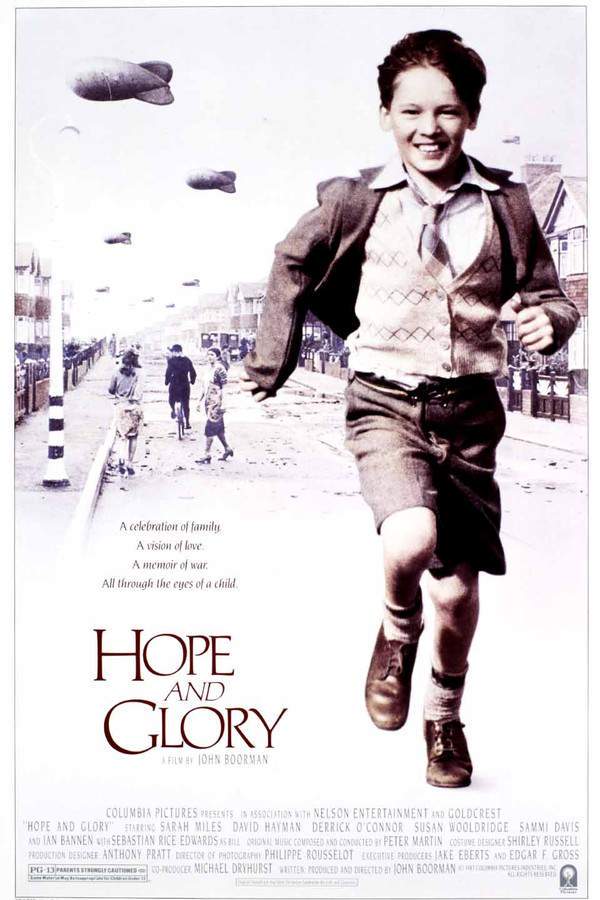
Hope and Glory (1988) movie poster

Timeline

Hope and Glory (1988) Timeline Explained – Every Event in Order

Release, runtime and language
1988 · 113 min · English
Directed by
John Boorman
Starring
Sarah Miles, Ian Bannen, Annie Leon, David Hayman, Derrick O'Connor, Geraldine Muir

During the London Blitz, a young boy named Billy Rowan experiences a childhood defined by both terror and unexpected liberation. While nightly bombings shake the city, Billy and his friends find adventure exploring the rubble, searching for hidden treasures. The film follows Billy's family as they navigate the challenges of wartime, highlighting their resilience and the bittersweet nature of growing up against a backdrop of conflict. It's a poignant and humorous coming-of-age story directed by John Boorman.

On this page (5)
  1. 1 Events in order (14)
  2. 2 Timeline questions answered
  3. 3 Movie threads
  4. 4 Movies like Hope and Glory
  5. 5 Every angle

14 events in order · contains spoilers

Hope and Glory Timeline: Events in Chronological Order

Every key event of Hope and Glory (1988) in order, scene by scene, with when and where it takes place. Use it to untangle flashbacks, time jumps and parallel storylines, to refresh your memory before the sequel or to find the exact scene you are thinking of.

  1. War Declaration

    On September 3, 1939, Britain declared war on Germany, initiating a tumultuous period in history. The Rowan family feels the immediate impact as the world around them begins to change dramatically.

    When
    September 3, 1939
    Where
    London
  2. Clive Enlists

    Clive, the father of the Rowan family, decides to enlist in the army, leaving his wife Grace and their children to navigate the challenges of war alone. This decision marks the family's shift into a new reality filled with uncertainty and fear.

    Where
    London
  3. Grace's Dilemma

    Grace struggles with the idea of sending her children, Billy and Sue, away from London to escape the dangers posed by the war. Ultimately, she hesitates at the train station, choosing to keep them close, showcasing her deep maternal instincts and fear of separation.

    Where
    Train Station, London
  4. The Blitz Begins

    From September 1940 to May 1941, Billy experiences the Blitz from a child's perspective. The bombings, seen as both frightening and thrilling, become a backdrop to his adventures in a now war-torn London.

    When
    September 1940 - May 1941
    Where
    London
  5. Adventures in Ruins

    Billy and his friends explore the remnants of bombed buildings, turning destruction into an adventure. This newfound playground, however, brings peril as they navigate the shattered landscape filled with remnants of war.

    Where
    London
  6. Dawn's Pregnancy

    Dawn, one of Billy's sisters, faces the challenges of an unexpected pregnancy with her Canadian soldier boyfriend, Bruce. This shocking news brings that realization of the weight of family support and responsibility during turbulent times.

    Where
    London
  7. Loss of Home

    The Rowan family's home is lost to a tragic fire, not due to an air raid but from an everyday accident. This loss forces them to relocate, highlighting the unpredictability of life even amidst war.

    Where
    London
  8. New Beginnings

    The Rowans move to a picturesque Thames-side residence owned by Grace's parents. This change provides a new environment for Billy, where he fosters a closer relationship with his grandfather George and learns to appreciate nature.

    Where
    Thames-side residence
  9. Bruce's Return

    In the autumn of 1942, Bruce returns from his covert assignment and decides to go AWOL in order to marry Dawn. This act of love runs counter to the rigid expectations of military duty, demonstrating the human aspect of war.

    When
    Autumn of 1942
    Where
    Local Church
  10. Dawn's Birth

    Dawn gives birth to a son in her grandparents' living room, surrounded by family. This moment of joy amidst the chaos of war emphasizes the strength of family bonds and the miracle of life.

    Where
    Grandparents' Living Room
  11. New School Challenges

    After securing a new house along the riverbank, Billy is sent back to London to enroll in school. When he returns, he finds his old school in ruins, a mix of laughter and destruction that captures the absurdity of wartime experiences.

    Where
    London
  12. Joy in Destruction

    Children from Billy's old school celebrate the destruction caused by a stray bomb, leaving a lasting impression on him. This moment reveals the strange yet profound way in which children cope with the realities of war.

    Where
    London
  13. Reflection on War

    As an adult, Billy reflects on his childhood experiences during the war, particularly the joy he found even amidst destruction. He understands the layered meanings of those moments and how they shaped his outlook on life.

  14. The Promise of the River

    The film concludes with heartwarming images of the river, symbolizing hope and renewal. The stirring strains of 'Land of Hope and Glory' play, leaving the audience with a sense of resilience and optimism.

    Where
    River

Last updated: November 15, 2024 at 20:42

Was this helpful?

Timeline questions answered

Hope and Glory Timeline Explained: Your Questions Answered

When does it happen, and why in that order? The questions people ask about the chronology of Hope and Glory (1988): time jumps, flashbacks, cause and effect between scenes and the correct order of events, each answered with spoilers.

Q1

Why didn't Grace send Billy and Sue away to the countryside?

Grace couldn't go through with sending her children away because her maternal instinct proved stronger than her fear of the bombings. At the train station, at the final moment, she chose to keep them close rather than endure the pain of separation, despite the dangers that awaited them in London.

Foreshadowing: Earlier, the family is shown gathered around the radio listening to war news, establishing the growing tension about whether to evacuate the children.

  • grace
  • train station
  • evacuation
  • children
  • london blitz
  • mother
Q2

Why does Billy view the Blitz bombings as exciting rather than terrifying?

Billy, being only 10 years old, processes the Blitz through the filter of childhood innocence. The explosions and flames resemble fireworks to him, and the rubble becomes an adventurous playground. His young mind hasn't developed the full capacity to comprehend death and destruction, allowing him to find thrills where adults only see terror.

  • billy
  • child perspective
  • blitz
  • fireworks
  • innocence
  • london
Q3

How did the Rowan family lose their London home?

The Rowan family's home was destroyed by fire, but notably not from an air raid. The fire was caused by mundane, everyday circumstances, an accident rather than direct wartime bombing. This random loss underscores how the war disrupted lives through both intentional violence and sheer bad luck.

  • home
  • fire
  • london
  • family
  • displacement
Q4

Why did Bruce go AWOL and what happened after his wedding to Dawn?

Bruce went AWOL (Absent Without Leave) because he wanted to marry Dawn before returning to military duty after his covert assignment. His love for Dawn compelled him to risk military punishment. Shortly after their wedding at the local church, Military Police apprehended Bruce, taking him back into custody despite the newlyweds' brief happiness.

Foreshadowing: Bruce was introduced earlier as Dawn's Canadian soldier boyfriend, and their relationship was established as serious enough to lead to her pregnancy.

  • bruce
  • dawn
  • awol
  • military police
  • wedding
  • 1942
  • canadian soldier
Q5

Why do the children celebrate when their school gets destroyed?

The children celebrate the destruction of their school because, from their perspective, the bombing represents an unexpected holiday from lessons and authority. The stray bomb that destroyed their building feels like liberation rather than tragedy. Billy's grandfather George shares this reaction, laughing along with the children, illustrating how wartime trauma twisted normal childhood joy into something that appears shocking to adults.

Foreshadowing: Throughout the film, Billy and his friends are shown seeking adventure and freedom from adult supervision in the bombed-out ruins.

  • school
  • bomb
  • children
  • celebration
  • joy
  • destruction
  • adolf
Q6

What does the river symbolize in the film?

The river represents hope, freedom, and renewal amid wartime destruction. At the Thames-side residence with his grandfather George, Billy experiences a sanctuary where he can escape the chaos of London. The final shots of the river, accompanied by "Land of Hope and Glory," reinforce this theme of resilience and the promise of better days ahead.

Foreshadowing: George teaches Billy "the ways of the river," positioning it as a place of learning and peace away from the bombings.

  • river
  • hope
  • george
  • grandfather
  • thames
  • renewal
  • freedom
Q7

How does Dawn's unexpected pregnancy affect the Rowan family?

Dawn's pregnancy, resulting from her relationship with Canadian soldier Bruce, creates both a crisis and an opportunity for family unity. The situation forces the family to confront the realities of war touching even their personal lives, but it also brings them closer together as they rally around Dawn. Her later giving birth in her grandparents' living room, surrounded by family, becomes a moment of joy that showcases their collective strength.

  • dawn
  • pregnancy
  • bruce
  • family
  • support
  • baby
Q8

What does Billy learn from his grandfather George?

Billy learns "the ways of the river" from his grandfather George at the Thames-side home. This includes appreciating nature, patience, and a different perspective on life from the older generation. George's gruff exterior hides a caring nature, and his shared joy with Billy at the school's destruction reveals a kindred spirit who also finds dark humor in wartime absurdity.

  • george
  • grandfather
  • billy
  • river
  • nature
  • thames
  • lessons
Q9

Why is the film's ending considered bittersweet?

The ending is bittersweet because the destruction of Billy's school, a tragedy by any measure, is portrayed as a moment of perfect joy for him. The film captures the strange duality of wartime childhood: finding happiness in moments that represent loss and trauma. Adult Billy's reflection that "nothing ever quite matched the perfect joy of that moment" crystallizes this complex emotional truth, balanced between mourning what was lost and embracing what survival made possible.

Foreshadowing: The entire film has established the juxtaposition of childhood adventure with adult horror through Billy's unique perspective.

  • ending
  • bittersweet
  • school
  • destruction
  • joy
  • reflection
  • adult billy
Q10

Why does the film focus specifically on the Blitz period?

The film focuses on the Blitz (September 1940 to May 1941) because this period represents the height of London's wartime experience and a formative time for children growing up during the conflict. The nightly bombings created the distinctive backdrop of fire and rubble that Billy and his friends transformed into their playground. This specific timeframe also allows the film to explore how prolonged trauma shaped an entire generation's childhood memories.

  • blitz
  • 1940
  • 1941
  • london
  • bombing
  • childhood
  • historical

Movie threads

More Movies Like Hope and Glory, by Mood & Story

Curated lists built around what makes Hope and Glory tick: the same mood, the same kind of story or the same emotional payoff. Each list explains why these movies belong together.

Movies about wartime innocence like Hope and Glory

Stories where children find wonder and freedom amid adult-sized conflicts. If you liked Hope and Glory, you'll enjoy these movies that explore the resilience and adventure of childhood during historical conflicts. These similar coming-of-age stories find humor and heartwarming moments amidst serious backdrops, perfect for fans of nostalgic family dramas.

  • nostalgic
  • childlike wonder
  • heartwarming
  • adventurous
  • resilient
  • poignant
  • Tone: bittersweet, humorous
  • Pacing: steady, character-driven
Why these movies?

The story pattern: Stories in this thread are typically told through the eyes of a child or adolescent, framing major historical or societal upheavals as a backdrop for personal discovery. The central journey is one of maintaining innocence and finding playful moments, even when adult characters are consumed by gravity and fear.

Why they belong together: These films are grouped together because they share a specific tonal blend of nostalgia, heartwarming humor, and poignant resilience. They balance the seriousness of their settings with the lightness of a child's perspective, creating a unique and memorable emotional experience.

Movies about resilient humor like Hope and Glory

Families and communities finding humor and connection to survive hardship. Find more movies like Hope and Glory that celebrate family resilience and humor in the face of adversity. These dramas and comedies feature characters who maintain their spirit during difficult times, offering stories that are both poignant and uplifting.

  • resilient
  • humorous
  • heartwarming
  • poignant
  • family bonds
  • character-driven
  • Tone: bittersweet, heartwarming
  • Pacing: steady
Why these movies?

The story pattern: The narrative pattern involves a group—often a family or tight-knit community—facing a sustained external pressure, such as war, economic hardship, or social unrest. The plot unfolds through episodic challenges, each met with a mix of pragmatism and comic relief, strengthening the bonds between characters.

Why they belong together: Movies in this thread share a core theme of resilience expressed through humor and interpersonal bonds. They have a medium emotional weight, avoiding unrelenting bleakness by consistently highlighting the quirky, warm, and funny ways people support each other.

If you liked this

Movies Like Hope and Glory

Similar movies to Hope and Glory: the same genre, themes or kind of story. Each one comes with its own plot summary, timeline and ending explained.

Browse all movie summaries

Every angle

Hope and Glory (1988) Explained: Plot, Timeline & Characters

Everything about Hope and Glory in one place: what happens in the plot summary, the timeline in chronological order, the characters and meaning and a spoiler-free summary. What's After the Movie adds the cast, box office and post-credit scenes.

Coming soon on iOS and Android

The Plot Explained Movie Summary App

Plot summaries, endings explained and timelines on your phone. Catch up on any movie in minutes, save your favorites and never miss a twist again.

Be the first to know when we launch. Your email stays private, always.

Learn more about the app