









Plot Explained Spoilers guaranteed!
Plot Explained

Browse by genre

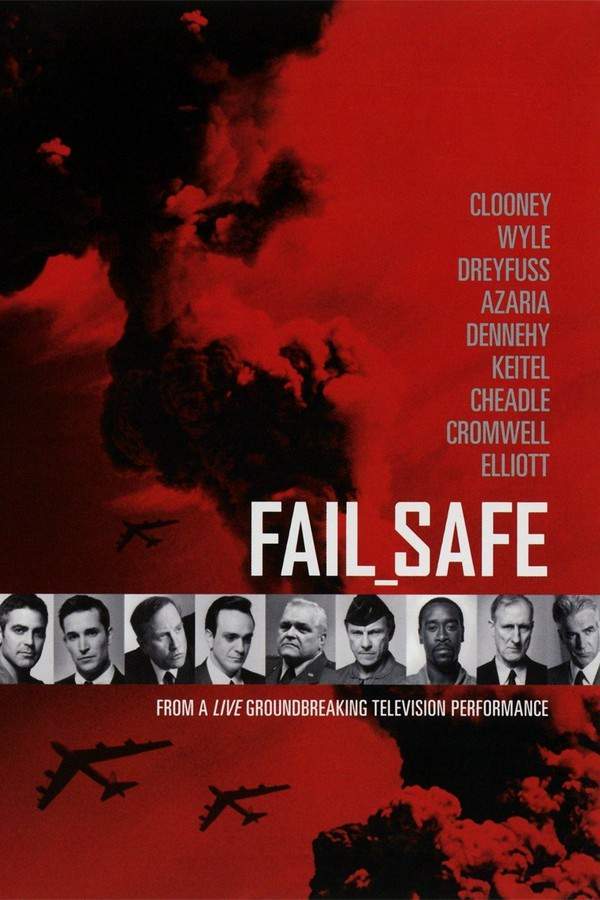
Fail-Safe (1964) movie poster

Timeline

Fail-Safe (1964) Timeline Explained – Every Event in Order

Release, runtime and language
1964 · 112 min · English
JustWatch #10,508 426
Directed by
Sidney Lumet
Starring
Walter Matthau, Larry Hagman, Henry Fonda, Edward Binns, Dan O'Herlihy, Fritz Weaver

During the Cold War, a computer error triggers a potentially disastrous sequence of events. A US bomber squadron is mistakenly launched towards Moscow, unaware of the critical malfunction. As the situation escalates, the president and his advisors race against time to avert a global catastrophe. They must find a way to negotiate with Russian leaders and stop the squadron before it initiates a nuclear conflict, all while grappling with the terrifying implications of the system failure.

On this page (8)
  1. 1 Where to watch
  2. 2 Events in order (12)
  3. 3 Timeline questions answered
  4. 4 The book behind the movie
  5. 5 Movie threads
  6. 6 Movies like Fail-Safe
  7. 7 Categories
  8. 8 Every angle

Where to watch

Where to Watch Fail-Safe (1964)

Where can you watch Fail-Safe? Stream, rent or buy it in the US, including on Fawesome, Tubi TV and YouTube Free: current JustWatch availability with up-to-date prices.

Streaming availability powered by JustWatch

12 events in order · contains spoilers

Fail-Safe Timeline: Events in Chronological Order

Every key event of Fail-Safe (1964) in order, scene by scene, with when and where it takes place. Use it to untangle flashbacks, time jumps and parallel storylines, to refresh your memory before the sequel or to find the exact scene you are thinking of.

  1. Warren's Nightmares Begin

    Warren Black, a Brigadier General in the US Air Force, experiences a recurring nightmare about a bullfight. The dream ends with a piercing shriek that haunts him, leading to deep doubts about his role in managing nuclear weapons.

    Where
    New York City
  2. Introduction of Walter Groteschele

    Walter Groteschele, a civilian professor, offers controversial views on nuclear warfare. He challenges the widely held belief that any nuclear exchange would lead to global annihilation, providing a different perspective to the Defense Department.

  3. Frank Bogan's Command

    Frank Bogan, the commanding general of Strategic Air Command, showcases the military's advanced technology during a short-notice tour for Congressman Hubert Raskob. This tour requires him to urgently pull Colonel Warren Cascio away from a family visit.

    Where
    SAC Headquarters
  4. Colonel Grady's Leadership

    Colonel Jack Grady leads Group Six, a squadron of Vindicator nuclear bombers based in Anchorage, Alaska. As he and his wingman, Billy Flynn, discuss their fellow pilots, they notice a troubling difference between modern aviators and those from World War II.

    Where
    Anchorage, AL
  5. Computer Malfunction at SAC

    A routine replacement of faulty control equipment at SAC headquarters leads to unforeseen consequences. The replacement momentarily freezes the mainframe, which inadvertently activates the Fail-Safe box aboard the bombers of Group Six.

    Where
    SAC Headquarters
  6. Radio Jamming by Soviet Russia

    Simultaneously with the computer issues, Group Six’s radios are jammed by Soviet forces. The crew, believing that nuclear war has commenced, receives the fail-safe signal and is compelled to follow their final orders to attack Soviet Russia.

  7. The Presidential Dilemma

    The President of the United States, accompanied by translator Peter Buck, descends into the White House command bunker to address the escalating crisis. They prepare to communicate with the Soviet Premier to prevent catastrophic retaliation.

    Where
    White House Command Bunker
  8. Commands and Miscommunication

    Despite the President's efforts to stop Group Six, the pilots remain steadfast in their orders due to the belief that outside communications may be disinformation. This disconnect escalates the threat of an imminent nuclear attack on Moscow.

  9. Soviet Lies and Evasion

    When the President questions the Soviet Premier about the radio jamming, the initial response is a denial. This lack of communication further complicates attempts to dissuade Group Six, exacerbating the ticking clock toward disaster.

  10. Linking to Soviet Air Defense

    A direct communication line to Soviet air defense is established, prompting General Bogan to instruct a technical sergeant on how to detonate air-to-air missiles. This drastic measure is undertaken in a bid to eliminate the threat posed by Group Six's approaching bombers.

  11. President's Proposal to the Soviets

    Faced with the grim likelihood of nuclear catastrophe, the President makes a shocking proposal to the Soviet Premier. This deal is so unexpected that it jolts the Premier into realizing the gravity of the situation, as both leaders strive to prevent omnicide.

  12. Resolution of Tensions

    The intense negotiations and desperate measures taken by both the United States and Soviet leaders reflect the high stakes of the moment. Their mutual recognition of the unintended nature of the crisis leads to a temporary resolution, averting disaster.

Last updated: January 19, 2025 at 18:49

Was this helpful?

Timeline questions answered

Fail-Safe Timeline Explained: Your Questions Answered

When does it happen, and why in that order? The questions people ask about the chronology of Fail-Safe (1964): time jumps, flashbacks, cause and effect between scenes and the correct order of events, each answered with spoilers.

Q1

How did a computer malfunction trigger the fail-safe system?

During a routine replacement of faulty control equipment at SAC headquarters, the mainframe temporarily froze. This freeze inadvertently activated the Fail-Safe box aboard Group Six's bombers. The timing was catastrophic, the computer freeze happened simultaneously with Soviet radio jamming, causing the pilots to believe nuclear war had actually begun and forcing them to execute their final offensive orders.

  • computer malfunction
  • fail-safe
  • SAC headquarters
  • Group Six
  • nuclear bombers
Q2

What was the President's shocking proposal to the Soviet Premier?

The President offered to sacrifice one American city to Soviet forces as retaliation for the mistaken attack, in exchange for the Soviets helping to stop the American bombers heading toward Moscow. This extreme bargain was designed to demonstrate to the Soviets that the attack was accidental, allowing them to assist without appearing weak. The proposal was so drastic it shocked the Premier into recognizing the genuine crisis.

  • President
  • Soviet Premier
  • shocking proposal
  • nuclear crisis
  • bargain
Q3

Why couldn't the President stop the bombers from attacking?

The pilots of Group Six followed strict military protocol, they believed any communication ordering them to return might be Soviet disinformation designed to disable America's nuclear response. Their orders were absolute: once the fail-safe signal was validated and nuclear war assumed, they were compelled to carry out their attack on Soviet Russia from the North Pole. Even the President's direct appeals couldn't override their conditioning.

  • Group Six pilots
  • disobey orders
  • fail-safe protocol
  • President
  • nuclear attack
Q4

Why were the bombers' radios jammed at the critical moment?

Soviet forces were jamming the American bombers' radios at the exact same time the computer malfunction occurred at SAC headquarters. This jamming made it appear to the pilots that their communication links had been destroyed by enemy action, reinforcing their belief that nuclear war had begun. The jamming was a separate Soviet military action, not connected to the American computer error, but the coincidence proved deadly.

  • Soviet jamming
  • radio communication
  • Group Six
  • nuclear war
  • disinformation
Q5

What was the significance of Warren Black's bullfight nightmares?

Warren Black, the Brigadier General overseeing nuclear weapons, experiences recurring nightmares about a bullfight that ends with a piercing shriek. These nightmares represent his deep psychological doubts about his position and the immense responsibility of managing nuclear weaponry. The nightmares foreshadow the catastrophic shriek of nuclear sirens and underscore the film's theme of technological systems causing human destruction.

Foreshadowing: Early scenes show Black waking in distress from these dreams, establishing his psychological vulnerability before the crisis unfolds.

  • Warren Black
  • nightmares
  • bullfight
  • Brigadier General
  • guilt
  • psychological theme
Q6

What happened to Group Six and their bombers in the end?

The film ends with the bombers approaching Moscow. A direct communication line to Soviet air defense was established, and General Bogan instructed technicians on how to detonate air-to-air missiles to destroy the bombers. The resolution involved the President's shocking proposal and mutual recognition between U.S. and Soviet leaders that the crisis was unintentional, temporarily averting disaster, but the ending is bleak, implying tragic consequences.

  • Group Six
  • Vindicator bombers
  • Moscow
  • Soviet air defense
  • resolution
  • ble ak ending
Q7

What was Walter Groteschele's role in the story?

Walter Groteschele was a civilian professor who challenged the prevailing belief that any nuclear exchange would lead to total annihilation. He served as a controversial advisor to the Defense Department, working alongside Defense Secretary Swenson. His theories provided the intellectual framework for the film's exploration of nuclear strategy and the dangerous mindset that makes mutually assured destruction seem acceptable.

  • Walter Groteschele
  • professor
  • nuclear warfare
  • Defense Department
  • advisor
  • mutually assured destruction
Q8

How did the President communicate with the Soviet Premier during the crisis?

The President descended to the White House underground command bunker with his translator, Peter Buck, to access the direct "Hot Line" connecting to the Soviet Premier. Initial communication was complicated when the Soviet Premier initially denied the radio jamming. Eventually, the direct truth emerged, and the President made his shocking proposal to prevent mutual destruction.

  • President
  • Hot Line
  • Soviet Premier
  • White House bunker
  • Peter Buck
  • translator
  • nuclear crisis
Q9

What did the film say about military confidence in technology?

General Frank Bogan exhibited unwavering confidence in the sophisticated technology at SAC headquarters, organizing an impromptu tour for Congressman Raskob to showcase the system. This overconfidence proved catastrophic, the very technology designed to prevent accidental nuclear war became the trigger for disaster. The film critiques blind faith in automated systems without human judgment, paralleling Warren Black's personal doubts about his role in managing such dangerous technology.

  • Frank Bogan
  • technology
  • SAC
  • overconfidence
  • automation
  • nuclear system
  • military command

Movie threads

More Movies Like Fail-Safe, by Mood & Story

Curated lists built around what makes Fail-Safe tick: the same mood, the same kind of story or the same emotional payoff. Each list explains why these movies belong together.

Command Center Thrillers like Fail-Safe

Races against time from inside the rooms where world-ending decisions are made. Discover movies like Fail-Safe, where the drama unfolds in high-tech command centers and political war rooms. If you enjoyed the tense, cerebral race against time driven by dialogue and strategic decisions, you'll find similar high-stakes stories here.

  • tense
  • claustrophobic
  • paranoid
  • foreboding
  • desperate
  • strategic
  • Tone: tense, bleak, desperate
  • Pacing: fast, relentless
Why these movies?

The story pattern: The narrative is typically a linear, escalating crisis, often triggered by a technological or strategic failure. The plot follows the chain of command as they analyze information, debate morally fraught solutions, and attempt to contain a disaster from a single, high-pressure location.

Why they belong together: They share a specific setting and narrative engine: the claustrophobic tension of a command center. The similarity comes from the high-intensity pacing, the intellectual and ethical grappling of characters, and the focus on systemic failure and its catastrophic potential.

Bleak System Failure Movies like Fail-Safe

Stories where the very systems designed to protect us become the source of our doom. Explore films similar to Fail-Safe that delve into the terrifying consequences of technological and systemic breakdown. If you were gripped by the bleak, morally complex outcome of an unstoppable chain of events, these stories of catastrophic failure will resonate.

  • somber
  • foreboding
  • anxious
  • desperate
  • catastrophic
  • tragic
  • Tone: somber, foreboding, bleak
  • Pacing: fast, linear
Why these movies?

The story pattern: Narratives follow a clear cause-and-effect structure: a single point of failure escalates into an uncontainable crisis. Characters are often powerless to stop the momentum of the system they built, leading to an ending that is tragic, bleak, and heavily focused on the theme of unintended consequences.

Why they belong together: They are united by a central theme: the hubris of technology or complex systems leading directly to disaster. The similarity is in the straightforward, fast-paced plot structure, the heavy emotional weight, and the ultimately bleak and sobering conclusion about human fallibility.

If you liked this

Movies Like Fail-Safe

Similar movies to Fail-Safe: the same genre, themes or kind of story. Each one comes with its own plot summary, timeline and ending explained.

Browse all movie summaries

Categories

Movie Lists Featuring Fail-Safe

Fail-Safe appears in these hand-built movie categories. Each one groups movies by a specific mood, theme or story type, with their plot summaries and endings explained.

View all movie categories

Every angle

Fail-Safe (1964) Explained: Plot, Timeline & Characters

Everything about Fail-Safe in one place: what happens in the plot summary, the timeline in chronological order, the characters and meaning and a spoiler-free summary. What's After the Movie adds the cast, box office and post-credit scenes.

Coming soon on iOS and Android

The Plot Explained Movie Summary App

Plot summaries, endings explained and timelines on your phone. Catch up on any movie in minutes, save your favorites and never miss a twist again.

Be the first to know when we launch. Your email stays private, always.

Learn more about the app