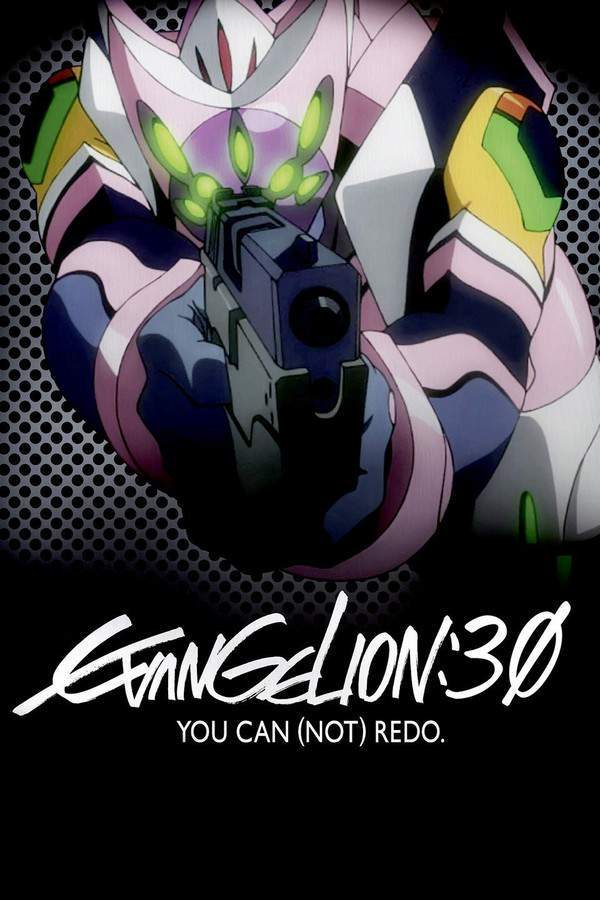
Evangelion: 3.0 You Can (Not) Redo

Evangelion: 3.0 You Can (Not) Redo

Year: 2014

Runtime: 96 min

Language: Japanese

Directors: Hideaki Anno, Kazuya Tsurumaki, Mahiro Maeda, Masayuki

ActionSci-FiDramaAnimation

After a fourteen-year absence, Shinji awakens to a world teetering on the brink of disaster. Guided by the lingering memory of Rei, he returns to NERV, hoping to find answers and a path to redemption. However, his past actions have triggered a dangerous sequence of events, placing humanity's existence in grave peril and forcing him to confront the consequences of his choices.

Warning: spoilers below!

Haven’t seen Evangelion: 3.0 You Can (Not) Redo yet? This summary contains major spoilers. Bookmark the page, watch the movie, and come back for the full breakdown. If you're ready, scroll on and relive the story!

Timeline & Setting – Evangelion: 3.0 You Can (Not) Redo (2014)

Explore the full timeline and setting of Evangelion: 3.0 You Can (Not) Redo (2014). Follow every major event in chronological order and see how the environment shapes the story, characters, and dramatic tension.

Time period

Post-Third Impact, 14 years later

The narrative unfolds fourteen years after the catastrophic Third Impact, a world-changing event that drastically altered humanity's present and future. During this time, characters grapple with their identities, the repercussions of past actions, and the continual threat posed by Evangelions and angels.

Location

Earth, Tokyo-3, NERV headquarters

The movie primarily takes place on Earth, with significant events occurring in Tokyo-3, a futuristic city known for its advanced technology and defense systems. The ruins of the NERV headquarters serve as a crucial backdrop for many pivotal moments, reflecting the devastation that followed the Third Impact and the ongoing conflict between human factions.

🏙️ City 🌍 Earth

Last Updated: October 22, 2024 at 22:08

Main Characters – Evangelion: 3.0 You Can (Not) Redo (2014)

Meet the key characters of Evangelion: 3.0 You Can (Not) Redo (2014), with detailed profiles, motivations, and roles in the plot. Understand their emotional journeys and what they reveal about the film’s deeper themes.

Asuka Langley Shikinami

Asuka is a fierce and determined pilot, struggling with her past and a deep desire for validation. Her complex personality often oscillates between confidence and vulnerability, which is highlighted as she grapples with her feelings towards Shinji and the weight of her responsibilities.

🎮 Pilot 💪 Strength

Shinji Ikari

Shinji is portrayed as a conflicted and emotionally fragile character, burdened by the expectations placed upon him. His journey throughout the film revolves around self-acceptance and confronting his fears, particularly in relation to his father and the expectations surrounding the Evangelions.

🤖 Pilot 🤔 Introspection

Kaworu Nagisa

Kaworu presents himself as a calm and enigmatic figure who seeks to understand Shinji while also navigating his own identity as the First Angel. His relationship with Shinji is pivotal, as he serves as a guide and a harrowing symbol of fate, embodying both compassion and tragic inevitability.

🎼 Musician 💖 Affection

Captain Misato Katsuragi

Captain Misato has evolved into a strong leader, commanding the group WILLE with determination and strategy. Her tough exterior and strong resolve mask her inner struggles, as she tries to protect her subordinates while confronting the moral complexities of their mission.

👩‍✈️ Leader 🚀 Strategy

Rei Ayanami

Rei embodies a mysterious and stoic presence, marked by her lack of individuality and the existential questions surrounding her existence as a clone. Her evolving relationship with Shinji adds depth to her character, pushing the boundaries of what it means to be human.

🧬 Clone 😶 Mystery

Last Updated: October 22, 2024 at 22:08

Major Themes – Evangelion: 3.0 You Can (Not) Redo (2014)

Explore the central themes of Evangelion: 3.0 You Can (Not) Redo (2014), from psychological, social, and emotional dimensions to philosophical messages. Understand what the film is really saying beneath the surface.

🔄 Cycle of Conflict

The film explores the cyclical nature of conflict, emphasizing humanity's struggles to evolve while facing existential threats. Characters are caught in a web of personal and collective crises, reflecting their attempts to break free from their past while grappling with difficult choices.

💔 Sacrifice and Loss

Sacrifice is a central theme, with characters facing devastating decisions that impact their lives and those of their loved ones. The losses feel profound, as characters navigate the pain of betrayal and the emotional consequences of fulfilling their duties to protect humanity.

🌀 Identity and Humanity

The film raises questions of identity and what it means to be human, particularly through the character relationships. The nature of individuality is challenged as characters confront clones and the loss of personal memories, leading to an exploration of self-awareness and existential purpose.

Last Updated: October 22, 2024 at 22:08

Mobile App Preview

Coming soon on iOS and Android

The Plot Explained Mobile App

From blockbusters to hidden gems — dive into movie stories anytime, anywhere. Save your favorites, discover plots faster, and never miss a twist again.

Sign up to be the first to know when we launch. Your email stays private — always.

Explore Movie Threads

Discover curated groups of movies connected by mood, themes, and story style. Browse collections built around emotion, atmosphere, and narrative focus to easily find films that match what you feel like watching right now.

Movies about apocalyptic guilt and redemption like Evangelion: 3.0 You Can (Not) Redo

Characters haunted by past failures must save a broken world they helped destroy.If you enjoyed the heavy emotional burden and quest for redemption in Evangelion: 3.0, explore other movies where protagonists grapple with having caused a disaster. These films feature bleak worlds, high-stakes consequences, and bittersweet paths to atonement, offering a similar intense and morally complex viewing experience.

grimapocalypticanxiousmelancholictenseoppressiveguilt-riddenredemptive

Narrative Summary

The narrative follows a protagonist who is directly or indirectly responsible for a world-ending or world-altering catastrophe. The story begins after the fall, forcing the character to operate in a hostile environment they created. Their journey is internal as much as external, confronting their guilt while being thrust into a position where they must attempt to fix what they broke, often at great personal cost.

Why These Movies?

Movies are grouped here based on the central theme of protagonist-induced apocalypse and the subsequent heavy journey toward redemption. They share a dark, intense tone, a fast-paced narrative of escalating crises, and a focus on psychological trauma and the heavy burden of choice.
Sci-fi movies about psychological trauma like Evangelion: 3.0 You Can (Not) Redo

High-concept science fiction where the real battle is against internal demons and psychological collapse.Fans of the deep psychological drama and existential horror in Evangelion: 3.0 will find similar themes here. These films blend complex sci-fi worlds with intense character studies, exploring trauma, identity, and the heavy cost of conflict. If you liked the fusion of mecha action and human fragility, this thread is for you.

psychologicaltenseoppressiveanxiousexistentialmelancholicisolatedtraumatic

Narrative Summary

Stories in this thread typically feature young or vulnerable protagonists pushed to their absolute limit within a large-scale sci-fi conflict. The narrative structure interweaves spectacular battles with quiet, deeply unsettling moments of psychological unraveling. The plot is often driven by external manipulation from shadowy organizations, forcing characters to question their reality, their purpose, and their very sanity.

Why These Movies?

These movies are connected by their primary focus on the psychological damage inflicted by war and conflict in a science fiction context. They share a complex narrative, a dark and tense tone, and a high emotional weight centered on themes like parental abandonment, identity crisis, and the sacrifice of innocence.

Unlock the Full Story of Evangelion: 3.0 You Can (Not) Redo

Don't stop at just watching — explore Evangelion: 3.0 You Can (Not) Redo in full detail. From the complete plot summary and scene-by-scene timeline to character breakdowns, thematic analysis, and a deep dive into the ending — every page helps you truly understand what Evangelion: 3.0 You Can (Not) Redo is all about. Plus, discover what's next after the movie.

Evangelion: 3.0 You Can (Not) Redo Summary

Read a complete plot summary of Evangelion: 3.0 You Can (Not) Redo, including all key story points, character arcs, and turning points. This in-depth recap is ideal for understanding the narrative structure or reviewing what happened in the movie.

Evangelion: 3.0 You Can (Not) Redo Summary

Evangelion: 3.0 You Can (Not) Redo Timeline

Track the full timeline of Evangelion: 3.0 You Can (Not) Redo with every major event arranged chronologically. Perfect for decoding non-linear storytelling, flashbacks, or parallel narratives with a clear scene-by-scene breakdown.

Evangelion: 3.0 You Can (Not) Redo Timeline

Evangelion: 3.0 You Can (Not) Redo Spoiler-Free Summary

Get a quick, spoiler-free overview of Evangelion: 3.0 You Can (Not) Redo that covers the main plot points and key details without revealing any major twists or spoilers. Perfect for those who want to know what to expect before diving in.

Evangelion: 3.0 You Can (Not) Redo Spoiler-Free Summary

More About Evangelion: 3.0 You Can (Not) Redo

Visit What's After the Movie to explore more about Evangelion: 3.0 You Can (Not) Redo: box office results, cast and crew info, production details, post-credit scenes, and external links — all in one place for movie fans and researchers.

More About Evangelion: 3.0 You Can (Not) Redo