Year: 1947
Runtime: 80 mins
Language: English
Directors: Hans Richter, Man Ray
The film seeks to introduce surrealist art to a broader audience. It follows an ordinary man who can summon dream‑like visions that improve his clients’ lives. This narrative framework stitches together a series of avant‑garde vignettes created by leading visual artists of the era, many of whom had fled to the United States as refugees during World II.
Find where to stream, rent, or buy Dreams That Money Can Buy (1947) in the US with current JustWatch availability, up-to-date pricing, and platform listings for subscription, rental, and digital purchase options.
Warning: spoilers below!
Haven’t seen Dreams That Money Can Buy yet? This summary contains major spoilers. Bookmark the page, watch the movie, and come back for the full breakdown. If you're ready, scroll on and relive the story!
Trace every key event in Dreams That Money Can Buy (1947) with our detailed, chronological timeline. Perfect for unpacking nonlinear stories, spotting hidden connections, and understanding how each scene builds toward the film’s climax. Whether you're revisiting or decoding for the first time, this timeline gives you the full picture.
Last updated: October 09, 2025 at 11:13
Find frequently asked questions about the Dreams That Money Can Buy (1947) timeline, including chronological order, nonlinear jumps, cause-and-effect links, and scene sequence clarifications. This timeline FAQ helps explain when key events happen, how moments connect, and why the story unfolds in that specific order.
Joe discovers his ability while looking into a mirror in his room. When he gazes into his own eyes, he realizes he can see the contents of his own mind unfolding. This realization gives him the idea to use this talent to help others by selling tailor-made dreams, leading him to set up his surreal enterprise in his rented room.
After discovering his mind-reading ability and realizing he can look inside anyone, Joe decides to monetize this talent. Faced with a complicated lease and needing to pay rent, he conceives the idea of offering personalized dreams to clients, promising to deliver dream experiences tailored to each person's desires and needs.
Mr. A's dream, titled 'Desire,' assembles images from his ledger-like mind, a reclining woman, jail bars, a voyeur, and a golden ball. The white-clad woman under red curtains represents his suppressed desires, while the voyeur watching from behind bars and the golden ball sliding from her mouth symbolize the tension between aspiration and the risks of pursuing forbidden wishes.
Julie arrives in a suit and beret pushing various causes, and her dream becomes a critique of consumer fantasy and artificial intimacy. The mannequin head, wigged dancing mannequins, and cascade of glittering jewelry represent superficial fulfillment. The phrase 'untouched by human hands' reinforces the artificial nature of the desires being offered, while her kiss of Joe suggests genuine human connection breaking through the artificial facade.
The gangster commissions a dream to help him win horse races, but the vision Joe provides, a hall of spinning discs and a distorted Duchamp-inspired 'Nude Descending a Staircase', fails to give him useful information. Disappointed, the gangster robs Joe at gunpoint, shooting him and leaving him unconscious before escaping.
In Case 7, Joe encounters himself frozen in a blue-tinged ice chamber holding a blue poker chip left by the little girl. This dream represents his self-examination, sitting at a poker table with friends beneath a Morpheus bust, Joe's skin turns blue, causing his friends to reject him. The blue chip symbolizes both the artistic influence he's absorbed and his isolation.
Joe follows a blue thread that leads outside where public protests block his path and ladders stretch toward the sky in every direction, representing postwar hope and possibility. As he climbs, he recalls the optimism following World War II. The blue thread initially represents hope, but when Joe cuts it, it turns red with blood, suggesting the loss of that hopeful path.
In the climactic scene, a reclining woman offers Joe cherries, a drink, and a knife. He kisses her but then cuts the blue cord, which immediately turns red with blood, symbolizing his rejection of hope. He returns to the poker room where the bearded Morpheus bust bursts into flames and his friends transform into flaming bird cages, marking the collapse of his inner world.
The final scene shows Joe and the statue falling and transforming into balls of colored ink that rain down on the pavement below. The ink disperses into water, washing over the pavement while the broken classical bust stares upward. This ambiguous ending suggests Joe's identity has dissolved back into the collective artistic consciousness, leaving his ultimate fate unresolved.
The clients represent different forms of human longing, Mr. A seeks escape from his methodical banking life, Julie wants purpose through causes, Mrs. A desires renewal and connection to her past. Each is drawn to Joe's unusual service because conventional reality fails to fulfill their psychological needs, making the surreal dream experience preferable to their waking lives.
Max Ernst, a leading surrealist artist, appears as Le President in Mr. A's dream, embodying the intrusion of artistic authority into the dream landscape. This cameo represents the film's core premise, bringing surrealist art to a broader audience through the cinematic dream framework. Other artists referenced include Man Ray (on a book cover) and Duchamp's Nude Descending a Staircase.
The film explores how dreams offer escape and fulfillment that reality cannot provide, but ultimately suggests this is unsustainable. Joe begins as a profit-seeking entrepreneur but becomes trapped in his own creation. The collapsing boundary between dream and self in Case 7 implies that excessive reliance on manufactured dreams leads to identity dissolution, a surreal meditation on art, desire, and the fragility of self.
Discover curated groups of movies connected by mood, themes, and story style. Browse collections built around emotion, atmosphere, and narrative focus to easily find films that match what you feel like watching right now.
Movies structured as a series of dreamlike, avant-garde episodes.If you enjoyed the unique structure of Dreams That Money Can Buy, this collection features other movies that stitch together dreamlike or avant-garde vignettes. Find similar films with a narrative frame that connects surreal artistic explorations of the subconscious mind.
Stories in this thread typically abandon a single, linear plot in favor of a framing device that introduces several standalone, thematically-linked segments. Each episode operates by its own internal dream logic, creating a cumulative exploration of a central concept like the psyche or artistic creation.
These films are grouped by their shared avant-garde narrative structure and their focus on translating the illogical nature of dreams and artistic vision into a cinematic form. They prioritize mood, imagery, and intellectual curiosity over traditional storytelling.
Stories where a playful surface hides a subtle, persistent sense of disquiet.Discover films that share the distinctive vibe of Dreams That Money Can Buy, where playful and inventive presentation is tinged with a subtle sense of dread. If you liked its blend of whimsy and psychological disturbance, you'll find similar moods here.
The narrative journey often involves characters engaging with a fantastical or surreal world that initially seems delightful or curious. However, as the story unfolds, the boundaries between dream and reality blur, revealing darker themes and creating an ambiguous, often unresolved, sense of threat.
These movies are united by their specific emotional mix: a dominant tone of whimsy that is consistently tempered by an unsettling undercurrent. This creates a unique, slightly feverish dreamscape that is both alluring and disquieting.
Don't stop at just watching - explore Dreams That Money Can Buy in full detail. From the complete plot summary and scene-by-scene timeline to character breakdowns, thematic analysis, and a deep dive into the ending - every page helps you truly understand what Dreams That Money Can Buy is all about. Plus, discover what's next after the movie.
Read a complete plot summary of Dreams That Money Can Buy, including all key story points, character arcs, and turning points. This in-depth recap is ideal for understanding the narrative structure or reviewing what happened in the movie.
Discover the characters, locations, and core themes that shape Dreams That Money Can Buy. Get insights into symbolic elements, setting significance, and deeper narrative meaning - ideal for thematic analysis and movie breakdowns.
Discover movies like Dreams That Money Can Buy that share similar genres, themes, and storytelling elements. Whether you’re drawn to the atmosphere, character arcs, or plot structure, these curated recommendations will help you explore more films you’ll love.
Dreams That Money Can Buy (1947) Plot Summary & Movie Recap
Dreams That Money Can Buy (1947) Scene-by-Scene Movie Timeline
Dreams That Money Can Buy (1947) Spoiler-Free Summary & Key Flow
Movies Like Dreams That Money Can Buy – Similar Titles You’ll Enjoy
Planet Earth: Dreams (2004) Spoiler-Packed Plot Recap
Dream Scenario (2023) Spoiler-Packed Plot Recap
A Dream is a Life Lived and Lost (1000) Plot Summary & Ending Explained
The Forgotten Colours of Dreams (2018) Full Summary & Key Details
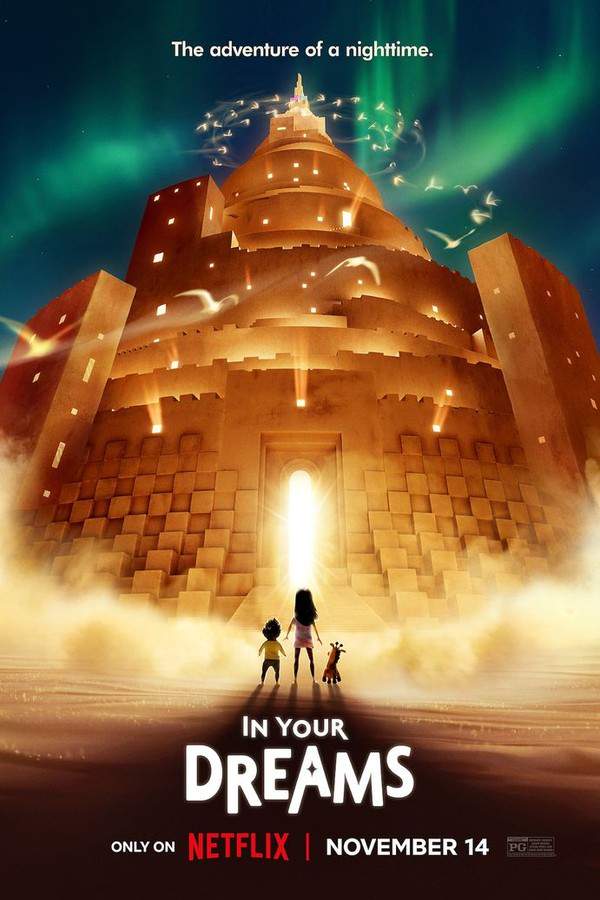
In Your Dreams! (2016) Story Summary & Characters
Dreams on Spec (2007) Film Overview & Timeline
On the Wings of Dreams (2007) Story Summary & Characters
Dreams (1990) Story Summary & Characters
Life Is a Dream (1986) Spoiler-Packed Plot Recap
The Dream Machine (1986) Full Summary & Key Details
Let Me Dream Again (1900) Complete Plot Breakdown
Dream (1943) Film Overview & Timeline
Dreaming with Scissors: Hitchcock, Surrealism & Salvador Dali (2008) Complete Plot Breakdown
Day Dreams (1922) Complete Plot Breakdown
Dreams (2025) Spoiler-Packed Plot Recap