Plot Explained Spoilers guaranteed!
Plot Explained

Browse by genre

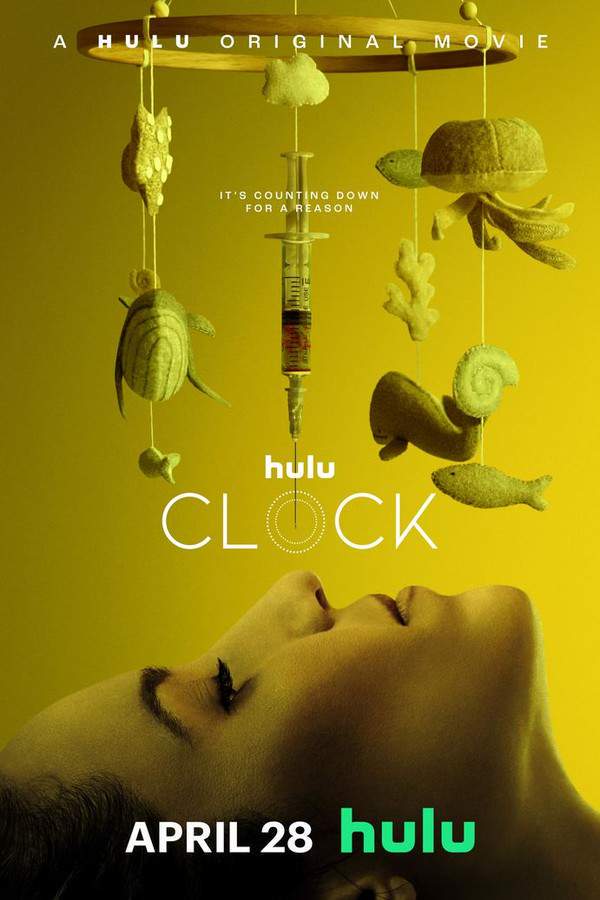
Clock (2023) movie poster

Plot Summary

Clock (2023) Plot Summary & Ending Explained

Release, runtime and language
2023 · English
Echo score 68
JustWatch #25,053 1
Starring
Dianna Agron, Saul Rubinek, Alexis Jacknow, Grace Porter, Isabelle Du, Jay Ali

Facing immense pressure to start a family, a woman participates in an experimental clinical trial designed to reverse the effects of aging. Hoping to regain control of her life and save her marriage, Ella's pursuit of a solution leads her down a challenging and unpredictable path, confronting unforeseen consequences and questioning the very nature of time and motherhood.

On this page (7)
  1. 1 Where to watch
  2. 2 What happens: full plot
  3. 3 Plot questions answered
  4. 4 How it ends
  5. 5 Movie threads
  6. 6 Movies like Clock
  7. 7 Every angle

Where to watch

Where to Watch Clock (2023)

Where can you watch Clock? Stream, rent or buy it in the US, including on Hulu: current JustWatch availability with up-to-date prices.

Streaming availability powered by JustWatch

Full plot summary · contains spoilers

What Happens in Clock: Full Plot Summary

The whole story of Clock (2023) explained, from the opening scene to the final frame: every key event, every twist and what it all adds up to. Read it as a quick recap before the sequel, to check a scene you missed, or to finally understand what really happened.

Ella, a 37-year-old woman, finds herself grappling with societal and familial pressure to have children, a path she is not keen on pursuing. Her father, a descendant of Holocaust survivors, nudges her to reconsider her stance on motherhood. Meanwhile, her husband, Aiden, encourages her to consult with Dr. Webber for a breast cancer screening. During the visit, Ella, burdened with anxiety about childbirth, expresses her hope for her biological clock to start ticking. Dr. Webber, however, implies that Ella's clock may be broken and proposes an experimental treatment instead.

In an effort to explore this option, Ella opts to enroll in the study, all while claiming to focus on a work project, which she ultimately abandons via a phone call. She meets Dr. Elizabeth Simmons, who confidently assures her that an implant and hormone therapy can reset her biological clock. Following her advice, Ella begins a regimen of prescribed pills, leading to unexpected and vivid hallucinations during a Rorschach test. The images she sees—a very tall woman, a family of deceased bugs, and a grandfather clock—trigger intense discussions with Dr. Simmons, who interprets the clock as a symbol of Ella's dread regarding her legacy.

Ella's journey takes a more harrowing turn when she's subjected to a sensory deprivation chamber, where she confronts her deepest fears, imagining a future with a baby while being overwhelmed by graphic scenes of childbirth. In a moment of panic, she begs to be released, but when the chamber opens, she encounters the tall woman, causing her to fall and lose consciousness. Upon awakening, Dr. Simmons reassures her that her strong reaction is positive. Despite the bizarre hallucinations that plague her daily life, including losing her color vision and seeing ordinary individuals transformed into the tall woman, Ella continues to hide her symptoms to remain in the study.

The tensions escalate when Ella attends a gathering at her friend Shauna's home, where the sight of her pregnant friend further complicates her already tumultuous emotional state. During the party, hallucinations continue to torment her, leading to an intense incident where she nearly crushes Shauna's belly with a heavy book. Disturbed by her behavior, Shauna's wife intervenes, and the situation spirals downhill. The pressure mounts as Ella’s father sustains an injury, and in a fit of rage, she destroys the grandfather clock in their home, feeling as if she were dismantling a part of her legacy.

After a tumultuous confrontation in their relationship, Ella discovers the truth about Aiden's complicity in her participation in the study, stemming from a discussion he had with Dr. Webber. This revelation sends her into a fury, prompting her to take drastic actions against Dr. Simmons and the implant she has inserted. The situation escalates into chaos as Ella tears the implant from her body in a desperate bid for autonomy and clarity.

With the police closing in and emotionally consumed by her actions, Ella finds herself at a cliff's edge. A revealing phone call from Aiden confirms the magnitude of her choices, leaving her to confront the horror that the clock was a metaphor for her father’s mortality. In a moment of despair, she leaps off the cliff, landing at the water's edge, miraculously unharmed. As she lies there, a strange fish-like creature approaches her, symbolizing yet another twist in her journey of self-discovery and uncertainty.
Last updated: November 03, 2024 at 12:37

Was this helpful?

Plot questions answered

Clock Plot Explained: Your Questions Answered

The questions people ask most about Clock (2023): what happens in the confusing scenes, why the characters do what they do, the twists, hidden details and what the ending means. Each answer contains spoilers.

Q1

Why does Ella agree to participate in the experimental study?

Ella agrees to participate because she feels immense pressure from her family and society to have children. Her father, a Holocaust survivor's descendant, urges her to reconsider motherhood, while her husband Aiden encourages her to see Dr. Webber. During the appointment, Dr. Webber suggests her biological clock may be broken and proposes the experimental treatment as a solution, making Ella feel this could resolve her internal conflict about motherhood.

Foreshadowing: Earlier, Ella expresses hope that her biological clock might start ticking on its own, setting up her willingness to seek medical intervention.

  • ella
  • biological clock
  • experimental treatment
  • motherhood pressure
  • dr. webber
Q2

What does the tall woman represent in Ella's hallucinations?

The tall woman represents Ella's deep-seated fear of womanhood, motherhood, and her legacy. Dr. Simmons interprets the hallucination as a manifestation of Ella's dread about her identity and future. As Ella's condition deteriorates, she loses her color vision and begins seeing the tall woman everywhere, symbolizing how her fear of becoming a mother has consumed her entire perception of reality.

Foreshadowing: The tall woman first appears during Ella's Rorschach test, hinting at psychological themes she hasn't fully confronted.

  • tall woman
  • hallucination
  • fear of motherhood
  • psychological horror
  • symbolism
Q3

What does the grandfather clock symbolize in the movie?

The grandfather clock symbolizes Ella's anxiety about time, mortality, and legacy. Dr. Simmons interprets it as representing Ella's dread about her biological timeline and what she will leave behind. The clock appears repeatedly in her hallucinations, reflecting her internal struggle with societal expectations about when she should have children and her fear of running out of time.

Foreshadowing: The grandfather clock appears in Ella's initial Rorschach test hallucinations, establishing its importance as a recurring symbol.

  • grandfather clock
  • time
  • mortality
  • legacy
  • symbolism
Q4

Why was Aiden involved in getting Ella into the study?

Aiden had a conversation with Dr. Webber about Ella's situation, which led to Ella being recommended for the experimental study. When Ella discovers this betrayal, it shatters her trust completely. This revelation explains why the study was presented to Ella so readily and why Dr. Webber pushed her toward it - her husband was secretly complicit in steering her toward treatment he believed would help their marriage.

Foreshadowing: Aiden encourages Ella to visit Dr. Webber for a routine screening, showing his initial involvement in the medical process.

  • aiden
  • husband
  • dr. webber
  • study
  • betrayal
  • conspiracy
Q5

What happens to Ella in the sensory deprivation chamber?

During the sensory deprivation chamber session, Ella is overwhelmed by her deepest fears about childbirth and motherhood. She experiences vivid imagery of both the beauty and horror of having a baby, including graphic childbirth scenes. The experience becomes so traumatic that she panics and begs to be released. When the chamber opens, she sees the tall woman and falls unconscious, after which Dr. Simmons reassures her that this intense reaction is actually positive progress.

Foreshadowing: Earlier hallucinations during the Rorschach test established the themes of fear and legacy that surface in the chamber.

  • sensory deprivation
  • hallucination
  • childbirth
  • fear
  • trauma
  • dr. simmons
Q6

Why does Ella destroy the grandfather clock?

Ella destroys the grandfather clock during a fit of rage triggered by multiple factors: her father's injury, the mounting pressure from her family, and her deteriorating mental state. The act symbolizes her desperate attempt to dismantle the ticking timeline and societal expectations that have been haunting her. By destroying the clock, she attempts to reject the notion that her worth is tied to a biological deadline.

Foreshadowing: The clock has appeared throughout her hallucinations as a symbol of her anxiety about time and legacy.

  • grandfather clock
  • destruction
  • rage
  • family pressure
  • breakdown
Q7

What does the implant actually do to Ella?

The implant, combined with hormone therapy, is part of Dr. Simmons' experimental treatment designed to reset Ella's biological clock and make her want children. Instead of working as intended, the treatment triggers severe psychological side effects: vivid hallucinations, loss of color vision, and an obsession with the tall woman imagery. The implant appears to physically alter Ella's mental state, causing her to lose touch with reality.

Foreshadowing: Dr. Simmons assures Ella the treatment will reset her biological clock, but the Rorschach test shows early warning signs of psychological disturbance.

  • implant
  • hormone therapy
  • side effects
  • hallucinations
  • psychological damage
Q8

Why does Ella leap off the cliff at the end?

Ella leaps off the cliff in a moment of despair after a phone call from Aiden reveals the full extent of her situation. The call confirms her father's mortality and the weight of her choices. The leap represents her attempt to escape the overwhelming pressure, trauma, and loss of control she has experienced throughout the film. Miraculously, she survives, landing at the water's edge.

Foreshadowing: Throughout the movie, Ella's psychological state steadily deteriorates, building toward this desperate final act.

  • cliff
  • jump
  • suicide attempt
  • despair
  • aiden
  • father mortality
Q9

What is the strange creature at the end of the movie?

The strange fish-like creature that approaches Ella at the water's edge serves as a metaphor for the unknown and her ongoing journey of self-discovery. The ambiguous ending leaves interpretation open - the creature could symbolize rebirth, transformation, or the continuation of her psychological struggle. It represents the uncertainty of her fate and mental state after surviving her suicide attempt.

Foreshadowing: The creature appears as Ella lies by the water, marking the final surreal moment of her journey.

  • fish creature
  • ending
  • ambiguity
  • metaphor
  • rebirth
  • transformation
Q10

Why does Ella nearly attack Shauna's pregnant belly at the party?

At Shauna's party, Ella is tormented by intensified hallucinations triggered by seeing her pregnant friend. The sight of Shauna's pregnant belly represents everything Ella fears and resents about motherhood expectations. Overwhelmed by these emotions, she nearly crushes Shauna's belly with a heavy book before Shauna's wife intervenes. This incident demonstrates how the experimental treatment has warped Ella's psyche and made her dangerous around pregnant women.

Foreshadowing: Ella's emotional turmoil has been building throughout the film, with pregnancy-related stimuli triggering increasingly severe reactions.

  • shauna
  • pregnant belly
  • attack
  • party
  • hallucination
  • breakdown
Q11

What is Dr. Simmons' role in Ella's psychological breakdown?

Dr. Simmons leads the experimental study and encourages Ella to continue despite worsening symptoms. She interprets Ella's hallucinations and reassures her that extreme reactions are positive signs. However, Dr. Simmons appears to prioritize keeping Ella in the study rather than addressing the clear danger. Her confident reassurances mask the harmful nature of the treatment, making her complicit in Ella's deterioration.

Foreshadowing: Dr. Simmons interprets the Rorschach images early on, framing Ella's fears as the key to the treatment's success.

  • dr. simmons
  • experimental study
  • breakdown
  • responsibility
  • complicity
Q12

What does the clock metaphor mean in the movie?

The clock metaphor represents multiple intertwined concepts: the biological deadline society places on women's fertility, the fear of mortality inherited from Ella's Holocaust-surviving father, and the pressure to define one's legacy through children. The movie's title refers to this metaphorical clock that Ella feels is broken. The final phone call reveals the clock was also about her father's mortality - she fears losing him without fulfilling family expectations.

Foreshadowing: The phone call at the cliff's edge connects the clock metaphor directly to her father's mortality.

  • clock metaphor
  • biological clock
  • fertility pressure
  • mortality
  • legacy
  • family expectations

Ending explained

What Happens at the End of Clock?

How Clock (2023) ends, in short: the final scene, the last twist and what it means for the characters. The full ending explained, with every spoiler, lives on its own page.

Read the full ending explained

In the end, Ella realizes that her intense desire to become a mother was not truly her own but something shaped by societal pressure and her own therapy-induced delusions. The clock, the spiders, and the ghostly figure of her grandmother all symbolized her subconscious fears and her ancestral trauma linked to her family’s dark history. Her journey led her to confront the truth that her longing for motherhood had become a product of medical manipulation and psychological delusion rather than her genuine wish. When she discovers that the implant—intended to “correct” her biological clock—can never be removed without destroying her chances of conceiving, she chooses to reject this manufactured identity. Ella pulls out the implant herself, severing her dependence on the harmful medical intervention and claiming her autonomy. Her act symbolizes reclaiming her own life and identity, breaking free from societal expectations and the control of those who mimicked her trauma.

The story concludes tragically with Ella jumping into a lake after her confrontation with the police, suggesting she might have drowned. In her final moments, she envisions the fish, which in cultural symbolism can represent fertility, but also rejection and decay in her disturbed state. The fish might symbolize her lingering fears of rejection and her ancestral curse, now reflected in her own destroyed ability to connect naturally with life and motherhood. Ultimately, her death signifies the destructive power of societal and medical manipulation over personal agency, and how her desire for motherhood—once a source of hope—was transformed into a haunting, self-destructive obsession. The ending leaves viewers questioning whether Ella truly escaped her trauma or was consumed by it, illustrating the horrifying toll of trying to conform to societal norms about womanhood and motherhood.

Clock ending explained in full

Movie threads

More Movies Like Clock, by Mood & Story

Curated lists built around what makes Clock tick: the same mood, the same kind of story or the same emotional payoff. Each list explains why these movies belong together.

Societal Pressure Horror Movies like Clock

Stories where external expectations twist into internal terror and madness. If the themes of Clock resonated with you, this list features movies like it that explore the horror of societal pressure. These similar psychological thrillers and horror stories depict characters unraveling under the weight of external expectations, often with dark, intense, and ambiguous outcomes.

  • anxious
  • oppressive
  • unsettling
  • desperate
  • clinically cold
  • claustrophobic
  • Tone: dark, oppressive, unsettling
  • Pacing: steady, methodical
Why these movies?

The story pattern: Narratives in this thread typically follow a protagonist grappling with intense pressure from family, society, or culture. This external force becomes an internal catalyst for a descent into anxiety, paranoia, or full-blown psychosis, blurring the lines between reality and a terrifying subjective experience.

Why they belong together: These films are grouped together because they share a core theme of societal coercion as a source of horror. They create a similar experience of claustrophobic dread, focusing on the psychological disintegration of a character trapped by expectations they never asked for.

Claustrophobic Descent into Madness Movies like Clock

A steady, suffocating unraveling of the mind under unbearable stress. For viewers who appreciated the harrowing mental unraveling in Clock, this collection highlights similar movies about a descent into madness. These films share a steady, anxious pacing and a high-intensity, claustrophobic vibe, focusing on characters losing their grip on reality in the face of trauma or extreme pressure.

  • claustrophobic
  • nightmarish
  • anxious
  • unsettling
  • psychological
  • descent
  • Tone: dark, nightmarish, anxious
  • Pacing: steady, relentless
Why these movies?

The story pattern: The narrative pattern is a linear but layered progression from a state of anxiety to full-blown psychosis. The protagonist's perception becomes unreliable, often symbolized through hallucinations or a sinister entity, as the walls of their reality close in. The journey is inward and destructive, with an ending that rarely offers clear resolution.

Why they belong together: These movies are united by their shared focus on a subjective, internal horror experience. They prioritize mood over plot, using a steady pace and high intensity to create a feeling of inescapable dread, making the viewer a prisoner to the protagonist's deteriorating mental state.

If you liked this

Movies Like Clock

Similar movies to Clock: the same genre, themes or kind of story. Each one comes with its own plot summary, timeline and ending explained.

Browse all movie summaries

Every angle

Clock (2023) Explained: Plot, Ending, Timeline & Characters

Everything about Clock in one place: what happens in the plot summary, the timeline in chronological order, the characters and meaning, the ending explained and a spoiler-free summary. What's After the Movie adds the cast, box office and post-credit scenes.

Coming soon on iOS and Android

The Plot Explained Movie Summary App

Plot summaries, endings explained and timelines on your phone. Catch up on any movie in minutes, save your favorites and never miss a twist again.

Be the first to know when we launch. Your email stays private, always.

Learn more about the app