Plot Explained Spoilers guaranteed!
Plot Explained

Browse by genre

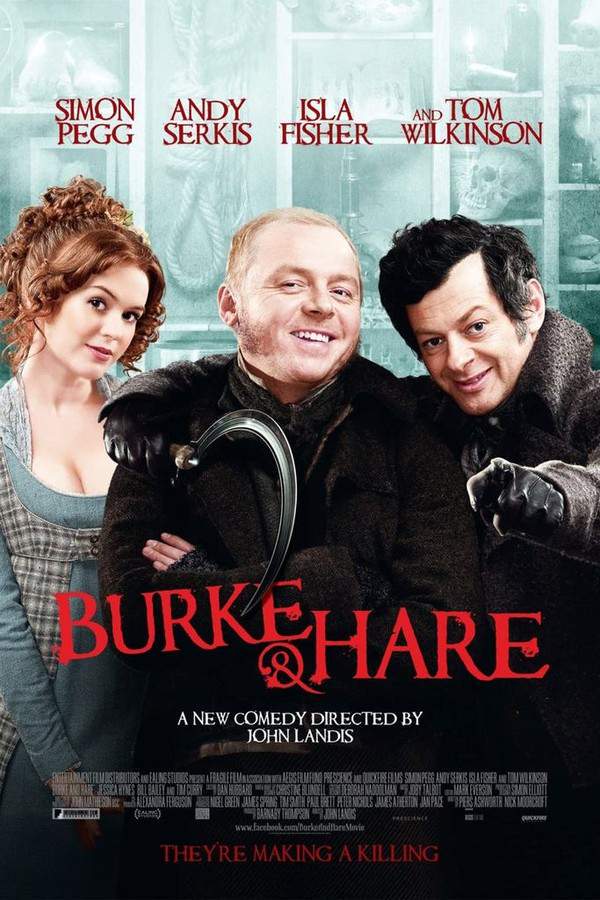
Burke and Hare (2011) movie poster

Plot Summary

Burke and Hare (2011) Plot Summary Explained

Release, runtime and language
2011 · 91 min · English
Loading streaming availability…
Directed by
John Landis

During the 1820s in Edinburgh, William Burke and William Hare are struggling to make ends meet. They discover a profitable, albeit horrific, opportunity when a local anatomy professor needs cadavers for his lectures. To meet the demand, Burke and Hare begin preying on the city's vulnerable and poor, selling their bodies for anatomical study. Their increasingly desperate actions lead them down a dark path of murder and deception, ultimately threatening to expose their gruesome trade.

On this page (5)
  1. 1 Where to watch
  2. 2 What happens: full plot
  3. 3 Plot questions answered
  4. 4 Movie threads
  5. 5 Every angle
Loading streaming availability…

Full plot summary · contains spoilers

What Happens in Burke and Hare: Full Plot Summary

The whole story of Burke and Hare (2011) explained, from the opening scene to the final frame: every key event, every twist and what it all adds up to. Read it as a quick recap before the sequel, to check a scene you missed, or to finally understand what really happened.

William Burke and William Hare, Ulster-born immigrants, embark on a grim scheme to pass off cheese mould as a patent medicine. When their fraud is exposed, they flee to an inn run by Hare’s wife, Lucky. There, one of her lodgers has already died, and she urges them to remove the body. A quick stop for a drink introduces them to a murkier opportunity: Fergus, a local enforcer for the ruthless Danny McTavish, relays that Dr Knox is paying well for cadavers, especially as demand grows. Seizing the chance, Burke and Hare decide to sell the corpse to Knox, and in a moment of desperate improvisation they break the spine to cram the body into a barrel for the smuggle through the city.

The deal with Knox is struck after a tense negotiation, and the mortgaged body yields a handsome sum for each new dissection. Buoyed by money and bravado, Burke and Hare turn to grave-robbing in earnest, hoping to stock Knox’s dissection table. Their plan hits a grim snag when they exhume an already long-dead corpse and are chased from the cemetery by militia men, Burke even being shot in the rear during the pursuit. Back at the inn, Lucky is intoxicated and almost unconsolable, yet she reveals she knows what they’ve been up to. Regardless, she surprises them by proposing a partnership: she will take a “tax” of a pound per corpse as a home-front share of the gains, easing the tension with a sly, pragmatic endorsement.

Trouble escalates when Burke is kidnapped by McTavish and Fergus, who have also seized Hare. McTavish demands half the Knox money and threatens to kill them if their haul doesn’t cover his cut. The men are dumped on the road and forced to plot murder after murder to recover what they’ve lost, tightening the grip of fear and greed around them. Suspicion swirls through Edinburgh as missing-person posters proliferate and Captain Tom McLintock of the militia begins to connect the dots. Burke’s nerves fray while Hare retreats into plans to pivot the operation toward a legitimate funeral-parlor business.

McTavish captures Hare again and extorts the remainder of the money, prompting a dangerous twist when McTavish reappears as Knox’s next dissection cadaver. Captain McLintock recognizes the figure and links him to Knox’s growing collection of anatomical photographs—photos that include people reported missing. Knox’s confession about his arrangement with Burke and Hare seals the moral collapse of the scheme. McLintock arrests Burke and Ginny Hawkins, along with Hare and Lucky, in a chilling confrontation that takes place even as the couples are engaged in intimate moments.

In prison, Burke shows remorse, but Hare urges silence, arguing that confession would doom all of them, including the women. The authorities, keen to shield Edinburgh’s medical schools and their vast funding, pressure the case into a quiet resolution, even bribing McLintock with a promotion. Knox’s anatomical photographs are destroyed, erasing a damning record, as McLintock delivers a grim ultimatum: any confession from one prisoner will free the others. Burke chooses to confess so that Ginny may go free, delivering his final line, “I did it for love,” before his execution. The narrative closes with a note on the fates of each character and a final glimpse of Burke’s actual skeleton housed in the Anatomical Museum of the University of Edinburgh Medical School.
Last updated: October 09, 2025 at 15:39

Was this helpful?

Plot questions answered

Burke and Hare Plot Explained: Your Questions Answered

The questions people ask most about Burke and Hare (2011): what happens in the confusing scenes, why the characters do what they do, the twists, hidden details and what the ending means. Each answer contains spoilers.

Q1

Why did Burke and Hare start murdering people?

Burke and Hare turned to murder after McTavish and Fergus extorted them, demanding half their earnings from the cadaver trade. With their money stolen and their lives threatened, they were forced to kill again to recoup their losses and pay off their tormentors. The extortion pressure combined with their desperation created a downward spiral where murder became their only way forward.

Foreshadowing: Earlier in the film, McTavish threatens to kill them if they don't hand over half their money, establishing the coercive dynamic that drives them to murder.

  • burke
  • hare
  • murder
  • extortion
  • mctavish
Q2

How did Burke and Hare start selling cadavers to Dr. Knox?

After their cheese mould scam fails, Burke and Hare flee to Lucky's inn where they learn from Fergus, a local enforcer, that Dr. Knox pays well for cadavers due to high demand at the university. When a lodger dies naturally, they see an opportunity and decide to sell the body, breaking its spine to fit it in a barrel for smuggling into the city. Knox agrees to pay them for each corpse they deliver.

  • dr knox
  • cadaver
  • anatomy
  • edinburgh
  • Fergus
Q3

What happened to McTavish at the end?

McTavish ends up as one of Dr. Knox's cadavers. After capturing Hare again and extorting the remaining money, McTavish becomes Knox's next dissection subject. When Captain McLintock examines Knox's anatomical photographs, he recognizes McTavish's body among the corpses of people reported missing, which helps unravel the entire operation.

  • mctavish
  • cadaver
  • dr knox
  • dissection
  • mclintock
Q4

Why did Burke confess to the murders?

Burke confessed so that Ginny, his partner, would go free. McLintock offered a deal where if any prisoner confessed, the others would be released. Hare urged silence to protect everyone, but Burke chose to confess, sacrificing himself so Ginny could walk free. His final words were "I did it for love," explaining his motivation.

  • burke
  • confession
  • ginny
  • love
  • execution
Q5

What were Dr. Knox's anatomical photographs?

Dr. Knox had been taking photographs of the cadavers he received from Burke and Hare for his anatomical studies. These photographs became crucial evidence when Captain McLintock recognized that some of the corpses matched people reported missing in Edinburgh. However, as part of the cover-up to protect the medical institutions, Knox's photographs were destroyed.

  • photographs
  • evidence
  • knox
  • mclintock
  • cover-up
Q6

How was Lucky involved in the murders?

Lucky, Hare's wife who runs the inn, discovered what Burke and Hare were doing early on. Instead of stopping them, she demanded a pound tax per corpse as her share of the profits. She remained complicit throughout the operation, eventually being arrested alongside the others. Her pragmatic acceptance of the crimes made her an unwilling but willing participant.

Foreshadowing: Lucky's line about knowing what they've been up to and demanding payment foreshadows her active role in the criminal enterprise.

  • lucky
  • hare
  • inn
  • tax
  • complicit
Q7

Why was Captain McLintock bribed?

The authorities bribed McLintock with a promotion because they wanted to suppress the scandal. Edinburgh's medical schools depended heavily on funding from cadavers, and exposing the murder ring would have damaged the city's reputation and medical institutions. By promoting McLintock and keeping the case quiet, the authorities ensured the scandal wouldn't reach the papers.

  • mclintock
  • bribery
  • cover-up
  • medical schools
  • edinburgh
Q8

What does "I did it for love" mean at the end?

Burke's final statement "I did it for love" refers to his confession to save Ginny. Rather than keeping silent to potentially spare himself, he confessed specifically so Ginny would be released under the deal. The line also hints at the twisted nature of his relationship with Ginny and the film's darkly comedic exploration of love and desperation.

  • burke
  • love
  • confession
  • ginny
  • final words
Q9

Is Burke and Hare based on a true story?

Yes, Burke and Hare is based on the real historical figures William Burke and William Hare, who were notorious body snatchers and murderers in 1820s Edinburgh. The film dramatizes their crimes, though the specific details are fictionalized. The epilogue confirms this by noting that Burke's skeleton is actually displayed at the Anatomical Museum of the University of Edinburgh Medical School.
  • true story
  • historical
  • burke
  • hare
  • edinburgh museum
Q10

How did the police find out about the murders?

The police began connecting the dots after Captain McLintock noticed that Dr. Knox's anatomical photographs showed people who had been reported missing. When McTavish's body appeared in Knox's collection, McLintock recognized him and linked the corpses to the missing persons. Suspicion had been growing throughout Edinburgh with the proliferation of missing-person posters, which ultimately led to the arrests.

Foreshadowing: The appearance of missing-person posters throughout the city signals the growing public awareness that foreshadows the investigation.

  • police
  • mclintock
  • evidence
  • missing persons
  • arrest

Movie threads

More Movies Like Burke and Hare, by Mood & Story

Curated lists built around what makes Burke and Hare tick: the same mood, the same kind of story or the same emotional payoff. Each list explains why these movies belong together.

Grim Historical Crime Movies Like Burke and Hare

Stories of ordinary people driven to terrible acts by poverty and desperation. If you liked the desperate criminal descent in Burke and Hare, explore more movies like it. This selection features similar historical crime stories where characters are driven by poverty into a grim spiral of murder and moral compromise, all set in richly detailed, atmospheric periods.

  • grim
  • desperate
  • sinister
  • anxious
  • historical
  • crime
  • Tone: dark, bleak, cynical
  • Pacing: fast, driven by escalating stakes
Why these movies?

The story pattern: The narrative pattern typically involves characters starting from a position of vulnerability or poverty, who see crime as their only way out. Their actions escalate in severity, leading to a cycle of violence, deception, and increasing paranoia, often culminating in a tragic downfall that reinforces the bleakness of their world.

Why they belong together: Movies are grouped here for their shared focus on economic desperation as a catalyst for crime, their commitment to a grim, historically-grounded atmosphere, and their exploration of the psychological toll of moral compromise. The tone is consistently dark, and the endings are often unforgiving.

Black Comedy Thrillers Similar to Burke and Hare

Thrillers where horrific acts are punctuated by moments of macabre humor. Fans of the macabre humor in Burke and Hare will enjoy these similar movies. This collection features thrillers and crime stories that blend a dark tone with satirical or black-comedic elements, often focusing on morally questionable protagonists whose actions are both horrifying and darkly funny.

  • satirical
  • sinister
  • macabre
  • cynical
  • unsettling
  • thrilling
  • Tone: dark, satirical, cynical
  • Pacing: fast, chaotic
Why these movies?

The story pattern: These stories often follow protagonists who engage in terrible acts but view them through a lens of practicality or absurdity, which generates the comedic tension. The plot is typically fast-paced, involving a series of escalating cover-ups and close calls, where the humor serves to highlight the characters' moral bankruptcy rather than relieve the tension.

Why they belong together: These films are united by their unique tonal blend of high-stakes thriller elements and dark, satirical comedy. They share a fast pace, a high level of intensity, and a focus on characters who operate outside moral norms, making the audience complicit in their grimly humorous worldview.

Every angle

Burke and Hare (2011) Explained: Plot, Timeline & Characters

Everything about Burke and Hare in one place: what happens in the plot summary, the timeline in chronological order, the characters and meaning and a spoiler-free summary. What's After the Movie adds the cast, box office and post-credit scenes.

Coming soon on iOS and Android

The Plot Explained Movie Summary App

Plot summaries, endings explained and timelines on your phone. Catch up on any movie in minutes, save your favorites and never miss a twist again.

Be the first to know when we launch. Your email stays private, always.

Learn more about the app