Plot Explained Spoilers guaranteed!
Plot Explained

Browse by genre

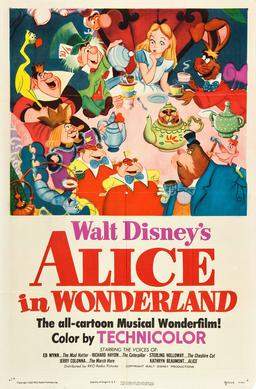
Alice in Wonderland (1949) movie poster

Plot Summary

Alice in Wonderland (1949) Plot Summary Explained

Release, runtime and language
1949 · 76 mins · French
Loading streaming availability…
Directed by
Dallas Bower, Lou Bunin
Starring
Felix Aylmer, Pamela Brown, Carol Marsh, Joyce Grenfell, David Reed, Raymond Bussières

Lou Bunin’s imaginative blend of live‑action performance and puppetry brings Lewis Carroll’s 1865 classic to the stage with vivid charm. The production mixes real actors with expertly crafted puppets, capturing the whimsical spirit of Wonderland while showcasing a unique theatrical visual style.

On this page (7)
  1. 1 Where to watch
  2. 2 What happens: full plot
  3. 3 Plot questions answered
  4. 4 Movie threads
  5. 5 Movies like Alice in Wonderland
  6. 6 Categories
  7. 7 Every angle
Loading streaming availability…

Full plot summary · contains spoilers

What Happens in Alice in Wonderland: Full Plot Summary

The whole story of Alice in Wonderland (1949) explained, from the opening scene to the final frame: every key event, every twist and what it all adds up to. Read it as a quick recap before the sequel, to check a scene you missed, or to finally understand what really happened.

In Victorian England, Dodgson is a scholar at Christ Church, Oxford who loves photography, theatre, and spending time with the Dean’s daughters, including Alice, Carol Marsh. The stern Vice Chancellor, Ernest Milton, disapproves of his latest poem written under the pen name Lewis Carroll and even hints that Oxford’s famous bell, Great Tom, should be silenced because its chimes annoy the crowd ahead of the Queen’s visit. On the suggestion of the Vice Chancellor, Alice Liddell and her sisters are kept out when the Queen arrives, a decision that leaves Dodgson feeling guilty for the disappointed girl. To ease her, he discreetly slips one of the Queen of Hearts’ Pamela Brown tarts to Alice, though he cannot summon the courage to share his true opinion of Great Tom with the visiting monarch.

Dodgson then takes the Dean’s daughters on a boat ride and begins to tell a story about a little girl named Alice who sees a White Rabbit with a pocket watch. Curious, Alice follows him down a large rabbit hole, landing in a room filled with doors and a key that opens a tiny door. Using magical objects that appear in the room, she shifts size—growing taller than the room, then shrinking until she can fit through the door—only to cry a storm of tears that becomes a sea around her. She meets a mouse and, upon washing ashore, witnesses animals debating the best way to dry off in a Caucus Race.

The tale continues as Alice encounters the Rabbit again, who mistakes her for his maid and sends her to retrieve a fan and gloves from his house. She drinks from a bottle in the Rabbit’s home and grows so large that she becomes stuck, and the Rabbit calls in his gardener to fix the problem. A subsequent cake made her shrink, and the Rabbit’s crew of gardeners join the chase as the scene shifts to the Queen’s court. In the woods she meets the Ugly Duchess / Dormouse, Joyce Grenfell, and later the trio of the Hatter, March Hare, and the Dormouse, who are part of a chaotic tea party where the Mad Hatter Raymond Bussières performs a wild, time-bending song.

Alice finds herself back in the door room, this time at the bottom of the sea for a Lobster Quadrille, then returns to the croquet lawn where the King and Queen of Hearts preside. The Queen’s gardeners perilously try to hide a mispainted rose bed, painting white roses red to hide their mistake. The Queen, along with her entourage, accuses Alice of theft when the Knave of Hearts steals the Queen’s tarts; the King of Hearts urges restraint, but a trial is demanded. In the courtroom, nonsense is the rule and the Knave of Hearts—Stephen Murray—and the rest of the characters offer bizarre evidence as the charge reads that the Knave stole the tarts, not Alice. The Queen orders Alice’s execution, but the entire scene erupts as a pack of cards swirls around the courtroom.

Awakening aboard the boat, Alice Liddell realizes that Dodgson’s story may have felt real to her—and the White Rabbit stands on the riverbank, as if confirming the tale. With a renewed sense of wonder, Alice follows Dodgson home, believing that the boundary between story and reality has moments of blur, and she returns to her sisters with the memory of an extraordinary adventure that began as a bedtime tale and became something more.

Last updated: October 09, 2025 at 10:49

Was this helpful?

Plot questions answered

Alice in Wonderland Plot Explained: Your Questions Answered

The questions people ask most about Alice in Wonderland (1949): what happens in the confusing scenes, why the characters do what they do, the twists, hidden details and what the ending means. Each answer contains spoilers.

Q1

Why was Alice Liddell kept from the Queen's visit at Oxford?

Alice Liddell and her sisters are kept from the Queen's arrival on the Vice Chancellor's advice, who fears their presence might cause disorder during the ceremonial visit. This decision disappoints the young girl, leaving Charles Dodgson feeling guilty for her exclusion.

Foreshadowing: The Vice Chancellor's strict control over who can see the Queen foreshadows the arbitrary authority figures Alice will encounter in Wonderland.

  • alice liddell
  • queen visit
  • oxford
  • vice chancellor
  • dodgson
Q2

Why does Dodgson slip Alice a tart from the Queen?

Dodgson feels guilty for Alice's disappointment at being excluded from the Queen's arrival, so he quietly gives her one of the Queen's tarts as a consoling gesture to ease her disappointment.

Foreshadowing: The tart gift later connects to the Queen's tarts being stolen in Wonderland, creating a ironic link between the frame story and dream adventure.

  • dodgson
  • tart
  • alice
  • queen
  • guilt
Q3

Why doesn't Dodgson tell the Queen his opinion about Great Tom?

Despite carrying his concerns about the Great Tom bell controversy, Dodgson cannot summon the courage to share his true opinion with the visiting monarch, reflecting his general nervousness and social uncertainty around authority.

Foreshadowing: Dodgson's inability to voice his true opinion to the Queen parallels Alice's powerless position as she's falsely accused in Wonderland.

  • great tom
  • queen
  • dodgson
  • oxford
  • bell
Q4

Why does the White Rabbit think Alice is his maid?

When Alice enters the Rabbit's house, she has just shrunk in size. The Rabbit mistakes her for his maid Mary Ann (or a similar household figure) because of her small stature and enters calling for her to fetch his gloves and fan.

Foreshadowing: The Rabbit's mistaken identity sets up the absurd logic of Wonderland where characters are judged by appearance rather than truth.

  • white rabbit
  • maid
  • alice
  • size change
Q5

How does Alice get stuck in the Rabbit's house?

After entering the Rabbit's house, Alice drinks from a bottle that makes her grow enormous, filling the entire room and trapping her inside. When she later eats a cake that shrinks her, the Rabbit calls gardeners to remove what they think is a monster, but the shrinking only partially helps, leading to continued chaos.

Foreshadowing: The unpredictable size changes demonstrate Wonderland's dream logic where solutions create new problems.

  • alice
  • giant
  • shrinking
  • rabbit house
  • trap
Q6

Why are the gardeners painting white roses red?

The three gardeners accidentally planted white roses instead of red ones for the Queen's croquet game. Fearing the Queen's notorious temper and punishment, they frantically paint the white roses red to hide their mistake before she discovers it.

Foreshadowing: Their desperate cover-up establishes the Queen's harsh rule and foreshadows the unfair accusations Alice will face.

  • gardeners
  • roses
  • croquet
  • queen
  • mistake
Q7

Who really stole the Queen's tarts in the trial?

The Knave of Hearts is the actual thief who stole the Queen's tarts, though the Rabbit attempts to frame Alice by taking a tart himself and pretending not to see the theft. The trial wrongly targets Alice despite the Knave's guilt.

Foreshadowing: The frame-up echoes the earlier tart gift from Dodgson, creating a circular connection between the real world and Wonderland.

  • knave of hearts
  • tarts
  • theft
  • trial
  • queen
Q8

Why does the Queen accuse Alice of stealing the tarts?

The Queen declares Alice the thief despite the Knave of Hearts being guilty, demonstrating Wonderland's absurd justice system where accusations are arbitrary and the truth doesn't matter. The Queen seeks someone to blame rather than finding the real culprit.

Foreshadowing: This unjust accusation reflects the arbitrary power of Wonderland's rulers and sets up the chaotic trial sequence.

  • queen
  • alice
  • tarts
  • accusation
  • unfair
Q9

What happens when Alice wakes up at the end?

Alice awakens on the boat with Dodgson finishing his story. She insists the adventure felt real to her, and as they return home, the White Rabbit appears on the riverbank as if confirming the experience was more than mere fantasy, leaving the boundary between story and reality blurred.

Foreshadowing: The frame narrative's resolution suggests that imagination can touch reality, validating Alice's journey as meaningful whether dream or not.

  • alice
  • wakes
  • boat
  • ending
  • reality
  • dodgson
Q10

What does the Mad Hatter mean by 'murdering time'?

The Mad Hatter explains he sang a time-bending song at a concert the Queen disliked, and as punishment, he was forced to exist in a perpetual tea time, unable to move forward. He claims he is "murdering time" because time itself has stopped for him in the endless tea party.

Foreshadowing: This explains the Hatter's chaotic relationship with time, reflecting Wonderland's distorted logic where even time itself can be punished.

  • mad hatter
  • time
  • tea party
  • song
  • queen
Q11

Why do the cards attack Alice in the courtroom?

When Alice confronts the absurd trial and declares the proceedings are "nothing but a pack of cards," the entire deck of cards animates and swirls around the courtroom in a chaotic attack, as if her words have broken the illusion of Wonderland itself.

Foreshadowing: This moment represents Alice's realization that Wonderland has no real power unless she believes in its reality.

  • cards
  • attack
  • courtroom
  • alice
  • wake up
Q12

What is the Caucus Race in Alice in Wonderland?

After Alice's tears flood the world, the animals gather for a "Caucus Race" where everyone runs in circles to dry themselves off. The race has no clear winner or purpose, representing the nonsense logic of Wonderland where rules exist but make no logical sense.

Foreshadowing: The absurdist race establishes the pattern of meaningless activities and arbitrary authorities Alice will encounter throughout Wonderland.

  • caucus race
  • animals
  • dry
  • alice
  • nonsense

Movie threads

More Movies Like Alice in Wonderland, by Mood & Story

Curated lists built around what makes Alice in Wonderland tick: the same mood, the same kind of story or the same emotional payoff. Each list explains why these movies belong together.

Dreamlike Journeys into Surreal Worlds like in Alice in Wonderland

Curious protagonists explore imaginative realms governed by their own strange logic. Discover movies like Alice in Wonderland that feature imaginative escapes into surreal fantasy worlds. If you enjoyed the curious exploration and nonsensical charm of Wonderland, you'll find similar stories here where protagonists embark on enchanting adventures in lands of pure imagination.

  • dreamlike
  • whimsical
  • surreal
  • imaginative
  • enchanted
  • curious
  • Tone: whimsical, curious, playful
  • Pacing: steady, episodic
Why these movies?

The story pattern: The narrative structure is often a linear journey through a series of bizarre, loosely connected encounters. There is rarely a complex overarching plot; instead, the story is driven by the character's curiosity and the sheer novelty of the world itself, culminating in a return to reality that often blurs the line between dream and waking life.

Why they belong together: These films are grouped by their shared commitment to whimsy, surrealism, and light-hearted adventure. They prioritize imaginative world-building and a sense of playful wonder over high-stakes conflict, offering a charming and visually distinctive escape.

Charming Adaptations of Childhood Classics like Alice in Wonderland

Beloved stories brought to life with a focus on visual charm and gentle wonder. Explore charming adaptations similar to the 1949 Alice in Wonderland. These movies faithfully bring beloved children's books to the screen with a unique artistic vision, focusing on whimsical storytelling, imaginative worlds, and a light, happy tone perfect for family viewing.

  • charming
  • whimsical
  • imaginative
  • nostalgic
  • family-friendly
  • literary
  • Tone: whimsical, charming, happy
  • Pacing: steady
Why these movies?

The story pattern: The narratives typically follow the well-known structure of the original book, often a journey or a series of moral and imaginative lessons. The conflict is usually mild, serving the story's themes rather than creating genuine peril, and concludes on a happy, reaffirming note that honors the classic's enduring message.

Why they belong together: These films share a core DNA of being respectful yet creative adaptations. They are united by a light emotional weight, a whimsical or hopeful tone, and a production design that prioritizes charm and visual storytelling to evoke the same wonder as the original texts.

If you liked this

Movies Like Alice in Wonderland

Similar movies to Alice in Wonderland: the same genre, themes or kind of story. Each one comes with its own plot summary, timeline and ending explained.

Browse all movie summaries

Categories

Movie Lists Featuring Alice in Wonderland

Alice in Wonderland appears in these hand-built movie categories. Each one groups movies by a specific mood, theme or story type, with their plot summaries and endings explained.

View all movie categories

Every angle

Alice in Wonderland (1949) Explained: Plot, Timeline & Characters

Everything about Alice in Wonderland in one place: what happens in the plot summary, the timeline in chronological order, the characters and meaning and a spoiler-free summary. What's After the Movie adds the cast, box office and post-credit scenes.

Coming soon on iOS and Android

The Plot Explained Movie Summary App

Plot summaries, endings explained and timelines on your phone. Catch up on any movie in minutes, save your favorites and never miss a twist again.

Be the first to know when we launch. Your email stays private, always.

Learn more about the app