


Plot Explained Spoilers guaranteed!
Plot Explained

Browse by genre

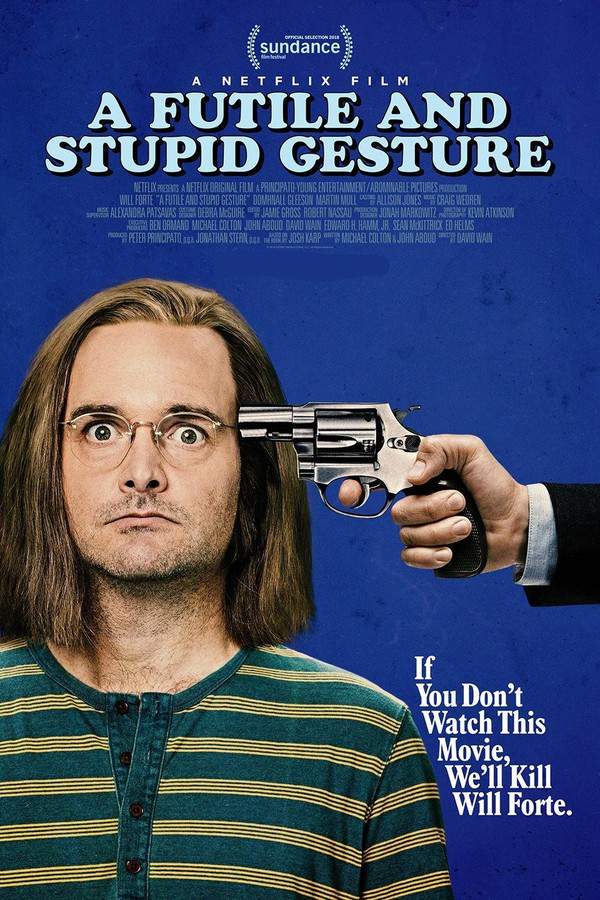
A Futile and Stupid Gesture (2018) movie poster

Timeline

A Futile and Stupid Gesture (2018) Timeline Explained – Every Event in Order

Release, runtime and language
2018 · 101 min · English
Echo score 72
JustWatch #30,380 4
Starring
Domhnall Gleeson, Will Forte, Finn Wittrock, David Wain, Thomas Lennon, Camille Guaty
Budget
$30M

During the early 1970s, writer Doug Kenney plays a pivotal role in the creation of the satirical magazine National Lampoon. The story follows his journey as he helps build the publication, witnessing its rise to prominence and its significant influence on American humor. Kenney's comedic talent and unconventional approach contribute to the magazine's success and lasting legacy.

On this page (6)
  1. 1 Where to watch
  2. 2 Events in order (15)
  3. 3 Timeline questions answered
  4. 4 Movie threads
  5. 5 Movies like A Futile and Stupid Gesture
  6. 6 Every angle

Where to watch

Where to Watch A Futile and Stupid Gesture (2018)

Where can you watch A Futile and Stupid Gesture? Stream, rent or buy it in the US, including on Netflix and Netflix Standard: current JustWatch availability with up-to-date prices.

Streaming availability powered by JustWatch

15 events in order · contains spoilers

A Futile and Stupid Gesture Timeline: Events in Chronological Order

Every key event of A Futile and Stupid Gesture (2018) in order, scene by scene, with when and where it takes place. Use it to untangle flashbacks, time jumps and parallel storylines, to refresh your memory before the sequel or to find the exact scene you are thinking of.

  1. Celebration of Success

    In 1964, Douglas Kenney and Henry Beard celebrate the success of their book 'Bored of the Rings' alongside colleagues from the Harvard Lampoon. This event symbolizes the beginning of their comedic journey and the formation of a unique friendship centered around humor and creativity.

    When
    1964
    Where
    Harvard University
  2. Creating National Lampoon

    Upon graduating from Harvard, Kenney convinces Beard to forgo law school to launch 'National Lampoon'. This decision ignites a new chapter in their lives, as they aim to produce a publication that radiates irreverent comedic commentary.

    When
    1964
  3. The Rise of National Lampoon

    With financial backing from Matty Simmons, National Lampoon rapidly gains momentum, thanks to the duo's dedication and creative output. Although they initially face challenges, their commitment to humor eventually solidifies the magazine's presence in the comedy landscape.

    When
    1964-1970
  4. Legal Challenges

    As National Lampoon grows, it attracts legal notice from major corporations like Disney and Volkswagen. This fight against significant players propels the magazine into the spotlight, reinforcing its role in changing comedic narratives with fearless satire.

    When
    1970
  5. Kenney's Abrupt Departure

    Overwhelmed by burnout, Kenney abruptly steps away from the magazine for nine months, leaving Beard to manage the publication. Despite the turmoil, Beard’s leadership helps guide National Lampoon through this challenging period.

    When
    1971
  6. Lucrative Buyout

    Eventually, Beard orchestrates a lucrative buyout of National Lampoon from Simmons in collaboration with Kenney. This deal provides the financial stability they need, however, it also marks the beginning of increased stress and dissatisfaction within the team.

    When
    1972
  7. Expansion into Radio

    National Lampoon expands its influence into radio with a new hour-long show showcasing talents such as Chevy Chase, Bill Murray, and Gilda Radner. This venture contributes to the magazine's cultural significance, cementing its place in the comedic landscape.

    When
    1973
  8. Kenney Writes Animal House

    In 1978, Kenney writes the groundbreaking film 'Animal House', which catapults him into fame. This success is a high point in his career, representing a significant achievement and influential shift towards filmmaking.

    When
    1978
  9. Struggles with Addiction

    Despite the successful release of 'Animal House', Kenney's struggles with cocaine addiction begin to spiral out of control. His increasing battle with addiction ultimately overshadows his professional life and creates distance between him and his colleagues.

    When
    1978-1980
  10. Humiliating Press Conference

    Amid rising conflicts with studio executives, Kenney holds a press conference where his addiction struggles become evident. This moment marks a low point in his career as he faces the reality of his situation in front of the media and fans.

    When
    1980
  11. Selling National Lampoon

    In a significant move, Kenney, Beard, and Chris Hoffman decide to sell National Lampoon to Simmons’ Twenty First Century Communications. This decision represents a pivotal change not only for the magazine but also in Kenney's tumultuous life.

    When
    1980
  12. Trip to Hawai'i

    In a gesture of support, Chevy Chase takes Kenney on a restorative trip to the beaches of Hawai'i in hopes of guiding him towards recovery. Unfortunately, the trip does not lead to the hoped-for healing and Kenney's struggles continue.

    When
    1980
    Where
    Hawai'i
  13. Kenney's Tragic Death

    The tragic climax occurs in 1980 when Kenney's body is found at the bottom of a Hawai'ian cliff. His belongings eerily arranged at the top serve as a haunting reminder of the same life that was once vibrant with creativity.

    When
    1980
    Where
    Hawai'i
  14. Kenney's Funeral

    In a surreal turn, Kenney observes his own funeral and expresses discontent with the mourners' display of sorrow. He reflects on his life and acknowledges that despite his untimely death, his legacy continues through the enduring humor of National Lampoon.

  15. Food Fight at the Wake

    At the wake, Beard lightens the somber atmosphere by initiating a food fight, reminiscent of their carefree days at Harvard Lampoon. This moment not only serves as a tribute to their friendship but also symbolizes the enduring nature of humor in the face of loss.

Last updated: November 19, 2024 at 20:13

Was this helpful?

Timeline questions answered

A Futile and Stupid Gesture Timeline Explained: Your Questions Answered

When does it happen, and why in that order? The questions people ask about the chronology of A Futile and Stupid Gesture (2018): time jumps, flashbacks, cause and effect between scenes and the correct order of events, each answered with spoilers.

Q1

Why did Doug Kenney leave National Lampoon in 1971

Doug Kenney left National Lampoon in 1971 due to severe burnout from the relentless pace of producing the magazine while constantly attending parties and dealing with the pressures of rapid success. He departed for nine months without explanation, leaving a cryptic message for Henry Beard. Beard managed to keep the magazine running during Kenney's absence, which ultimately led to the lucrative buyout from Matty Simmons when Kenney returned.

  • Doug Kenney
  • burnout
  • National Lampoon
  • departure
  • Henry Beard
Q2

How did National Lampoon become so influential in American comedy

National Lampoon became influential through its fearless approach to satire and parody, tackling topics that other publications avoided. The magazine combined Kenney's comedic genius with Beard's business acumen and Matty Simmons' financial backing. Its success was cemented when major companies like Disney and Volkswagen threatened legal action, which paradoxically brought the magazine into the spotlight and demonstrated its power to challenge established institutions. This led to expansion into radio and eventually film.

Foreshadowing: The early success of their Harvard Lampoon book "Bored of the Rings" hinted at their ability to parody established works.

  • National Lampoon
  • satire
  • influence
  • American comedy
  • history
Q3

Why did Doug Kenney's cocaine addiction spiral out of control

Doug Kenney's cocaine addiction escalated due to the combination of immense professional pressure from his success with Animal House and Caddyshack, creative burnout, and conflicts with studio executives. The film depicts how his initial use as a social activity during the high-energy National Lampoon days evolved into a devastating dependency that ultimately contributed to his tragic death in 1980.

  • Doug Kenney
  • cocaine addiction
  • Animal House
  • Caddyshack
  • downfall
Q4

What happened at Doug Kenney's humiliating press conference

In 1980, Doug Kenney held a press conference where his cocaine addiction became publicly visible and undeniable. The humiliation of this moment marked a major low point in his career, as his struggles were exposed in front of the media and fans. This public unraveling occurred amid escalating conflicts with studio executives over his film projects.

  • Doug Kenney
  • press conference
  • humiliation
  • addiction
  • 1980
Q5

Why did Henry Beard decide to sell his stake in National Lampoon

Henry Beard decided to sell his stake in National Lampoon due to mounting stress and dissatisfaction with the direction of the publication. After orchestrating the buyout with Kenney, the increased financial pressures and creative differences took their toll. Beard chose to cash out and leave the publication while Kenney continued to struggle with his addiction and creative output.

  • Henry Beard
  • National Lampoon
  • sell stake
  • business
  • exit
Q6

How did National Lampoon lead to Saturday Night Live

National Lampoon's radio show in 1973 served as a launching pad for comedians who would later become SNL staples, including Chevy Chase, Bill Murray, and Gilda Radner. Lorne Michaels, who later created Saturday Night Live, acquired National Lampoon and absorbed its talent pool and comedic sensibility into what would become one of the most influential comedy franchises in television history.

  • National Lampoon
  • Saturday Night Live
  • Lorne Michaels
  • radio show
  • comedians
Q7

What caused Doug Kenney's death in 1980

Doug Kenney died in 1980 when his body was found at the bottom of a Hawaiian cliff. His belongings were arranged eerily atop the edge of the cliff. The circumstances surrounding his death remain ambiguous, whether it was intentional or accidental, but it occurred during a period when his struggle with cocaine addiction had completely overtaken his life following a failed recovery attempt with Chevy Chase.

  • Doug Kenney death
  • Hawaii
  • cliff
  • 1980
  • tragedy
Q8

Why did Chevy Chase take Doug Kenney to Hawaii

Chevy Chase took Doug Kenney to Hawaii in a desperate attempt to help him recover from his cocaine addiction. The trip was meant to be restorative, removing Kenney from the environment of Hollywood parties and pressures that fueled his addiction. Unfortunately, Kenney relapsed during the trip, and his struggles continued until his death.

  • Chevy Chase
  • Hawaii
  • Doug Kenney
  • recovery
  • addiction treatment
Q9

Why did Doug Kenney write Animal House

Doug Kenney wrote Animal House in 1978 as his transition from magazine comedy to filmmaking. The movie became a groundbreaking comedy that catapulted him to mainstream fame and established him as a major force in Hollywood comedy. It represented both the peak of his creative success and the beginning of the pressures that would contribute to his later struggles with addiction.

  • Doug Kenney
  • Animal House
  • 1978
  • film career
  • Hollywood
Q10

What was the meaning of the surreal funeral scene

The surreal funeral scene shows Doug Kenney observing his own funeral from beyond, expressing displeasure with how the mourners are grieving. He reflects that despite his life ending too soon, his legacy continues through the humor and creativity of National Lampoon. Henry Beard then lightens the mood by starting a food fight, symbolizing the enduring power of their shared humor and friendship beyond death.

  • funeral
  • surreal
  • ending
  • legacy
  • National Lampoon
  • food fight
Q11

How did National Lampoon's radio show launch famous comedians

National Lampoon's hour-long radio show in 1973 showcased emerging comedic talents who would become legends, including Chevy Chase, Bill Murray, and Gilda Radner. This platform served as a proving ground for their comedic styles and directly led to their opportunities on Saturday Night Live, creating a pipeline of talent that shaped American comedy for decades.

  • National Lampoon radio
  • Chevy Chase
  • Bill Murray
  • Gilda Radner
  • careers

Movie threads

More Movies Like A Futile and Stupid Gesture, by Mood & Story

Curated lists built around what makes A Futile and Stupid Gesture tick: the same mood, the same kind of story or the same emotional payoff. Each list explains why these movies belong together.

Movies about the tragic cost of creative genius like A Futile and Stupid Gesture

Stories of brilliant creators whose success is shadowed by personal collapse. Discover more movies like A Futile and Stupid Gesture that explore the lives of brilliant creators. These films blend high creative energy with the heavy emotional weight of personal downfall, addiction, and the bittersweet legacy left behind.

  • tragic
  • creative
  • somber
  • energetic
  • nostalgic
  • irreverent
  • Tone: bittersweet, tragic
  • Pacing: steady, chronological
Why these movies?

The story pattern: These narratives typically follow a 'rise and fall' structure, charting the protagonist's ascent to the peak of their creative field. The conflict arises not just from external challenges, but from the internal demons—often addiction, ego, or mental health—that are exacerbated by the pressures of success, leading to a poignant or tragic conclusion.

Why they belong together: Movies are grouped here for their shared focus on the duality of creation and destruction within a single life. They balance an energetic, often irreverent tone with a deeply somber and tragic undercurrent, creating a uniquely bittersweet and heavy viewing experience.

Bittersweet chronicles of cultural revolutions like A Futile and Stupid Gesture

Energetic stories about rebellious movements that leave a complicated legacy. If you liked the story of National Lampoon in A Futile and Stupid Gesture, you'll enjoy these movies about similar cultural shifts. They capture the energetic, satirical spirit of an era while exploring the legacy and personal toll on those who shaped it.

  • satirical
  • nostalgic
  • energetic
  • irreverent
  • somber
  • creative
  • Tone: bittersweet, nostalgic, irreverent
  • Pacing: steady, spanning years
Why these movies?

The story pattern: The narrative pattern involves a group of unconventional talents coming together to challenge the status quo. The plot follows their successes and internal dynamics, celebrating their cultural impact. However, the story is often tinged with melancholy, reflecting on the passage of time, the dissolution of the group, or the personal price paid by its key figures.

Why they belong together: These films are united by a specific tonal mix: the high-energy, satirical joy of creation is consistently balanced with a reflective, often somber look back. The pacing is steady, covering a significant time period to show both the explosive rise and the lasting, complicated legacy.

If you liked this

Movies Like A Futile and Stupid Gesture

Similar movies to A Futile and Stupid Gesture: the same genre, themes or kind of story. Each one comes with its own plot summary, timeline and ending explained.

Browse all movie summaries

Every angle

A Futile and Stupid Gesture (2018) Explained: Plot, Timeline & Characters

Everything about A Futile and Stupid Gesture in one place: what happens in the plot summary, the timeline in chronological order, the characters and meaning and a spoiler-free summary. What's After the Movie adds the cast, box office and post-credit scenes.

Coming soon on iOS and Android

The Plot Explained Movie Summary App

Plot summaries, endings explained and timelines on your phone. Catch up on any movie in minutes, save your favorites and never miss a twist again.

Be the first to know when we launch. Your email stays private, always.

Learn more about the app