In a distant future, Earth has become a silent, glittering wasteland of discarded objects, its sky choked with the remnants of a consumptive past. The planet’s surface is a sprawling maze of rusted metal and towering piles of refuse, a place where nature has all but vanished. The atmosphere hums with a melancholy stillness, broken only by the soft whir of lonely machines that continue a forgotten task. This desolate setting is juxtaposed with a sleek, luminous starliner that drifts far above, a floating oasis for the remnants of humanity who have left their home world behind.
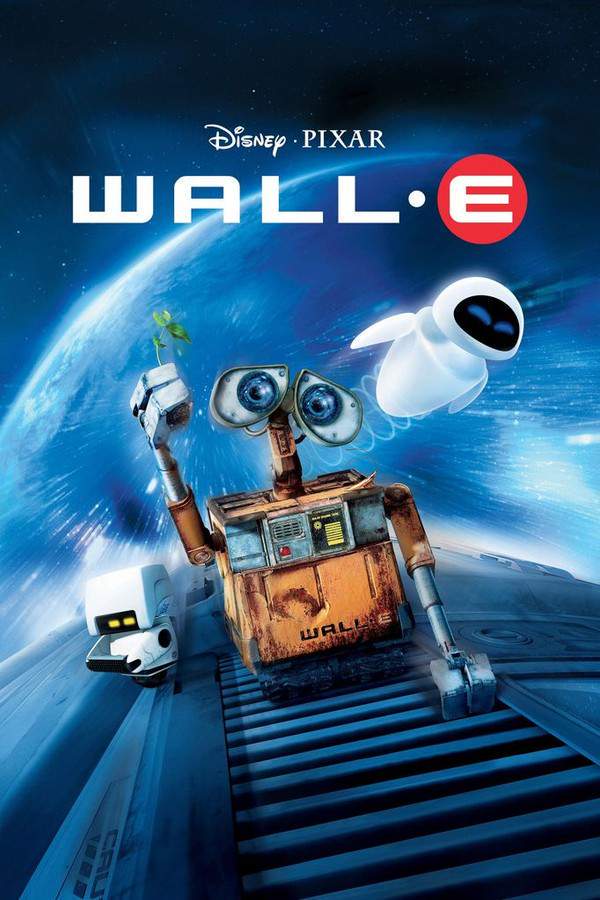
Amid the endless junk, a solitary robot WALL‑E goes about his daily ritual of compacting trash into neat blocks, his tiny hands shaping order from chaos. With a curious mind and a longing for connection, he adorns his cramped garage with relics of a vanished civilization—old videotapes, trinkets, a lone cockroach for company. His routine is simple yet poetic, highlighted by nightly viewings of a classic musical that fills his silence with hope and a sense of wonder. Despite the isolation, WALL‑E exudes a childlike optimism, his eyes reflecting the soft glow of a sun that no longer reaches the ground.
The quiet of his world is interrupted when a gleaming, advanced probe arrives from the stars. This new arrival, EVE — an Extraterrestrial Vegetation Evaluator designed to scout for signs of life—glides onto the ruined landscape with a purposeful grace that contrasts sharply with the rusted surroundings. Her sleek design and quiet efficiency hint at a mission far beyond the ruined Earth, and her presence instantly sparks curiosity and affection in the steadfast robot. Their encounter sets the stage for an unlikely partnership that bridges the gap between a lone caretaker of waste and a high‑tech envoy on a vital quest.
Together, they embody the film’s gentle blend of humor, heart, and quiet yearning, inviting viewers to wonder whether a single spark of life—and the bond it creates—might one day coax the planet back to vitality. The tone remains warm and contemplative, with a visual palette that shifts from the muted browns of debris to the radiant blues of distant space, promising a story that is as much about love and perseverance as it is about the future of Earth itself.