Plot Explained Spoilers guaranteed!
Plot Explained

Browse by genre

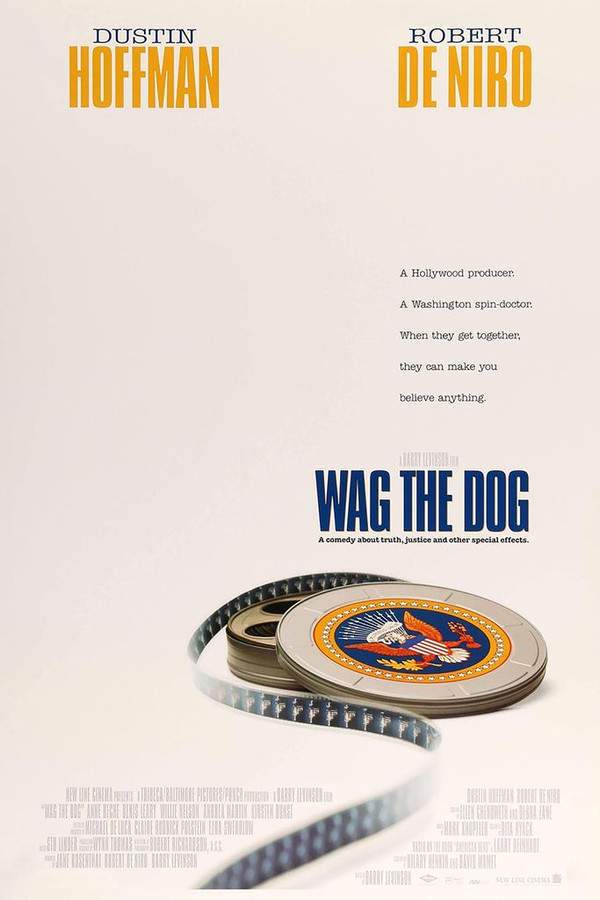
Wag the Dog (1997) movie poster

Plot Summary

Wag the Dog (1997) Plot Summary Explained

Release, runtime and language
1997 · 97 min · English
Directed by
Barry Levinson
Starring
Robert De Niro, Dustin Hoffman, Anne Heche

Facing a looming reelection campaign and a damaging sex scandal, a desperate president enlists a team of crisis managers to fabricate a national crisis. They concoct a phony war in Albania, orchestrated by a brilliant but unscrupulous spin doctor and a Hollywood producer. As the media becomes captivated by the manufactured conflict, the team races against time to maintain the illusion, leading to a darkly comedic and satirical look at political manipulation and the power of the media.

On this page (7)
  1. 1 Where to watch
  2. 2 What happens: full plot
  3. 3 Plot questions answered
  4. 4 The book behind the movie
  5. 5 Movie threads
  6. 6 Movies like Wag the Dog
  7. 7 Every angle

Where to watch

Where to Watch Wag the Dog (1997)

Where can you watch Wag the Dog? Stream, rent or buy it in the US, including on Amazon Video, Apple TV Store and Fandango At Home: current JustWatch availability with up-to-date prices.

Streaming availability powered by JustWatch

Full plot summary · contains spoilers

What Happens in Wag the Dog: Full Plot Summary

The whole story of Wag the Dog (1997) explained, from the opening scene to the final frame: every key event, every twist and what it all adds up to. Read it as a quick recap before the sequel, to check a scene you missed, or to finally understand what really happened.

The President, Michael Belson, finds himself in a precarious situation when he is caught making advances on an underage girl inside the Oval Office, just days before the election. To divert the public's gaze from this scandal, Conrad Brean (Robert De Niro), an elite spin doctor, is summoned by presidential aide Winifred Ames (Anne Heche). Brean concocts an imaginative solution: he will fabricate a war in Albania, directing the media's attention away from the unfolding scandal.

To bring this fictional narrative to life, Brean reaches out to Hollywood producer Stanley Motss (Dustin Hoffman), tasking him with creating phony war footage and a catchy theme song, accompanied by a touching tale of an adorable orphan. Their ruse works initially, and the President's popularity rebounds as public interest shifts.

However, the CIA soon becomes aware of the charade and dispatches Agent Young (William H. Macy) to confront Brean. Brean manages to persuade Young that unmasking the deception would be detrimental to both parties. But as the CIA colludes with the President's political opponent, they announce that the war is real but nearing an end, causing the media to refocus on the President's scandal.

In a desperate bid to distract the public again, Motss creates a narrative around a hero—one whom they suggest has been left behind enemy lines. Driven by the notion that this hero has been "discarded like an old shoe," Brean and Motss manage to convince the Pentagon to attach a soldier named Schumann (Woody Harrelson) to their story, crafting a compelling POW narrative complete with T-shirts, patriotic songs, and orchestrated displays of support.

An impactful touch to their scheme involves folk singer Johnny Dean (Willie Nelson), who records a song called "Old Shoe." This tune is then aged artificially and sent to the Library of Congress, giving it an appearance of historical significance. Soon, pairs of shoes start appearing on power lines, symbolizing the burgeoning support for their fictional war effort.

As their elaborate hoax continues to expand, the public becomes enmeshed in the false realities constructed in the White House's basement with technology, actors, and staged events. To bolster their narrative, the team even liberates a mental patient with military credentials, simply because his last name is "Shoe," rallying national sentiment with catchy songs tied to his name.

Yet, when the time comes to secure Schumann, the team is horrified to discover that he is actually an insane criminal. Their efforts to return are thwarted by a plane crash, but they survive, thanks to an illegal alien farmer who gains citizenship in exchange for a compelling story. Tragically, Schumann perishes after a violent incident, prompting Motss to stage a lavish military funeral, claiming he died heroically in the line of duty.

Tensions escalate when, after witnessing a political program crediting the President's soaring poll numbers to a mundane campaign slogan, Motss grows frustrated. He believes his contributions are being overlooked and insists on recognition, despite Brean's warnings of the potential dangers involved. In a dramatic turn of events, Motss's refusal to retreat leads Brean to give the order that seals Motss's fate.

As the dust settles, a newsflash reports that Motss has succumbed to a heart attack. The President successfully wins re-election, while a foreign terrorist group takes credit for a recent act of violence, thus closing the curtain on the chaos spawned from a web of lies.

Last updated: November 03, 2024 at 12:14

Was this helpful?

Plot questions answered

Wag the Dog Plot Explained: Your Questions Answered

The questions people ask most about Wag the Dog (1997): what happens in the confusing scenes, why the characters do what they do, the twists, hidden details and what the ending means. Each answer contains spoilers.

Q1

Why does the President need a spin doctor so urgently?

President Michael Belson is caught making advances on an underage girl inside the Oval Office just days before the election. This damaging scandal threatens his entire political future, forcing his aides to desperate measures. The timing is catastrophic, public exposure would destroy his re-election chances entirely.

  • president scandal
  • underage girl
  • oval office
  • election
  • political cover-up
Q2

How does Conrad Brean create the fake war in Albania?

Conrad Brean, a master spin doctor, conceives the idea of fabricating a war in Albania to divert media attention from the President's scandal. He partners with Hollywood producer Stanley Motss to create convincing war footage, a catchy theme song, and a heartwarming story about an orphan. The team stages events, uses actors, and employs technology in the White House basement to manufacture a complete fictional conflict.

  • conrad brean
  • albania war
  • fake war
  • stanley motss
  • hollywood producer
  • spin doctor
Q3

What is the significance of shoes appearing on power lines?

The shoes on power lines symbolize the public's emotional investment in the fabricated war. Folk singer Johnny Dean records a song called 'Old Shoe' about the fictional abandoned soldier. The song is artificially aged and sent to the Library of Congress to appear historically significant. This creates a viral phenomenon where people literally hang shoes on power lines, transforming the manufactured narrative into a grassroots movement.

  • old shoe song
  • johnny dean
  • power lines
  • symbolic shoes
  • public support
  • manufactured patriotism
Q4

Why do they involve a mental patient just because his last name is Shoe?

Brean and Motss deliberately exploit the 'Old Shoe' narrative by releasing a mental patient who has military credentials. His last name being 'Shoe' allows them to tie him directly to their patriotic campaign. They rally national sentiment by presenting him as a symbol of the war effort, demonstrating how the team manipulates any available element, regardless of how arbitrary, to build their false narrative.

  • mental patient
  • shoe name
  • military credentials
  • propaganda manipulation
Q5

What happens when the team tries to retrieve their fictional hero Schumann?

The team discovers that Schumann, the soldier they claimed was stranded behind enemy lines, is actually an insane criminal. When they attempt to extract him, their plane crashes. They survive thanks to an illegal alien farmer who hopes to gain citizenship by telling his story. Schumann later dies during a violent incident, forcing Motss to stage an elaborate military funeral to maintain the fiction of his heroic death.

  • schumann
  • fake hero
  • plane crash
  • soldier
  • military funeral
  • criminal
Q6

Why does the CIA agree to help cover up the fake war?

The CIA initially sends Agent Young to investigate the fabricated war. Brean convinces Young that exposing the deception would harm both their interests. Later, the CIA aligns with the President's political opponent and announces the war is real but nearing its end, using the fake conflict as political leverage. This creates a perverse situation where the CIA helps perpetuate the lie rather than expose it.

  • cia
  • agent young
  • cover-up
  • government deception
  • political opponent
Q7

Why does Conrad Brean order Stanley Motss's death?

Motss becomes furious when he sees the President gets credit for soaring poll numbers based on a mundane campaign slogan, despite Motss's massive creative contribution to saving the presidency. He demands recognition and threatens to expose everything. Brean warns him this would destroy the President, but Motss refuses to back down. Brean then gives the order that results in Motss dying of a heart attack, eliminating the only person who could expose the entire conspiracy.

Foreshadowing: Motss's frustration builds after seeing the President take credit for work he did, and Brean repeatedly warns him about the dangers of seeking recognition.

  • stanley motss death
  • conrad brean
  • heart attack
  • eliminated
  • cover-up
  • loyalty
Q8

How does the President ultimately win the election?

The President wins re-election despite the scandal and manufactured war. The entire operation, created to distract from his misconduct, succeeds beyond expectations. The victory is hollow, built entirely on lies and manipulation. After the election, a foreign terrorist group takes credit for a violent act, suggesting the chaos and consequences of the deception will continue echoing beyond the film.

  • election victory
  • president wins
  • re-election
  • terrorist group
  • aftermath

Movie threads

More Movies Like Wag the Dog, by Mood & Story

Curated lists built around what makes Wag the Dog tick: the same mood, the same kind of story or the same emotional payoff. Each list explains why these movies belong together.

Frenetic Satires of Power and Deception like Wag the Dog

Fast-paced stories where institutions spin lies to control the narrative. If you liked the fast-paced, cynical humor of Wag the Dog, explore more movies like it. This thread features similar satirical stories about media manipulation, political spin, and the chaotic effort to control public opinion through elaborate fabrications.

  • satirical
  • cynical
  • frenetic
  • absurd
  • darkly comedic
  • paranoid
  • Tone: dark, satirical, cynical
  • Pacing: fast, frantic
Why these movies?

The story pattern: The narrative typically follows a small group of experts or insiders racing against time to create and maintain a complex illusion. The plot is driven by a series of escalating lies, requiring quick thinking and constant improvisation to stay ahead of the truth, often leading to morally ambiguous or cynical conclusions.

Why they belong together: These films are grouped by their shared cynical tone, fast pacing, and focus on the mechanics of deception. They create a specific vibe of intellectual unease and dark humor, appealing to viewers who enjoy stories that dissect the power dynamics of media and politics.

Cynical Conspiracies and Media Machinations like Wag the Dog

Unsettling tales where the news is the real conspiracy. Fans of Wag the Dog's take on media manipulation will find more similar movies here. Discover other cynical thrillers and satires that explore how propaganda is crafted, how conspiracies are spun, and the unsettling power of those who control the narrative.

  • paranoid
  • uneasy
  • conspiratorial
  • cynical
  • psychological
  • suspenseful
  • Tone: cynical, uneasy, paranoid
  • Pacing: steady to fast, suspenseful
Why these movies?

The story pattern: These narratives often unfold as a behind-the-scenes look at the creation of a false reality. The central conflict is between the manufactured story and the inconvenient facts threatening to expose it. Character journeys involve moral compromise, with protagonists either becoming complicit in the deception or struggling to reveal it.

Why they belong together: They share a core thematic focus on propaganda, public deception, and the manipulation of information. The mood is consistently uneasy and paranoid, driven by a moderate complexity in plotting that explores the layers of a conspiracy. The endings often leave a bittersweet or bleak feeling.

If you liked this

Movies Like Wag the Dog

Similar movies to Wag the Dog: the same genre, themes or kind of story. Each one comes with its own plot summary, timeline and ending explained.

Browse all movie summaries

Every angle

Wag the Dog (1997) Explained: Plot, Timeline & Characters

Everything about Wag the Dog in one place: what happens in the plot summary, the timeline in chronological order, the characters and meaning and a spoiler-free summary. What's After the Movie adds the cast, box office and post-credit scenes.

Coming soon on iOS and Android

The Plot Explained Movie Summary App

Plot summaries, endings explained and timelines on your phone. Catch up on any movie in minutes, save your favorites and never miss a twist again.

Be the first to know when we launch. Your email stays private, always.

Learn more about the app