

















Plot Explained Spoilers guaranteed!
Plot Explained

Browse by genre

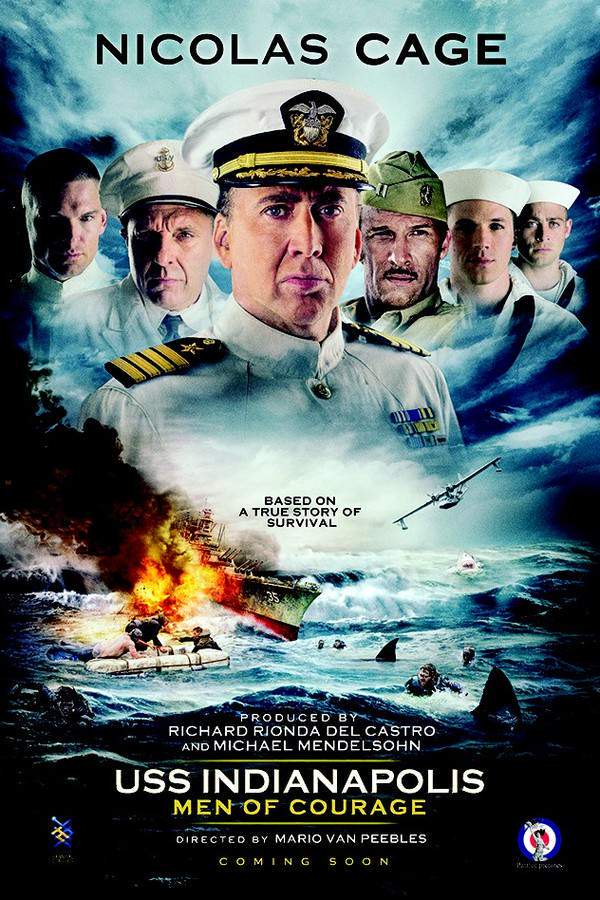
USS Indianapolis: Men of Courage (2016) movie poster

Timeline

USS Indianapolis: Men of Courage (2016) Timeline Explained – Every Event in Order

Release, runtime and language
2016 · 128 min · English
JustWatch #13,076 2

During the final days of World War II, the USS Indianapolis is struck by enemy torpedoes in the Philippine Sea. The crippled vessel and its crew face a harrowing ordeal as they struggle to survive in the vast ocean. Stranded and adrift, the men battle against the elements and the constant danger of shark attacks while desperately awaiting rescue, testing the limits of their courage and resilience.

On this page (6)
  1. 1 Where to watch
  2. 2 Events in order (13)
  3. 3 Timeline questions answered
  4. 4 Movie threads
  5. 5 Movies like USS Indianapolis: Men of Courage
  6. 6 Every angle

Where to watch

Where to Watch USS Indianapolis: Men of Courage (2016)

Where can you watch USS Indianapolis: Men of Courage? Stream, rent or buy it in the US, including on Amazon Prime Video, Lionsgate+ Amazon Channels and Fawesome: current JustWatch availability with up-to-date prices.

Streaming availability powered by JustWatch

13 events in order · contains spoilers

USS Indianapolis: Men of Courage Timeline: Events in Chronological Order

Every key event of USS Indianapolis: Men of Courage (2016) in order, scene by scene, with when and where it takes place. Use it to untangle flashbacks, time jumps and parallel storylines, to refresh your memory before the sequel or to find the exact scene you are thinking of.

  1. Challenges in Okinawa

    In 1945, the United States faced fierce resistance from Japanese forces entrenched in Okinawa. This struggle was critical as Okinawa served as a gateway to the Japanese main islands.

    When
    1945
    Where
    Okinawa
  2. Decision for an atomic bomb

    Due to the high human cost anticipated from a ground invasion of Japan, the U.S. decided to pursue an atomic bomb as a means of ending the war. This high-stakes mission required transporting bomb components to the Philippines.

    Where
    Philippines
  3. The USS Indianapolis

    The USS Indianapolis was chosen to undertake the perilous mission of delivering the bomb's components. Commanded by Captain Charles McVay, the ship set sail with no protective escorts, making it highly vulnerable to enemy attacks.

  4. Suicidal Mission Realization

    Captain McVay understood the dire implications of his mission and recognized it as potentially suicidal. The absence of protective destroyers left the cruiser susceptible to submarine assaults while it maneuvered its way through hostile waters.

  5. Departure from Tinian Island

    On July 26, 1945, the USS Indianapolis made a crucial stop at Tinian Island to deliver the atomic bomb components. After completing the mission, the ship was ordered to leave without an escort to maintain operational secrecy.

    When
    July 26, 1945
    Where
    Tinian Island
  6. Sinking of the USS Indianapolis

    On July 30, 1945, disaster struck when a Japanese submarine I-58 launched a Kaiten torpedo at the USS Indianapolis. The torpedo hit the ship, leading to its rapid sinking and causing a loss of 300 men in the Philippine Sea.

    When
    July 30, 1945
    Where
    Philippine Sea
  7. Survival Struggles

    After the sinking, 897 men were stranded in the ocean for five days without food or water. Battling starvation and dehydration, many succumbed, while others were hunted by sharks.

  8. Rescue Operation

    Hope was restored on the fifth day when a pilot spotted the survivors from the USS Indianapolis. This led to a rescue operation that saved 317 crew members, but the ordeal highlighted the tragedy of the situation.

  9. Scrutiny of the US Navy

    Following the sinking, the US Navy faced severe criticism for failing to provide an escort for the Indianapolis. Inadequate responses to distress calls raised questions about Navy's operational protocols.

  10. Captain McVay's Courts-Martial

    Captain McVay was courts-martialed for allegedly endangering his ship by not taking evasive actions to dodge enemy fire. Despite the lack of evidence, he was unfairly blamed for the tragedy that befell his crew.

  11. Media Vilification

    In the following years, McVay became a victim of media vilification and was harassed by the families of lost sailors. This relentless pressure profoundly affected his mental state and led to a tragic outcome.

  12. Japanese Submarine Commander's Role

    In a twist of fate, the commander of the Japanese submarine that sank the Indianapolis returned to Japan. Years later, he took part in efforts to clear McVay's name, acknowledging the injustice suffered by the captain.

    Where
    Japan
  13. Exoneration of Captain McVay

    In 2000, President Bill Clinton formally pardoned Captain McVay, acknowledging the wrongful blame placed on him during the aftermath of the Indianapolis disaster. This act brought a measure of justice to a long-standing controversy.

    When
    2000

Last updated: October 25, 2024 at 12:06

Was this helpful?

Timeline questions answered

USS Indianapolis: Men of Courage Timeline Explained: Your Questions Answered

When does it happen, and why in that order? The questions people ask about the chronology of USS Indianapolis: Men of Courage (2016): time jumps, flashbacks, cause and effect between scenes and the correct order of events, each answered with spoilers.

Q1

Why was the USS Indianapolis chosen for the atomic bomb mission?

The USS Indianapolis was chosen because it was a heavy cruiser capable of carrying the bomb components to the Philippines. However, the aircraft that would eventually drop the bomb lacked the range to reach Japan from the mainland US, making transport to the Philippines necessary. The mission required a single, fast ship that could evade detection by the Japanese fleet.

Foreshadowing: The ship's selection was tied directly to the desperate military strategy of avoiding a costly ground invasion of Japan.

  • USS Indianapolis
  • atomic bomb
  • Tinian
  • World War 2
  • secret mission
Q2

Why did the USS Indianapolis sail without an escort?

Captain McVay was ordered to proceed without protective destroyers to maintain operational secrecy. The Navy wanted to keep the bomb components hidden from Japanese forces. This was highly unusual since heavy cruisers typically traveled with destroyer escorts to defend against submarine attacks.

Foreshadowing: The lack of escort would prove fatal when the submarine attack came.

  • destroyer escort
  • submarine protection
  • secret mission
  • Navy orders
Q3

What was a Kaiten and how did it sink the Indianapolis?

A Kaiten was a manned torpedo launched from Japanese submarines, essentially a human-guided explosive. The Japanese submarine I-58 spotted the USS Indianapolis and launched a Kaiten that struck the heavy cruiser. Unlike conventional torpedoes, the Kaiten was guided by a pilot directly toward its target, making it particularly deadly.

Foreshadowing: Captain McVay knew the ship could not outrun the deadly Kaitens.

  • Kaiten
  • Japanese submarine
  • I-58
  • manned torpedo
  • weapon
Q4

Why were the survivors stranded in the ocean for five days?

The USS Indianapolis sank so quickly that its crew had no time to send a distress signal before the ship went down. The Navy also failed to respond adequately to any distress calls that may have been sent from life rafts. The ship's path was not properly tracked, and no one realized it was missing until survivors were finally spotted by a patrol plane on the fifth day.

Foreshadowing: The Navy's failure to monitor the ship's progress contributed to the delayed rescue.

  • five days
  • shark attacks
  • no rescue
  • distress signal
  • survival
Q5

Why was Captain McVay blamed for the sinking?

Captain McVay was courts-martialed for allegedly endangering his ship by failing to zigzag, a standard evasive maneuver to avoid submarine attacks. The Navy sought a scapegoat for the disaster. Despite testimony from the Japanese submarine commander who confirmed that the Kaiten would have hit regardless of evasive action, McVay was convicted and publicly vilified.

Foreshadowing: The courts-martial was a tragic miscarriage of justice that haunted McVay for years.

  • Captain McVay
  • courts-martial
  • blame
  • scapegoat
  • Navy injustice
Q6

How many crew members survived the USS Indianapolis disaster?

Of the 1,197 men aboard, 300 died when the ship sank. After five days adrift in shark-infested waters, only 317 survivors were rescued. Many died from shark attacks, saltwater poisoning, dehydration, and exposure during the ordeal.

Foreshadowing: The survival rate was devastatingly low despite the rescue operation.

  • survivors
  • death toll
  • 317 rescued
  • shark attacks
  • Philippine Sea
Q7

What happened to the Japanese submarine commander who sank the Indianapolis?

The commander of the Japanese submarine I-58 returned to Japan after the war. Years later, he participated in efforts to clear Captain McVay's name, providing testimony that the captain's alleged failure to zigzag would not have prevented the sinking since the Kaiten was a direct hit.

Foreshadowing: In an ironic twist, the man who sank the ship helped exonerate its captain.

  • Japanese submarine commander
  • I-58
  • exoneration
  • testimony
  • justice
Q8

How was Captain McVay finally exonerated?

In 2000, President Bill Clinton formally cleared Captain McVay of all charges, recognizing the grave injustices surrounding the disaster. This posthumous pardon came decades after McVay had taken his own life due to the relentless harassment and blame from the media and families of the lost sailors.

Foreshadowing: The exoneration came far too late for McVay to receive it in his lifetime.

  • President Bill Clinton
  • pardon
  • exoneration
  • 2000
  • justice
Q9

Why didn't the Navy rescue the crew immediately after the sinking?

The Navy failed to provide an escort for the Indianapolis and did not properly track its journey. When the ship sank, no one realized it was missing because the vessel's arrival at its destination was not confirmed. The distress calls were not adequately responded to, and the ship was not reported overdue until days later.

Foreshadowing: Naval negligence was a critical factor in the delayed rescue.

  • Navy failure
  • distress calls
  • delayed rescue
  • neglect
  • accountability

Movie threads

More Movies Like USS Indianapolis: Men of Courage, by Mood & Story

Curated lists built around what makes USS Indianapolis: Men of Courage tick: the same mood, the same kind of story or the same emotional payoff. Each list explains why these movies belong together.

Harrowing True Survival Movies like USS Indianapolis: Men of Courage

Grueling stories of human endurance against overwhelming natural forces. For viewers who want movies like USS Indianapolis: Men of Courage. These films depict real-life survival epics, capturing the intense, desperate struggle against nature and disaster. If you liked the gripping, tragic ordeal of the Indianapolis crew, you'll find similar stories of human resilience and endurance here.

  • harrowing
  • desperate
  • gripping
  • anxious
  • oppressive
  • somber
  • Tone: dark, desperate, somber
  • Pacing: fast, relentless
Why these movies?

The story pattern: These narratives typically follow a catastrophic event that strands the protagonists in a dangerous setting. The plot is driven by a relentless series of challenges—dehydration, exposure, injury, and predation—as hope dwindles and the group's cohesion is tested. The journey is less about triumph and more about the brutal cost of survival.

Why they belong together: Movies are grouped here for their shared commitment to portraying the grim reality of survival against nature. They share a high-intensity, fast-pacing structure, a dark and somber tone, and a heavy emotional weight derived from the life-or-death stakes and frequent tragic outcomes.


Military Injustice Dramas like USS Indianapolis: Men of Courage

Stories of soldiers scapegoated by the institutions they served. Explore movies similar to USS Indianapolis: Men of Courage that delve into themes of military injustice and tragedy. These films follow soldiers or commanders who become scapegoats, grappling with trauma and fighting for vindication. If you were moved by the Captain's court-martial and the film's somber conclusion, this collection is for you.

  • somber
  • gripping
  • oppressive
  • tragic
  • anxious
  • grief-stricken
  • Tone: dark, somber, tragic
  • Pacing: variable, from fast to steady
Why these movies?

The story pattern: The pattern involves a military catastrophe followed by a public inquiry or court-martial that unfairly blames a key figure. The story charts the protagonist's struggle with grief, guilt, and the fight to clear their name, frequently leading to a tragic or bittersweet resolution that highlights the personal cost of institutional failure.

Why they belong together: These films are connected by their central theme of military injustice and the psychological fallout on individuals. They share a dark, somber tone, heavy emotional weight dealing with trauma and grief, and a narrative structure that balances intense action with a slower, more melancholic reckoning.

If you liked this

Movies Like USS Indianapolis: Men of Courage

Similar movies to USS Indianapolis: Men of Courage: the same genre, themes or kind of story. Each one comes with its own plot summary, timeline and ending explained.

Browse all movie summaries

Every angle

USS Indianapolis: Men of Courage (2016) Explained: Plot, Timeline & Characters

Everything about USS Indianapolis: Men of Courage in one place: what happens in the plot summary, the timeline in chronological order, the characters and meaning and a spoiler-free summary. What's After the Movie adds the cast, box office and post-credit scenes.

Coming soon on iOS and Android

The Plot Explained Movie Summary App

Plot summaries, endings explained and timelines on your phone. Catch up on any movie in minutes, save your favorites and never miss a twist again.

Be the first to know when we launch. Your email stays private, always.

Learn more about the app