









Plot Explained Spoilers guaranteed!
Plot Explained

Browse by genre

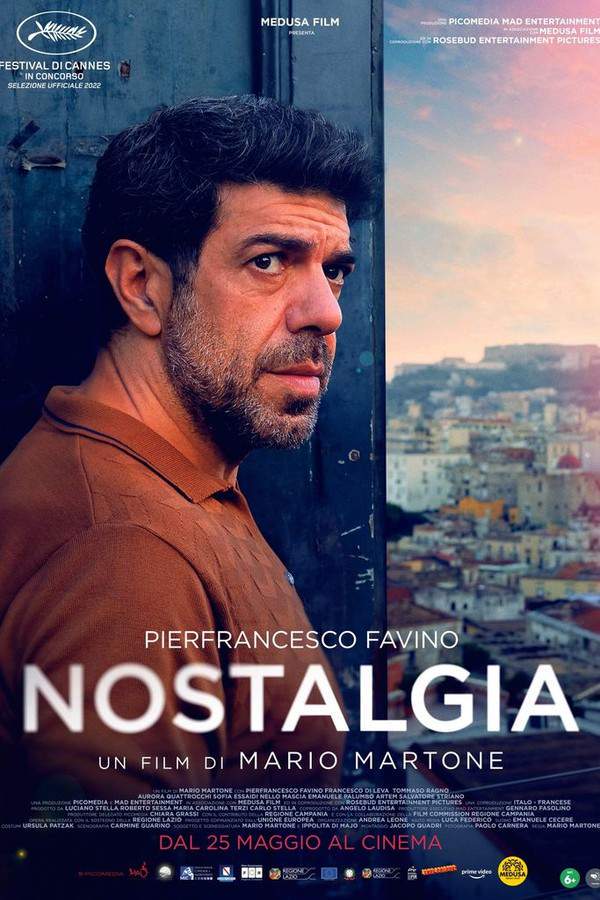
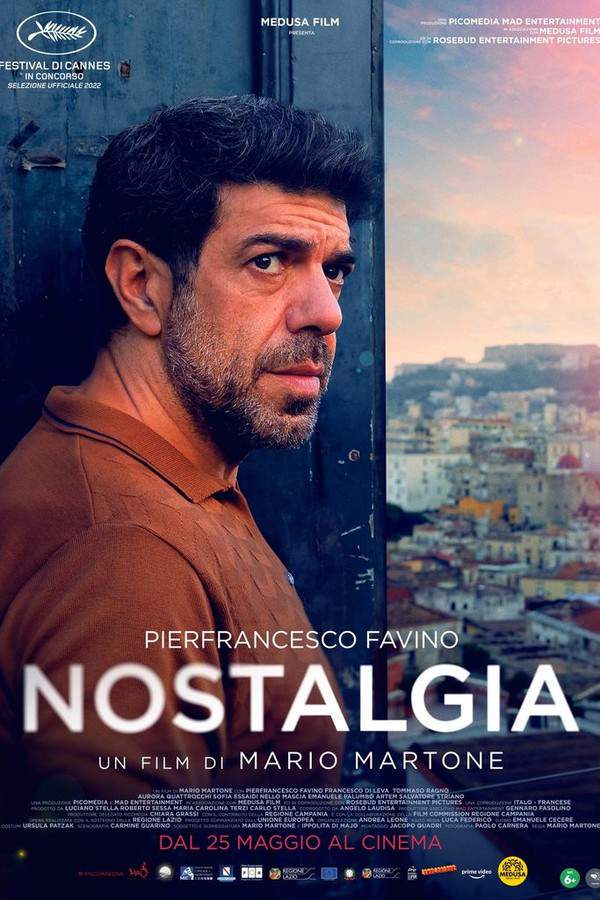
Nostalgia (2023) movie poster

Plot Summary

Nostalgia (2023) Plot Summary & Ending Explained

Release, runtime and language
2023 · 117 min · Italian
Echo score 70
Directed by
Mario Martone
Starring
Tommaso Ragno, Ar Tem, Aurora Quattrocchi, Daniela Ioia, Emanuele Palumbo, Francesco Di Leva

After four decades living abroad, Felice returns to his childhood home in Naples, Italy. The familiar sights and sounds of the city unexpectedly awaken deeply buried memories and emotions. He must now face the unresolved issues and painful experiences he left behind, as the past threatens to overwhelm his present.

On this page (7)
  1. 1 Where to watch
  2. 2 What happens: full plot
  3. 3 Plot questions answered
  4. 4 How it ends
  5. 5 Movie threads
  6. 6 Movies like Nostalgia
  7. 7 Every angle

Where to watch

Where to Watch Nostalgia (2023)

Where can you watch Nostalgia? Stream, rent or buy it in the US, including on Fawesome, Kanopy and Fandango at Home Free: current JustWatch availability with up-to-date prices.

Streaming availability powered by JustWatch

Full plot summary · contains spoilers

What Happens in Nostalgia: Full Plot Summary

The whole story of Nostalgia (2023) explained, from the opening scene to the final frame: every key event, every twist and what it all adds up to. Read it as a quick recap before the sequel, to check a scene you missed, or to finally understand what really happened.

Felice Lasco, Pierfrancesco Favino, returns to his Naples hometown after forty years spent in Egypt, where he converted to Islam and married an Egyptian woman. The story unfolds largely in the *impoverished Rione Sanità, as he first visits his ill mother and then encounters the local priest, Don Luigi* Francesco Di Leva. In a raw, almost confession-like moment, Felice reveals a brutal memory: during a petty theft he and his childhood friend Oreste Spasiano Tommaso Ragno carried out, Oreste killed the owner of a nearby carpentry shop. The priest’s reaction is stern and final, casting him out of the church and explaining that Oreste has since risen to become a dangerous boss within the Camorra.

A friend of Felice's mother warns him of real danger and urges him to flee Naples. Don Luigi then introduces Felice to a Camorra family, and during a tense dinner he drinks wine for the very first time, letting his guard down and recounting the boyhood days he shared with Oreste, leaving everyone in the room speechless. The moment feels like a turning point, a window into a past that still governs the present.

Felice then travels to meet the aged Oreste. Oreste, furious about his friend’s abandonment four decades earlier, follows him into an alley, shoots him, and steals his wallet—and discovers inside an old photo of the two of them on a motorbike. The image captures a memory that binds the two men even as their paths have diverged, and it hints at the deeper loyalties and betrayals that drive this setting and its characters.

Last updated: February 10, 2026 at 08:32

Was this helpful?

Plot questions answered

Nostalgia Plot Explained: Your Questions Answered

The questions people ask most about Nostalgia (2023): what happens in the confusing scenes, why the characters do what they do, the twists, hidden details and what the ending means. Each answer contains spoilers.

Q1

Why does Don Luigi throw Felice out of the church after his confession?

Don Luigi casts Felice out because the confession reveals a brutal murder tied to a petty theft Felice committed with Oreste as a teenager. During the theft, Oreste killed the owner of a local carpentry shop, and Felice's confession implicates him in that crime. The priest's reaction is stern and final, viewing the past violence as unforgivable despite Felice's decades-long absence.

Foreshadowing: Earlier scenes establish Don Luigi as a moral anchor in the Rione Sanità community, making his harsh judgment consistent with his role as spiritual guardian.

  • don luigi
  • church
  • confession
  • felice
  • oreste
  • murder
  • theft
Q2

How did Oreste become a Camorra boss after the theft?

After the robbery that resulted in the carpenter's murder, Oreste remained in Naples while Felice fled to Egypt. Over the four decades, Oreste rose through the ranks of the Camorra, transforming from a teenage thief into a dangerous criminal boss. Don Luigi reveals this transformation to Felice, warning him of the real danger waiting in his hometown.

Foreshadowing: The confession scene plants the seed of Oreste's violent potential, which explains his later rise in the criminal underworld.

  • oreste
  • camorra
  • boss
  • crime
  • naples
  • transformation
Q3

Why does Felice agree to meet the Camorra family despite the danger?

Felice agrees to meet the Camorra family because Don Luigi arranges the introduction, and Felice seems drawn toward confronting his past rather than fleeing from it. The meeting represents his willingness to reengage with the world he abandoned, even though he knows the risks. At the dinner, his guard drops significantly.

Foreshadowing: The warning from his mother's friend to flee establishes the danger, making Felice's choice to stay and meet the Camorra even more significant.

  • felice
  • camorra family
  • dinner
  • don luigi
  • risk
  • confrontation
Q4

What causes Oreste to kill Felice after their reunion?

Oreste kills Felice because he harbors intense anger over his friend's abandonment forty years earlier. When Felice returns to Naples, Oreste views this as an opportunity for confrontation rather than reconciliation. He follows Felice into an alley, shoots him, and steals his wallet, discovering inside an old photograph of the two friends on a motorbike, a painful reminder of their shared childhood.

Foreshadowing: The dinner scene where Felice speaks openly about their boyhood days foreshadows the weight their shared history carries.

  • oreste
  • felice
  • shooting
  • alley
  • murder
  • photo
  • betrayal
Q5

Why does Felice drink wine for the first time at the Camorra dinner?

Felice drinks wine for the first time at the Camorra dinner because he has converted to Islam during his decades in Egypt, where alcohol is forbidden. The moment marks a symbolic breaking of his religious restraint, perhaps indicating his psychological surrender to the pull of his Neapolitan roots. His inhibition leads him to speak openly about his childhood with Oreste, leaving everyone in the room stunned.

Foreshadowing: His conversion to Islam and marriage to an Egyptian woman were established earlier, making this departure from his faith visually and symbolically significant.

  • felice
  • wine
  • alcohol
  • islam
  • conversion
  • camorra
  • dinner
Q6

What was the significance of the photo in Felice's wallet?

The old photograph shows Felice and Oreste as young men riding a motorbike together, capturing their childhood friendship before the theft and murder occurred. When Oreste discovers this photo after killing Felice, it reveals that Felice had kept this memory close for decades. The image serves as a haunting symbol of their bond, now destroyed by Oreste's violence, adding tragic irony to the ending.

Foreshadowing: Earlier references to their boyhood days establish the deep friendship that preceded the crime, making the photo's discovery poignant.

  • photo
  • motorbike
  • memory
  • friendship
  • oreste
  • felice
  • wallet
Q7

Why does Felice return to Naples after 40 years?

Felice returns to Naples primarily to visit his ill mother, whom he hasn't seen in four decades. The trip is also driven by an unspoken need to confront the past he left behind, including the unresolved crime and his estrangement from his hometown. The familiar sights and sounds of Naples unexpectedly awaken deeply buried memories and emotions he had suppressed during his years in Egypt.

Foreshadowing: The opening establishes his long exile in Egypt, suggesting a lifetime of unresolved issues waiting to be faced.

  • felice
  • naples
  • mother
  • return
  • egypt
  • exile
  • 40 years
Q8

Why does the mother friend warn Felice to flee Naples?

The friend warns Felice to flee because Oreste has become a powerful and dangerous Camorra boss in the years since Felice left. The warning signals that Felice's presence in Naples poses immediate physical danger, as Oreste's criminal status means any confrontation could turn lethal. The urgency emphasizes the threat Felice faces by returning.

Foreshadowing: Don Luigi's earlier revelation about Oreste's rise establishes the danger that motivates this warning.

  • friend
  • warning
  • flee
  • naples
  • oreste
  • danger
  • camorra
Q9

What triggers Felice to confess his past crime to Don Luigi?

Felice confesses the crime in a raw, almost confession-like moment with Don Luigi, revealing the brutal memory that haunted him for decades. The act seems driven by a psychological need to unburden himself after returning to the place where the crime occurred. The church setting amplifies the confessional nature, though his revelation goes beyond typical penance to expose a dark secret he carried to Egypt.

Foreshadowing: The weight of his silence during forty years in Egypt builds toward this breaking point upon returning home.

  • confession
  • crime
  • don luigi
  • church
  • felice
  • oreste
  • murder
  • theft
Q10

Why does Felice seek out Oreste despite knowing the danger?

Felice seeks out Oreste to confront the past and perhaps attempt some form of reconnection or closure. Despite the warnings about Oreste's dangerous status, Felice appears driven by a need to face his childhood friend directly. This decision leads to the fatal confrontation in the alley, suggesting Felice may have been seeking redemption or resolution even at personal risk.

Foreshadowing: His willingness to lower his guard at the Camorra dinner foreshadows his approach to confronting Oreste directly.

  • felice
  • oreste
  • visit
  • confrontation
  • past
  • danger
  • naples

Ending explained

What Happens at the End of Nostalgia?

How Nostalgia (2023) ends, in short: the final scene, the last twist and what it means for the characters. The full ending explained, with every spoiler, lives on its own page.

Read the full ending explained

In the climax of "Mother of the Bride," the story circles back to the unexpected reunion of Lana and Will, the past lovers who once shared a deep connection. After decades apart, fate brings them together at Emily's wedding, and the film suggests a rekindling of old feelings. However, the ending leaves their relationship ambiguous, with Lana and Will exchanging meaningful glances that hint at a potential second chance. This reunion acts as a culmination of the film’s exploration of past romances and missed opportunities, but it avoids providing a concrete resolution. Instead, it emphasizes the idea that some relationships never truly fade away, and that second chances are possible even late in life.

Meanwhile, the movie also wraps up with Emily’s wedding, which is portrayed as a glamorous event fueled by social media hype. The subplots, including the strain between mother and daughter caused by Emma’s social media obsession, are resolved in a superficial manner, leaving the characters' development feeling somewhat shallow. The subplot involving Dr. Lucas, Lana’s former love interest, is also left hanging, as he is shown somewhat sympathetically but without a definitive ending—he remains an unresolved figure, emphasizing the film’s tendency to leave story threads open.

Continue reading the ending (1 more paragraphs)

Ultimately, the film’s ending underscores themes of nostalgia and unresolved feelings. It hints that love, even after many years and complicated circumstances, can be reignited or at least remembered vividly. Yet, it doesn’t commit to a clear resolution, aligning with the overall predictability and surface-level storytelling that characterizes the entire movie. The final scenes are more about leaving the audience with a sense of possibility than providing closure, making the ending both bittersweet and tinged with the promise of what might have been.

Nostalgia ending explained in full

Movie threads

More Movies Like Nostalgia, by Mood & Story

Curated lists built around what makes Nostalgia tick: the same mood, the same kind of story or the same emotional payoff. Each list explains why these movies belong together.

Movies about confronting the past like Nostalgia

Characters return to their origins to confront buried secrets and unresolved pain. If you liked the haunting return to Naples in Nostalgia, explore these other films about characters revisiting their hometowns to confront buried trauma, unresolved guilt, and the inescapable pull of their origins.

  • nostalgic
  • unsettling
  • tragic
  • somber
  • tense
  • psychological
  • Tone: melancholic, oppressive, tragic
  • Pacing: slow, deliberate, reflective
Why these movies?

The story pattern: The narrative follows a linear but emotionally complex arc where the protagonist's physical return triggers a psychological unravelling. The familiar setting becomes a pressure cooker for suppressed memories and conflicts, often involving former relationships or community secrets, leading to a dramatic and cathartic, though often bleak, resolution.

Why they belong together: These films are grouped together because they share a core narrative structure and melancholic mood. They focus on the intense, often painful process of revisiting one's past, exploring themes of guilt, memory, and the idea that some places and histories cannot be outrun.
Slow burn atmospheric dramas like Nostalgia

Atmospheric dramas where the setting itself becomes a character of oppressive beauty. For viewers who appreciated the oppressive beauty of Naples in Nostalgia, this section features movies with a similar slow burn pace, heavy emotional weight, and a Mediterranean setting that amplifies the characters' internal struggles and tragic arcs.

  • oppressive
  • melancholic
  • atmospheric
  • somber
  • tragic
  • slow burn
  • Tone: melancholic, somber, bleak
  • Pacing: slow burn, atmospheric, deliberate
Why these movies?

The story pattern: These stories unfold gradually, prioritizing atmosphere and character introspection over fast-paced plot. The narrative often revolves around a central, inescapable conflict—such as familial duty, criminal entanglements, or personal decay—that simmers beneath the surface of picturesque settings, leading to an inevitable and often violent culmination.

Why they belong together: These films are grouped by their shared aesthetic and tonal qualities: a deliberate, slow pacing that allows for deep atmospheric immersion, a high emotional intensity derived from tragic circumstances, and a specific use of the Mediterranean locale to enhance feelings of beauty, decay, and inescapable fate.

If you liked this

Movies Like Nostalgia

Similar movies to Nostalgia: the same genre, themes or kind of story. Each one comes with its own plot summary, timeline and ending explained.

Browse all movie summaries

Every angle

Nostalgia (2023) Explained: Plot, Ending, Timeline & Characters

Everything about Nostalgia in one place: what happens in the plot summary, the timeline in chronological order, the characters and meaning, the ending explained and a spoiler-free summary. What's After the Movie adds the cast, box office and post-credit scenes.

Coming soon on iOS and Android

The Plot Explained Movie Summary App

Plot summaries, endings explained and timelines on your phone. Catch up on any movie in minutes, save your favorites and never miss a twist again.

Be the first to know when we launch. Your email stays private, always.

Learn more about the app