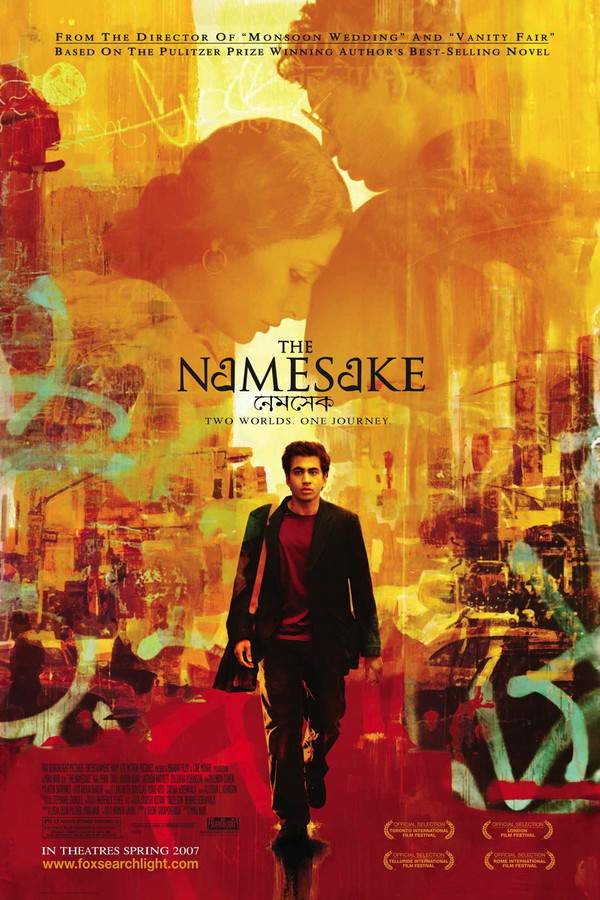
The Namesake
Year: 2007
Runtime: 122 min
Language: English
Director: Mira Nair
Budget: $9.5M
A poignant story of cultural identity, this film follows the Ganguli family as they experience the challenges of adapting to a new life in America while honoring their Indian heritage. Ashoke and Ashima strive to build a future for their children, but their son, Gogol, struggles to reconcile his personal aspirations with the traditions of his family and the meaning behind his unusual name. The film explores themes of belonging, family, and the complexities of growing up between two worlds.
Where to Watch The Namesake?
Find where to stream, rent, or buy The Namesake (2007) in the US with current JustWatch availability, up-to-date pricing, and platform listings for subscription, rental, and digital purchase options.



Streaming availability powered by 
Warning: spoilers below!
Haven’t seen The Namesake yet? This summary contains major spoilers. Bookmark the page, watch the movie, and come back for the full breakdown. If you're ready, scroll on and relive the story!
The Namesake (2007) – Full Plot Summary & Ending Explained
Read the complete plot breakdown of The Namesake (2007), including all key story events, major twists, and the ending explained in detail. Discover what really happened, and what it all means.
The film opens with a train accident whose impact will gradually unfold. Ashima, portrayed by Tabu, is a young Bengali girl skilled in classical singing, who finds herself in an arranged marriage with Ashoke Ganguli, played by Irrfan Khan, a Bengali man settled in New York. After leaving her homeland and family behind, Ashima strives to adapt to the fast-paced lifestyle of New York, grappling with the challenges of cultural differences, harsh weather, and a cramped apartment where she feels isolated from her neighbors. As Ashoke dedicates his time to studying and working long hours, Ashima frequently battles loneliness.
Despite their struggles, the couple gradually grows closer, although expressing emotions proves difficult due to their upbringing, which encourages restraint between men and women. Eventually, Ashima gives birth to a son, whom Ashoke names Gogol, in homage to the Russian author he admires, although in accordance with Bengali tradition, the boy receives the "good name" of Nikil, which is lovingly shortened to Nicky by his American friends. Later, they welcome a daughter named Sonia, who, as a teenager, portrayed by Shahira Nair, embodies a rebellious spirit that clashes with the traditional expectations placed upon her by her family, including her grandparents—Ruma Guha Thakurta, Tanushree Shankar, Sabyasachi Chakraborty, and Tamal Ray Chowdhury—who pressure her to settle down, marry, and start a family. Sonia yearns for independence and chooses to relocate to California to carve out her own path.
As Gogol, acted by Kal Penn, grows up, he navigates the complexities of American adolescence, spurred by a family trip to the Taj Mahal, which ignites his passion for architecture. His relationship with Maxine Ratliff, an all-American girl portrayed by Jacinda Barrett, sends him spiraling away from his own familial ties. When Ashoke travels to Ohio for teaching, he unexpectedly suffers a fatal heart attack, thrusting Gogol into a deep confrontation with his cultural identity and grief. Struggling to allow Maxine to comfort him, the strain ultimately causes their relationship to dissolve.
Recalling his father's harrowing tale of survival during the train accident, Gogol is reminded of the fragility of life. Later, he reconnects with Moushumi Mazundar, played by Zuleikha Robinson, a fellow Bengali who has embraced Western culture and independence. Although their parents once envisioned a marriage between them, Gogol initially perceives Moushumi as meek and conventional. Yet, she transforms into a confident businesswoman and they marry, sharing an intense connection. However, their marriage falters as Moushumi's sociable nature clashes with Gogol's preferences and culminates in an affair with an ex-boyfriend, pushing Gogol towards self-acceptance regarding his cultural roots.
Meanwhile, Ashima contemplates returning to India, feeling disconnected from a country she never fully understood. Though she offers to cancel her upcoming trip, Gogol encourages her to go, relishing his newfound sense of freedom during this pivotal phase in both their lives.
Last updated: November 04, 2024 at 05:11
The Namesake (2007) Plot Questions Answered – Summary FAQ
Explore frequently asked questions about The Namesake (2007) with spoiler-rich answers covering the full plot summary, major story beats, character motivations, hidden details, and ending meaning. This movie summary FAQ helps explain confusing scenes, plot twists, and narrative decisions in clear, searchable detail.
Why is Gogol named Gogol if his real name is Nikil?
Ashoke names his son Gogol after the Russian author Nikolai Gogol, whom he deeply admires. In Bengali tradition, however, a child receives a 'good name' (dharma naam) for official and community use, while a 'pet name' (naak) is used informally. Gogol becomes the pet name, while Nikil is the good name used by his American friends who shorten it to Nicky.
Earlier, Ashoke tells Gogol about surviving the traumatic train accident while reading a Gogol short story, establishing the author's significance to him.
Why did Gogol break up with Maxine after his father's death?
After Ashoke dies, Maxine tries to comfort Gogol, but he pushes her away. The grief reignites his conflict about his identity, he realizes that being with Maxine, who represents complete American assimilation, means distancing himself from his family and cultural roots. He cannot fully embrace comfort from someone who represents rejecting his heritage, leading to the breakdown of their relationship.
Earlier, Gogol's relationship with Maxine already caused tension with his parents and pulled him away from family gatherings.
Why did Moushumi cheat on Gogol with her ex-boyfriend?
Moushumi's affair stems from her fundamentally different nature. She has embraced Western independence and freedom, living a more outgoing, social lifestyle than the traditional Bengali wife expected to be. Gogol, still struggling with his identity, wants her to be more conventional and reserved. Her desire for the freedom she had before marriage leads her back to an ex-boyfriend who represents that past self.
Their parents once envisioned an arranged marriage between them, but Gogol initially saw Moushumi as meek, ironic given how she laterasserts her independence.
What was the train accident that opens the film?
The film opens with Ashoke surviving a catastrophic train accident in India, which becomes the defining trauma of his life. He was reading a Gogol short story when the accident occurred, and he was the only survivor in his compartment, experiences that shaped his worldview and made him appreciate life's fragility. This event directly influences his decision to name his son Gogol and drives his desire to build a new life in America.
This event is revealed gradually, with Ashoke telling Gogol the full story later in the film.
Why did Ashima want to go back to India at the end?
After decades in America, Ashima feels she never fully belonged there or in India, she was caught between two worlds without truly understanding either. Her husband is now dead, her children have distanced themselves culturally, and she feels disconnected from both countries. She contemplates returning to India not to stay, but to reclaim some sense of roots and belonging she never found in America.
From the beginning, Ashima struggles with isolation and cultural displacement in New York, suggesting her lifelong sense of not fitting anywhere.
Why did Gogol want to become an architect?
Gogol's passion for architecture is sparked during a family trip to the Taj Mahal in his teenage years. The visit profoundly moves him, and he becomes fascinated with the idea of creating meaningful, lasting structures that bridge cultures and time, a calling that eventually leads him to pursue architecture professionally in America.
This trip marks a turning point in Gogol's life and sets his career trajectory.
Why did Gogol marry Moushumi despite initially not liking her?
Although Gogol initially perceived Moushumi as conventional and meek (the opposite of what he wanted after his failed relationship with Maxine), he discovers she has transformed into a confident, independent woman who has adapted to Western culture while still embracing her Bengali roots. They share a deep cultural connection and intense chemistry that builds into love, leading to their marriage.
Their parents had once hoped they would marry, suggesting compatibility the characters initially overlooked.
Why did Gogol resist using his given name Nicky?
Gogol rejects the name Nicky (derived from Nikil) because it represents everything he resents about his Indian heritage, the imposed identity he never chose. As a teenager and young adult, he tries to assimilate fully into American culture, viewing his Indian name as a symbol of his parents' old-world ways. Using 'Gogol' feels like a compromise, though it still ties him to expectations he wishes to escape.
Even as a child, Gogol shows discomfort with the tension between his two names and cultural worlds.
How did Ashoke Ganguli die?
Ashoke dies of a sudden heart attack while traveling to Ohio for a teaching engagement. His death is sudden and unexpected, happening far from family. This tragedy forces Gogol to confront his relationship with his father, his grief, and his cultural identity, themes that consume the second half of the film.
Ashoke's survival of the train accident earlier in the film makes his later death feel like a cruel twist of fate.
Why did Sonia rebel against her traditional Bengali family?
As a teenager, Sonia embodies a rebellious spirit that clashes with the traditional expectations placed upon her by her parents and grandparents. Pressure from her grandparents to settle down, marry, and start a family drives her to seek independence. She eventually moves to California to carve out her own path, rejecting the conventional life her family envisions for her.
Sonia's rebellion foreshadows Gogol's own later struggles with cultural expectations.
Why did Gogol feel so constrained by his Bengali family?
Gogol feels torn between his parents' expectations (traditions, arranged marriage possibilities, cultural preservation) and his desire to live freely as an American. The constant pressure to honor his heritage, respect his parents' wishes, and maintain cultural rituals feels suffocating to someone who wants to blend into American society. His relationship with his parents becomes a battleground for his identity.
This tension builds throughout the film as Gogol repeatedly chooses American ways over Bengali traditions.
What does the ending of The Namesake mean?
The ending is bittersweet: Ashima travels to India seeking connection to roots she never found, while Gogol experiences freedom during her absence and begins accepting his dual identity. Rather than a complete resolution, the ending suggests a quiet acceptance, Gogol finally embraces aspects of his heritage while Ashima seeks peace with her complicated relationship to both cultures. It's neither purely happy nor sad, reflecting the film's ongoing exploration of belonging.
This resolution is foreshadowed by Gogol's gradual reconciliation with his name and identity throughout the film.

Explore Movie Threads
Discover curated groups of movies connected by mood, themes, and story style. Browse collections built around emotion, atmosphere, and narrative focus to easily find films that match what you feel like watching right now.
Generational immigrant dramas like The Namesake
Epic family stories about building a new life between two worlds.If you liked the family saga in The Namesake, explore more movies about the immigrant experience. These poignant dramas capture the generational clashes and emotional journeys of families building new lives while honoring their roots, offering stories similar to the Ganguli family's.

Daughters of the Dust
1991
The Namesake
2007

A Touch of Spice
2006

Goynar Baksho
2013
Meiyazhagan
2024

Past Lives
2023

Late Autumn
1960

Happiness
2016

Early Summer
1951

A Place in the World
1992

A Thousand Years of Good Prayers
2008

The Trip to Bountiful
1986

Restoration
2011

Happiness
2016

Himalaya
1999
Narrative Summary
Stories in this thread typically unfold over many years, tracing the lives of parents who leave their homeland and their children who grow up caught between two identities. The central conflict revolves around assimilation, tradition, and the search for belonging, often resolved through a gradual, bittersweet acceptance of a hybrid identity.
Why These Movies?
Movies are grouped here for their shared focus on the multi-generational impact of immigration, their bittersweet tone balancing loss and hope, and their slow, reflective pacing that allows for deep character exploration of cultural identity.
Character studies with a melancholic mood like The Namesake
Introspective stories about loneliness, grief, and personal acceptance.Fans of The Namesake's reflective and somber atmosphere will find similar movies here. These character-driven dramas share a quiet, melancholic vibe, focusing on internal struggles and emotional journeys, perfect if you liked the introspective tone of Gogol's story.

Heavy
1996

Distant
2004

Somewhere
2010

Old Boyfriends
1979

The Storyteller
2022

Winter Solstice
2005

Get Low
2010

Mister Lonely
2008

My Reputation
1946

The Rest Is Personal…
2013
Wild Strawberries
1959

Solace
2006

I'm Going Home
2002

Springtime in a Small Town
2004

Flights in Dreams and in Reality
1982
Narrative Summary
The narrative pattern is less about external events and more about the internal, emotional evolution of the protagonist. Conflict is often internal—a struggle with identity, grief, or a sense of isolation—leading to a resolution that is contemplative and emotionally resonant rather than explosively dramatic.
Why These Movies?
These films are connected by their dominant melancholic and reflective mood, their slow pacing that allows for introspection, and their medium emotional weight that creates a poignant, thought-provoking experience without being overwhelming.
Unlock the Full Story of The Namesake
Don't stop at just watching - explore The Namesake in full detail. From the complete plot summary and scene-by-scene timeline to character breakdowns, thematic analysis, and a deep dive into the ending - every page helps you truly understand what The Namesake is all about. Plus, discover what's next after the movie.
The Namesake Timeline
Track the full timeline of The Namesake with every major event arranged chronologically. Perfect for decoding non-linear storytelling, flashbacks, or parallel narratives with a clear scene-by-scene breakdown.

Characters, Settings & Themes in The Namesake
Discover the characters, locations, and core themes that shape The Namesake. Get insights into symbolic elements, setting significance, and deeper narrative meaning - ideal for thematic analysis and movie breakdowns.


Similar Movies to The Namesake
Discover movies like The Namesake that share similar genres, themes, and storytelling elements. Whether you’re drawn to the atmosphere, character arcs, or plot structure, these curated recommendations will help you explore more films you’ll love.












Explore More About Movie The Namesake
The Namesake (2007) Scene-by-Scene Movie Timeline
The Namesake (2007) Movie Characters, Themes & Settings
The Namesake (2007) Spoiler-Free Summary & Key Flow
Movies Like The Namesake – Similar Titles You’ll Enjoy
Bollywood/Hollywood (2003) Movie Recap & Themes
My Name Is Khan (2010) Full Movie Breakdown
Kapoor and Sons (2016) Ending Explained & Film Insights
American Desi (2001) Plot Summary & Ending Explained
Amu (2007) Movie Recap & Themes
Walkaway (2010) Complete Plot Breakdown
Sangam (2004) Detailed Story Recap
The Name of a River (2002) Ending Explained & Film Insights
The Bengali Night (1988) Story Summary & Characters
Naam (1986) Film Overview & Timeline
The Tenant (2021) Film Overview & Timeline
Aparajito (1956) Film Overview & Timeline
Naseem (1995) Plot Summary & Ending Explained
Kaminey (2009) Spoiler-Packed Plot Recap
Son of India (1931) Spoiler-Packed Plot Recap