Year: 1973
Runtime: 123 mins
Language: English
Director: Richard C. Sarafian
While on the run from her abusive husband, Catherine Crocker witnesses a train robbery and is captured by a frontier outlaw gang. The gang’s leader, a mysterious bandit, hides his own secret, and two women become entangled in his life—one sacrifices herself, the other takes violent action for him.
Warning: spoilers below!
Haven’t seen The Man Who Loved Cat Dancing yet? This summary contains major spoilers. Bookmark the page, watch the movie, and come back for the full breakdown. If you're ready, scroll on and relive the story!
Read the complete plot breakdown of The Man Who Loved Cat Dancing (1973), including all key story events, major twists, and the ending explained in detail. Discover what really happened, and what it all means.
Jay Grobart, an outlaw, is married to Cat Dancing, Sarah Miles. After Cat is raped and murdered, Grobart kills the man responsible and is arrested. Upon his release, he teams up with Dawes, Jack Warden, Charlie, Jay Varela, and Billy, Bo Hopkins, to pull off a daring train robbery, and soon he is back on the run from the law.
On the run, Grobart and his partners come across Catherine, a woman escaping her abusive husband, Crocker, George Hamilton. Catherine is abducted by Dawes and Billy, but Grobart protects her from them. Lapchance, a veteran railroad detective with a posse, is on their trail for the train robbery, Lee J. Cobb. Accompanying the posse is Catherine’s husband Willard Crocker, an arrogant millionaire, who is obsessed with retrieving his wife, though he knows that she does not love him. As Grobart and Catherine get to know each other, they find themselves falling in love, and despite his criminal past, she admires him for avenging the death of the woman he loved.
Dawes beats Billy, causing internal injuries that should soon kill him. Grobart leaves the others at an old cabin for a day. A few marauding Indians attack the cabin, killing Billy and Charlie, while Dawes runs off with some of the money. Grobart returns and kills the marauders in an intense battle. Catherine and he continue their journey. Catherine admits her feelings for Grobart, and they make love. Dawes finds them, rapes Catherine, and plans to kill Grobart for the remaining money, but is killed by Grobart.
Grobart and Catherine travel to the Shoshone village where Grobart lived with Cat Dancing and their children — their very young daughter and their young son, Dream Speaker, Sutero García Jr. — who now live with Cat Dancing’s brother, Iron Knife, Larry Littlebird. He discovers that his children have bonded with the Shoshone and wish to remain in the village. Grobart is also revealed to have pushed his son aside and strangled Cat Dancing, thinking that she had chosen to sleep with the man who, in fact, had raped her. Grobart leaves Catherine and the railroad money at the village and departs, not wanting to place her in further danger.
The posse arrives at the village and retrieves the money. Crocker insists on pursuing Grobart to kill him. The posse spends the night at the village. That evening, Catherine and Dream Speaker leave to find Grobart, with Dream Speaker guiding her to a cave in the hills where Grobart is camped out. Grobart bids his son farewell and reunites with Catherine. The following morning, as they prepare to leave, Crocker arrives and shoots Grobart from the tree line. Grobart is wounded and Catherine rushes to his aid. Catherine grabs Grobart’s pistol from his holster and shoots Crocker dead as he charges them. Lapchance orders his men to put Crocker’s body on a pack horse, and having already retrieved the railroad’s money, leaves Crocker’s horse for Grobart. Grobart pulls himself to his feet and embraces Catherine.
Last updated: October 09, 2025 at 14:06
Explore frequently asked questions about The Man Who Loved Cat Dancing (1973) with spoiler-rich answers covering the full plot summary, major story beats, character motivations, hidden details, and ending meaning. This movie summary FAQ helps explain confusing scenes, plot twists, and narrative decisions in clear, searchable detail.
Grobart kills the rapist-murderer in a fit of rage and grief after discovering Cat Dancing's body. This act of vengeance sets the entire story in motion, as he is arrested for the murder and becomes an outlaw again. Catherine later admires him for this, seeing it as evidence of his capacity for loyalty and love.
Catherine falls in love with Grobart because he protects her from Dawes and Billy when they abduct her, showing a moral compass despite his criminal past. She is also drawn to his willingness to avenge the woman he loved, which she sees as a sign of his deep capacity for devotion.
Grobart strangled Cat Dancing because he believed she had chosen to sleep with the man who raped her. In a fit of jealous rage, he killed her before learning the truth, that she was also a victim of the same man who murdered her. This hidden guilt haunts him throughout the film.
The film hints at Grobart's troubled past when Catherine admires him for avenging Cat Dancing, not knowing the full truth.
Grobart's children, a young daughter and son named Dream Speaker, live in the Shoshone village with Cat Dancing's brother Iron Knife. By the time Grobart returns, they have integrated into the tribe and choose to remain there rather than leave with him.
Dawes becomes violent and ruthless after beating Billy, causing internal injuries that will kill him. When Indians attack the cabin, Dawes escapes with part of the stolen money. Later, he finds Grobart and Catherine, rapes Catherine, and tries to kill Grobart to take the remaining money.
Catherine kills Crocker because he shoots Grobart from the tree line as they prepare to leave. When Grobart is wounded, Catherine grabs his pistol and shoots Crocker dead as he charges toward them. It is an act of protection and love to save the man she cares about.
Grobart leaves Catherine and the railroad money at the village because he does not want to place her in further danger. Knowing the law and Crocker are closing in, he decides it is safer for her to stay with his children rather than continue on the run with him.
Crocker accompanies Lapchance's posse to the Shoshone village. That evening, Catherine and Dream Speaker leave to find Grobart, with the boy guiding her to his cave hideout. Crocker follows them and discovers their location, leading to the final confrontation.
Dream Speaker's knowledge of the hills allows Catherine to locate Grobart, but this same path enables Crocker to track them.
Lapchance, the railroad detective, has already retrieved the stolen money and watches Crocker kill Grobart. When Catherine kills Crocker in self-defense, Lapchance sees no reason to pursue Grobart further. He leaves Crocker's body for the pack horse and departs with the money, allowing the wounded Grobart to remain with Catherine.
Grobart leaves the group at the old cabin for a day, allowing Dawes to brutally beat Billy and cause fatal internal injuries. When Grobart returns, the cabin has been attacked by Indians, and Billy and Charlie are dead, showing the consequences of his absence.
Discover curated groups of movies connected by mood, themes, and story style. Browse collections built around emotion, atmosphere, and narrative focus to easily find films that match what you feel like watching right now.
Love stories forged in the violent, unforgiving crucible of the Old West.If you liked the intense, high-stakes romance in The Man Who Loved Cat Dancing, explore more movies where love stories are tested by the brutal realities of the Old West. These films feature complex characters, violent conflicts, and relationships forged in fire, offering a similar mix of raw emotion and frontier justice.
Stories in this thread typically involve two wounded or morally ambiguous individuals from different worlds—often a fugitive and a person seeking escape—whose paths collide in a dangerous environment. Their relationship develops under constant threat, forcing them to rely on each other for survival, which deepens their connection amidst external chaos and pursuit.
These movies are grouped by their core premise: a central romance that is inextricably linked to a gritty, high-intensity Western setting. They share a dark tone, heavy emotional weight, and a focus on how extreme circumstances shape and define love, moving beyond conventional romance into stories of sacrifice and redemption.
Criminals haunted by past trauma seek a fragile chance at love and absolution.Fans of The Man Who Loved Cat Dancing will appreciate these films centered on tormented outlaws seeking a second chance. Explore similar movies about criminals grappling with grief and loss, whose paths to redemption are complicated by violence and a bittersweet, hard-won connection with another soul.
The narrative follows a morally complex anti-hero, typically an outlaw or fugitive, whose traumatic past fuels their present actions. An encounter with another character—often a victim or outsider—forces them to confront their grief and morality. The story unfolds as a tense cat-and-mouse chase, where the possibility of change is constantly threatened by the protagonist's history and the violent world they operate in, leading to a conclusion where redemption is partial or costly.
Movies in this thread share a focus on the emotional arc of a criminal protagonist seeking meaning beyond violence. They are united by a melancholic and tragic mood, a steady pacing that builds tension, and a bittersweet ending feel that acknowledges the price of seeking change in an unforgiving environment.
Don't stop at just watching - explore The Man Who Loved Cat Dancing in full detail. From the complete plot summary and scene-by-scene timeline to character breakdowns, thematic analysis, and a deep dive into the ending - every page helps you truly understand what The Man Who Loved Cat Dancing is all about. Plus, discover what's next after the movie.
Track the full timeline of The Man Who Loved Cat Dancing with every major event arranged chronologically. Perfect for decoding non-linear storytelling, flashbacks, or parallel narratives with a clear scene-by-scene breakdown.
Discover the characters, locations, and core themes that shape The Man Who Loved Cat Dancing. Get insights into symbolic elements, setting significance, and deeper narrative meaning - ideal for thematic analysis and movie breakdowns.
Discover movies like The Man Who Loved Cat Dancing that share similar genres, themes, and storytelling elements. Whether you’re drawn to the atmosphere, character arcs, or plot structure, these curated recommendations will help you explore more films you’ll love.
The Man Who Loved Cat Dancing (1973) Scene-by-Scene Movie Timeline
The Man Who Loved Cat Dancing (1973) Movie Characters, Themes & Settings
The Man Who Loved Cat Dancing (1973) Spoiler-Free Summary & Key Flow
Movies Like The Man Who Loved Cat Dancing – Similar Titles You’ll Enjoy
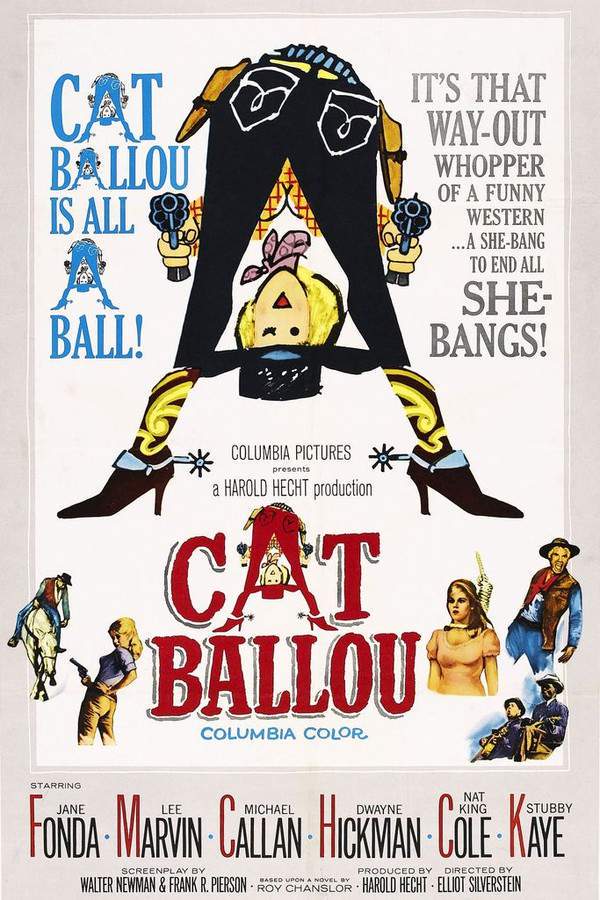
Cat Ballou (1965) Full Summary & Key Details
Cat Chaser (1989) Story Summary & Characters
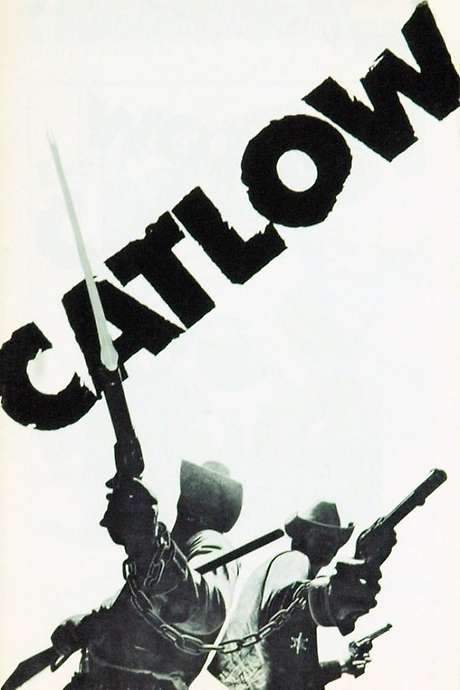
Catlow (1971) Film Overview & Timeline
A Man Called Gannon (1968) Full Summary & Key Details
Another Man, Another Chance (1977) Full Movie Breakdown
Man in the Saddle (1951) Plot Summary & Ending Explained
The Violent Men (1955) Full Summary & Key Details
This Man Can’t Die (1968) Story Summary & Characters
When a Man’s a Man (1935) Ending Explained & Film Insights
The Wild and the Innocent (1959) Movie Recap & Themes
Cat in the Cage (1978) Story Summary & Characters
The Wrong Man (1993) Ending Explained & Film Insights
Track of the Cat (1954) Spoiler-Packed Plot Recap
The Man Who Came Back (2008) Spoiler-Packed Plot Recap
Man Without a Star (1955) Ending Explained & Film Insights