Year: 1968
Runtime: 138 mins
Language: English
Director: Robert Aldrich
June Buckridge returns to her London flat terrified that someone will kill her, forcing lover and flat‑mate Alice “Childie” McNaught to brace for change. June fears the death of her TV role, the beloved nurse Sister George, on a daytime serial. Meanwhile BBC executive Mercy Croft—who ordered the character’s removal—pursues Childie relentlessly.
Warning: spoilers below!
Haven’t seen The Killing of Sister George yet? This summary contains major spoilers. Bookmark the page, watch the movie, and come back for the full breakdown. If you're ready, scroll on and relive the story!
Trace every key event in The Killing of Sister George (1968) with our detailed, chronological timeline. Perfect for unpacking nonlinear stories, spotting hidden connections, and understanding how each scene builds toward the film’s climax. Whether you're revisiting or decoding for the first time, this timeline gives you the full picture.
Last updated: October 09, 2025 at 12:34
Find frequently asked questions about the The Killing of Sister George (1968) timeline, including chronological order, nonlinear jumps, cause-and-effect links, and scene sequence clarifications. This timeline FAQ helps explain when key events happen, how moments connect, and why the story unfolds in that specific order.
June's entire identity has become intertwined with Sister George after four years on the show. Fans nicknamed her 'George,' and she has lost the ability to separate her real self from the character. When Mercy Croft threatens to kill off Sister George, June isn't just facing career loss, she's facing annihilation of the only identity that gives her significance and security.
Early scenes show June's anxiety about being written out, paralleling how her colleagues were killed off the show, establishing her fear of erasure.
The contrition game is a ritual June demands where Alice must kneel and eat a cigar butt as an act of submission. It represents June's need for control and dominance in the relationship. When Alice finally refuses to participate, it marks the first real act of rebellion against June's abusive power dynamic.
The power imbalance is established early when Alice relies on June financially, giving June leverage to impose these degrading rituals.
When a joking comment about Sister George dying on-air reaches June, she spirals into panic and drunkenness. The taxi incident is a manifestation of her unraveling, June forces herself into the cab with two young nuns and sexually assaults them, combining her fear of death (the character's and her own relevance) with self-destructive behavior. The crash draws ecclesiastical and BBC attention, accelerating her downfall.
June's insecurity about being written off like previous colleagues sets the stage for this breakdown.
Mercy Croft sees Alice as both a potential professional asset and a way to further control June. She encourages Alice's poetry and cooking, offers professional opportunities, and deliberately creates a rift between the two women. This manipulation serves Croft's dual purpose of weakening June's support system while gaining influence over Alice, ultimately persuading Alice to leave with her.
During her warning visit to June, Croft already notices Alice and begins sowing seeds of interest in her talents.
Alice leaves because the relationship has become toxic and offers her no genuine support. June's alternating affection and domination, combined with her jealousy and controlling behavior, has worn Alice down. When Mrs. Croft offers real professional help for Alice's writing and a safe place to stay, Alice sees an opportunity for independence and growth that June never provided. Her key dropping into the mailbox symbolizes a clean break.
Alice's earlier refusal to perform the contrition game signals her growing willingness to resist June's control.
The 'moo' is June's horrifying moment of identity dissolution. After losing both her character (killed by a truck) and her partner (who left with the woman who ordered the killing), June mechanically imitates a cow, the very voice work she was offered as a final insult. It represents her reduced status: from beloved TV character to a laughingstock, from powerful partner to utterly alone. The empty set becomes a tomb for both Sister George and June herself.
The offer of the talking cow voice role earlier planted this degrading image that now haunts her.
The talking cow offer is the final humiliation. After being fired from her beloved Sister George role, June is offered what amounts to a joke position, voicing a puppet on a children's show. This represents everything she's feared: being reduced to irrelevance, becoming a punchline, and having her serious acting career end in absurdity. The offer also comes from Mercy Croft, making it feel like a deliberate cruelty rather than genuine opportunity, triggering June's explosive public breakdown.
June's sensitivity about being written out of Applehurst makes any subsequent role feel like a demotion.
June discovers that Alice lied about being too busy for lunch, in fact, Alice was meeting with Mercy Croft. Feeling betrayed, June retaliates by deliberately delaying performances and attempting to stretch filming. Her sabotage stems from wounded pride and jealousy: she's losing her character, her lover, and her power, and this deception confirms her worst fears about being abandoned.
June's jealousy has been established throughout, especially when Mrs. Croft showed interest in Alice.
Mercy Croft deliberately selects the most violent, attention-grabbing death possible: Sister George will be struck by a ten-ton truck on screen. This isn't just story convenience, it's a statement. The public nature of the death, witnessed by the show's audience, represents the complete, irreversible erasure of both the character and, by extension, June herself. The specificity of 'ten-ton' makes it more brutal and memorable.
Croft's earlier warning that June must apologize or risk losing her place establishes her willingness to destroy June entirely.
Initially, June holds all power: she provides finances, status, and identity for Alice. However, as June's professional situation deteriorates, Alice gains leverage. When Mrs. Croft offers Alice genuine professional support and an escape from June's control, the power inverts. Alice's lies about meeting Croft, and her eventual departure, represent her final reclamation of autonomy, leaving June powerless and alone.
Alice's early resistance to the contrition game plants the seed of her eventual rebellion.
Discover curated groups of movies connected by mood, themes, and story style. Browse collections built around emotion, atmosphere, and narrative focus to easily find films that match what you feel like watching right now.
Stories where a character's psyche disintegrates within a suffocating environment.If you liked the tense, suffocating atmosphere of The Killing of Sister George, explore more movies about characters psychologically unraveling in confined spaces. These films share a similar focus on toxic relationships, emotional manipulation, and a heavy, melancholic mood leading to bleak conclusions.
Narratives in this thread typically follow a character's steady descent into self-destruction, often triggered by a personal or professional crisis. The conflict is deeply internal but amplified by a claustrophobic setting—be it a small apartment, a relationship, or a social role—creating a powerful sense of inescapable doom.
These movies are grouped by their shared high-intensity, emotionally heavy experience, driven by a dark tone and steady pacing that methodically builds dread. They excel at creating a palpable sense of anxiety and psychological unease, making them compelling for viewers who appreciate deep, character-driven dramas about human fragility.

Explorations of manipulative relationships where control and jealousy dominate.For viewers who appreciated the complex, manipulative relationship in The Killing of Sister George, this list features similar movies exploring dark power dynamics and emotional control. These dramas often involve jealousy, infidelity, and psychological games within intense, character-driven narratives.
The narrative pattern involves a central, often codependent relationship where one character exerts control over another, leading to a cycle of manipulation and self-sabotage. The story unfolds through emotional conflicts rather than action, building towards a conclusion where the power structure collapses, often with devastating consequences for all involved.
These films are united by their heavy emotional weight and intense focus on the dark complexities of human relationships. They share a steady, character-driven pace that allows the toxic dynamics to simmer and erupt, resulting in a consistently anxious and thought-provoking viewing experience for fans of nuanced interpersonal drama.
Don't stop at just watching - explore The Killing of Sister George in full detail. From the complete plot summary and scene-by-scene timeline to character breakdowns, thematic analysis, and a deep dive into the ending - every page helps you truly understand what The Killing of Sister George is all about. Plus, discover what's next after the movie.
Read a complete plot summary of The Killing of Sister George, including all key story points, character arcs, and turning points. This in-depth recap is ideal for understanding the narrative structure or reviewing what happened in the movie.
Discover the characters, locations, and core themes that shape The Killing of Sister George. Get insights into symbolic elements, setting significance, and deeper narrative meaning - ideal for thematic analysis and movie breakdowns.
Discover movies like The Killing of Sister George that share similar genres, themes, and storytelling elements. Whether you’re drawn to the atmosphere, character arcs, or plot structure, these curated recommendations will help you explore more films you’ll love.
The Killing of Sister George (1968) Plot Summary & Movie Recap
The Killing of Sister George (1968) Scene-by-Scene Movie Timeline
The Killing of Sister George (1968) Spoiler-Free Summary & Key Flow
Movies Like The Killing of Sister George – Similar Titles You’ll Enjoy
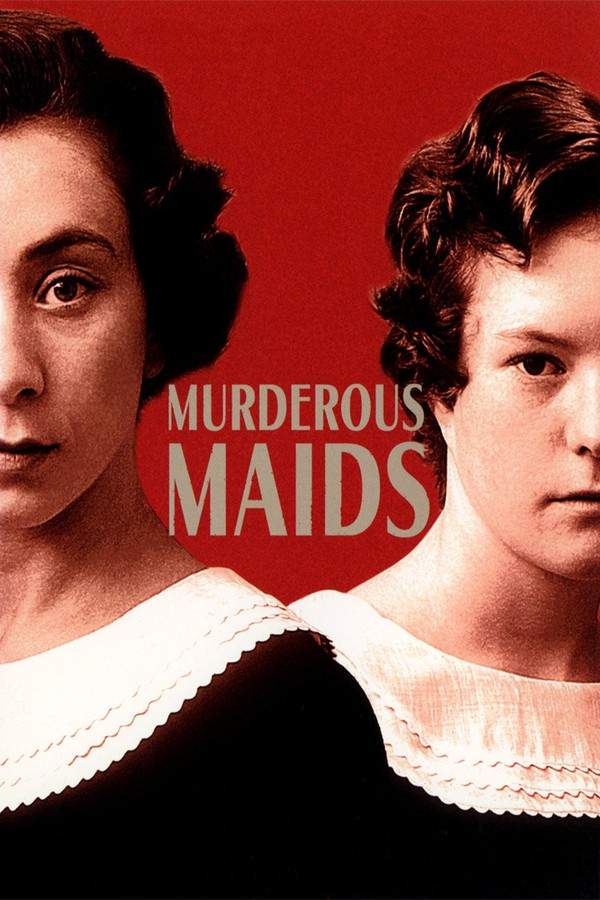
Murderous Maids (2002) Story Summary & Characters
The Killing Jar (2010) Plot Summary & Ending Explained
You’re Killing Me… (2003) Full Summary & Key Details
A Murder of Quality (1991) Ending Explained & Film Insights
The Killing Game (1988) Complete Plot Breakdown
The Kill-Off (1989) Full Summary & Key Details
The Sister (1000) Full Movie Breakdown
The Killing Mind (1991) Full Summary & Key Details
Sister My Sister (1994) Detailed Story Recap
The Sexy Killer (1976) Spoiler-Packed Plot Recap
Lady Killer (1995) Plot Summary & Ending Explained
George’s Room (1967) Full Summary & Key Details
Killer (1994) Complete Plot Breakdown
A Day in the Death of Joe Egg (1972) Story Summary & Characters
Deadly Advice (1994) Detailed Story Recap