Plot Explained Spoilers guaranteed!
Plot Explained

Browse by genre

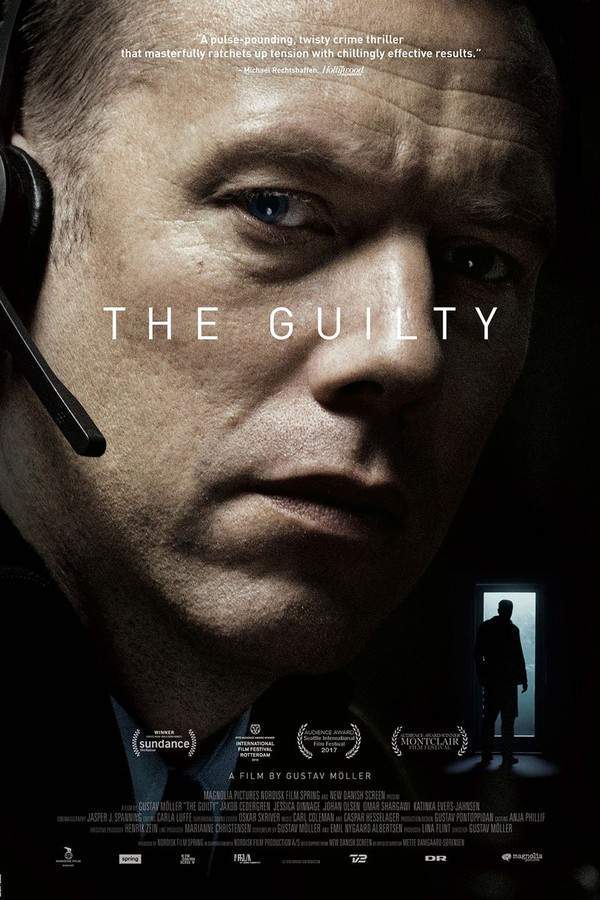
The Guilty (2018) movie poster

Plot Summary

The Guilty (2018) Plot Summary & Ending Explained

Release, runtime and language
2018 · 85 min · Danish
Echo score 85
JustWatch #4,209 17
Directed by
Director:, Gustav Möller
Starring
Morten Suurballe, Jakob Ulrik Lohmann, Katinka Evers-Jahnsen, Jakob Cedergren, Jeanette Lindbæk, Jessica Dinnage

A police officer working at a call center experiences a shattering night when a distressed woman reports a possible kidnapping. Forced to rely on external resources and his own instincts, he investigates the unfolding situation, uncovering a complex web of clues and confronting potential corruption. Asger Holm’s troubled past also resurfaces, complicating his efforts to find the missing woman and unravel the truth before time runs out.

On this page (7)
  1. 1 Where to watch
  2. 2 What happens: full plot
  3. 3 Plot questions answered
  4. 4 How it ends
  5. 5 Movie threads
  6. 6 Movies like The Guilty
  7. 7 Every angle

Where to watch

Where to Watch The Guilty (2018)

Where can you watch The Guilty? Stream, rent or buy it in the US, including on Amazon Prime Video, fuboTV and Hoopla: current JustWatch availability with up-to-date prices.

Streaming availability powered by JustWatch

Full plot summary · contains spoilers

What Happens in The Guilty: Full Plot Summary

The whole story of The Guilty (2018) explained, from the opening scene to the final frame: every key event, every twist and what it all adds up to. Read it as a quick recap before the sequel, to check a scene you missed, or to finally understand what really happened.

Police officer Asger Holm starts his shift at the police station, where he is assigned to telephone duty, a temporary role he looks forward to leaving behind. The day begins with calls coming in, and after resolving a drug-induced panic situation, Asger receives a report from a man who claims he has been robbed in a red light district. He connects with his boss, Bo, who finds humor in the man's unfortunate situation involving a prostitute and promises to send patrols for assistance. When Asger inquires about Rashid’s wellbeing, Bo’s puzzlement suggests there may be more to the story.

The plot thickens when an unexpected call from a journalist catches Asger off-guard. He quickly cuts her off, causing disapproval from his superior for mixing personal matters with work. Asger, visibly distressed, soon receives a critical call from a woman named Iben, who feigns mundane conversation while revealing her covert distress. Through a careful series of questions, Asger uncovers the chilling truth that Iben is being abducted by a man who may be armed, and they are driving north in a white van. Urgently, he directs dispatch to search for the vehicle despite not having the license plate information.

Asger attempts to reconnect with Iben, but the call drops. Through her phone records, he tracks down her address, where he speaks to Mathilde, Iben's young daughter. With panic woven into her voice, Mathilde relays fears for her mother and baby brother, Oliver. In an effort to reassure her, Asger reveals that police are working to bring her mother home safely. His investigation reveals the unstable nature of Iben’s abductor, Michael, who has a violent past.

Frustrated by the limitations of protocol, Asger presses his superiors for action, insisting they must intervene before it’s too late. A well-meaning colleague offers a moment of compassion, reminding him to take care of himself amid his emotional turmoil. Nevertheless, Asger’s resolve remains steadfast as he attempts to reach out to Rashid for help in following up a lead on Iben's situation.

When Mathilde reports police presence at her home, Asger’s hope rises, but the situation quickly spirals. Upon hearing that Oliver is tragically deceased, Asger is left devastated, grappling with guilt and helplessness. He desperately tries to contact Michael, but the calls disconnect, further shrouding the unfolding tragedy in uncertainty.

Eventually, Iben manages to reach Asger again, this time under dire circumstances in the van. The tension builds as she is instructed to defend herself, and amidst the chaos, Michael’s violent tendencies reveal a dark reality. Asger is given insight into a previous mental health crisis involving Iben; pieces of the puzzle begin to align.

As despair mounts, Asger unravels the tragic truth: Iben accidentally harmed her child during a psychological episode. In a gripping crescendo, Asger tries to draw her away from the edge of a bridge where she contemplates suicide, revealing his own past torment while attempting to connect with her on an emotional level. As the police close in, Asger hears a devastating silence, praying for Iben's survival.

Ultimately, the tension culminates in a relief as Iben is successfully rescued. Asger’s journey through this harrowing day, marked by his internal battles and professional dilemmas, leads him to a reflective moment, prompting him to make one last phone call as he exits the station, a heart heavy with the weight of the day's revelations.
Last updated: November 08, 2024 at 00:14

Was this helpful?

Plot questions answered

The Guilty Plot Explained: Your Questions Answered

The questions people ask most about The Guilty (2018): what happens in the confusing scenes, why the characters do what they do, the twists, hidden details and what the ending means. Each answer contains spoilers.

Q1

Why was Iben being abducted and who was Michael?

Iben was not being abducted in the traditional sense. Michael was the man with her, but the situation was far more complex than a simple kidnapping. As the story unfolds, it becomes clear that Iben was experiencing a severe mental health crisis. Michael was actually trying to help her, though his methods were questionable. The truth that emerges is that Iben had accidentally harmed her own child during a psychological episode, and she was fleeing in panic rather than being kidnapped.

Foreshadowing: Earlier hints of Iben's distress came through her seemingly mundane phone conversations, which Asger initially misinterpreted as a robbery case.

  • iben
  • michael
  • kidnapping
  • abduction
  • mental health
Q2

What happened to Iben's baby boy Oliver?

Oliver, Iben's infant son, died before the events of the kidnapping call. During the investigation, Asger discovers that Iben accidentally harmed her own child during a mental breakdown. This tragic truth is revealed as Asger pieces together the mystery behind Iben's distress call. The death of Oliver is what triggered Iben's psychological crisis and subsequent erratic behavior.

Foreshadowing: Mathilde's panicked calls about her mother and baby brother hinted at something being wrong with the infant.

  • oliver
  • baby
  • iben
  • death
  • child
Q3

Why did Iben harm her own child?

Iben suffered a mental health crisis that led her to inadvertently harm her baby son Oliver. The film reveals that this was an accident resulting from her psychological breakdown, not a deliberate act. This traumatic event is what drove Iben to flee with Michael and ultimately led to her desperate phone call to the police, where she presented the situation as a kidnapping.

Foreshadowing: Asger learns about Iben's history of instability and Michael's past violence, which hints at underlying issues beyond a simple abduction.

  • iben
  • mental health
  • breakdown
  • child harm
  • psychosis
Q4

Why was Asger so emotionally invested in Iben's case?

Asger's intense personal investment stems from his own troubled past, which is revealed when he tries to talk Iben down from the bridge. He shares his own history of trauma and loss, suggesting he has experienced similar despair. This personal connection is why he breaks protocol and becomes so personally involved in trying to save Iben, treating her case as more than just another dispatch call.

Foreshadowing: Early scenes show Asger receiving a mysterious journalist call and appearing visibly shaken, hinting at underlying personal issues.

  • asger
  • holm
  • emotional
  • trauma
  • personal
Q5

Why did Iben try to jump off the bridge?

Iben attempted suicide because she was overwhelmed by guilt and despair over accidentally killing her baby son Oliver. The mental health crisis that led to Oliver's death left her believing she was unworthy of living. When Michael tried to help her, she saw no way out. The bridge scene represents her attempt to end her suffering, with Asger using his own painful past to connect with her and prevent her jump.

Foreshadowing: The gradual revelation of Oliver's death and Iben's mental state builds toward this desperate moment.

  • iben
  • bridge
  • suicide
  • guilt
  • despair
Q6

Who was Rashid and why did Asger try to contact him?

Rashid appears to be a colleague or contact within the police force that Asger was trying to reach for help with the case. When Asger inquires about Rashid's wellbeing, his boss Bo's puzzlement suggests there may be more to the story, possibly hinting at Rashid's own involvement or fate. Asger's determination to contact Rashid indicates he believed Rashid could help follow up on a critical lead regarding Iben's situation.

Foreshadowing: Bo's confused reaction when Asger asks about Rashid hints that something unusual is happening.

  • rashid
  • police
  • colleague
  • contact
Q7

How was Iben rescued at the end?

Asger managed to keep Iben on the phone while police units closed in on her location. During the intense conversation at the bridge, Asger shared his own personal struggles to establish an emotional connection and talk her away from the edge. As police approached, Iben was physically rescued from the brink. The ending shows relief as she is taken to safety, though the movie leaves questions about her ultimate fate.

Foreshadowing: Throughout the call, Asger's constant communication and probing questions served to keep Iben connected and buying time for police to locate her.

  • iben
  • rescue
  • police
  • bridge
  • survival
Q8

Why was Asger working at the telephone duty instead of field work?

Asger was assigned to telephone duty at the police station, a role he clearly looked forward to leaving behind. The film doesn't explicitly explain why he's in this temporary position, but his visible distress throughout the day and references to his troubled past suggest he may have been demoted or placed there due to personal issues. The telephone duty becomes the setting where he must confront his demons while trying to save Iben.

Foreshadowing: The opening scenes establish Asger's eagerness to leave this role, hinting at his dissatisfaction with his current position.

  • asger
  • telephone
  • duty
  • police
  • role
Q9

Why did a journalist call Asger during his shift?

An unexpected call from a journalist caught Asger off-guard during his police shift. He quickly cut her off, which drew disapproval from his superior for mixing personal matters with work. The call left Asger visibly shaken, suggesting it involved sensitive information about his personal life or past. This mysterious interruption hints at unresolved issues in Asger's life that contribute to his emotional turmoil throughout the day.

Foreshadowing: This brief interaction establishes that Asger has personal problems bleeding into his professional life.

  • journalist
  • call
  • asger
  • personal
  • distress
Q10

How did Asger realize Iben's call was actually an emergency?

Asger initially received what seemed like a mundane call from Iben, who was feigning casual conversation. However, through careful questioning and by picking up on subtle cues in her voice and responses, Asger deduced that she was actually in grave danger. She was being abducted by a man who might be armed, and they were driving north in a white van. His keen observation skills turned what could have been a routine call into a life-or-death investigation.

Foreshadowing: Iben's seemingly strange conversation patterns and forced casual tone were the first clues something was wrong.

  • iben
  • call
  • emergency
  • kidnapping
  • abduction
Q11

What was Michael's role in Iben's situation?

Michael was the man driving the van with Iben. While initially presented as her abductor, the truth is more complicated. Michael has a violent past, which Asger uncovers during his investigation. It appears Michael may have been trying to help Iben in his own way, possibly as a caretaker or someone connected to her during her mental health crisis. However, his violent history and questionable methods made the situation appear kidnapping-like from the outside.

Foreshadowing: Asger's research reveals Michael's violent background, adding complexity to understanding his true role.

  • michael
  • iben
  • driver
  • abductor
  • violent
Q12

Why did Asger reveal his own past to Iben during the bridge scene?

Asger shared his own painful past with Iben because he needed to establish an emotional connection to talk her down from the bridge. By revealing his own history of trauma and struggles, he hoped to show Iben that survival is possible even after profound loss. This desperate attempt to relate to her on a human level was his final tool to prevent her suicide, demonstrating his deep commitment to saving her life.

Foreshadowing: Earlier hints of Asger's emotional distress and personal issues foreshadowed this moment of vulnerability.

  • asger
  • past
  • sharing
  • bridge
  • connection

Ending explained

What Happens at the End of The Guilty?

How The Guilty (2018) ends, in short: the final scene, the last twist and what it means for the characters. The full ending explained, with every spoiler, lives on its own page.

Read the full ending explained

The ending of The Guilty reveals that much of what Joe believed about the situation was based on assumptions and limited information. Initially, Joe is convinced that Henry is a dangerous ex-husband who threatens Emily and her children. However, as the story unfolds, it becomes clear that Emily's mental state is unstable, and she is the real threat. She is the one who has been mentally disturbed, possibly causing harm to her children herself, as indicated when she mentions "getting the snakes out" of her son Oliver—probably a metaphor for internal injuries or distress. When Joe's friend searches Henry's house, they find evidence suggesting Henry was actually trying to help Emily get psychiatric assistance, painting him as a caring, helpless figure rather than a threat.

The film carefully plant this twist by making viewers and Joe believe Henry is culpable based on Emily's voice on 911 calls and Henry's criminal record. But Emily's vague and controlling communication prevents her from fully revealing the truth, leading both Joe and the audience to jump to conclusions. It’s a deliberate psychological misdirection that keeps the viewer engaged until the real story is uncovered.

Continue reading the ending (2 more paragraphs)

As the story progresses, Joe recognizes his own flaws—his quick temper and desire to punish rather than understand—reflected in his anger at Henry. His confrontation with Emily, leading her to be on the brink of suicide, pushes him to confront his mistakes, especially regarding a past shooting. In that earlier case, Joe shot a young man named Joseph out of anger, a decision that he later admits may have been unnecessary. He pleads guilty at the end, accepting responsibility not just for the mistake in the case but as a symbol of his broader failure as a cop and person.

Joe’s guilty plea signifies his acknowledgment of his flawed moral compass and the harm caused by his rage. Throughout the film, he is depicted as a character caught in a cycle of anger and violence—both in his police work and personal life. By taking responsibility, he begins a path toward self-awareness and redemption. The final moments of the film underline that truth is often complex and painful but necessary for growth. Joe's acceptance of guilt is a cathartic release, a recognition that confronting and owning one's mistakes is the first step toward genuine change. In the end, The Guilty suggests that truth—no matter how difficult—is ultimately what sets us free.

The Guilty ending explained in full

Movie threads

More Movies Like The Guilty, by Mood & Story

Curated lists built around what makes The Guilty tick: the same mood, the same kind of story or the same emotional payoff. Each list explains why these movies belong together.

Single-location thrillers with high tension like The Guilty

Thrillers where confined spaces amplify the intensity of a distant crisis. If you liked the claustrophobic tension of The Guilty, this thread features movies that trap their protagonists in a single location, forcing them to solve a high-stakes crisis unfolding elsewhere. These films create intense, real-time drama focused on communication and desperate problem-solving.

  • claustrophobic
  • real-time
  • gripping
  • suspenseful
  • anxious
  • desperate
  • Tone: tense, desperate
  • Pacing: fast, breathless
Why these movies?

The story pattern: The narrative pattern centers on a protagonist trapped in a control room, vehicle, or isolated location, who must remotely manage a critical situation. The drama hinges on limited information, reliance on external parties, and the immense pressure of making life-or-death decisions from a distance, often in real-time.

Why they belong together: These movies are grouped by their shared use of a confined setting to generate relentless suspense. They deliver a unique, anxious viewing experience where the audience feels the protagonist's powerlessness and desperation as they try to influence events they cannot directly see or touch.

Moral dilemma dramas with bittersweet endings like The Guilty

Stories where a small victory is overshadowed by heavy moral fallout. Movies like The Guilty that explore themes of guilt, moral compromise, and the heavy cost of truth. These films often end on a bittersweet note, where an external conflict is resolved but the protagonist is left to face profound personal consequences and emotional scars.

  • guilt-ridden
  • psychological
  • heavy
  • desperate
  • tragic
  • morally complex
  • Tone: bittersweet, heavy
  • Pacing: steady, character-driven
Why these movies?

The story pattern: The journey typically involves a flawed protagonist who, while solving an immediate problem, uncovers a deeper, more tragic truth that implicates them or forces a reckoning with their own past. The ending provides a partial, practical success but delivers a heavy emotional gut-punch, focusing on the lingering price of guilt and the ambiguous nature of redemption.

Why they belong together: They are connected by a shared emotional arc that prioritizes psychological consequence over clean resolution. The viewing experience is defined by a heavy emotional weight and a conclusion that feels poignant and realistically imperfect, leaving a lasting impact on the audience.

If you liked this

Movies Like The Guilty

Similar movies to The Guilty: the same genre, themes or kind of story. Each one comes with its own plot summary, timeline and ending explained.

Browse all movie summaries

Every angle

The Guilty (2018) Explained: Plot, Ending, Timeline & Characters

Everything about The Guilty in one place: what happens in the plot summary, the timeline in chronological order, the characters and meaning, the ending explained and a spoiler-free summary. What's After the Movie adds the cast, box office and post-credit scenes.

Coming soon on iOS and Android

The Plot Explained Movie Summary App

Plot summaries, endings explained and timelines on your phone. Catch up on any movie in minutes, save your favorites and never miss a twist again.

Be the first to know when we launch. Your email stays private, always.

Learn more about the app