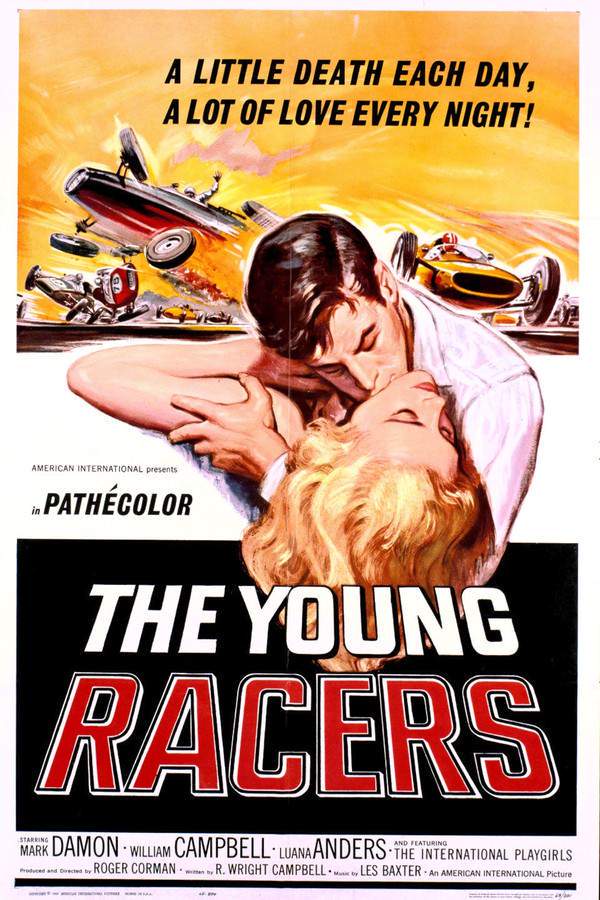
Michael 'Micky' Clark [Darryl Hickman] turns his Ford roadster into a hot rod, teaming up with his friend Robert Arthur Todd to chase speed. Their shared project is guided by Michael's older brother James Cardwell Jeff, a former combat pilot who learned everything there is to know about engines and now shares that know-how with his younger kin. The trio bonds over the thrill of tuning engines, swapping stories about their rides, and dreaming of the day their souped-up car will truly shine on the open street. Together, they imagine a future where speed is a language they speak fluently, and Jeff's experience lends them a streetwise confidence that feels almost invincible.
John Clark [Damian O'Flynn] returns home in a brand-new convertible, a gleaming symbol of velocity that instantly becomes a focal point for the family. His arrival brings a palpable buzz of excitement and danger, as the speedometer climbs to 120 mph and becomes a blunt reminder of how quickly things can spiral out of control. John himself is a portrait of conflicting impulses—on the one hand, he can lecture about responsibility and restraint, and on the other, he revels in the raw thrill of acceleration. The car becomes a catalyst, a moving example of how a single ride can shift a household's dynamic and expose what everyone truly believes about risk.
Michael's girlfriend Peggy Andrews [Sue England], his friend Todd, and Todd's girlfriend Rusty [Terry Moore] all poke fun at Michael for wanting to be cautious behind the wheel. Their teasing lightens the mood in the short term, but it also underlines a troubling truth: in a world where speed feels like a test of loyalty and bravado, everyone’s judgment can blur. The banter underscores the social pressure to push boundaries, and Michael’s resolve begins to tilt toward defying caution rather than embracing it. The teasing, while playful, plants the seeds of a shared mindset that makes restraint feel out of step with the group’s identity.
Upset by the ribbing and emboldened by a desire to prove himself, Michael decides to participate in a street race with Todd. Even with police intervention looming over them, the thrill of the chase is too strong to resist, and Michael doesn’t back down. He takes Rod Todd for a high-speed ride in his father’s new convertible, weaving through the city streets and slipping away from law enforcement as the sirens wail in the distance. The chase becomes a test of nerve, and the line between calculated risk and reckless danger begins to blur in a way that feels almost inevitable.
Close calls with the law pile up, and the atmosphere grows tenser as the consequences of their choices become harder to ignore. The death of a fellow racer casts a pall over the group, injecting a grim reminder that their love of speed comes with real, deadly stakes. The sense of camaraderie that once buoyed their daring now sits alongside a sobering awareness of the cost of their actions. The story keeps pushing forward, not offering easy answers, but revealing how quickly a lifestyle built on speed can spiral into tragedy when fear, pride, and peer pressure converge.
As the adrenaline fades, the echoes of a danger-filled night linger, and the film settles into a stark truth: the urge to race, to outpace fear, and to live on the edge can set off a chain of events that no one can fully outrun. The family’s dynamics—between caution and bravado, between duty and desire—are tested to their limits, leaving the characters to reckon with what happens when thrill-seeking overtakes responsibility, and when the siren’s call finally signals more than just a warning.