Plot Explained Spoilers guaranteed!
Plot Explained

Browse by genre

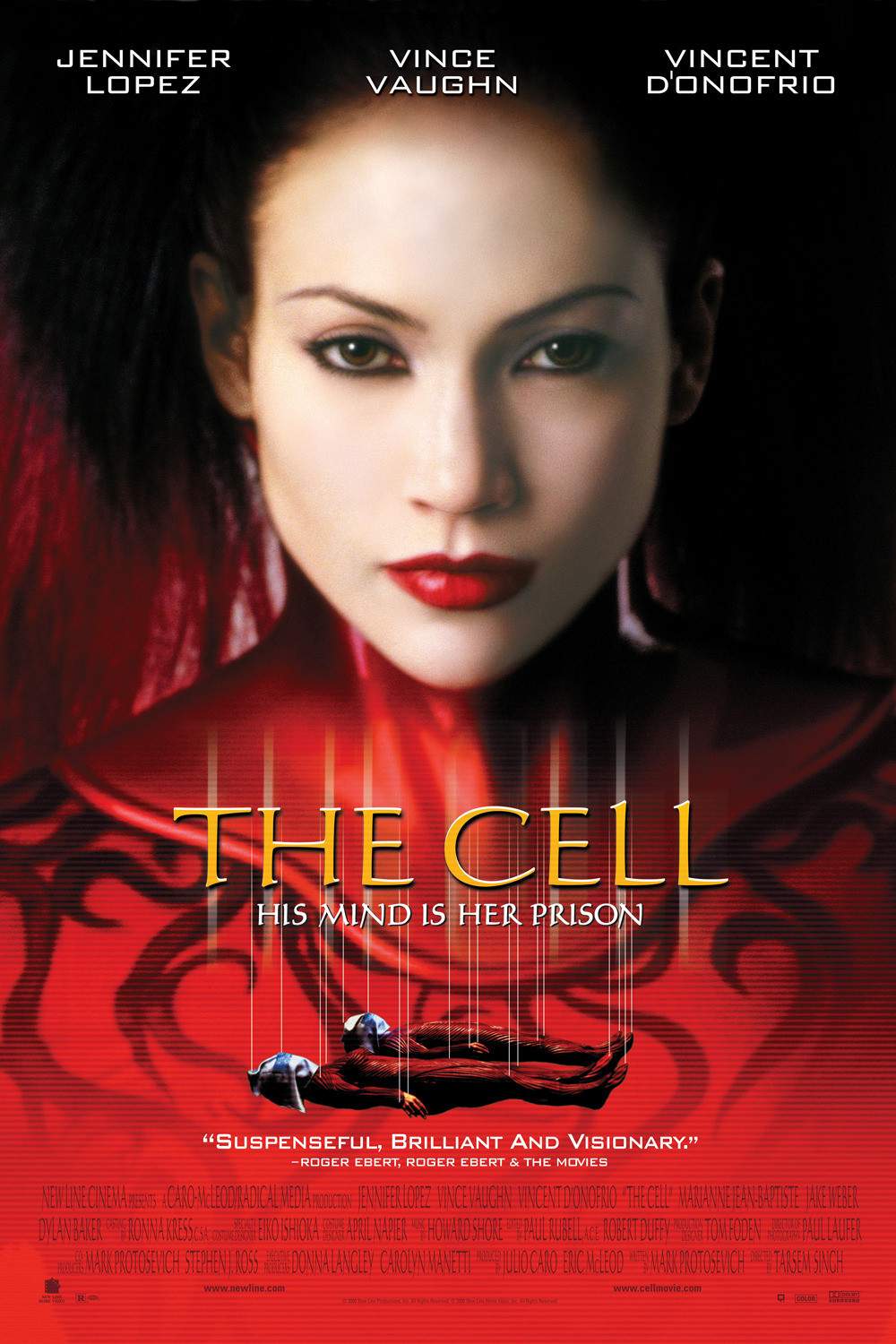
The Cell (2000) movie poster

Plot Summary

The Cell (2000) Plot Summary Explained

Release, runtime and language
2000 · 107 min · Arabic
JustWatch #1,002 27
Directed by
Tarsem Singh
Starring
Jennifer Lopez, Vincent D'Onofrio, Vince Vaughn
Budget
$33M

A specialist in experimental psychology is enlisted by the FBI to enter the mind of a comatose serial killer, in an attempt to determine the location of his latest victim. Using advanced technology, she must navigate the killer's dangerous and surreal subconscious, confronting his darkest fantasies and facing perilous obstacles to rescue the captive before it's too late.

On this page (6)
  1. 1 Where to watch
  2. 2 What happens: full plot
  3. 3 Plot questions answered
  4. 4 Movie threads
  5. 5 Movies like The Cell
  6. 6 Every angle

Where to watch

Where to Watch The Cell (2000)

Where can you watch The Cell? Stream, rent or buy it in the US, including on Amazon Video, Apple TV Store and Fandango At Home: current JustWatch availability with up-to-date prices.

Streaming availability powered by JustWatch

Full plot summary · contains spoilers

What Happens in The Cell: Full Plot Summary

The whole story of The Cell (2000) explained, from the opening scene to the final frame: every key event, every twist and what it all adds up to. Read it as a quick recap before the sequel, to check a scene you missed, or to finally understand what really happened.

Child psychologist Catherine Deane (Jennifer Lopez) specializes in a groundbreaking experimental treatment for coma patients involving a virtual reality device developed by Dr. Henry West. This innovative technology allows her to dive into the minds of these individuals, aiming to bring them back to consciousness. One of her patients, a young boy named Edward, shows signs of progress during their sessions, yet there seems to be no visible improvement in his medical condition. As doubts bubble up, his parents start to question whether Catherine's conversations with him are merely the result of hallucinations fueled by medication.

Meanwhile, in a sinister underground lair, the serial killer Carl Rudolph Stargher (Vincent D'Onofrio) engages in his gruesome rituals, capturing young women, psychologically tormenting them, and ultimately drowning them. He meticulously cleans the corpses, turning them into a chilling form of possession, almost like a horrifying doll.

As fate would have it, during his latest stalking of a woman named Julia Hickson, the police, led by detectives Peter Novak (Vince Vaughn) and Gordon Ramsey, finally catch a break in the case. However, just as they are about to apprehend Stargher, he suffers a seizure and falls into a coma due to an uncommon neurological disorder that makes recovery impossible.

In the depths of Stargher's lair, Julia awakes to find herself trapped in a glass enclosure that’s steadily filling with water. With time running out, it becomes imperative for Catherine and Dr. West's team to delve into Stargher's disturbed psyche in hopes of extracting the information needed to save Julia before the water engulfs her.

Inside Stargher's mind, Catherine finds herself facing his tortured soul, where she encounters both the frightened child-cornered Carl and the menacing adult Stargher, who rules with an iron fist. An adult representation of Carl reveals harrowing details of his abusive upbringing and the origins of Stargher's murderous intent. Despite her nurturing efforts towards the innocent side, the malevolent Stargher constantly thwarts her attempts. As tensions escalate, Stargher gains the upper hand, ensnaring Catherine within his dark dreamscape.

Desperate to rescue her, Novak volunteers to enter Stargher's mind but becomes trapped himself. Fortunately, his reminder of the dream state empowers Catherine to break free. They may not have extracted vital details from Stargher, but Peter recalls a significant symbol from the dream that leads them to Stargher's secret hideout just in time to save Julia.

In a twist of fate, Catherine decides to reverse the mind-linking process, attempting to draw Stargher's psyche into her own. She offers the inner child, Carl, a paradise, but the dark serpent of his murderous alter ego lingers threateningly. With newfound power, Catherine confronts this deadly aspect, mortally injuring it but at a devastating cost: the two personalities are intertwined, and Carl suffers as well. In a tragic completion of Stargher's mythology, he finds peace in a serene dream world as Catherine drowns him in her imagined pool, equating it to an act of salvation.

The successful rescue of Julia through Dr. West's revolutionary technology enhances the credibility of his research. With renewed hope, Catherine prepares to apply the reversal technique to help Edward, anticipating significant breakthroughs in his therapy journey.
Last updated: November 03, 2024 at 14:58

Was this helpful?

Plot questions answered

The Cell Plot Explained: Your Questions Answered

The questions people ask most about The Cell (2000): what happens in the confusing scenes, why the characters do what they do, the twists, hidden details and what the ending means. Each answer contains spoilers.

Q1

Why does Edward show progress during Catherine's sessions but not improve physically?

Edward appears to respond emotionally and cognitively during Catherine's virtual reality therapy sessions, demonstrating potential for consciousness. However, his physical medical condition remains unchanged because the treatment aims to reconnect neural pathways from within, the psychological progress doesn't automatically translate to physical recovery until the underlying neurological damage heals. His parents' doubt stems from this disconnect between observable mental engagement and visible bodily improvement.

Foreshadowing: Earlier scenes show Catherine's confidence in the treatment's potential, suggesting the physical manifestations may lag behind psychological breakthroughs.

  • Edward
  • coma patient
  • virtual reality therapy
  • psychological progress
  • physical condition
Q2

How does Catherine enter the minds of coma patients?

Catherine uses a groundbreaking virtual reality device developed by Dr. Henry West that creates a neural bridge between her consciousness and the patient's mind. This experimental technology allows her to literally dive into the subconscious of coma patients, creating an immersive environment where she can interact with their psyche. The process involves specialized equipment that monitors both participants and enables two-way psychological entry, though the technology is still experimental and carries significant risks.

  • virtual reality
  • neural bridge
  • Dr. West
  • mind entering technology
  • consciousness
Q3

Why does Stargher fall into a coma right before police can arrest him?

Stargher suffers a seizure caused by an uncommon neurological disorder that renders him comatose just as detectives Novak and Ramsey are about to apprehend him. This condition makes recovery impossible, creating a critical problem: the police have identified their suspect but cannot question him, and his latest victim Julia is trapped in his lair with no way to learn the location through conventional means.

  • Stargher
  • coma
  • seizure
  • neurological disorder
  • police arrest
Q4

What is the significance of the two versions of Stargher in his mind?

Inside Stargher's mind, Catherine encounters two distinct personalities: the frightened child Carl representing his innocent, traumatized inner self, and the menacing adult Stargher who governs his murderous desires. This split reflects his abusive childhood, the child Carl is the victim of past trauma, while the adult Stargher is the monster that trauma created. The adult uses fear and control to dominate, while the child remains trapped and frightened, representing the core identity that was corrupted by abuse.

Foreshadowing: The narrative hints at dark childhood events early in the film through brief references to Stargher's disturbing rituals.

  • Stargher
  • Carl
  • split personality
  • child self
  • adult killer
  • trauma
Q5

How did Stargher's childhood trauma shape his killer persona?

Catherine discovers through direct interaction with his psyche that Stargher suffered severe abuse as a child, which directly planted the seeds of his murderous tendencies. The adult Stargher represents the coping mechanism a traumatized child developed, transforming from victim to perpetrator. His ritualistic behaviors, including capturing and drowning women, stem from this formative trauma, creating a twisted form of possession over his victims that mirrors whatever happened to him as a child.

Foreshadowing: The duality between the frightened child and brutal killer within Stargher's mind suggests deep-seated psychological wounds from the start.

  • Stargher
  • childhood abuse
  • trauma
  • killer origins
  • psychological roots
Q6

Why does Novak get trapped in Stargher's mind and how does he help Catherine escape?

Novak volunteers to enter Stargher's mind to rescue Catherine but becomes trapped because he lacks the psychological training to navigate the killer's dangerous subconscious. However, his realization that they are in a dream state, where the rules of reality don't apply, gives Catherine the cognitive edge she needs. He reminds her that she controls the environment, empowering her to break free from Stargher's psychological grip and find her way out.

  • Novak
  • trapped
  • Stargher mind
  • dream state
  • Catherine escape
Q7

What symbol leads police to Stargher's hidden lair?

While Catherine and Novak fail to extract explicit location information from Stargher during their mind exploration, Novak notices a significant symbolic image within the dream, a specific visual element that triggers recognition. This symbol, drawn from the surreal landscape of Stargher's subconscious, provides the crucial clue that leads police to discover his secret hideout just in time to save Julia from drowning.

  • symbol
  • lair location
  • discovery
  • Julia rescue
  • Novak clue
Q8

What happens when Catherine reverses the mind-linking process?

Catherine performs a dangerous reversal where she attempts to draw Stargher's psyche into her own mind rather than remaining in his. This reversal allows her to create a controlled environment, a paradise for the child Carl while confronting the adult killer in her own psychological space. The process is risky because it requires her to willingly accept Stargher's consciousness into her mind, creating a dangerous merge of personalities that nearly destroys them both.

  • reversal
  • mind linking
  • Catherine
  • Stargher
  • psychological merge
Q9

Why does Catherine drown Stargher in her own mind?

Catherine drowns the adult Stargher in her imagined pool as a way to finally defeat the monster while offering the child Carl a peaceful alternative. By controlling the environment in her own mind, she kills the murderous aspect while attempting to save the traumatized inner child. This act represents a twisted salvation, she destroys the evil personality but allows the innocent child to find peace in a serene dream world, effectively ending Stargher's existence through a metaphorical baptism rather than letting him remain trapped in his own nightmares.

  • drown
  • Stargher
  • pool
  • Catherine
  • salvation
  • killing the monster
Q10

What happens to the child version of Carl at the end?

The child Carl finds peace in the dream world Catherine creates for him, a serene, paradise-like environment where he can exist without fear of the adult Stargher. When Catherine drowns the adult killer aspect, the child doesn't suffer the same fate; instead, he's offered a compassionate escape from his tormented existence. This resolution is bittersweet: the murderer is destroyed, but the innocent child within is given a merciful conclusion rather than being forever trapped with his dark side.

Foreshadowing: Catherine's nurturing efforts toward the innocent child side throughout the film set up this eventual compassionate resolution.

  • Carl
  • child
  • peaceful ending
  • dream world
  • salvation
Q11

How does the successful rescue affect Catherine's treatment of Edward?

The successful rescue of Julia validates Dr. West's revolutionary technology and restores credibility to Catherine's experimental approach. With proven results from the high-stakes mission, Catherine gains confidence to apply the reversal technique to Edward, the same process she used to draw Stargher into her own mind. This suggests Edward may finally experience the physical recovery that has eluded him, as the technology moves from experimental to validated treatment.

Foreshadowing: The film ends with Catherine preparing to use the reversal technique on Edward, indicating a breakthrough in his therapy is imminent.

  • Edward
  • reversal technique
  • treatment breakthrough
  • future therapy
  • technology success

Movie threads

More Movies Like The Cell, by Mood & Story

Curated lists built around what makes The Cell tick: the same mood, the same kind of story or the same emotional payoff. Each list explains why these movies belong together.

Psychological journeys into dark minds like in The Cell

Visually surreal and psychologically perilous explorations of damaged minds. A collection of movies like The Cell, where characters venture into surreal and dangerous psychological realms. These similar films explore themes of trauma and madness through visually stunning and nightmarish landscapes of the subconscious, perfect for fans of psychological horror and sci-fi thrillers.

  • surreal
  • nightmarish
  • psychological
  • claustrophobic
  • disturbing
  • intense
  • Tone: dark, surreal, disturbing
  • Pacing: fast, intense
Why these movies?

The story pattern: Stories in this thread typically involve a protagonist—often a scientist, therapist, or investigator—using experimental technology or methods to enter the mind of another person, usually a killer or a patient. The narrative unfolds within a surreal, dream-like world that represents the subject's psyche, filled with symbolic threats and revelations about their past trauma.

Why they belong together: Movies are grouped here based on their core premise of exploring a character's mind as a physical, perilous space. They share a high-intensity, dark tone, a focus on psychological horror, and the use of avant-garde visual design to represent abstract mental states, creating a uniquely unsettling and claustrophobic experience.

Claustrophobic race against time thrillers like The Cell

Intense, fast-paced stories where escape is the only option. If you liked the intense urgency of The Cell, explore these similar movies built around a high-stakes race against time. These films feature a fast pace, a confined setting, and heavy emotional weight, delivering tense and anxious viewing experiences centered on a desperate rescue or escape mission.

  • intense
  • anxious
  • claustrophobic
  • race against time
  • tense
  • urgent
  • Tone: tense, dark, anxious
  • Pacing: fast, urgent
Why these movies?

The story pattern: The narrative pattern is straightforward: a catastrophic event is imminent, and the protagonists have a very limited window to stop it. The setting is often restrictive, amplifying the tension. The plot is driven by a series of escalating obstacles, with little downtime, pushing characters to their physical and emotional limits as the clock ticks down.

Why they belong together: These films are united by their core engine of suspense: a fast-paced, time-sensitive mission within a confined space. They share a high intensity level, a dark or tense tone, and induce feelings of anxiety and claustrophobia, making the viewer feel the urgency and pressure alongside the characters.

If you liked this

Movies Like The Cell

Similar movies to The Cell: the same genre, themes or kind of story. Each one comes with its own plot summary, timeline and ending explained.

Browse all movie summaries

Every angle

The Cell (2000) Explained: Plot, Timeline & Characters

Everything about The Cell in one place: what happens in the plot summary, the timeline in chronological order, the characters and meaning and a spoiler-free summary. What's After the Movie adds the cast, box office and post-credit scenes.

Coming soon on iOS and Android

The Plot Explained Movie Summary App

Plot summaries, endings explained and timelines on your phone. Catch up on any movie in minutes, save your favorites and never miss a twist again.

Be the first to know when we launch. Your email stays private, always.

Learn more about the app