Plot Explained Spoilers guaranteed!
Plot Explained

Browse by genre

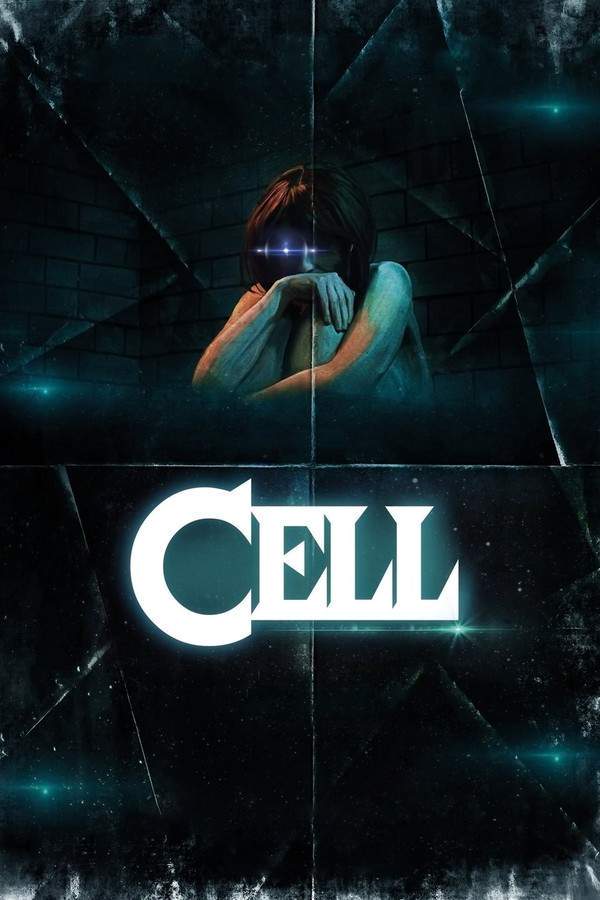
Cell (2016) movie poster

Plot Summary

Cell (2016) Plot Summary Explained

Release, runtime and language
2016 · 98 min · English
JustWatch #9,422 21
Directed by
Tod Williams
Starring
Samuel L. Jackson, Isabelle Fuhrman, John Cusack

After returning from war, a former soldier finds himself imprisoned in a Nazi stronghold. He soon discovers he is the subject of a disturbing psychological experiment testing the limits of human resilience. Isolated and disoriented, he must confront the harrowing ordeal and uncover the true nature of his captors' sinister plan.

On this page (7)
  1. 1 Where to watch
  2. 2 What happens: full plot
  3. 3 Plot questions answered
  4. 4 The book behind the movie
  5. 5 Movie threads
  6. 6 Movies like Cell
  7. 7 Every angle

Where to watch

Where to Watch Cell (2016)

Where can you watch Cell? Stream, rent or buy it in the US, including on Amazon Prime Video, Fawesome and Kanopy: current JustWatch availability with up-to-date prices.

Streaming availability powered by JustWatch

Full plot summary · contains spoilers

What Happens in Cell: Full Plot Summary

The whole story of Cell (2016) explained, from the opening scene to the final frame: every key event, every twist and what it all adds up to. Read it as a quick recap before the sequel, to check a scene you missed, or to finally understand what really happened.

Clay Riddell has just landed at the Boston airport and eagerly contacts his wife, Sharon, sharing his excitement about securing a deal for his graphic novel and its adaptations. While she expresses happiness, an unexpected twist arises when she reminds him that he had left a year ago, leading to a strained moment. Despite their fractured relationship, Clay yearns to connect with his son, Johnny. However, their conversation abruptly ends when his phone dies, prompting him to search helplessly for a charger. Facing frustration, Clay resorts to using a pay phone to call Sharon again.

In a shocking turn of events, chaos erupts as everyone using a cell phone responds to a dissonant sound, leading to violent and catastrophic behavior. The situation spirals, resulting in an airplane crash and overwhelming police distress. Amid the turmoil, Clay narrowly escapes via a subway entrance only to find a stalled train alongside a conductor named Tom and several others. With no power, they decide to trek down the dark tracks, facing grotesque, zombie-like figures dubbed "phoners." After a harrowing confrontation, Clay and Tom flee through a manhole, revealing a Boston transformed into a war zone, filled with wrecked cars and flames.

When they finally reach Clay’s apartment, a horrifying incident unfolds outside involving a motorcycle rider and a pack of phoners. Inside, Clay remembers his unsettling artwork, which eerily resembles the movie's antagonist. Desperate to reconnect, Clay contemplates calling Sharon, but Tom warns him of the continuing danger, while text messages yield nonsensical replies. Their isolation is interrupted by a bloodied neighbor, Alice, who pleads for refuge after witnessing her mother’s murder.

The trio, now uneasy allies, explore the outside world, uncovering a grim scene near a cell tower. Inside a nearby house, they find deceased individuals clutching firearms. Tom, Clay, and Alice loot what they can, only to encounter another stunned individual who morphs into a phoner before their eyes, leading to further confrontation. As noise emanates from the phoners, it becomes apparent that they follow a collective instinct, suggesting they operate like a superorganism.

Under the cover of night, they reach Gaitan Academy, where only Headmaster Charles Adai and a student named Jordan remain. They receive a warm welcome but discover a chilling sight: a sea of phoners resting across the school's soccer field. Charles posits that the phoners may represent a new evolutionary stage, prompting a debate among the group about the moral implications of this transformation. Determined to fight back, they attempt to ignite a fire on the field, leading to explosive chaos that claims Charles’s life.

As snowfall blankets the area, they seek shelter in a drive-in theater. In a poignant moment, Tom shares a scripture-laden sermon reflecting on sin, and Clay faces unsettling dreams reminiscent of his artwork. With each passing day, the group finds temporary solace in a restaurant with a "No Fo" sign, celebrating with music and dance, while grappling with their pasts.

Tragedy soon strikes when a member, Sally, transforms into a phoner after receiving a signal, igniting chaos within the restaurant. In the chaos, Alice suffers a fatal injury, leaving Clay and the remaining members to press on. Their next encounter leads them to a camping ground where they meet Ray and Denise. A survivalist at heart, Ray warns them of impending dangers posed by the phoners and hints at a deeper connection to the enigma surrounding the "man in red."

The extremities of survival push Clay to confront deeply personal conflicts, culminating in devastating decisions regarding the fate of his loved ones. After experiencing profound loss, he embarks on a perilous journey back to Kashwak, unveiling a colossal tower with throngs of phoners surrounding it. In a climactic showdown against the man in red, Clay fights to disentangle his son from the clutches of the phoner hive mind. In a moment of ultimate sacrifice, he detonates an explosive truck, liberating the phoners and reclaiming his son’s humanity, leading them toward a glimmer of hope in a fractured world.
Last updated: October 27, 2024 at 17:22

Was this helpful?

Plot questions answered

Cell Plot Explained: Your Questions Answered

The questions people ask most about Cell (2016): what happens in the confusing scenes, why the characters do what they do, the twists, hidden details and what the ending means. Each answer contains spoilers.

Q1

Why do cell phones turn people violent in Cell?

The mysterious signal emitted from cell phones transforms people into violent, zombie-like creatures called phoners. This occurs when a dissonant sound affects everyone using a cell phone simultaneously, causing them to attack anyone nearby. The exact nature of the signal remains largely unexplained in the film, but it appears to activate a primal, collective aggression in those exposed to it.

Foreshadowing: Earlier in the movie, Clay's phone dies before he can make a call, which inadvertently saves him from being affected by the signal.

  • cell phone signal
  • phoners
  • violent outbreak
  • phone sound
Q2

Who is the man in red in Cell?

The man in red is the enigmatic leader of the phoners who operates from a massive tower in Kashwak. He appears to have complete control over the phoner hive mind and specifically targets Clay's son, Johnny. His motives remain somewhat abstract, though he seems to view the phoner transformation as an evolutionary leap rather than a curse.

Foreshadowing: Ray hints at a deeper mystery surrounding a man in red early on, warning the group of greater dangers ahead.

  • man in red
  • Kashwak
  • phoner leader
  • Johnny
Q3

What happens to Johnny in Cell?

Johnny, Clay's son, becomes one of the phoners after being taken to the tower in Kashwak. The man in red specifically collects children, apparently to indoctrinate them into the hive mind. Clay must battle through the phoner horde to reach his son and free him from the collective control.

Foreshadowing: Clay's desperation to reconnect with Johnny throughout the film establishes their relationship as the emotional core driving his survival.

  • Johnny
  • Clay's son
  • rescued
  • hive mind
Q4

Why does Clay's artwork match the phoners?

Clay, a graphic novel artist, created artwork that eerily resembles the phoners before the catastrophe even occurs. This chilling coincidence suggests either prophetic intuition or a deeper, unexplained connection between Clay and the events unfolding. His artwork serves as a haunting premonition of the horror that engulfs Boston.

Foreshadowing: At his apartment, Clay recalls his unsettling artwork that depicts the movie's antagonist, establishing this mysterious link early in the story.

  • Clay artwork
  • graphic novel
  • premonition
  • antagonist
Q5

How does the phoner hive mind work?

The phoners operate as a superorganism, following a collective instinct driven by the signal. They move and attack together, responding to the man in red's commands. The group at Gaitan Academy theorizes that the phoners may represent a new evolutionary stage, with the signal serving as the mechanism that binds them into a unified, hive-mind entity.

Foreshadowing: When Sally transforms after receiving a signal, it demonstrates how the collective consciousness can override individual will.

  • hive mind
  • collective instinct
  • phoners
  • signal
  • evolution
Q6

What is the tower in Kashwak in Cell?

The tower in Kashwak is the central headquarters where the man in red commands the phoner army. It's a massive structure surrounded by thousands of phoners. This location serves as the climax of the film, where Clay must infiltrate to rescue his son from the clutches of the hive mind.

Foreshadowing: Ray's warnings about the man in red and the dangers ahead foreshadow the eventual confrontation at Kashwak.

  • Kashwak tower
  • headquarters
  • man in red
  • final battle
Q7

Why does Sally turn into a phoner?

Sally transforms into a phoner after receiving a signal, demonstrating that the phoner condition can affect anyone who hears the specific frequency. Her transformation occurs suddenly while at the restaurant, triggering chaos and leading to Alice's fatal injury. This moment proves that safety is always temporary and anyone can become a phoner.

Foreshadowing: Earlier, the group sees an individual transform into a phoner inside a house, establishing that exposure to the signal can happen at any time.

  • Sally
  • transformation
  • signal
  • restaurant
  • Alice death
Q8

How does Clay save his son in the ending of Cell?

Clay infiltrates the tower in Kashwak and fights through the phoner horde to reach Johnny. In the climactic moment, he detonates an explosive truck, using the blast to break the signal controlling the phoners. This act frees Johnny from the hive mind and restores his humanity, though it comes at the cost of massive destruction and Clay's apparent sacrifice.

Foreshadowing: The buildup throughout the film centers on Clay's determination to reach his son, with every survival decision leading toward this ultimate confrontation.

  • explosive truck
  • free son
  • restore humanity
  • sacrifice
  • ending
Q9

Why do the phoners attack non-infected people?

The phoners attack anyone who has not been converted to their collective. Under the signal's influence, they view uninfected humans as outsiders or threats to be eliminated. Their violent behavior appears automatic and coordinated, driven by the hive mind's imperative to expand its numbers and protect the group.

Foreshadowing: The initial outbreak shows phone users attacking pedestrians and each other indiscriminately, establishing the phoners' violent nature.

  • phoners attack
  • violence
  • uninfected
  • survival
Q10

What caused the cell phone catastrophe in Cell?

The catastrophe begins when a mysterious dissonant sound is transmitted through cell phones, affecting everyone using one simultaneously. This triggers violent behavior across Boston, causing plane crashes, car accidents, and widespread attacks. The source of the signal and who transmitted it remains ambiguous, though the timing appears deliberate.

Foreshadowing: Clay's phone dying before the signal hits saves him from becoming a phoner, indirectly highlighting how the signal spreads through active phone usage.

  • cell phone outbreak
  • catastrophe
  • signal
  • Boston chaos

Movie threads

More Movies Like Cell, by Mood & Story

Curated lists built around what makes Cell tick: the same mood, the same kind of story or the same emotional payoff. Each list explains why these movies belong together.

Relentless Survival Horror Movies like Cell

Stories where characters are constantly pursued by an immediate, overwhelming danger. Find more movies like Cell that feature a constant, high-stakes fight for survival. These films share a fast pace, high intensity, and a dark, desperate tone, plunging characters into catastrophic scenarios where every moment is a battle.

  • tense
  • desperate
  • chaotic
  • apocalyptic
  • grim
  • paranoid
  • Tone: dark, tense, desperate
  • Pacing: fast, chaotic, relentless
Why these movies?

The story pattern: Narratives in this thread typically begin with a sudden, catastrophic event that upends the world. The plot follows a linear, straightforward journey as protagonists move from one dangerous encounter to the next. The primary conflict is external—a direct, physical threat that must be escaped or overcome, driving a relentless and chaotic pacing.

Why they belong together: Movies are grouped here based on their shared high-intensity pacing, dark tone, and focus on immediate physical survival. They create a cohesive experience of tension and desperation, appealing to viewers who enjoy non-stop action and high-stakes scenarios in a horror or thriller context.

Bittersweet Apocalyptic Movies like Cell

Journeys where saving what matters comes at a profound, personal cost. If you liked the ending of Cell, explore films with bittersweet victories in broken worlds. These movies blend heavy emotional themes of love and loss with apocalyptic horror, where success is measured by profound sacrifice.

  • grim
  • desperate
  • emotional
  • apocalyptic
  • hopeful yet sad
  • sacrificial
  • Tone: dark, heavy, bittersweet
  • Pacing: steady, emotionally driven
Why these movies?

The story pattern: The narrative pattern involves a protagonist driven by a deeply personal mission within a larger societal collapse. The journey is emotionally heavy, fraught with trauma and loss. The climax resolves the personal quest, but the world remains shattered, and the cost of victory is deeply felt, resulting in a bittersweet ending that emphasizes the fragility of hope.

Why they belong together: These films are united by their exploration of love and sacrifice against a backdrop of utter devastation. They share a heavy emotional weight, a dark tone punctuated by moments of humanity, and a specifically bittersweet ending feel that leaves a lasting emotional impact.

If you liked this

Movies Like Cell

Similar movies to Cell: the same genre, themes or kind of story. Each one comes with its own plot summary, timeline and ending explained.
Browse all movie summaries

Every angle

Cell (2016) Explained: Plot, Timeline & Characters

Everything about Cell in one place: what happens in the plot summary, the timeline in chronological order, the characters and meaning and a spoiler-free summary. What's After the Movie adds the cast, box office and post-credit scenes.

Coming soon on iOS and Android

The Plot Explained Movie Summary App

Plot summaries, endings explained and timelines on your phone. Catch up on any movie in minutes, save your favorites and never miss a twist again.

Be the first to know when we launch. Your email stays private, always.

Learn more about the app