





Plot Explained Spoilers guaranteed!
Plot Explained

Browse by genre

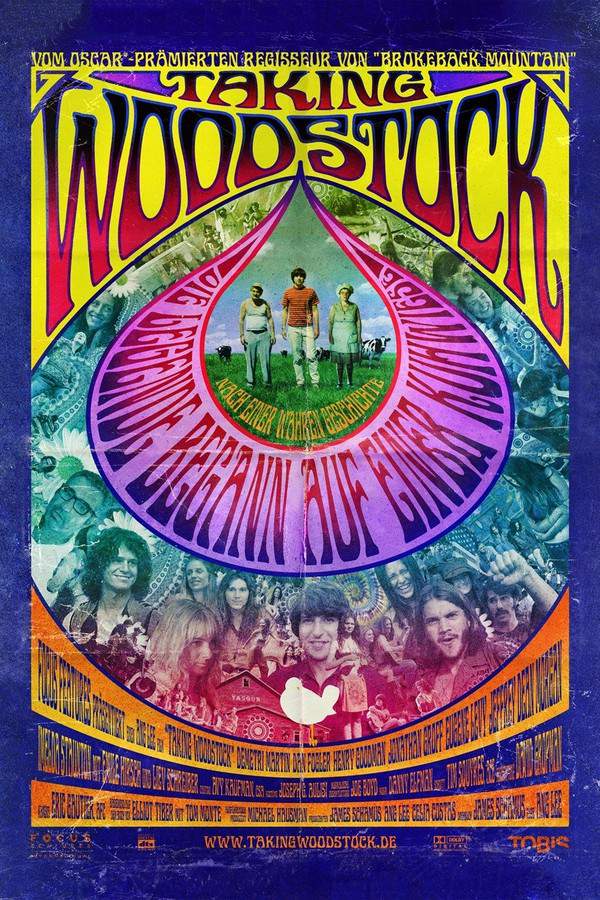
Taking Woodstock (2009) movie poster

Characters & Themes

Taking Woodstock (2009) Characters, Setting & Themes Explained

Release, runtime and language
2009 · 120 min · English
Directed by
Ang Lee
Starring
Demetri Martin
Budget
$30M

During the summer of 1969, Elliot returns home to the Catskills, where his parents run a struggling motel. Feeling stifled and yearning for something more, Elliot finds himself unexpectedly involved when a local farmer proposes hosting a music festival on his land. As the Woodstock festival rapidly grows, Elliot sees a chance to help his family and discover his own purpose amidst the vibrant atmosphere of music, art, and counterculture.

On this page (8)
  1. 1 Where to watch
  2. 2 Characters explained (3)
  3. 3 Where & when it takes place
  4. 4 Themes & meaning (2)
  5. 5 Character & meaning questions
  6. 6 Movie threads
  7. 7 Movies like Taking Woodstock
  8. 8 Every angle

Where to watch

Where to Watch Taking Woodstock (2009)

Where can you watch Taking Woodstock? Stream, rent or buy it in the US, including on Amazon Video, Apple TV Store and Fandango At Home: current JustWatch availability with up-to-date prices.

Streaming availability powered by JustWatch

3 main characters · contains spoilers

Taking Woodstock Characters Explained: Who Is Who

The main characters of Taking Woodstock (2009), heroes and villains: what drives them, how they change over the course of the story and what each of them reveals about the film's bigger ideas.

  • Elliot Tiber

    played by Demetri Martin

    Elliot Tiber is a hopeful interior designer caught between his family's expectations and his own desires. He plays a pivotal role in bringing the Woodstock Festival to Bethel, reflecting his tenacity and innovative spirit. As he grapples with his identity and family loyalty, Elliot's character development is central to the film's narrative.

    • 👨‍🎨 Designer
    • 🌈 Identity
    • 🎉 Festival Organizer
  • Betty von Vilma

    Betty von Vilma is a cross-dressing Korean War veteran who adds a unique flair to the festival by managing security. Her character embodies themes of transformation and acceptance, providing a humorous yet heartfelt perspective on identity. Vilma's presence signifies the diversity of the Woodstock experience, enriching the narrative.

    • 🎭 Security
    • 🌟 Unconventional
    • 🪖 Veteran
  • Sonia Tiber

    Sonia Tiber is Elliot's mother, who struggles with the family's financial situation and her own past as a Russian refugee. Her character arc reflects resilience and the longing for familial unity, as she learns to embrace joy amid hardship. Sonia's heartfelt moments add depth to the narrative, showcasing the emotional pull of family ties.

    • 👩‍👦 Family
    • 💔 Resilience
    • 🏳️‍🌈 Acceptance

Last updated: October 22, 2024 at 20:01

Was this helpful?

Setting

Where and When Does Taking Woodstock Take Place?

The setting of Taking Woodstock (2009): the year and time period, the places and locations, and how they shape the characters, the mood and the tension of the story.

Time period

1969

The year 1969 was marked by significant cultural and social transformations, often viewed as a pivotal moment in the counterculture movement. The Woodstock Festival, which celebrated peace, love, and music, became iconic during this time, symbolizing the hopes and dreams of a generation. It was a time of rebellion, experimentation, and newfound freedoms, impacting society in profound ways.

Location

Bethel, New York

Bethel, New York, is a small, quaint town known for its natural beauty and historical significance in the 1960s. The El Monaco Resort, owned by Elliot's parents, exemplifies the period's rustic charm, though it faces financial difficulties. The town became a famous epicenter for the Woodstock Festival, attracting thousands and transforming its reputation forever.

  • 🏞️ Scenic
  • 🎶 Music Festival
  • 🏨 Resort

Last updated: October 22, 2024 at 20:01

Was this helpful?

2 major themes

Taking Woodstock Meaning: Themes & Message Explained

What is Taking Woodstock (2009) really about? The emotional, social and philosophical themes the film keeps returning to, its symbolism and the message beneath the surface.

  • Self-Discovery

    The theme of self-discovery is central to the narrative as Elliot navigates his identity amid family pressures and societal expectations. His journey at the Woodstock Festival serves as a catalyst for personal growth and acceptance, pushing him towards understanding and embracing his true self. The festival is a backdrop for not only musical exploration but also personal revelations.

  • Family Dynamics

    The evolving dynamics within the Tiber family highlight the importance of love, support, and understanding. Initially strained due to financial burdens and hidden secrets, their relationship transforms through shared experiences at the festival. Joy and laughter replace tension, showcasing how challenges can bring families closer together.

Last updated: October 22, 2024 at 20:01

Was this helpful?

Character & theme questions

Taking Woodstock Characters & Meaning: Your Questions Answered

The questions people ask about Taking Woodstock (2009): who the characters really are, their relationships, what the symbols mean, where it takes place and what the movie is really about. Each answer contains spoilers.

Q1

Where is Taking Woodstock set?

The film is set in Bethel, New York, a small town in the Catskills region. This location became famous as the site of the 1969 Woodstock Festival. The story centers around the El Monaco Resort, a struggling motel owned by the main character's family.

  • bethel new york
  • catskills
  • setting
  • el monaco resort
Q2

What year is Taking Woodstock set in?

Taking Woodstock is set in the summer of 1969, during the height of the counterculture movement. This was the exact year the actual Woodstock Festival took place, making the setting historically significant.

  • 1969
  • summer 1969
  • historical setting
  • counterculture era
Q3

What is the El Monaco Resort in the movie?

The El Monaco Resort is the struggling family-owned motel in Bethel, New York, run by Elliot Tiber's parents. The motel represents the financial pressures facing the family and serves as a backdrop for the unfolding events surrounding the festival.

  • el monaco resort
  • motel
  • tiber family
  • financial struggles
Q4

What does the Woodstock Festival represent in Taking Woodstock?

In the film, the Woodstock Festival represents a catalyst for personal transformation and family healing. Beyond being a music event, it symbolizes hope, freedom, and the counterculture ideals of peace and self-expression that defined the era.

  • woodstock festival
  • counterculture
  • 1960s
  • music festival meaning
Q5

What is the self-discovery theme in Taking Woodstock?

Self-discovery is the central theme of the film. Protagonist Elliot Tiber grapples with his identity and aspirations while caught between his family's expectations and his own desires. The festival serves as a catalyst for his personal growth and acceptance of who he truly is.

  • self-discovery
  • identity
  • personal growth
  • ellilot tiber journey
Q6

How does Taking Woodstock portray family dynamics?

The film explores how the Tiber family's relationships evolve from being strained by financial burdens and hidden secrets to becoming more unified through shared experiences at the festival. The challenges they face together ultimately bring them closer, with joy replacing tension.

  • family dynamics
  • tiber family
  • love
  • family relationships
  • healing
Q7

Who is Elliot Tiber in the movie?

Elliot Tiber is the film's protagonist, a hopeful interior designer who returns to his family's Catskills motel feeling stifled by everyday life. He plays a pivotal role in bringing the Woodstock Festival to Bethel, and his journey centers on reconciling family loyalty with his personal aspirations and identity.

  • elliot tiber
  • protagonist
  • main character
  • interior designer
Q8

Who is Betty von Vilma in Taking Woodstock?

Betty von Vilma is a cross-dressing Korean War veteran who manages security at the festival. Her character adds unique flair and represents themes of transformation and acceptance. She embodies the diverse, accepting spirit of the Woodstock experience.

  • betty von vilma
  • security
  • korean war veteran
  • festival character
Q9

Who is Sonia Tiber in the movie?

Sonia Tiber is Elliot's mother and the wife of the motel's owner. She is a Russian refugee who struggles with the family's financial difficulties. Her character arc reflects resilience and a deep longing for familial unity as she learns to embrace joy during the festival.

  • sonia tiber
  • mother
  • russian refugee
  • family character
Q10

What was the cultural context of 1969 in the movie?

The year 1969 was a pivotal moment in American counterculture, marked by rebellion, experimentation, and newfound freedoms. The Woodstock Festival celebrated peace, love, and music, becoming an iconic symbol of a generation's hopes and dreams.

  • 1969
  • counterculture
  • 1960s
  • cultural transformation
  • peace movement
Q11

What historical impact did Woodstock have on Bethel?

Before the festival, Bethel was a small, quiet town known for its natural beauty. The 1969 Woodstock Festival transformed its reputation forever, turning it into a famous cultural landmark and attracting millions of visitors over the decades since.

  • bethel new york history
  • woodstock impact
  • cultural landmark
  • town transformation

Movie threads

More Movies Like Taking Woodstock, by Mood & Story

Curated lists built around what makes Taking Woodstock tick: the same mood, the same kind of story or the same emotional payoff. Each list explains why these movies belong together.

Movies about transformative community events like Taking Woodstock

Stories where a major event brings a community and its people together for personal growth. If you liked the way Taking Woodstock used a festival to spark personal change, explore these movies. This list features stories where large community gatherings, concerts, or events become backdrops for self-discovery and connection, capturing a similar hopeful and nostalgic vibe.

  • transformative
  • hopeful
  • chaotic
  • nostalgic
  • liberating
  • welcoming
  • Tone: hopeful, nostalgic, bittersweet
  • Pacing: steady, building momentum
Why these movies?

The story pattern: This narrative pattern follows individuals or a community as they prepare for and experience a significant event. The event itself acts as a pressure cooker, accelerating personal transformations, resolving conflicts, and forging new bonds. The journey typically ends with a bittersweet but hopeful sense of change, where characters are forever altered by their shared experience.

Why they belong together: These films are grouped together because they share a core belief in the power of collective experience. They have a steady, building pace that leads to a cathartic event, a hopeful tone despite challenges, and a medium emotional weight focused on themes of self-discovery and community.


Bittersweet coming-of-age stories set in a specific era like Taking Woodstock

Character-driven stories of personal awakening set against a defining cultural moment. For viewers who enjoyed the 1960s setting and Elliot's personal journey in Taking Woodstock, this list highlights similar movies. These films feature protagonists finding themselves amidst the turmoil or vibrancy of a particular time period, blending nostalgic atmosphere with heartfelt, character-focused drama.

  • nostalgic
  • bittersweet
  • coming of age
  • self-discovery
  • liberating
  • transformative
  • Tone: bittersweet, hopeful, nostalgic
  • Pacing: steady, character-driven
Why these movies?

The story pattern: The narrative follows a protagonist feeling stifled by their current life who finds an escape or new perspective through the cultural forces of their time. Their awakening is tied to the era's music, art, or social movements, leading to a climax of personal liberation. The ending is typically bittersweet, acknowledging the growth achieved but also the loss or change required to move forward.

Why they belong together: These movies share a focus on a specific historical atmosphere as a character in itself. They combine a straightforward, character-driven plot with a medium emotional weight, resulting in a bittersweet ending feel. The pacing is steady, allowing for immersion in the era and the protagonist's gradual transformation.

If you liked this

Movies Like Taking Woodstock

Similar movies to Taking Woodstock: the same genre, themes or kind of story. Each one comes with its own plot summary, timeline and ending explained.

Browse all movie summaries

Every angle

Taking Woodstock (2009) Explained: Plot, Timeline & Characters

Everything about Taking Woodstock in one place: what happens in the plot summary, the timeline in chronological order, the characters and meaning and a spoiler-free summary. What's After the Movie adds the cast, box office and post-credit scenes.

Coming soon on iOS and Android

The Plot Explained Movie Summary App

Plot summaries, endings explained and timelines on your phone. Catch up on any movie in minutes, save your favorites and never miss a twist again.

Be the first to know when we launch. Your email stays private, always.

Learn more about the app