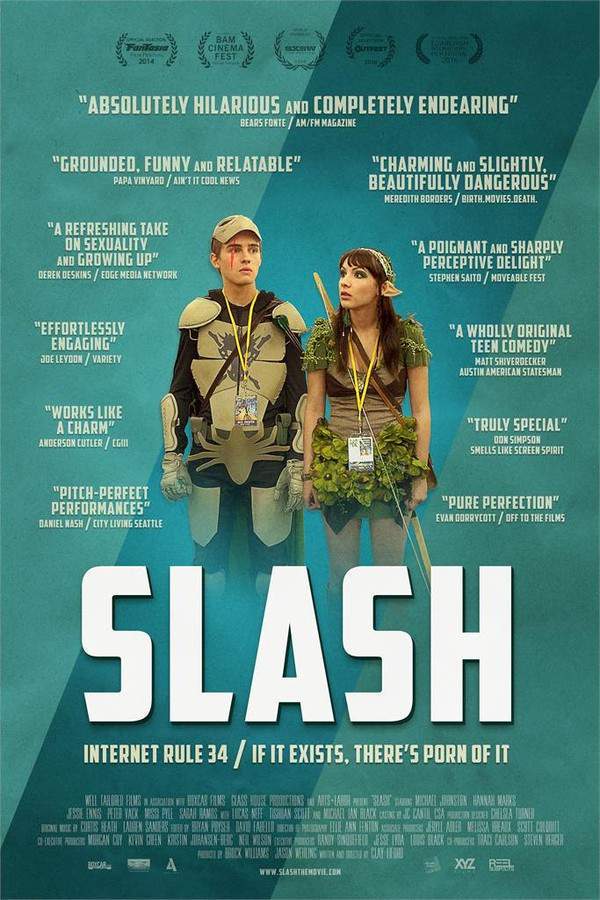
Fifteen-year-old Neil Shafer is a high school student who keeps a quiet, nerdy life on the sidelines while nurturing a secret passion: writing slash fiction that imagines intimate relationships between two male characters from various TV and film series, with a particular fondness for the Vanguard books and films. His writings are a personal outlet, a way to explore feelings he’s still trying to understand, all told in a clear, earnest voice that fits a teenager learning to own his voice.
Everything changes when his exercise book, the place where he pours his ideas, is snatched by another student and spread around the school. The embarrassment is intense, as peers react to the reveal in different, sometimes cruel, ways. The book lands in the hands of Julia Jordan, who believes the pages belong to her, and her mistaken ownership becomes the unlikely spark that brings Neil and Julia together. Despite the awkward beginning, they discover a shared love for writing slash, and what starts as a rough collision gradually grows into a strong, supportive friendship.
Encouraged by Julia, Neil takes a leap and publishes his work on the fan fiction site The Rabbit Hole. The response is immediate and positive, and he begins to build a following that confirms what he’s long suspected: there’s a community out there that appreciates his voice and his imagination. This online attention also brings Neil into new conversations about who he is and what he wants—his feelings aren’t entirely clear to him, including whether he is gay or simply drawn to Julia as a friend and collaborator. The line between friendship, attraction, and identity becomes a quiet preoccupation as he navigates the feedback from readers and the harder questions he starts asking himself in private.
As confidence grows, Julia pushes Neil toward a more public moment: a special session organized by The Rabbit Hole at Comicpalooza, a comic book convention where they’ve been invited to read their works aloud. The event promises a platform where Neil can share his writing with a larger audience and see how his stories resonate in real life, not just in comments on a screen. Alongside this, Neil engages with Denis, a gay fellow reader who urges him to consider meeting people beyond the anonymous space of the online world. The mix of excitement and nerves intensifies as Neil decides to participate, decide what he wants to reveal, and how to present himself to an audience that will be listening closely.
In a turning moment that reframes the whole experience, Neil tells a lie to gain entry: he claims to be eighteen so he can attend events and meet others more freely. The truth hasn’t caught up with the lie yet, but the moment’s weight is clear—young authors are stepping into a larger arena than they anticipated, and the consequences of bending the truth begin to surface. The story follows Neil’s journey through these concerns, balancing his creative ambitions with the realities of adolescence, friendship, and the complexities of online communities.
Throughout these twists and turns, the narrative stays centered on growth, self-discovery, and the power of creative expression to connect people who share a passion for storytelling. It presents a thoughtful look at how teenagers negotiate identity, friendship, and the tension between private writers’ rooms and public performances, all while remaining grounded in Neil’s honest, tentative, and hopeful voice. The world of fan fiction, school life, and convention culture becomes a lens through which Neil learns to understand himself a little better, even as he faces the consequences of decisions made in the moment. The result is a story that feels intimate and real, empathetic in its portrayal of a teen searching for belonging, and patient in its exploration of the messy process of growing up.