Year: 1992
Runtime: 110 mins
Language: English
Director: John Mackenzie
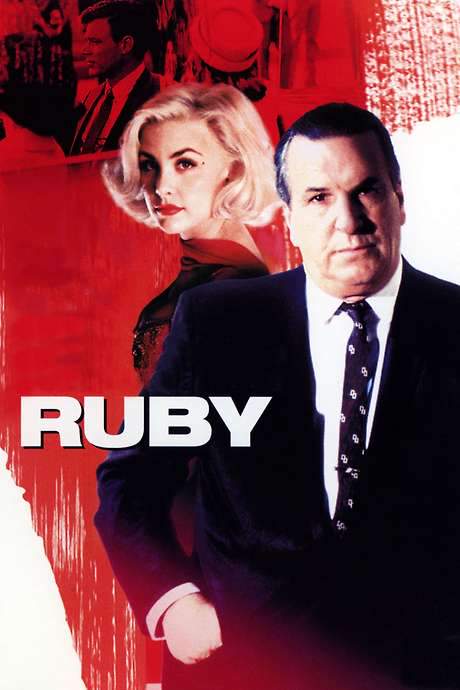
Blending real events with dramatized storytelling, the film follows Jack Ruby and a club dancer named Candy Cane as they become entangled in a shadowy plot surrounding the assassination of President John F. Kennedy. Fact and fiction intertwine, revealing the gritty underworld that draws the two into a conspiracy to kill the president.
Warning: spoilers below!
Haven’t seen Ruby yet? This summary contains major spoilers. Bookmark the page, watch the movie, and come back for the full breakdown. If you're ready, scroll on and relive the story!
Trace every key event in Ruby (1992) with our detailed, chronological timeline. Perfect for unpacking nonlinear stories, spotting hidden connections, and understanding how each scene builds toward the film’s climax. Whether you're revisiting or decoding for the first time, this timeline gives you the full picture.
Last updated: October 09, 2025 at 11:29
Find frequently asked questions about the Ruby (1992) timeline, including chronological order, nonlinear jumps, cause-and-effect links, and scene sequence clarifications. This timeline FAQ helps explain when key events happen, how moments connect, and why the story unfolds in that specific order.
Jack Ruby kills Louie Vitali because he refuses the covert order to assassinate Santos Alicante. When Vitali reveals the true mission is to kill Santos using a disguised pistol-camera, Ruby chooses to protect the elderly mobster instead. He shoots Vitali, bribes the guards, and helps Santos escape, effectively switching sides from his original mob associates to protecting the man he was supposed to kill.
Earlier, the brutal torture scene of a man on a meat hook foreshadows the violent consequences of crossing the mob.
Jack Ruby kills Lee Harvey Oswald on November 22, 1963, during a police transfer, two days after JFK's assassination. The film suggests Ruby acts partly from emotion over the President's death, partly from a desire for notoriety, and partly because he believes eliminating Oswald will silence him and protect larger conspiracies. Ruby later refuses to explain his actions or plead insanity, insisting he should testify before Congress.
Maxwell's earlier hint that the conspiracy targets 'something bigger' foreshadows the assassination's national scope.
Maxwell is portrayed as a shadowy government operative with clear CIA connections who pressures Jack Ruby to become an informant on Santos Alicante and his mob circle. He provides Ruby with a tape recorder to document his contacts and implies the government has interests beyond just monitoring the mob. Maxwell's presence throughout the film suggests the CIA is coordinating with organized crime for political assassinations, including the plot against Castro that shifts to targeting President Kennedy.
Maxwell's vague references to 'another target' in Las Vegas foreshadow the JFK assassination.
Candy Cane initially stays in Las Vegas after being offered a singing contract backed by powerful figures connected to the casino. However, she abruptly returns to Dallas, telling Ruby she walked away from the job. Ruby senses she has uncovered part of the broader conspiracy between the CIA and the mob. Her return suggests she prioritized staying with Ruby over the safer Vegas lifestyle, though her departure also leaves Ruby to face the danger alone.
The earlier gala scene where Candy sits at Kennedy's table while discussing explosive cigars hints at her proximity to the conspiracy.
The film depicts Diego, Jack Ruby's Cuban bartender, as one of the actual shooters during the JFK assassination. He fires from the Texas School Book Depository alongside other shooters, while Lee Harvey Oswald serves as his handler. This directly implicates Ruby's inner circle in the assassination conspiracy, connecting the local Dallas mob operation to the national political tragedy.
Earlier scenes of Ferrie and Diego traveling to New Orleans to recruit Oswald establish their connection before the assassination.
Jack Ruby refuses to plead insanity or offer any explanation for killing Oswald, instead insisting he should be taken to Washington to testify before Congress. He believes his act was purposeful rather than impulsive, and he wants to reveal what he knows about the conspiracy. This strategy fails as he is convicted and sentenced to death, and his requests for a Congressional hearing are ignored. Ruby ultimately dies of cancer in prison in 1967 without ever testifying.
Maxwell's earlier warning that Ruby should 'stay silent and fade away' contrasts with Ruby's defiant courtroom strategy.
At the Las Vegas gala, mob figures discuss plans to smuggle explosive cigars to Fidel Castro as part of the broader CIA-backed efforts to assassinate the Cuban leader. This represents the initial conspiracy that later shifts from targeting Castro to targeting President Kennedy. Maxwell's later implication that 'another target' is in mind connects the cigar plot to the larger assassination plot against JFK.
The Havana mission involving Santos Alicante establishes the Cuba-CIA-mob connection that leads to the cigar plot.
Jack Ruby agrees to accompany Louie Vitali to Cuba because the old mob associate arrives with a secret assignment that Ruby cannot easily refuse. Ruby brings Candy Cane along, signaling a shift from his local Dallas operations to international crime. The mission is officially to extract the imprisoned mobster Santos Alicante, but Ruby soon discovers the true purpose is to kill Santos, which leads to his decisive break from Vitali.
The opening torture scene establishes the dangerous stakes of crossing mob assignments.
The film depicts multiple shooters involved in President Kennedy's assassination. It shows Diego firing from the Texas School Book Depository with Oswald acting as his handler, while a second team fires the fatal shot from the grassy knoll. This portrayal reflects various conspiracy theories about the assassination, suggesting a coordinated effort rather than a lone gunman.
The complex web of CIA-mob connections throughout the film builds toward this depiction of a multi-perpetrator assassination.
Yes, Jack Ruby believes he is being slowly poisoned by injections while in prison. He suspects that powerful forces are eliminating him to prevent him from testifying before Congress about what he knows regarding the CIA-mob conspiracy and the JFK assassination. Ruby dies of cancer in 1967, and the film leaves open whether his suspicions were accurate or paranoid.
Maxwell's lingering presence at Ruby's conviction and the ignored Congressional hearing request establish the cover-up theme.
Discover curated groups of movies connected by mood, themes, and story style. Browse collections built around emotion, atmosphere, and narrative focus to easily find films that match what you feel like watching right now.
Where lone figures uncover a vast web of corruption, leading to a bleak end.Explore movies like Ruby that delve into dark political conspiracies and cover-ups. If you enjoyed the gritty, oppressive atmosphere and the fatalistic journey of uncovering a truth too big to handle, this list of similar thrillers is for you. Discover stories of historical fiction, government corruption, and lone wolves against the system.
The narrative typically follows a protagonist, often an outsider or someone with a personal stake, who uncovers fragments of a larger, hidden plot. As they dig deeper, they face increasing danger and isolation, realizing the conspiracy's reach extends far beyond what they imagined. The journey is less about victory and more about the grim revelation of systemic corruption, often ending with the protagonist defeated, silenced, or consumed by the very machine they sought to expose.
Movies in this thread share a dark, paranoid tone and a steady, intricate pacing that mimics the process of piecing together a puzzle. They feature high-stakes tension, complex plotting, and a heavy emotional weight stemming from the futility of fighting an all-powerful enemy. The bleak, fatalistic endings reinforce the core theme of powerless individuals in a corrupt world.
Stories where characters are pulled into a criminal underworld with no way out.If you liked the grim portrayal of mob involvement and the fatalistic spiral into the criminal underworld in Ruby, you'll find more movies with a similar vibe here. These stories focus on the inescapable nature of crime, mentorship under sinister figures, and the heavy emotional weight of corruption, often culminating in a bleak and tragic conclusion.
The narrative arc is one of entrapment and collapse. A character is drawn into a criminal ecosystem—through mentorship, coercion, or circumstance—and initially may believe they can control their situation. However, the world's inherent violence and corruption slowly consume them. Key relationships are often toxic or doomed, and every attempt to break free only tightens the grip of the underworld, leading irrevocably to a tragic endpoint.
These films are united by their dark tone, high intensity from sustained danger, and heavy emotional weight. The pacing is typically steady, allowing the sense of doom to build methodically. They share a bleak worldview, exploring themes of corruption, abuse of power, and the loss of innocence, resulting in endings that offer little to no hope or redemption.
Don't stop at just watching - explore Ruby in full detail. From the complete plot summary and scene-by-scene timeline to character breakdowns, thematic analysis, and a deep dive into the ending - every page helps you truly understand what Ruby is all about. Plus, discover what's next after the movie.
Read a complete plot summary of Ruby, including all key story points, character arcs, and turning points. This in-depth recap is ideal for understanding the narrative structure or reviewing what happened in the movie.
Discover the characters, locations, and core themes that shape Ruby. Get insights into symbolic elements, setting significance, and deeper narrative meaning - ideal for thematic analysis and movie breakdowns.
Discover movies like Ruby that share similar genres, themes, and storytelling elements. Whether you’re drawn to the atmosphere, character arcs, or plot structure, these curated recommendations will help you explore more films you’ll love.
Ruby (1992) Plot Summary & Movie Recap
Ruby (1992) Scene-by-Scene Movie Timeline
Ruby (1992) Spoiler-Free Summary & Key Flow
Movies Like Ruby – Similar Titles You’ll Enjoy
Jackie (2016) Complete Plot Breakdown
JFK (1991) Plot Summary & Ending Explained
JFK Revisited: Through The Looking Glass (2021) Complete Plot Breakdown
Oswald's Ghost (2007) Detailed Story Recap
Peter Jennings Reporting: The Kennedy Assassination - Beyond Conspiracy (2003) Detailed Story Recap
Ruby Herring Mysteries: Prediction Murder (2020) Story Summary & Characters
JFK: Destiny Betrayed (1000) Film Overview & Timeline
JFK Unsolved: The Real Conspiracies (2021) Complete Plot Breakdown
Kennedy (2023) Plot Summary & Ending Explained
Four Days In November (1964) Full Summary & Key Details
Ruby Gentry (1952) Story Summary & Characters
Fatal Deception: Mrs. Lee Harvey Oswald (1993) Ending Explained & Film Insights
JFK: One Day in America (1000) Spoiler-Packed Plot Recap
Ruby Cairo (1992) Story Summary & Characters
The American Trap (2008) Complete Plot Breakdown