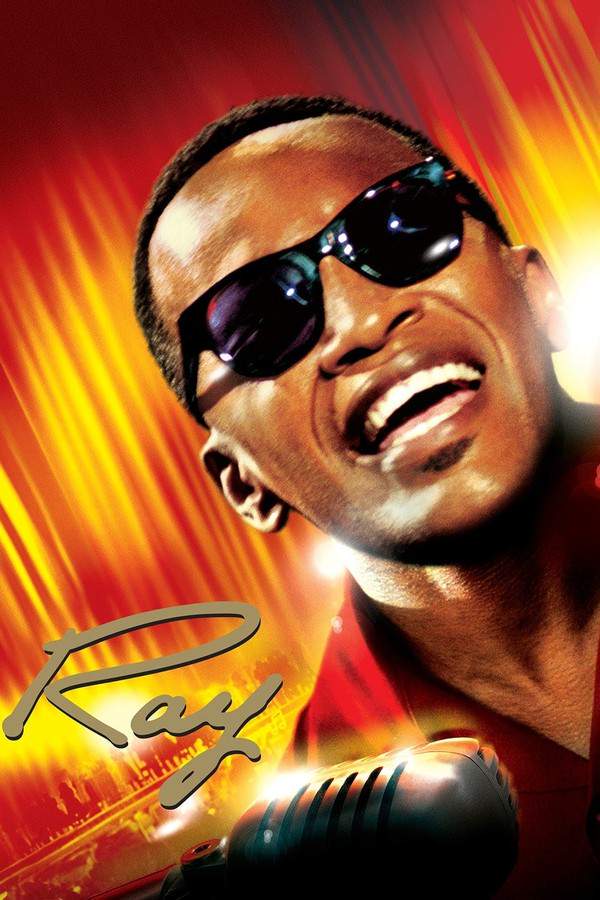
This film chronicles the life of Ray Charles, portraying his remarkable journey from a childhood marked by tragedy to becoming a groundbreaking music icon. Jamie Foxx delivers an award-winning performance as Charles, showcasing his determination to overcome adversity and revolutionize the landscape of soul music. The story explores both the triumphs and personal struggles that defined his career and cemented his enduring legacy as one of the greatest entertainers of all time.
Find where to stream, rent, or buy Ray (2004) in the US with current JustWatch availability, up-to-date pricing, and platform listings for subscription, rental, and digital purchase options.
Warning: spoilers below!
Haven’t seen Ray yet? This summary contains major spoilers. Bookmark the page, watch the movie, and come back for the full breakdown. If you're ready, scroll on and relive the story!
Trace every key event in Ray (2004) with our detailed, chronological timeline. Perfect for unpacking nonlinear stories, spotting hidden connections, and understanding how each scene builds toward the film’s climax. Whether you're revisiting or decoding for the first time, this timeline gives you the full picture.
Last updated: November 08, 2024 at 02:02
Find frequently asked questions about the Ray (2004) timeline, including chronological order, nonlinear jumps, cause-and-effect links, and scene sequence clarifications. This timeline FAQ helps explain when key events happen, how moments connect, and why the story unfolds in that specific order.
When Ray joined a predominantly white country band in 1946, he was required to wear sunglasses to hide his blindness from the audience. To explain his sight impairment, he fabricated a story about losing his vision during the Normandy landings. This lie protected his job and allowed him to perform with the band despite their ignorance about his disability.
In Seattle, Ray worked at a nightclub owned by Marlene Andre, who manipulated and exploited his talent. She siphoned off his earnings while paying him far less than what he was worth, taking advantage of his youth and trusting nature. When Ray discovered her dishonest dealings, he broke free from her control and teamed up with Quincy Jones, marking a significant turning point in his career.
Jack Lauderdale from Swing Time Records advised Ray to adopt the name "Ray Charles" to distinguish him from the famous boxer Sugar Ray Robinson, who was already well-known at the time. This stage name would help avoid confusion and establish his own unique identity in the music industry.
Della Bea, the daughter of a preacher, struggled with Ray's decision to blend gospel elements into his secular music. She came from a religious background where gospel and secular music were kept separate. However, she also recognized his extraordinary talent and his genuine musical innovation, creating an internal conflict in their marriage.
Despite his marriage to Della Bea, Ray engaged in a tumultuous affair with singer Mary Anne Fisher. The affair complicated his personal life and created tension in his marriage. The movie portrays this as part of the complex, flawed nature of Ray's personal relationships during his rise to fame.
Ray refused to perform for segregated audiences, taking a strong stand against racial discrimination. This decision was influenced by his own experiences with racial prejudice and his growing awareness of the civil rights movement. His stance not only reflected his personal values but also enhanced his legacy as both a musician and an activist for racial equality.
Ray's blindness came after a tragic event where his younger brother George drowned in a washbasin. Following this heartbreaking tragedy, Ray began experiencing vision problems and by the age of seven, he was completely blind. While the exact medical cause isn't specified in the film, the trauma of witnessing his brother's death appears to have triggered his vision deterioration.
The film establishes Ray's close bond with his brother George before the accident.
Ray developed a drug addiction as he faced mounting personal and professional pressures. The stress of his rising fame, the demands of touring, the complexities of his relationships, and the weight of his childhood traumas all contributed to his substance abuse. The film depicts addiction as one of the significant challenges he had to overcome on his path to redemption.
Ray eventually sought rehabilitation and worked through his addiction issues. A defining moment in his recovery came through a poignant confrontation with his deceased mother and brother in his mind, which helped guide him toward redemption. By 1979, he had triumphed over his addiction and was honored by the state of Georgia.
The film earlier shows Ray's deep connection to his mother and the trauma of losing his brother.
In 1979, the state of Georgia honored Ray Charles by adopting "Georgia On My Mind" as the official state song. This recognition came after Ray had successfully overcome his addiction and rebuilt his career. The song had become one of his signature hits, and this tribute solidified his enduring legacy in American music history.
Ray developed a unique method to perceive musical elements by using the hardness of his shoes to feel different vibrations. This ingenious technique helped him navigate without assistance and enabled him to detect musical nuances during performances. It exemplifies his remarkable ability to adapt and find innovative solutions despite his blindness.
Discover curated groups of movies connected by mood, themes, and story style. Browse collections built around emotion, atmosphere, and narrative focus to easily find films that match what you feel like watching right now.
Uplifting stories of artists overcoming personal demons to achieve legendary status.Explore movies like Ray that chronicle the lives of legendary musicians. If you enjoyed the story of Ray Charles's journey from adversity to icon, you'll find similar inspiring biographies of artists who overcame great odds to leave a lasting legacy. These films blend emotional depth with the power of music.
These narratives typically follow a chronological, steady-paced arc from a protagonist's humble or tragic beginnings through their personal and professional struggles, culminating in a legacy-celebrating but bittersweet conclusion. The central conflict is often internal, battling addiction or trauma, as well as external, facing racial or societal injustice.
Movies are grouped here for their shared focus on a real-life artist's arduous journey, balanced tone of gritty hardship and hopeful triumph, steady biographical pacing, and heavy emotional weight centered on themes of legacy, addiction, and overcoming adversity.

Intense character studies where profound personal flaws are conquered through resilience.Discover movies with redemption arcs similar to Ray. If you were moved by Ray Charles's battle with addiction and his journey toward personal and professional redemption, this collection features other intense character dramas about individuals overcoming their deepest struggles to find a form of peace and triumph.
The narrative pattern involves a protagonist burdened by a significant flaw or trauma (e.g., addiction, guilt) that dictates their life. The story is a steady unpacking of this burden through consequential events and relationships, leading to a climactic point of choice or realization. The ending acknowledges the scars of the journey while affirming the value of the struggle.
These films share a high-intensity, heavy emotional core driven by a central character's arduous path from a state of profound personal crisis to a hard-earned state of redemption or acceptance, often with a bittersweet resolution.
Don't stop at just watching - explore Ray in full detail. From the complete plot summary and scene-by-scene timeline to character breakdowns, thematic analysis, and a deep dive into the ending - every page helps you truly understand what Ray is all about. Plus, discover what's next after the movie.
Read a complete plot summary of Ray, including all key story points, character arcs, and turning points. This in-depth recap is ideal for understanding the narrative structure or reviewing what happened in the movie.
Discover the characters, locations, and core themes that shape Ray. Get insights into symbolic elements, setting significance, and deeper narrative meaning - ideal for thematic analysis and movie breakdowns.
Discover movies like Ray that share similar genres, themes, and storytelling elements. Whether you’re drawn to the atmosphere, character arcs, or plot structure, these curated recommendations will help you explore more films you’ll love.
Ray (2004) Plot Summary & Movie Recap
Ray (2004) Scene-by-Scene Movie Timeline
Ray (2004) Spoiler-Free Summary & Key Flow
Movies Like Ray – Similar Titles You’ll Enjoy
Blaze (2018) Detailed Story Recap
Get On Up (2014) Story Summary & Characters
Miles Ahead (2016) Ending Explained & Film Insights
Ray Donovan: The Movie (2022) Ending Explained & Film Insights
Raymond & Ray (2022) Full Movie Breakdown
Cadillac Records (2008) Film Overview & Timeline
Antwone Fisher (2002) Detailed Story Recap
Safety (2020) Full Summary & Key Details
Bohemian Rhapsody (2018) Detailed Story Recap
Rhapsody in Blue (1945) Film Overview & Timeline
Miles (2017) Plot Summary & Ending Explained
#FreeRayshawn (1000) Ending Explained & Film Insights
The Music of Satyajit Ray (1984) Complete Plot Breakdown
Ballad in Blue (1965) Story Summary & Characters
Sugar Ray Robinson: The Bright Lights and Dark Shadows of a Champion (1998) Ending Explained & Film Insights