






Plot Explained Spoilers guaranteed!
Plot Explained

Browse by genre

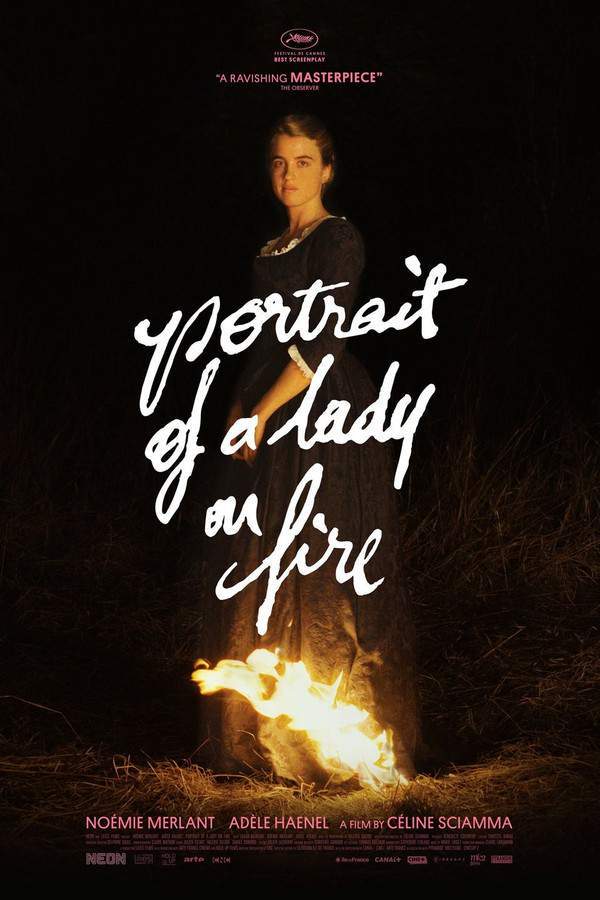
Portrait of a Lady on Fire (2019) movie poster

Ending Explained

Portrait of a Lady on Fire (2019) Ending Explained – Final Scene & Meaning

Release, runtime and language
2019 · 122 min · French
Echo score 91
JustWatch #668 118
Directed by
Céline Sciamma
Starring
Adele Haenel, Armande Boulanger, Cécile Morel, Christel Baras, Clément Bouyssou, Guy Delamarche
Budget
$5.7M

In 18th-century France, Marianne, a painter, is commissioned to paint Héloïse, a young woman who is about to be married. Héloïse refuses to pose, so Marianne must observe her and paint her portrait in secret. As the two women spend time together, an intense connection develops, and their relationship transcends the boundaries of artist and model, blossoming into a passionate and forbidden love affair that is captured in the evolving portrait.

On this page (7)
  1. 1 Where to watch
  2. 2 What happens at the end
  3. 3 Final events in order
  4. 4 Ending questions answered
  5. 5 Movie threads
  6. 6 Movies like Portrait of a Lady on Fire
  7. 7 Every angle

Where to watch

Where to Watch Portrait of a Lady on Fire (2019)

Where can you watch Portrait of a Lady on Fire? Stream, rent or buy it in the US, including on HBO Max, Kanopy and Apple TV Store: current JustWatch availability with up-to-date prices.

Streaming availability powered by JustWatch

Ending explained · contains spoilers

What Happens at the End of Portrait of a Lady on Fire?

How Portrait of a Lady on Fire (2019) ends, what the final scene means, which earlier moments set it up and how to read the ending if the film leaves it open. The full ending explained, with every spoiler.

The ending of Portrait of a Lady on Fire is a poignant culmination of the film’s exploration of love, memory, and art. Throughout the story, Marianne and Héloïse’s relationship develops into something deeply meaningful, but the inevitable separation looms. The film draws on the Greek myth of Orpheus and Eurydice, symbolizing their love as something transient and almost forbidden—beautiful, but doomed. Marianne’s final painting captures the moment Orpheus looks back at Eurydice, a metaphor for her own choice: she paints Héloïse as the tragic hero, cementing her memory on the canvas. The film’s decision to show Marianne's second, almost unconscious, act of turning to face Héloïse—when Héloïse calls out to her in an informal, intimate way—signifies that, in her heart, Marianne truly sees and loves her, and that Héloïse also desires connection even if they cannot be together in the present.

The closing scene at the concert emphasizes the enduring power of memory and art. Marianne watches Héloïse lost in the music, capturing her expression through her gaze—an act of love and longing that echoes the myth’s tragic theme. The choice of music, Vivaldi’s “Summer,” about a fleeting summer day interrupted by a storm, parallels the fleeting nature of their love. Yet, in this silence and in Marianne’s perspective, there’s a profound acknowledgment: love isn't about possession or eternal togetherness, but about preserving those moments that continue to live within us through art and memory. Céline Sciamma deliberately crafts an ending that isn’t happy in the conventional sense but feels honest and full of hope—love that continues beyond loss, immortalized in the heart and canvas.

The film’s refusal to give the characters a tragic ending underscores a belief that love, while often fleeting, can still be wholeheartedly meaningful and rich with beauty. Sciamma openly states she wanted to challenge the typical notions of “happiness,” emphasizing that love’s true power lies in its lingering memories and the way art helps us hold onto what was lost. In Portrait of a Lady on Fire, love is cherished not through possession but through the eternal echo of shared moments, making the ending both devastating and ultimately poetic, a testament to the profound ways love shapes us.

Last updated: June 25, 2025 at 08:57

Was this helpful?

The last 4 events

How Portrait of a Lady on Fire Ends: The Final Events in Order

The last events of Portrait of a Lady on Fire (2019) in chronological order, the run-up to the ending explained above. The complete timeline has all 17 events, scene by scene.

Open the full timeline
  1. Final Portrait Approval

    As the new portrait is unveiled, the Countess expresses her satisfaction with Marianne's work. This approval acts as a bittersweet moment for both women as they approach the end of their time together.

  2. Heartbreaking Goodbye

    On the morning of Marianne's departure, she turns to find Héloïse in her wedding dress, a poignant reminder of the life that awaits her. This encounter solidifies the emotional weight of their time together and leaves a lasting impact on Marianne.

  3. Future Encounters

    In the present, Marianne reflects on two serendipitous encounters with Héloïse years later. The first occurs at an art exhibition where Héloïse is depicted in a portrait, echoing their intimate past.

  4. The Concert in Milan

    The second encounter takes place at a concert in Milan, where Marianne sees Héloïse among the patrons. This moment encapsulates the profound emotional connection they still share, even if separated by time.

    Where
    Milan

Ending questions answered

Portrait of a Lady on Fire Ending: Your Questions Answered

The questions people ask most about the ending of Portrait of a Lady on Fire (2019): what the final scene means, how the twist works, what happens to each character and how to read the ending. Each answer contains spoilers.

Q1

Why does Marianne paint Orpheus looking back at Eurydice?

Marianne paints this mythological moment as a metaphor for her own choice with Héloïse. In the myth, Orpheus loses Eurydice by turning back to look at her; Marianne chooses to turn and acknowledge Héloïse when she calls her name informally, signifying that in her heart she truly sees and loves her. The painting becomes a way to immortalize this moment of recognition and longing, cementing Héloïse's memory on canvas.

  • orpheus
  • eurydice
  • marianne painting
  • portrait
  • mythology
Q2

What does the final concert scene mean?

The concert scene represents the enduring power of memory and art. Marianne watches Héloïse lost in the music, capturing her expression through her gaze, an act of love and longing. The moment shows that their connection persists beyond physical separation; love continues to live within them through shared memories and the art Marianne has created.

  • concert
  • marianne
  • heloise
  • music
  • watching
Q3

Why does Héloïse smile and cry at the end?

Héloïse's tears and subtle smile express the bittersweet nature of their love, she feels joy in remembering their connection and sorrow in knowing they cannot be together. Her expression reflects the film's message that love can be profoundly meaningful even when it ends, combining both sorrow and hope.

  • heloise
  • tears
  • smile
  • emotion
  • concert
Q4

Is the ending happy or sad?

The ending is deliberately bittersweet rather than conventionally happy or tragic. The love affair ends in separation, Héloïse marries someone else and they part ways, but both characters carry their connection through memory and art. Director Céline Sciamma wanted to challenge typical notions of happiness, emphasizing that love's true power lies in lingering memories rather than possession.

  • bittersweet ending
  • happiness
  • separation
  • love
Q5

What does Marianne's decision to turn around represent?

When Héloïse calls Marianne's name in an informal, intimate way, Marianne turns to face her, a second, almost unconscious act that signifies she truly sees and acknowledges Héloïse as more than just a subject. This moment contrasts with the Orpheus myth where looking back causes loss; here, Marianne's turn represents choosing to honor the memory of their love rather than walking away from it.

  • marianne
  • turn around
  • looking back
  • choice
Q6

Why does the film use the Orpheus and Eurydice myth?

The Orpheus and Eurydice myth symbolizes the transient, almost forbidden nature of Marianne and Héloïse's love, beautiful but doomed by societal constraints. The myth explores themes of loss, memory, and the power of art to preserve what has been lost, all central to the film's meditation on love that cannot last but endures through memory and creation.

  • orpheus
  • eurydice
  • mythology
  • symbolism
  • love
Q7

What does Vivaldi's Summer represent in the ending?

Vivaldi's "Summer," which plays at the concert, describes a fleeting summer day interrupted by a storm, directly paralleling the brief, passionate nature of Marianne and Héloïse's love. The music reinforces the theme of something beautiful that cannot be held onto, mirroring how their relationship blossoms briefly before being lost to society's demands.

  • vivaldi
  • summer
  • music
  • storm
  • fleeting
Q8

How does love continue after the characters separate?

The film suggests love persists through memory and art rather than physical presence. Marianne's paintings preserve Héloïse, and the ending shows both women carrying their connection forward, Marianne through her art, Héloïse through her willingness to revisit the memory. The closing scene affirms that love doesn't require possession; it can live eternally in shared moments and creative works.

  • memory
  • art
  • separation
  • love persists
Q9

Why doesn't the film give the characters a tragic ending?

Sciamma chose to avoid a tragic ending to emphasize that love's meaning isn't lost when relationships end. Rather than depicting death or destruction, the film shows both women alive and carrying their love forward. This approach challenges the trope that same-sex love must end in tragedy, presenting instead a hopeful message about love's lasting impact through memory and art.

  • tragic ending
  • celine sciamma
  • representation
  • hope

Movie threads

More Movies Like Portrait of a Lady on Fire, by Mood & Story

Curated lists built around what makes Portrait of a Lady on Fire tick: the same mood, the same kind of story or the same emotional payoff. Each list explains why these movies belong together.

Movies about forbidden love like Portrait of a Lady on Fire

Passionate affairs that defy society, ending in profound sacrifice and remembrance. If you were moved by the secret, passionate romance in Portrait of a Lady on Fire, explore more movies about forbidden love. This thread gathers historical dramas and romantic tragedies where societal constraints force lovers apart, creating stories with heavy emotional weight and bittersweet endings.

  • forbidden romance
  • yearning
  • melancholic
  • tragic love
  • emotional
  • repressed desire
  • Tone: melancholic, passionate
  • Pacing: slow, deliberate
Why these movies?

The story pattern: Stories in this thread typically follow a pattern of discovery, intense connection, and inevitable separation. Characters find profound love in a context that forbids it, leading to a conflict between personal desire and external duty. The climax often involves a painful choice or forced parting, with the ending focusing on the lasting impact of the lost love.

Why they belong together: Movies are grouped here based on their core theme of illicit romance, their melancholic tone, and the significant emotional weight they carry. They share a focus on the internal struggle of the characters and the poignant beauty found in a love that is beautiful precisely because it is doomed.

Atmospheric slow burn movies like Portrait of a Lady on Fire

Quiet, painterly films where mood and subtle character observation drive the narrative. Fans of the quiet, painterly pace and intense intimacy of Portrait of a Lady on Fire will enjoy this collection of atmospheric slow burn movies. These films use deliberate pacing, strong visual composition, and subtle performances to explore complex characters and relationships in a deeply immersive way.

  • slow burn
  • atmospheric
  • intimate
  • quiet
  • reflective
  • observational
  • Tone: intimate, reflective, melancholic
  • Pacing: slow, deliberate, observational
Why these movies?

The story pattern: The narrative in these films is often minimalistic, driven by quiet moments, lingering glances, and unspoken tensions. The plot unfolds gradually, focusing on the development of a central relationship or a character's internal journey. The setting and atmosphere are as important as the dialogue, creating a world that feels tangible and charged with unexpressed emotion.

Why they belong together: These films are grouped by their shared slow pacing, high emphasis on atmosphere, and focus on intimate character dynamics. They create a specific, contemplative viewing experience defined by visual beauty, quiet tension, and a deep investment in the emotional lives of their characters.

If you liked this

Movies Like Portrait of a Lady on Fire

Similar movies to Portrait of a Lady on Fire: the same genre, themes or kind of story. Each one comes with its own plot summary, timeline and ending explained.

Browse all movie summaries

Every angle

Portrait of a Lady on Fire (2019) Explained: Plot, Ending, Timeline & Characters

Everything about Portrait of a Lady on Fire in one place: what happens in the plot summary, the timeline in chronological order, the characters and meaning, the ending explained and a spoiler-free summary. What's After the Movie adds the cast, box office and post-credit scenes.

Coming soon on iOS and Android

The Plot Explained Movie Summary App

Plot summaries, endings explained and timelines on your phone. Catch up on any movie in minutes, save your favorites and never miss a twist again.

Be the first to know when we launch. Your email stays private, always.

Learn more about the app