Plot Explained Spoilers guaranteed!
Plot Explained

Browse by genre

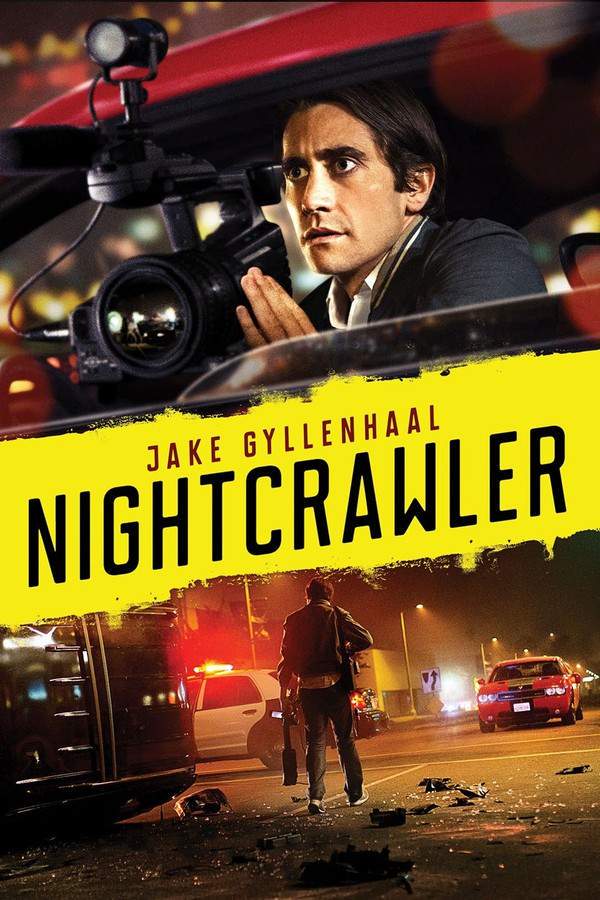
Nightcrawler (2014) movie poster

Timeline

Nightcrawler (2014) Timeline Explained – Every Event in Order

Release, runtime and language
2014 · 117 min · English
Loading streaming availability…
Directed by
Dan Gilroy
Starring
Jake Gyllenhaal, Bill Paxton, Rene Russo
Budget
$8.5M

Driven by ambition, Lou Bloom infiltrates the competitive world of crime journalism in Los Angeles. He works as a freelance camera operator, capturing footage of accidents and violent incidents for local news stations. Lou's relentless pursuit of the most sensational images leads him down a dangerous path, blurring the lines between observer and participant as he prioritizes profit over ethics and descends into a morally compromised existence.

On this page (6)
  1. 1 Where to watch
  2. 2 Events in order (15)
  3. 3 Timeline questions answered
  4. 4 Movie threads
  5. 5 Movies like Nightcrawler
  6. 6 Every angle
Loading streaming availability…

15 events in order · contains spoilers

Nightcrawler Timeline: Events in Chronological Order

Every key event of Nightcrawler (2014) in order, scene by scene, with when and where it takes place. Use it to untangle flashbacks, time jumps and parallel storylines, to refresh your memory before the sequel or to find the exact scene you are thinking of.

  1. Initial Crime

    Louis 'Lou' Bloom is caught stealing materials from a construction site in Los Angeles and assaults a security guard in the process. This desperate act sets off a chain of events that will dramatically alter his life.

    Where
    Construction site, Los Angeles
  2. Failed Job Opportunity

    After the theft, Lou attempts to sell the stolen materials at a scrap yard. Unfortunately, he is turned away by the foreman who refuses to hire a thief, pushing Bloom further down a path of desperation.

    Where
    Scrap yard
  3. Discovery of Freelancing

    While searching for direction, Lou witnesses a freelance film crew capturing a car crash scene. This moment inspires him to dive into the world of crime journalism, seeing an opportunity to profit from tragedy.

    Where
    Car crash scene
  4. Acquisition of Equipment

    Determined to enter the news business, Lou steals a racing bicycle to trade for a camcorder and radio scanner. This marks the beginning of his journey into professional stringing and crime reporting.

  5. First Crime Scene Footage

    Lou films the aftermath of a carjacking, capturing graphic content including the victim's death. This shocking footage earns him attention, igniting a rivalry with established cameraman Joe Loder.

    Where
    Carjacking scene
  6. Pitching to Nina

    Lou showcases his footage to Nina Romina, the morning news director at a local TV station. Impressed, she purchases his work and encourages him to focus on violent incidents in affluent neighborhoods.

    Where
    Local TV station
  7. Hiring an Assistant

    To assist with his growing operations, Lou hires Rick Carey, a young man struggling financially. This partnership enables Bloom to expand his reach while Rick gains the opportunity to work in journalism.

  8. Unethical Practices

    As Bloom seeks to improve his footage, he begins manipulating crime scenes to achieve more dramatic shots. This unethical approach feeds into his obsession with success but raises significant moral dilemmas.

  9. Competitive Tensions

    Despite his efforts, Lou finds himself consistently beaten by Joe Loder to crucial stories. Motivated to succeed, Bloom trades his old car for a new Dodge Challenger, symbolizing his escalating ambitions.

  10. Manipulative Relationship

    Lou's relationship with Nina becomes increasingly manipulative as he pressures her to become intimate, leveraging their professional connection for personal gain. This highlights the toxic dynamics at play in their partnership.

  11. Sabotage Incident

    Frustrated with being outpaced in the news game, Lou sabotages Loder's vehicle, causing a severe crash. This reckless act underscores his desperation and willingness to do anything to get ahead.

  12. Home Invasion Footage

    Bloom races to film a brutal home invasion in an upscale area just before the police arrive. Capturing the alarming events tests his ethical boundaries and raises questions about sensationalism in journalism.

    Where
    Upscale neighborhood
  13. Editing for Impact

    Navigating the moral quandary of journalism, Lou provides the police with edited footage that omits critical evidence that could identify the criminals. His priorities lie in securing captivating content rather than justice.

  14. Confrontation with Criminals

    Lou and Rick stake out the suspected criminals, leading to a chaotic confrontation. In the process, Rick is tragically shot while trying to document the escape, illustrating the real dangers of their profession.

  15. Final Moral Dilemma

    In a shocking display of ambition, Lou films Rick as he lies dying, revealing his utter disregard for human life in the pursuit of success. This moment encapsulates Lou’s dark transformation and obsession with his career.

Last updated: October 28, 2024 at 08:24

Was this helpful?

Timeline questions answered

Nightcrawler Timeline Explained: Your Questions Answered

When does it happen, and why in that order? The questions people ask about the chronology of Nightcrawler (2014): time jumps, flashbacks, cause and effect between scenes and the correct order of events, each answered with spoilers.

Q1

Why does Lou sabotage Joe Loder's car?

Lou sabotages Joe Loder's car because Loder consistently beats him to breaking news stories, especially after Lou turns down a business partnership with Loder. When Loder lands an exclusive plane crash story, Lou becomes desperate to eliminate his competition. He sees Loder as a threat to his growing career in crime journalism and believes that by causing Loder's crash, he can remove the only rival who consistently outpaces him in the field.

Foreshadowing: Earlier in the film, Lou's competitive tension with Loder is established when Loder arrives at the carjacking scene first, prompting Lou to film the victim's death just to outdo him.

  • joe loder
  • sabotage
  • car crash
  • competition
  • crime journalism
Q2

Why does Lou film Rick instead of helping him after he's shot?

Lou films Rick while he is dying because he values the footage more than human life. He explicitly states that he cannot work with someone he doesn't trust, and Rick's attempt to document the criminals' escape has made him a liability. Lou sees the dying moments as powerful, tragic content that will make for compelling television, demonstrating how completely his ambition has corrupted his morality.

Foreshadowing: Lou's earlier statement that he cannot collaborate with someone he doesn't trust foreshadows his decision to let Rick die rather than help him.

  • rick carey
  • dying
  • footage
  • moral decay
  • betrayal
Q3

Why does Lou manipulate Nina Romina into a sexual relationship?

Lou manipulates Nina because he knows she needs his violent, sensational footage to keep her job as morning news director. He leverages this professional dependency to force her into a sexual relationship, demonstrating how he treats all relationships as transactional opportunities for control. This reflects his broader pattern of exploiting others for personal gain.

Foreshadowing: Nina's earlier encouragement for Lou to focus on violent incidents in wealthy areas establishes her complicity in prioritizing ratings over ethics, giving Lou the leverage he later uses against her.

  • nina romina
  • manipulation
  • coercion
  • power dynamic
  • news journalism
Q4

Why does Lou edit the police footage to hide evidence?

Lou edits the home invasion footage to omit key evidence that could identify the criminals because he wants to create a more mysterious, suspenseful story that will generate higher viewership. By withholding information from the police, he ensures the story remains unsolved and compelling, allowing him to continue covering the case and profit from the ongoing narrative rather than helping secure an arrest.

Foreshadowing: Lou's pattern of manipulating crime scenes for more dramatic shots establishes his willingness to compromise justice for better content.

  • evidence
  • editing
  • police
  • home invasion
  • crime footage
Q5

Why does Lou hire Rick as his assistant?

Lou hires Rick because he needs someone to help expand his operations, specifically to work the night shift while he rests. He specifically targets a financially struggling young man who is desperate for any job opportunity, allowing Lou to pay him minimally while expecting long hours. Lou's selection of Rick is purely transactional, he wants an obedient worker, not a partner or friend.

Foreshadowing: Rick's desperation for employment is established when he initially meets Lou, showing he will accept exploitative conditions.

  • rick carey
  • assistant
  • exploitation
  • employment
  • stringer
Q6

How did Lou get started in crime journalism?

Lou discovers crime journalism after being turned away from a legitimate job at a scrap yard. While wandering after his failed attempt to sell stolen materials, he witnesses a freelance film crew capturing a car crash scene. He realizes he can profit from other people's tragedies and immediately steals a racing bicycle to trade for a camcorder and radio scanner, launching his career as a stringer.

Foreshadowing: Lou's earlier theft from the construction site and assault on a security guard establish his willingness to break laws for personal gain.

  • stringer
  • freelance
  • camera
  • crime scene
  • career start
Q7

Why does Lou manipulate crime scenes for better footage?

Lou manipulates crime scenes because he believes more dramatic footage generates higher news value and more money. He physically moves objects and alters crime scenes to create more visually compelling content, prioritizing sensationalism over journalistic integrity and justice. His justification is purely commercial, better footage means more airtime and higher payments from the TV station.

Foreshadowing: Nina's instruction for Lou to focus on violent incidents in affluent neighborhoods establishes that the news station rewards sensational, graphic content.

  • manipulation
  • crime scenes
  • sensationalism
  • footage
  • ethics
Q8

What happens to Rick at the end of Nightcrawler?

Rick is shot while trying to document the criminals' escape attempt during a stakeout with Lou. Instead of helping him, Lou films Rick as he bleeds out on the ground, treating the death as the ultimate dramatic footage. This moment represents the logical conclusion of Lou's complete moral collapse, his assistant becomes disposable content rather than a human being worth saving.

Foreshadowing: Lou's earlier statement about not collaborating with people he doesn't trust hints at his willingness to sacrifice Rick for the right shot.

  • rick carey
  • death
  • shooting
  • ending
  • betrayal
Q9

Why does Lou steal the security guard's watch after being caught stealing?

Lou steals the watch because he is desperate and has just failed to sell the stolen construction materials at the scrap yard. The theft represents his escalating criminal behavior, he assaults the security guard not for self-defense but to escape with the watch as additional stolen property. This early act establishes his pattern of taking what he wants without regard for consequences or others.

Foreshadowing: Lou's initial theft from the construction site sets up his willingness to escalate from property crime to violence.

  • theft
  • security guard
  • watch
  • assault
  • crime
Q10

Why does Lou focus on violent crimes in wealthy neighborhoods?

Lou focuses on wealthy areas because Nina Romina explicitly instructs him that violent incidents in affluent neighborhoods attract more viewers and higher ratings. The news station wants sensational content that appeals to their audience, and Lou is happy to deliver it because it pays better and advances his career. This instruction gives him permission to prioritize profit over ethical considerations.

Foreshadowing: Nina's pitch to Lou about wanting content that attracts viewership establishes the commercial incentive driving his choice of targets.

  • wealthy neighborhoods
  • violence
  • ratings
  • nina romina
  • news station
Q11

Why does Lou upgrade to a Dodge Challenger and better equipment?

Lou upgrades his equipment because he is losing the competitive race against Joe Loder, who has superior gear. He trades in his old car for a new Dodge Challenger and purchases better cameras to match Loder's capabilities. This investment represents his escalating commitment to the crime journalism world and his desire to compete at the highest level, no matter the cost.

Foreshadowing: The ongoing rivalry with Loder, who consistently arrives at scenes first with better equipment, establishes the necessity of upgrading.

  • dodge challenger
  • equipment
  • upgrade
  • competition
  • investment
Q12

Why is Lou drawn to crime journalism specifically?

Lou is drawn to crime journalism because he sees it as an opportunity to profit from tragedy without needing formal education or legitimate skills. After being rejected from a job, he realizes he can use a camera to capture violent incidents and sell the footage for money. The job requires no ethics, no credentials, and offers unlimited financial potential for someone willing to go to extreme lengths, which perfectly matches Lou's ambitions.

Foreshadowing: Lou's rejection from the scrap yard and his observation of the car crash crew directly lead him to this career path.

  • crime journalism
  • stringer
  • ambition
  • profit
  • tragedy

Movie threads

More Movies Like Nightcrawler, by Mood & Story

Curated lists built around what makes Nightcrawler tick: the same mood, the same kind of story or the same emotional payoff. Each list explains why these movies belong together.

Movies with Amoral Antiheroes like Nightcrawler

Unsettling character studies of driven, morally hollow protagonists succeeding without conscience. If you were fascinated by Lou Bloom's ruthless ambition in Nightcrawler, explore more movies like it featuring morally compromised protagonists. These similar thrillers and dramas follow characters who achieve success through manipulation and ethical decay, offering a dark and gripping viewing experience.

  • sociopathic
  • driven
  • morally hollow
  • unsettling
  • cynical
  • tense
  • Tone: dark, cynical, unsettling
  • Pacing: fast, driven, relentless
Why these movies?

The story pattern: Stories in this thread typically follow a linear ascent narrative, where the protagonist's lack of empathy becomes their greatest asset. The conflict arises from their manipulation of others and the ethical lines they cross, often culminating in a success that feels more like a chilling victory for amorality than a triumph.

Why they belong together: These films are grouped by their shared focus on a specific type of character journey: the rise of an individual who operates without a moral compass. They create a similar unsettling vibe by making the audience complicit in the antihero's success, blending tension with a critique of ambition.

Thrillers about Moral Corruption like Nightcrawler

Thrillers where ambition in a competitive world leads to moral bankruptcy. For viewers who enjoyed Nightcrawler's exploration of ethics in crime journalism, this list features similar movies about moral decay. These gripping stories follow characters in high-pressure professions whose ambition leads them down a dark path, perfect for fans of cynical capitalist critiques and tense narratives.

  • anxious
  • gripping
  • cynical
  • corruption
  • driven
  • unsettling
  • Tone: dark, tense, cynical
  • Pacing: fast, urgent, gripping
Why these movies?

The story pattern: The narrative pattern involves a protagonist entering a competitive, morally ambiguous world. Their initial ambition quickly leads to small ethical compromises, which escalate into major transgressions. The story is a downward spiral where professional success is directly tied to personal moral failure, often ending with the protagonist victorious but spiritually lost.

Why they belong together: These movies share a common vibe built from a fast pace, high intensity, and a cynical thematic focus on how systems reward corruption. They are united by the specific plot mechanism of a job or profession acting as the catalyst for a character's moral unraveling.

If you liked this

Movies Like Nightcrawler

Similar movies to Nightcrawler: the same genre, themes or kind of story. Each one comes with its own plot summary, timeline and ending explained.

Browse all movie summaries

Every angle

Nightcrawler (2014) Explained: Plot, Timeline & Characters

Everything about Nightcrawler in one place: what happens in the plot summary, the timeline in chronological order, the characters and meaning and a spoiler-free summary. What's After the Movie adds the cast, box office and post-credit scenes.

Coming soon on iOS and Android

The Plot Explained Movie Summary App

Plot summaries, endings explained and timelines on your phone. Catch up on any movie in minutes, save your favorites and never miss a twist again.

Be the first to know when we launch. Your email stays private, always.

Learn more about the app