





Plot Explained Spoilers guaranteed!
Plot Explained

Browse by genre

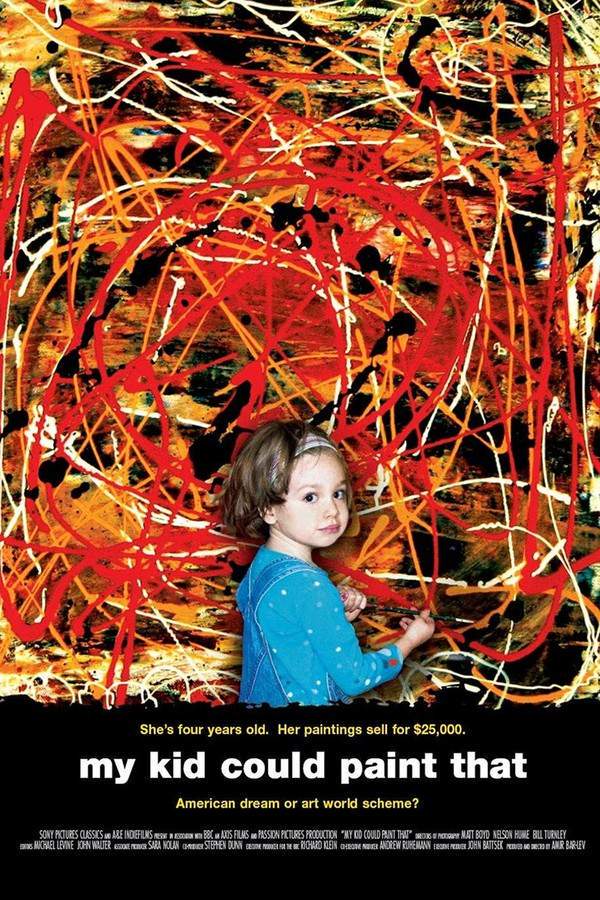
My Kid Could Paint That (2007) movie poster

Timeline

My Kid Could Paint That (2007) Timeline Explained – Every Event in Order

Release, runtime and language
2007 · 82 min · English
Directed by
Amir Bar-Lev
Starring
Laura Olmstead, Mark Olmstead, Marla Olmstead

A four-year-old girl’s extraordinary artistic talent leads to international acclaim and soaring prices for her paintings. As her fame grows, questions arise about the genuineness of her abilities, triggering a media frenzy that jeopardizes her family’s reputation and financial security. A documentary filmmaker investigating the phenomenon finds himself increasingly involved in the controversy, grappling with ethical dilemmas and the family’s request for understanding.

On this page (6)
  1. 1 Where to watch
  2. 2 Events in order (12)
  3. 3 Timeline questions answered
  4. 4 Movie threads
  5. 5 Movies like My Kid Could Paint That
  6. 6 Every angle

Where to watch

Where to Watch My Kid Could Paint That (2007)

Where can you watch My Kid Could Paint That? Stream, rent or buy it in the US, including on Amazon Video, Apple TV Store and Fandango At Home: current JustWatch availability with up-to-date prices.

Streaming availability powered by JustWatch

12 events in order · contains spoilers

My Kid Could Paint That Timeline: Events in Chronological Order

Every key event of My Kid Could Paint That (2007) in order, scene by scene, with when and where it takes place. Use it to untangle flashbacks, time jumps and parallel storylines, to refresh your memory before the sequel or to find the exact scene you are thinking of.

  1. Introduction to Marla Olmstead

    The documentary begins by introducing Marla Olmstead, a talented young girl from Binghamton, NY. Her remarkable skills in abstract painting draw attention as she is recognized as a child prodigy.

    Where
    Binghamton, NY
  2. Mark Olmstead’s Influence

    Marla’s father, Mark Olmstead, shares his experiences as an amateur painter and recalls how Marla developed an interest in painting. Inspired by watching him at the easel, Marla asks to paint on her own, leading to her first creations.

  3. First Art Display

    A friend of Marla’s family suggests showcasing her artwork in his coffee shop. This initial display results in unexpected offers for her paintings, marking the beginning of her rise to fame as an artist.

    Where
    Local coffee shop
  4. Media Attention Begins

    Local journalist Elizabeth Cohen writes an article about Marla after discussing it with her parents. This article eventually attracts significant media attention, leading to increased interest in Marla's artwork.

  5. New York Times Feature

    Marla's story gains traction when her article is featured in the New York Times. This exposure propels her into the limelight, showcasing her work and beginning a whirlwind of television appearances.

  6. Gallery Exhibitions

    Marla's fame continues to grow, and she is invited to hold gallery exhibitions in various locations, including New York and Los Angeles. Sales for her artwork reach staggering amounts, surpassing $300,000.

    Where
    New York and Los Angeles
  7. Critical CBS News Segment

    In February 2005, Marla's parents watch a CBS News segment from 60 Minutes II that raises questions about the authenticity of her artwork. The segment includes insights from child psychologist Ellen Winner, who examines Marla's apparent lack of prodigious talent.

    When
    February 2005
  8. Ellen Winner's Analysis

    Ellen Winner initially praises Marla's art, calling it beautiful and a potential fit for prestigious museums. However, as she observes Marla painting, her perspective shifts to viewing Marla as a typical child engaged in painting.

  9. Questions on Authenticity

    The dialogue between Winner and the CBS segment raises suspicions about the authenticity of Marla's earlier works. Viewer speculation intensifies as they wonder whether she worked independently or had outside influences.

  10. The Burden of Fame

    As the debate over Marla's talent continues, the film explores the impact of media fame on her as a child artist. It discusses the complexities of identity, talent, and the public’s perception of artistic merit.

  11. Reflection on Art

    The documentary culminates in a discussion about the nature of art itself. It questions what constitutes true artistry and the role that external perception plays in defining one’s creative abilities.

  12. Marla’s Ongoing Journey

    Ultimately, the film leaves viewers contemplating Marla Olmstead's artistic journey and the controversies that accompany it. It invites them to draw their own conclusions on her talent and the essence of abstract expressionism.

Last updated: November 07, 2024 at 22:35

Was this helpful?

Timeline questions answered

My Kid Could Paint That Timeline Explained: Your Questions Answered

When does it happen, and why in that order? The questions people ask about the chronology of My Kid Could Paint That (2007): time jumps, flashbacks, cause and effect between scenes and the correct order of events, each answered with spoilers.

Q1

What evidence did Ellen Winner present about Marla Olmstead's paintings?

Ellen Winner, a child psychologist, initially praised Marla's paintings as potentially worthy of the Museum of Modern Art. However, after observing hidden camera footage of Marla painting under observation, she changed her assessment, stating Marla was simply 'pushing the paint around' like any normal child. Winner pointed out that the discrepancy between her earlier acclaimed works and the painting done under observation raised serious questions about whether Marla had actually created her famous pieces independently.

  • ellen winner
  • child psychologist
  • hidden camera
  • authenticity evidence
Q2

What did the CBS 60 Minutes II segment reveal about Marla's paintings?

The CBS segment, aired in February 2005, captured hidden camera footage of Marla working on a painting over multiple sessions. The footage showed Marla painting in a manner that appeared ordinary rather than prodigious, leading the segment to cast doubt on whether she had truly created her acclaimed works without assistance.

  • cbs
  • 60 minutes
  • hidden camera footage
  • february 2005
Q3

How did Marla Olmstead's art career begin?

Marla's art career began when her father Mark Olmstead, an amateur painter, noticed her interest while watching him paint. When Marla asked to try painting herself, he gave her a canvas and supplies. A family friend then suggested displaying her work at a local coffee shop, where it attracted buyers and eventually caught the attention of a local journalist.

  • mark olmstead
  • father
  • coffee shop
  • beginnings
Q4

What ethical dilemma did the documentary filmmaker face?

The filmmaker, Amir Bar-Lev, found himself increasingly entangled in the controversy as he investigated Marla's authenticity. The family asked him for understanding and support, creating tension between his role as an objective documentarian and his personal involvement in the family's plight. This conflict became a meta-commentary on the nature of documentary filmmaking itself.

  • amir bar-lev
  • filmmaker
  • documentary ethics
  • family
Q5

Why did Marla Olmstead's story get so much media attention?

After a local journalist Elizabeth Cohen wrote about Marla, the story was picked up by the New York Times, which propelled her into national prominence. Her paintings sold for over $300,000, she appeared on television shows, and held gallery exhibitions in New York and Los Angeles. The dramatic rise of a child prodigy made for compelling media content.

  • elizabeth cohen
  • new york times
  • media frenzy
  • sales
Q6

Why doesn't the documentary give a clear answer about whether Marla actually painted her works?

The documentary deliberately maintains ambiguity because the core question, whether a young child can create authentic abstract expressionist art, is inherently unanswerable. The film uses this uncertainty to explore broader questions about the nature of art itself, particularly abstract expressionism, and the ethical responsibilities of documentary storytelling.

  • ambiguous ending
  • abstract expressionism
  • documentary conclusion
Q7

Why did Ellen Winner change her opinion about Marla's talent?

Winner initially admired Marla's paintings based on their visual quality, stating they could pass in a museum. However, when she observed Marla painting on video, watching her 'push the paint around' in a manner typical of any young child, her opinion shifted. She concluded that the earlier acclaimed works might not have been solely Marla's creation, suggesting outside assistance was possible.

  • talent assessment
  • opinion change
  • video observation
  • prodigy
Q8

How did the media attention affect Marla Olmstead's family?

The media frenzy over the authenticity questions put enormous pressure on the family, threatening both their reputation and financial security. They had to deal with public scrutiny, defend their integrity, and manage the psychological impact on their young daughter. The film explores how sudden fame can have serious consequences for families, especially when accusations arise.

  • family impact
  • reputation
  • financial security
  • fame consequences
Q9

What does the documentary suggest about the nature of abstract art?

The documentary uses Marla's case to question whether abstract expressionism can be objectively evaluated, especially when created by children. Since abstract art is often judged by its emotional impact rather than technical skill, it becomes difficult to determine whether a child's work is genuinely 'prodigious' or simply appealing. The film leaves viewers to ponder what actually constitutes artistic merit.

  • abstract expressionism
  • artistic merit
  • subjectivity
  • judging art
Q10

Why was there a difference between Marla's famous paintings and the painting done for CBS?

Ellen Winner highlighted a stark contrast: Marla's earlier celebrated works possessed the quality of professional abstract art, while her painting under CBS observation looked like typical child art. This discrepancy suggested that either her earlier works were created with guidance, or she was unable to replicate her supposed talent under pressure. The hidden camera captured her working slowly and without the apparent skill expected of a prodigy.

  • discrepancy
  • famous works
  • observation
  • quality difference

Movie threads

More Movies Like My Kid Could Paint That, by Mood & Story

Curated lists built around what makes My Kid Could Paint That tick: the same mood, the same kind of story or the same emotional payoff. Each list explains why these movies belong together.

Investigative Documentaries Like My Kid Could Paint That

Films that delve into a complex controversy, leaving the truth deliberately ambiguous. If you enjoyed the unsettling, unresolved investigation in 'My Kid Could Paint That,' explore these movies that similarly delve into real-world controversies. This selection features documentaries where filmmakers grapple with ethical dilemmas and ambiguous truths, leaving the audience with more questions than answers.

  • investigative
  • unsettling
  • thought-provoking
  • skeptical
  • anxious
  • ambiguous
  • Tone: tense, skeptical, investigative
  • Pacing: steady, methodical
Why these movies?

The story pattern: These documentaries follow a pattern of initial discovery leading to a deep, personal investigation. The narrative builds methodically, often forcing the filmmaker to confront their own biases and the consequences of their pursuit. The central conflict is typically about the nature of truth and perception, culminating in an ambiguous or open-ended conclusion that reflects the complexity of the real world.

Why they belong together: Movies in this thread share a specific cinematic approach: they use the documentary format to explore a mystery that lacks a definitive solution. They are united by a tense, skeptical mood, a steady pacing that builds the case, and a moderate emotional weight that comes from grappling with serious, real-life implications rather than fictional drama.

Movies About Fame and Scrutiny Like My Kid Could Paint That

Stories exploring the fragile nature of fame and the intense pressure of media scrutiny. For viewers fascinated by the tense unraveling of a public persona in 'My Kid Could Paint That,' this collection features stories about the dark side of fame. These films explore the pressure of media scrutiny, the fragility of reputation, and the haunting question of what is real versus what is perceived.

  • anxious
  • tense
  • psychological pressure
  • media frenzy
  • unsettling
  • melancholic
  • Tone: tense, anxious, melancholic
  • Pacing: steady, building pressure
Why these movies?

The story pattern: The narrative follows a similar arc: initial acclaim and public adoration are met with growing skepticism and investigation. The central character or family faces immense pressure as their credibility is challenged, leading to a crisis that threatens their livelihood and personal relationships. The story delves into themes of truth, perception, and the destructive power of the court of public opinion.

Why they belong together: These films are grouped by their shared focus on the destructive cycle of fame and scrutiny. They create a specific vibe of tension and anxiety, often with a steady pacing that mirrors the methodical build-up of public doubt. The emotional weight is medium to heavy, derived from the psychological pressure placed on the subjects.

If you liked this

Movies Like My Kid Could Paint That

Similar movies to My Kid Could Paint That: the same genre, themes or kind of story. Each one comes with its own plot summary, timeline and ending explained.

Browse all movie summaries

Every angle

My Kid Could Paint That (2007) Explained: Plot, Timeline & Characters

Everything about My Kid Could Paint That in one place: what happens in the plot summary, the timeline in chronological order, the characters and meaning and a spoiler-free summary. What's After the Movie adds the cast, box office and post-credit scenes.

Coming soon on iOS and Android

The Plot Explained Movie Summary App

Plot summaries, endings explained and timelines on your phone. Catch up on any movie in minutes, save your favorites and never miss a twist again.

Be the first to know when we launch. Your email stays private, always.

Learn more about the app