








Plot Explained Spoilers guaranteed!
Plot Explained

Browse by genre

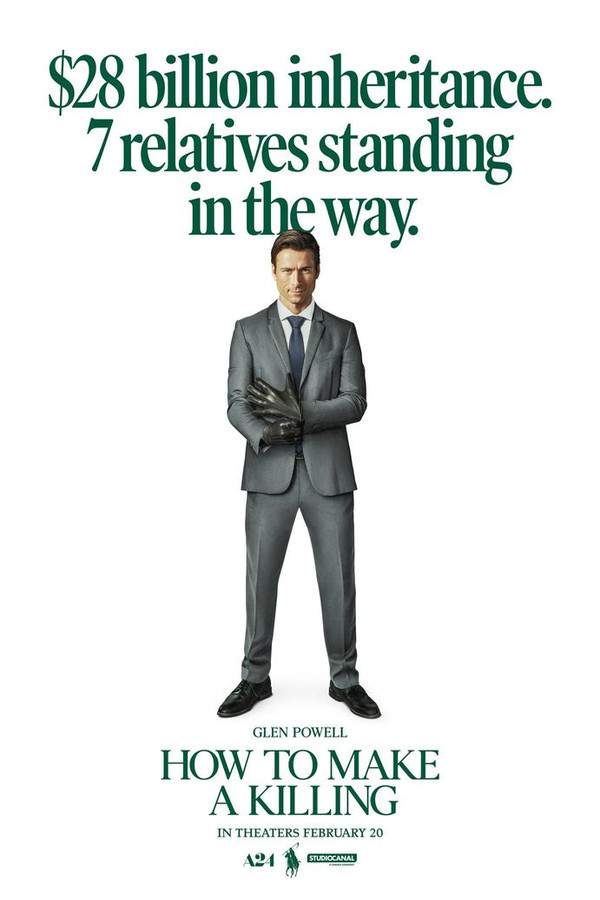
How to Make a Killing (2026) movie poster

Ending Explained

How to Make a Killing (2026) Ending Explained – Final Scene & Meaning

Release, runtime and language
2026 · 1 h 45 m · English
Echo score 55
JustWatch #402 11
Directed by
John Patton Ford
Starring
Stevel Marc, Topher Grace, Jessica Henwick, Bill Camp, Zach Woods, Margaret Qualley
Budget
$15M

Disowned at birth by his absurdly wealthy family, blue‑collar mechanic Becket Redfellow (Glen Powell) becomes obsessed with reclaiming the fortune that was taken from him. He pursues the inheritance relentlessly, confronting and outmaneuvering any relative who dares to block his claim.

On this page (6)
  1. 1 Where to watch
  2. 2 What happens at the end
  3. 3 Final events in order
  4. 4 Ending questions answered
  5. 5 Movie threads
  6. 6 Every angle

Where to watch

Where to Watch How to Make a Killing (2026)

Where can you watch How to Make a Killing? Stream, rent or buy it in the US, including on HBO Max, Amazon Video and Apple TV Store: current JustWatch availability with up-to-date prices.

Streaming availability powered by JustWatch

Ending explained · contains spoilers

What Happens at the End of How to Make a Killing?

How How to Make a Killing (2026) ends, what the final scene means, which earlier moments set it up and how to read the ending if the film leaves it open. The full ending explained, with every spoiler.

The conclusion of How to Make a Killing offers a final, stinging twist of irony for its protagonist, Becket Redfellow. After systematically eliminating his family members to secure a fortune, Becket is arrested for a murder he did not commit. His salvation comes from an unlikely source: Julia Steinway, the very person who framed him. Becket is released from prison through her machinations, but his freedom comes at a steep price. He is forced to leave behind Ruth, the woman who represented his best chance at a genuine, happy life, and align himself with Julia. This ending cements the film's central tragedy: Becket avoids the death penalty and escapes incarceration, only to find himself imprisoned in a different way, bound to a "terror" who holds his fate in her hands.

Director John Patton Ford describes the ending as a deliberate irony where Becket finally gets what he thought he wanted—wealth and status—but only after realizing he no longer wants it. The victory is hollow, defined by the absence of Ruth and the realization that he has destroyed his own path to joy. Jessica Henwick, who plays Ruth, notes that for a modern audience, it would have been unrealistic and depressing for Ruth to stand by a serial killer. Instead, Becket ends the film as a "disempowered man," weeping as he returns to the mansion. These tears signal a complex mix of emotions; he has survived, but he is now fully aware of the moral void he has created for himself.

It is worth noting that the film originally conceived a much more severe ending for the character. In an earlier draft of the script, Becket would have been released from jail to find Ruth giving birth to his child. In that version, he would have actively chosen to abandon both Ruth and the baby to pursue Julia and her billions. The studio ultimately rejected this conclusion, feeling it was too punishing for an audience that had been conditioned to root for Glen Powell’s charismatic, "golden retriever" energy. While the filmmakers debated whether the darker ending was more realistic, the final version strikes a careful balance. Becket does not escape unscathed—he is forced to live with the consequences of his greed, trapped in a life of luxury that he now knows he never truly wanted.

Last updated: March 16, 2026 at 11:31

Was this helpful?

The last 4 events

How How to Make a Killing Ends: The Final Events in Order

The last events of How to Make a Killing (2026) in chronological order, the run-up to the ending explained above. The complete timeline has all 15 events, scene by scene.

Open the full timeline
  1. Warren dies and Whitelaw looms

    Warren suffers a heart attack and dies, leaving only Whitelaw as the surviving obstacle to Becket's inheritance. The power dynamic tightens around Becket and his aging grandfather. Whitelaw's presence becomes the final challenge Becket must overcome to secure the fortune.

    When
    after MacArthur
    Where
    Warren's home
  2. Whitelaw dinner, evidence, and money

    Becket is invited to a dinner at Whitelaw's mansion, where Julia reveals she has evidence of Becket's murders unless Becket pays Lyle. Becket agrees to deliver money to Lyle to silence the threat, showing how money and leverage control the outcome. The tension escalates as the mansion becomes a trap.

    When
    night of Becket's engagement party
    Where
    Whitelaw's mansion; Lyle's office
  3. Whitelaw slain; Becket inherits

    Becket goes to Lyle's office with the promised money, then returns to Whitelaw's mansion where he kills Whitelaw in self-defense. With Whitelaw dead, Becket becomes the sole inheritor of the Redfellow fortune. The final hurdle to his ascent falls in a single night.

    When
    same night
    Where
    Whitelaw's mansion
  4. Arrest, exoneration, and ending

    Becket is arrested for Lyle's murder at the mansion, but Julia releases a suicide note that clears him. He is set free as the truth comes to light, and the film ends with Ruth's quiet gesture (returning his mother's locket) and Becket heading toward the Redfellow mansion with Julia.

    When
    immediate aftermath
    Where
    Whitelaw's mansion; prison

Ending questions answered

How to Make a Killing Ending: Your Questions Answered

The questions people ask most about the ending of How to Make a Killing (2026): what the final scene means, how the twist works, what happens to each character and how to read the ending. Each answer contains spoilers.

Q1

Why is Becket arrested at the end of the movie?

Becket is arrested for a murder he did not commit. After systematically eliminating his family members to secure the inheritance, he is framed for one of the killings. The irony is that while he is guilty of murdering several relatives, he is caught for a crime he actually didn't commit, leading to his arrest just as he's about to claim his fortune.

  • becket arrest
  • murder
  • prison
  • framed
Q2

Why does Julia save Becket from prison?

Julia Steinway, the person who framed Becket for the murder, orchestrates his release from prison. She does this not out of compassion but because she wants to align herself with Becket and control him. Julia manipulates the situation to force Becket into working with her rather than allowing him to rot in prison, securing his loyalty through his very survival.

  • julia steinway
  • frame
  • release
  • manipulation
Q3

What happens to Ruth at the end of the movie?

Ruth, the woman who represented Becket's chance at a genuine, happy life, is forced to be left behind. When Julia secures Becket's release, the condition forces Becket to abandon Ruth and align with Julia instead. This sacrifice represents the loss of his only authentic connection, leaving him emotionally devastated.

  • ruth
  • abandon
  • relationship
  • love
Q4

Why does Becket cry when he returns to the mansion?

Becket weeps as he returns to the mansion because he finally realizes the hollow victory he has achieved. He has the wealth and status he spent the entire film pursuing, but he now knows he never truly wanted it. His tears come from the devastating awareness that his greed has destroyed his path to genuine happiness, leaving him trapped in luxury with no meaning.

  • becket tears
  • mansion
  • regret
  • sadness
Q5

How is the ending ironic for Becket's character?

The ending delivers a deliberate irony: Becket finally gets what he thought he wanted, immense wealth and high status, but only after realizing he no longer wants it. He avoided the death penalty and escaped incarceration, only to find himself imprisoned in a different way, bound to Julia who now controls his fate. His victory is hollow, defined by the absence of Ruth and his moral void.

  • irony
  • wealth
  • hollow victory
  • status
Q6

What does Julia's manipulation of Becket mean for his future?

Julia's final manipulation leaves Becket trapped in a new form of imprisonment. While he avoids physical incarceration, he is now bound to Julia, a person who holds his fate in her hands. He must serve her interests and align with her agenda, making his freedom merely a change in captivity rather than true liberation.

  • julia control
  • trap
  • fate
  • power
Q7

What was the original ending that was changed?

The original draft of the script featured a much darker conclusion: Becket would have been released from jail to find Ruth giving birth to his child, then actively chosen to abandon both Ruth and the baby to pursue Julia and her billions. The studio rejected this ending as too punishing for audiences who had been rooting for Glen Powell's charismatic, "golden retriever" energy.

  • original ending
  • script
  • darker
  • pregnant ruth
Q8

What does it mean that Becket ends as a disempowered man?

Becket ends the film as a disempowered man because despite achieving his goal of gaining the fortune, he has lost all agency in his own life. He didn't choose to be with Julia, he was forced into that alliance to survive. He didn't choose to lose Ruth, it was taken from him. He has wealth but no control over his own destiny, making him a tragic figure defined by loss rather than victory.

  • disempowered
  • agency
  • lost
  • tragic
Q9

What does the ending say about the consequences of greed?

The ending delivers a cynical view of wealth and greed: Becket's relentless pursuit of inheritance destroyed every meaningful relationship in his life. He gains the fortune but loses the only things that could have brought him happiness, genuine love and moral integrity. The film suggests that pure greed leads to hollow victories and permanent spiritual emptiness, no matter how much material wealth is acquired.

  • greed
  • consequences
  • morality
  • wealth
Q10

Why did Julia frame Becket for murder in the first place?

Julia framed Becket as part of her broader machinations to gain control over the family fortune and Becket himself. Her framing was a strategic move to put Becket in a position where he would be dependent on her for survival, allowing her to manipulate him into alignment with her own plans. This calculated betrayal sets up the twisted dynamic where she becomes both his captor and his savior.

  • julia frame
  • strategy
  • control
  • fortune

Movie threads

More Movies Like How to Make a Killing, by Mood & Story

Curated lists built around what makes How to Make a Killing tick: the same mood, the same kind of story or the same emotional payoff. Each list explains why these movies belong together.

Ruthless Inheritance Games like in How to Make a Killing

When a fortune is the prize, family becomes the most dangerous enemy. If you liked the cutthroat battle for a fortune in How to Make a Killing, you'll want more movies like it. This thread features similar thrillers and dramas where family members turn on each other in a deadly fight for wealth and power, filled with tense schemes and moral collapse.

  • calculating
  • ruthless
  • suspenseful
  • tense
  • grim
  • cynical
  • Tone: dark, cynical, tense
  • Pacing: fast, relentless
Why these movies?

The story pattern: These narratives typically follow a protagonist (often an outsider or disowned relative) who launches a calculated campaign to infiltrate a wealthy, dysfunctional family and seize an inheritance. The plot is driven by escalating betrayals, strategic murders, and a constant cat-and-mouse game with other claimants or authorities, leading to a hollow victory that questions the cost of the prize.

Why they belong together: Movies are grouped here for their shared focus on inheritance as a catalyst for extreme moral compromise and violent family conflict. They share a dark, cynical tone, fast-paced plotting of schemes and double-crosses, and a heavy emotional weight stemming from the destruction of familial bonds for material gain.

Thrillers of Calculated Descent like How to Make a Killing

Protagonists who methodically trade their humanity for a singular, obsessive goal. Fans of Becket's ruthless journey in How to Make a Killing will find more movies like it here. This thread collects tense, character-focused thrillers where a protagonist's obsession leads them down a path of cold, calculated actions and irreversible moral decay.

  • calculating
  • obsessive
  • tense
  • melancholic
  • grim
  • ruthless
  • Tone: dark, grim, melancholic
  • Pacing: fast, methodical
Why these movies?

The story pattern: The narrative arc is defined by the protagonist's systematic and intelligent pursuit of a goal, which requires them to abandon their ethics one calculated step at a time. The audience witnesses the planning, the execution of schemes (often violent), and the growing emotional isolation of the character, culminating in a victory that feels like a profound personal loss.

Why they belong together: These films are united by their deep dive into a specific character's moral unraveling. They share a dark tone, high tension from the protagonist's risky maneuvers, and a heavy, melancholic mood as we watch a person become consumed and corrupted by their own relentless pursuit.

Every angle

How to Make a Killing (2026) Explained: Plot, Ending, Timeline & Characters

Everything about How to Make a Killing in one place: what happens in the plot summary, the timeline in chronological order, the characters and meaning, the ending explained and a spoiler-free summary. What's After the Movie adds the cast, box office and post-credit scenes.

Coming soon on iOS and Android

The Plot Explained Movie Summary App

Plot summaries, endings explained and timelines on your phone. Catch up on any movie in minutes, save your favorites and never miss a twist again.

Be the first to know when we launch. Your email stays private, always.

Learn more about the app