











Plot Explained Spoilers guaranteed!
Plot Explained

Browse by genre

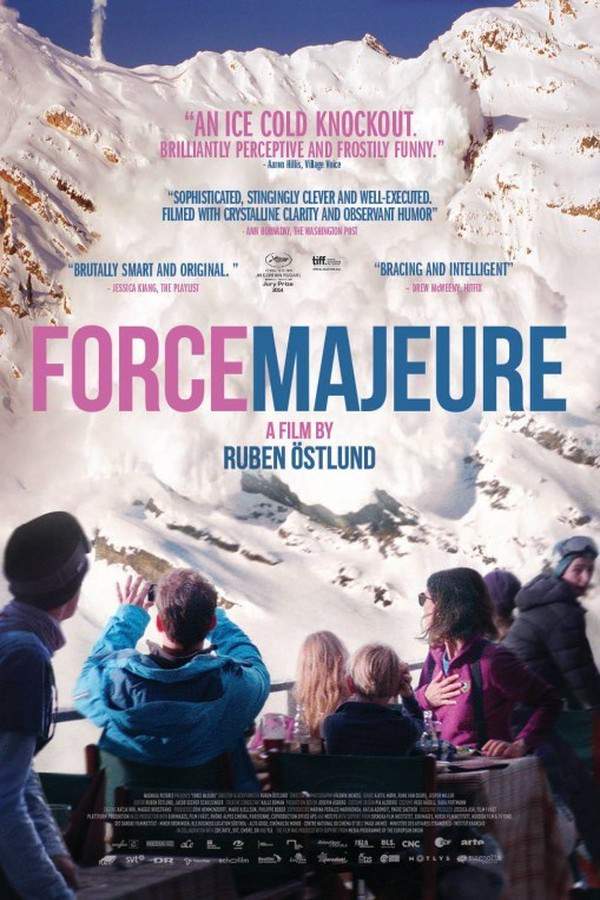
Force Majeure (2014) movie poster

Timeline

Force Majeure (2014) Timeline Explained – Every Event in Order

Release, runtime and language
2014 · 120 min · Swedish
JustWatch #4,210 16
Directed by
Ruben Östlund
Starring
Johannes Kuhnke, Clara Wettergren, Kristofer Hivju, Lisa Loven Kongsli, Vincent Wettergren

While enjoying a ski vacation in the French Alps, a Swedish family's idyllic lunch is shattered by an avalanche. During the chaos, the father's instinctive reaction to prioritize his own safety—and his failure to protect his family—is revealed, deeply affecting his wife and children. The incident exposes underlying tensions within the marriage and forces them to confront uncomfortable truths about their relationship and Tomas's role as a husband and father. The experience irrevocably alters their dynamic and leaves them questioning their future together.

On this page (6)
  1. 1 Where to watch
  2. 2 Events in order (12)
  3. 3 Timeline questions answered
  4. 4 Movie threads
  5. 5 Movies like Force Majeure
  6. 6 Every angle

Where to watch

Where to Watch Force Majeure (2014)

Where can you watch Force Majeure? Stream, rent or buy it in the US, including on Hoopla, Kanopy and Fandango at Home Free: current JustWatch availability with up-to-date prices.

Streaming availability powered by JustWatch

12 events in order · contains spoilers

Force Majeure Timeline: Events in Chronological Order

Every key event of Force Majeure (2014) in order, scene by scene, with when and where it takes place. Use it to untangle flashbacks, time jumps and parallel storylines, to refresh your memory before the sequel or to find the exact scene you are thinking of.

  1. Arrival at the Resort

    Tomas and his family arrive at a luxurious resort located in the French Alps for their much-anticipated vacation. The picturesque surroundings set the stage for what they hope will be a relaxing and enjoyable getaway.

    Where
    French Alps
  2. Avalanche Incident

    While enjoying an outdoor meal on their second day, the family witnesses a controlled avalanche, a terrifying sight that creates immediate panic. In a moment of fear, Tomas records the scene on his phone but ultimately abandons Ebba and their children to escape the unfolding chaos.

    Where
    French Alps Resort
  3. Fog Lifts

    As the fog from the avalanche clears, it becomes evident that no one was harmed in the incident. This revelation provides a moment of relief for Ebba, but it does not erase the tension that has begun to build between her and Tomas.

    Where
    French Alps Resort
  4. Dinner with Friends

    That evening, the family dines with one of Ebba's friends, who has invited an American man. During dinner, Ebba expresses her frustrations regarding Tomas's cowardice during the avalanche, leading to an intense disagreement that leaves everyone uncomfortable.

    Where
    French Alps Resort
  5. Ebba Goes Skiing Alone

    Feeling the weight of the argument and the growing distance in their relationship, Ebba decides to ski alone the next day. While skiing, she confronts her friend about her own reckless behavior and begins to reflect deeply on her marriage to Tomas.

    Where
    French Alps
  6. Mats Arrives

    One of Tomas's old friends, Mats, arrives at the resort with his girlfriend, Fanny. The group shares an uneasy dinner where tensions resurface as Ebba recounts the avalanche incident yet again, heightening the discomfort among those present.

    Where
    French Alps Resort
  7. Showing the Avalanche Video

    Ebba decides to show everyone the recorded footage of the avalanche, prompting discussions about Tomas's actions during the incident. Mats brings up how people react differently in crises, leading to speculation about Tomas's true feelings of cowardice.

    Where
    French Alps Resort
  8. Primal Scream

    During a ski lift ride, Mats encourages Tomas to release his pent-up emotions through primal screaming. This moment allows Tomas to confront his feelings of inadequacy, providing him with a cathartic release in front of his children.

    Where
    Ski Lift in French Alps
  9. Fog Thickens Again

    On their final day at the resort, thick fog sets in once more as the family prepares to leave. Tomas takes charge, instructing the children, but when Ebba gets lost, he briefly abandons the kids to find her, heightening the complexity of their relationship.

    Where
    French Alps
  10. Chaotic Journey Down the Mountain

    As they travel down the mountain, anxiety mounts when Ebba panics about the driver's skills. Mats tries to maintain order, stressing the importance of prioritizing women and children during the chaotic exit, showcasing the challenges in their dynamics.

    Where
    French Alps
  11. Tomas's Change in Behavior

    Amidst the chaos of exiting the bus, Tomas surprisingly accepts a cigarette from a stranger. This sudden shift in behavior shocks Harry, compelling him to question his father's actions after a smoke-free vacation, representing the family's evolving dynamics.

    Where
    Mountain Road
  12. End of the Vacation

    As the family leaves the resort, each member grapples with the emotional fallout from the avalanche incident. The vacation has irrevocably altered their relationships, leading them to confront their feelings about courage, trust, and family.

    Where
    French Alps

Last updated: November 16, 2024 at 14:46

Was this helpful?

Timeline questions answered

Force Majeure Timeline Explained: Your Questions Answered

When does it happen, and why in that order? The questions people ask about the chronology of Force Majeure (2014): time jumps, flashbacks, cause and effect between scenes and the correct order of events, each answered with spoilers.

Q1

Why did Tomas run away during the avalanche?

Tomas panicked when he saw the avalanche approaching and instinctively fled to save himself, abandoning his wife Ebba and their two children on the deck. He was recording the scene on his phone when the snow cloud rushed toward them, and his fear overtook his protective instincts. While no one was harmed, this moment revealed a deep-seated cowardice that contradicts the image he presents as a husband and father.

  • tomas
  • avalanche
  • cowardice
  • panic
  • family
Q2

Why does Ebba keep bringing up the avalanche incident?

Ebba repeatedly brings up the avalanche because Tomas never genuinely apologizes or acknowledges his failure to protect his family. Each time she recounts the story, she is testing whether he will finally admit his cowardice. His denial and excuse about not being able to run in ski boots deepens her sense of betrayal, making her feel that he is more concerned with preserving his image than addressing what he did.

  • ebba
  • avalanche
  • betrayal
  • marriage
  • denial
Q3

What does the video of the avalanche reveal?

The video clearly shows Tomas abandoning his family and running away while Ebba stays behind with their children in the fog. When Ebba shows the footage to everyone at dinner, Tomas is forced to confront what he did. Even he admits that he appears to be running away, though he still refuses to fully own his actions or apologize sincerely.

  • video
  • avalanche
  • evidence
  • tomas running
Q4

Why does Tomas abandon his children in the fog at the end?

When Ebba gets lost in the thick fog on their final day, Tomas instructs the children to wait while he goes to find her. He leaves them alone momentarily, which mirrors his original cowardice during the avalanche. This repetition shows that despite the family's attempts to move past the incident, Tomas's instinct to abandon his post when faced with danger remains unchanged.

Foreshadowing: The fog on the final day parallels the fog from the avalanche, creating a symbolic repetition of the original crisis.

  • fog
  • children
  • tomas
  • abandonment
  • repetition
Q5

Why does Tomas accept a cigarette at the end of the movie?

Tomas accepts a cigarette from a stranger during the chaotic bus descent down the mountain, which shocks his son Harry since the family had been smoke-free during the vacation. This moment signifies Tomas succumbing to his old habits and impulses, showing that his character has not genuinely changed despite the emotional revelations. It represents his inability to truly transform into the responsible father and husband his family needs.

  • cigarette
  • tomas
  • habits
  • regression
  • harry
Q6

What is the purpose of the primal screaming scene?

During the ski lift ride, Mats encourages Tomas to scream into the mountains as a way to release his bottled-up emotions. Tomas ultimately confronts his feelings of inadequacy and cowardice directly in front of his children, achieving a moment of catharsis. However, this performative release does not translate into genuine behavioral change, as evidenced by his later actions.

  • primal scream
  • catharsis
  • mats
  • tomas
  • emotions
Q7

What causes the argument at dinner with Ebba's American friend?

At dinner, Ebba recounts the avalanche incident in English, directly confronting Tomas about his cowardice in front of their guests. Tomas becomes embarrassed and insists he did not flee, claiming "one cannot run in ski boots." This denial sparks an intense argument that leaves their guests uncomfortable and highlights how Tomas cannot accept responsibility for his actions.

  • dinner
  • argument
  • american friend
  • ebba
  • tomas
  • denial
Q8

Why does Mats say people react differently in disasters?

Mats suggests that people often behave differently during crises than they do in normal life, implying that Tomas's cowardice during the avalanche does not define who he truly is. This perspective attempts to absolve Tomas of responsibility, but it also insults Fanny, who implies Mats might act the same way. The discussion reveals how people use this argument to avoid confronting uncomfortable truths about themselves and others.

  • mats
  • disaster
  • behavior
  • different
  • crisis
Q9

What does the fog represent in Force Majeure?

The fog appears twice: first during the avalanche when Ebba and the children are enveloped in a dense snow cloud, and again on the final day when the family prepares to leave. The fog symbolizes confusion, danger, and the inability to see clearly, both literally and metaphorically regarding the family's relationship. Its return at the end suggests that the emotional fog surrounding their marriage has not lifted.

  • fog
  • symbolism
  • danger
  • confusion
  • marriage
Q10

Does Tomas ever genuinely apologize for his actions?

Tomas never offers a sincere apology for abandoning his family during the avalanche. Instead, he makes excuses, claims he could not run in ski boots, and deflects blame. Even when forced to watch the video evidence, he only admits he "appears" to be running but does not truly acknowledge his cowardice. His inability to take genuine responsibility is a central source of the marital conflict.

  • apology
  • tomas
  • responsibility
  • marriage
  • denial
Q11

What does the ending imply about Tomas and Ebba's future?

The ending is ambiguous. Tomas briefly abandons the children again to find Ebba in the fog, but then smiles when he locates her, suggesting a moment of connection. However, his regression into smoking and the overall pattern of denial imply that the fundamental issues in their marriage remain unresolved. The family leaves the resort irrevocably altered, but whether they will stay together is unclear.

  • ending
  • marriage
  • ambiguous
  • future
  • tomas
  • ebba

Movie threads

More Movies Like Force Majeure, by Mood & Story

Curated lists built around what makes Force Majeure tick: the same mood, the same kind of story or the same emotional payoff. Each list explains why these movies belong together.

Movies about fragile masculinity and crisis of identity like Force Majeure

Stories where a single moment of weakness exposes the fragility of an idealized self-image. If you liked Force Majeure's examination of a father's failure, explore more movies like it. This collection features similar stories where characters confront a crisis of identity and the fallout from failing to perform their expected social role, often leading to tense, introspective dramas.

  • uncomfortable
  • anxious
  • introspective
  • cathartic
  • awkward
  • passive aggressive
  • Tone: tense, uncomfortable, introspective
  • Pacing: slow, observational
Why these movies?

The story pattern: These stories often begin with a character who comfortably inhabits a social role. A sudden, unexpected event—often a moment of cowardice or panic—shatters this illusion. The narrative then follows the slow, painful process of the character and those around them confronting this revealed truth, leading to intense psychological conflict rather than physical action.

Why they belong together: Movies are grouped here because they share a focus on the psychological dismantling of a character's self-image, triggered by a specific failure. They explore themes of gender roles, cowardice, and self-deception with a tense, uncomfortable tone, prioritizing character observation over plot-driven events.

Movies about family vacations that reveal deep problems like Force Majeure

Stories where a relaxing escape becomes the setting for a relationship's unraveling. Find more movies like Force Majeure where a family vacation goes terribly wrong. These films use an idyllic setting as a backdrop for a relationship crisis, uncovering marital strife and deep-seated issues while characters are away from their normal lives, leading to tense and dramatic confrontations.

  • anxious
  • tense
  • melancholic
  • claustrophobic
  • uncomfortable
  • introspective
  • Tone: tense, dramatic, melancholic
  • Pacing: slow to steady, building pressure
Why these movies?

The story pattern: The narrative pattern involves a group, often a family or couple, seeking relaxation or adventure in an idyllic location. Instead of bringing them closer, the change of scenery and lack of everyday distractions acts as a catalyst, magnifying underlying problems and leading to a confrontation that irrevocably changes their dynamic.

Why they belong together: These movies are united by their use of a vacation or getaway as a narrative device to force confrontation. They share a specific vibe where serene, often luxurious settings create a stark, ironic contrast with the intense emotional drama and psychological tension brewing among the characters.

If you liked this

Movies Like Force Majeure

Similar movies to Force Majeure: the same genre, themes or kind of story. Each one comes with its own plot summary, timeline and ending explained.

Browse all movie summaries

Every angle

Force Majeure (2014) Explained: Plot, Timeline & Characters

Everything about Force Majeure in one place: what happens in the plot summary, the timeline in chronological order, the characters and meaning and a spoiler-free summary. What's After the Movie adds the cast, box office and post-credit scenes.

Coming soon on iOS and Android

The Plot Explained Movie Summary App

Plot summaries, endings explained and timelines on your phone. Catch up on any movie in minutes, save your favorites and never miss a twist again.

Be the first to know when we launch. Your email stays private, always.

Learn more about the app