













Plot Explained Spoilers guaranteed!
Plot Explained

Browse by genre

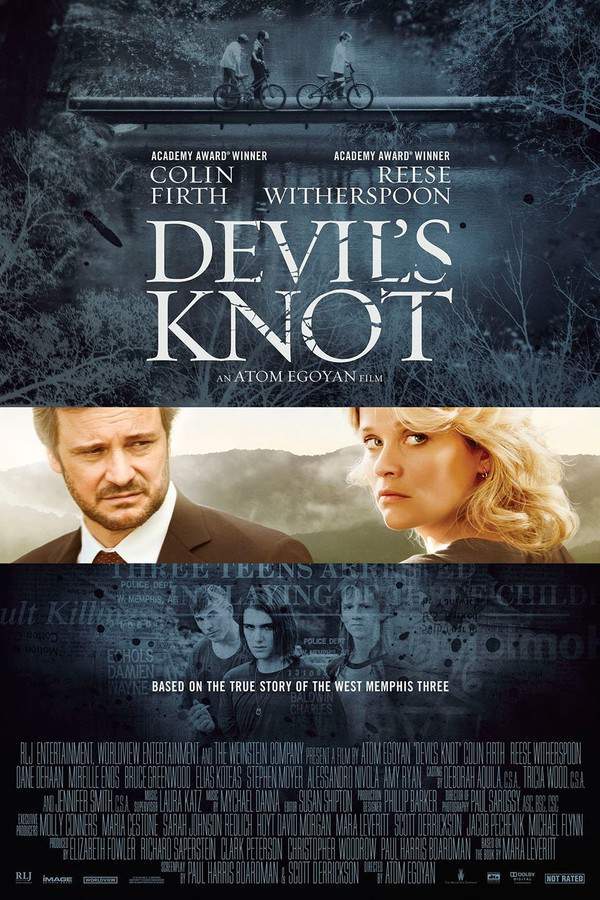
Devil's Knot (2014) movie poster

Timeline

Devil's Knot (2014) Timeline Explained – Every Event in Order

Release, runtime and language
2014 · 114 min · English
JustWatch #14,842 931
Directed by
Atom Egoyan
Starring
Reese Witherspoon, Colin Firth

In 1993, the lives of three teenagers are irrevocably changed in West Memphis, Arkansas, following a series of disturbing events. As the investigation unfolds, suspicion quickly turns to the accused, with rumors of satanic rituals fueling public fear and outrage. A mother, struggling to find answers, enlists the help of an investigator, but their search for justice reveals unsettling truths and challenges her faith in the legal system. The case exposes a darkness far more complex than initially imagined.

On this page (7)
  1. 1 Where to watch
  2. 2 Events in order (11)
  3. 3 Timeline questions answered
  4. 4 The book behind the movie
  5. 5 Movie threads
  6. 6 Movies like Devil's Knot
  7. 7 Every angle

Where to watch

Where to Watch Devil's Knot (2014)

Where can you watch Devil's Knot? Stream, rent or buy it in the US, including on Philo, Hoopla and Plex: current JustWatch availability with up-to-date prices.

Streaming availability powered by JustWatch

11 events in order · contains spoilers

Devil's Knot Timeline: Events in Chronological Order

Every key event of Devil's Knot (2014) in order, scene by scene, with when and where it takes place. Use it to untangle flashbacks, time jumps and parallel storylines, to refresh your memory before the sequel or to find the exact scene you are thinking of.

  1. Three boys go missing in West Memphis

    In 1993, three eight-year-old boys vanish from their West Memphis neighborhood. After an extensive search, their bound and beaten bodies are found the next day. The violent, sexualized nature of the crime spurs fear and a swift belief that a satanic cult is involved.

    When
    1993
    Where
    West Memphis, Arkansas
  2. Bodies discovered and community reacts

    The discovery of the boys' bodies shocks the town and triggers a high-pressure investigation. Rumors spread about occult involvement, fueling public fear and anger. Authorities push a theory that fast-tracks suspicion toward certain groups.

    When
    1993
    Where
    West Memphis, Arkansas
  3. Arrests of Echols, Baldwin, and Misskelley

    A month after the murders, Damien Echols, Jason Baldwin, and Jessie Misskelley Jr. are arrested on charges related to the killings. The case centers on the confession and the perceived similarities to a satanic crime.

    When
    1993
    Where
    West Memphis, Arkansas
  4. Misskelley’s long interrogation and confession

    After roughly 12 hours of interrogation, Misskelley confesses to the murders. The exchange raises serious questions about coercion and reliability, but prosecutors use it to build a case against the three teens. The confession becomes the cornerstone of the initial trial.

    When
    1993
    Where
    West Memphis, Arkansas
  5. Trial and conviction of the three teens

    The defendants go to trial with media attention intensifying the courtroom drama. Baldwin and Misskelley are sentenced to life in prison, while Echols receives the death sentence. Throughout, the defendants proclaim their innocence.

    When
    1994
    Where
    West Memphis, Arkansas
  6. Nearly two decades in prison

    The trio spends nearly two decades in prison as supporters question the fairness of the trials. New voices, scientists, and advocates challenge the idea that they were part of a satanic ritual killing. The case becomes a national symbol of possible miscarriage of justice.

    When
    1994-2011
    Where
    Arkansas
  7. DNA clue surfaces with hair sample

    Private investigator Ron Lax uncovers a hair sample from the crime scene that resembles DNA associated with Terry Hobbs, the stepfather of one victim's family. The clue introduces a credible alternative lead and raises doubts about the certainty of the original convictions. It fuels renewed scrutiny of the case.

    When
    2010-2011
    Where
    West Memphis, Arkansas
  8. Byers wife's death adds to the mystery

    The wife of John Mark Byers is found dead under unsolved circumstances, adding another layer of mystery and suspicion surrounding the community and the investigation. The event reinforces the sense that the case may involve people close to the victims. It becomes part of the broader discourse on guilt and credibility.

    When
    1993
    Where
    West Memphis, Arkansas
  9. Witness recantations undermine the case

    The key witness and his mother publicly recant their statements, challenging the foundations of the prosecution’s case. The recantations contribute to mounting doubts about the convictions. The film highlights how new accounts can reshape public understanding of a crime.

    When
    2011
    Where
    Arkansas
  10. New trial and release under Alford plea

    In August 2011, Echols, Baldwin, and Misskelley are granted a new trial and are released after entering an Alford plea. They remain convicted felons, but the plea allows them to assert their innocence while acknowledging the state’s ability to win the case. The decision marks a dramatic turning point in the long-standing controversy.

    When
    August 2011
    Where
    Arkansas
  11. Continued quest for truth by Pam Hobbs

    Pam Hobbs, mother of one of the victims, continues to search for the truth about her son's murder. Her determination keeps the case in public discussion, even as legal outcomes evolve. Her ongoing advocacy reflects the unresolved nature of the crime in the public memory.

    When
    2011
    Where
    West Memphis, Arkansas

Last updated: February 24, 2026 at 14:12

Was this helpful?

Timeline questions answered

Devil's Knot Timeline Explained: Your Questions Answered

When does it happen, and why in that order? The questions people ask about the chronology of Devil's Knot (2014): time jumps, flashbacks, cause and effect between scenes and the correct order of events, each answered with spoilers.

Q1

Why were Damien Echols, Jason Baldwin, and Jessie Misskelley arrested for the murders?

The three teenagers were arrested primarily based on Jessie Misskelley's confession, which was obtained after approximately 12 hours of interrogation. Police also noted that Damien Echols had previously been labeled a troublemaker in the town and wore dark clothing, which fueled suspicion. The confession, combined with community fears about satanic cults and perceived similarities to occult crimes, led to their arrest just one month after the murders.

  • arrest
  • interrogation
  • confession
  • satanic panic
  • police investigation
Q2

How could Jessie Misskelley's confession be used in court when it was coerced?

Misskelley's confession was obtained after twelve hours of intense interrogation without a lawyer or guardian present. The defense argued the confession was coerced and inconsistent with physical evidence. However, prosecutors presented it as credible evidence, and it became the cornerstone of their case against all three teens. The reliability of the confession was later questioned during appeals, contributing to the eventual release of the men.

  • confession
  • coercion
  • interrogation
  • false confession
  • trial evidence
Q3

What is an Alford plea and why did the West Memphis Three use it?

An Alford plea allows defendants to maintain their innocence while acknowledging that prosecutors have enough evidence to convict them. In August 2011, Echols, Baldwin, and Misskelley entered this plea to secure their immediate release after nearly 20 years in prison. The plea meant they could assert their innocence publicly while avoiding the risk of losing a new trial. They remained convicted felons despite walking free.

  • alford plea
  • legal plea
  • conviction
  • release 2011
  • innocence
Q4

Why did police focus on satanic cult activity in their investigation?

The community and investigators quickly latched onto the satanic cult theory because the crime scene showed signs of binding and unusual violence that resembled descriptions of occult rituals. West Memphis was a deeply religious, working-class town where fears about satanic practices were heightened. These assumptions fast-tracked suspicion toward outsiders and teenagers who dressed differently, particularly Damien Echols, who had been previously associated with goth appearance.

  • satanic panic
  • occult
  • community fear
  • investigation bias
  • west memphis
Q5

What new evidence emerged that led to the West Memphis Three's release?

Private investigator Ron Lax discovered a hair sample from the crime scene that resembled DNA associated with Terry Hobbs, the stepfather of one of the victims. Additionally, key witnesses recanted their testimony, stating they were pressured by police. This new evidence, combined with advances in DNA science and public pressure, prompted the state to offer the men a deal rather than face a new trial.

  • hair sample
  • dna evidence
  • terry hobbs
  • ron lax
  • new evidence
Q6

Who is Terry Hobbs and why is he significant in the case?

Terry Hobbs is the stepfather of Stevie Branch, one of the three murdered boys. In 2010-2011, private investigator Ron Lax uncovered a hair sample from the crime scene that resembled Hobbs' DNA. This evidence introduced a credible alternative suspect in the murders and raised serious doubts about the convictions of the West Memphis Three. However, the case against Hobbs was never proven in court.

  • terry hobbs
  • stepfather
  • hair sample
  • dna
  • alternative suspect
Q7

What happened to John Mark Byers' wife after the murders?

The wife of John Mark Byers (the father of victim Christopher Byers) was found dead under unsolved circumstances shortly after the murders. Her death added another layer of mystery to the case and contributed to the sense that the true perpetrator or perpetrators remained unknown. The circumstances of her death were never conclusively determined.

  • john mark byers
  • wife death
  • unsolved
  • mystery
  • west memphis three
Q8

Why did witnesses recant their testimony against the West Memphis Three?

In 2011, the key witness and his mother publicly recanted their statements that had helped convict the three teens. They stated they were pressured and coerced by police during the original investigation. Their recantations undermined the prosecution's case and contributed to growing doubts about the convictions, ultimately helping pave the way for the men's release.

  • witness recantation
  • testimony
  • coercion
  • appeal
  • evidence doubt
Q9

Why weren't the West Memphis Three fully exonerated after their release?

The three men were released through an Alford plea, which allows defendants to maintain innocence while acknowledging the prosecution's evidence. This meant they walked free but remained convicted felons on their records. The state was unwilling to fully exonerate them, likely because doing so would have implied wrongdoing by law enforcement and the original prosecutors. The plea was a compromise that secured their freedom without officially clearing their names.

  • exoneration
  • alford plea
  • not guilty
  • conviction record
  • legal compromise
Q10

What role did Pam Hobbs play in the investigation after her son's death?

Pam Hobbs, mother of murdered boy Stevie Branch, became a central figure in the continuing search for truth. Though she initially testified against the defendants, she later worked with private investigator Ron Lax and began pursuing answers about her son's murder. Her determination kept the case in public discussion and contributed to the eventual reconsideration of the convictions, even as she continued grieving the loss of her son.

  • pam hobbs
  • mother
  • steve branch
  • investigation
  • advocacy
Q11

Why was Damien Echols sentenced to death while the others received life sentences?

Damien Echols received the death sentence because prosecutors portrayed him as the ringleader of the alleged satanic cult. His goth appearance, interest in occult-themed music, and prior behavioral issues made him the focal point of the prosecution's case. The jury believed he was the most culpable, while Baldwin and Misskelley were seen as followers. Echols spent 18 years on death row before his release.

  • death sentence
  • echols
  • capital punishment
  • trial
  • prosecution
Q12

How did the West Memphis community react to the murders and subsequent arrests?

The discovery of the boys' bound and brutalized bodies sent shock through the small, deeply religious town. Fear quickly turned to outrage as rumors of satanic cult involvement spread. This panic strained relationships between neighbors and friends, with suspicion falling on anyone who seemed different. The intense public pressure contributed to the rapid arrest of the three teenagers and influenced the aggressive investigation tactics used.

  • community reaction
  • mob mentality
  • public fear
  • neighbor suspicion
  • west memphis

Movie threads

More Movies Like Devil's Knot, by Mood & Story

Curated lists built around what makes Devil's Knot tick: the same mood, the same kind of story or the same emotional payoff. Each list explains why these movies belong together.

True Crime Dramas of Legal Failure like Devil's Knot

Dramas based on real cases where the search for truth is obstructed by prejudice. If you were gripped by the flawed investigation in Devil's Knot, explore these movies like Devil's Knot that are based on true stories of wrongful conviction and a justice system under strain.

  • based on a true story
  • gripping
  • infuriating
  • solemn
  • tense
  • investigative
  • Tone: somber, tense, infuriating
  • Pacing: steady, procedural
Why these movies?

The story pattern: Stories typically follow a linear, factual timeline from the commission of a crime through the investigative and trial phases. The narrative often centers on an outsider—a journalist, private investigator, or determined family member—who challenges the official narrative, uncovering corruption or bias.

Why they belong together: These films share a sobering, fact-based approach to storytelling, a heavy emotional weight stemming from real tragedy, and a central theme of battling an entrenched and flawed system. The pacing is steady, building tension through procedural details rather than action.

Dark and Oppressive Dramas like Devil's Knot

Stories where societal fear creates an atmosphere of claustrophobic dread. For viewers who appreciated the grim, tense mood of Devil's Knot, these similar movies explore dark societal fears and the heavy burden of moral dilemmas in a judgmental community.

  • grim
  • unsettling
  • somber
  • tense
  • oppressive
  • suspenseful
  • Tone: dark, grim, unsettling
  • Pacing: steady, slow burn
Why these movies?

The story pattern: Narratives often focus on individuals or groups vilified by their community, exploring themes of scapegoating, mob mentality, and the loss of innocence. The journey is emotionally draining, pushing characters to their limits as they confront a hostile world.

Why they belong together: They are grouped by a consistently dark and serious tone, a high level of dramatic tension, and a focus on heavy themes like grief, loss, and societal collapse. The emotional experience is somber and often leaves a bittersweet or bleak aftertaste.

If you liked this

Movies Like Devil's Knot

Similar movies to Devil's Knot: the same genre, themes or kind of story. Each one comes with its own plot summary, timeline and ending explained.

Browse all movie summaries

Every angle

Devil's Knot (2014) Explained: Plot, Timeline & Characters

Everything about Devil's Knot in one place: what happens in the plot summary, the timeline in chronological order, the characters and meaning and a spoiler-free summary. What's After the Movie adds the cast, box office and post-credit scenes.

Coming soon on iOS and Android

The Plot Explained Movie Summary App

Plot summaries, endings explained and timelines on your phone. Catch up on any movie in minutes, save your favorites and never miss a twist again.

Be the first to know when we launch. Your email stays private, always.

Learn more about the app