






Plot Explained Spoilers guaranteed!
Plot Explained

Browse by genre

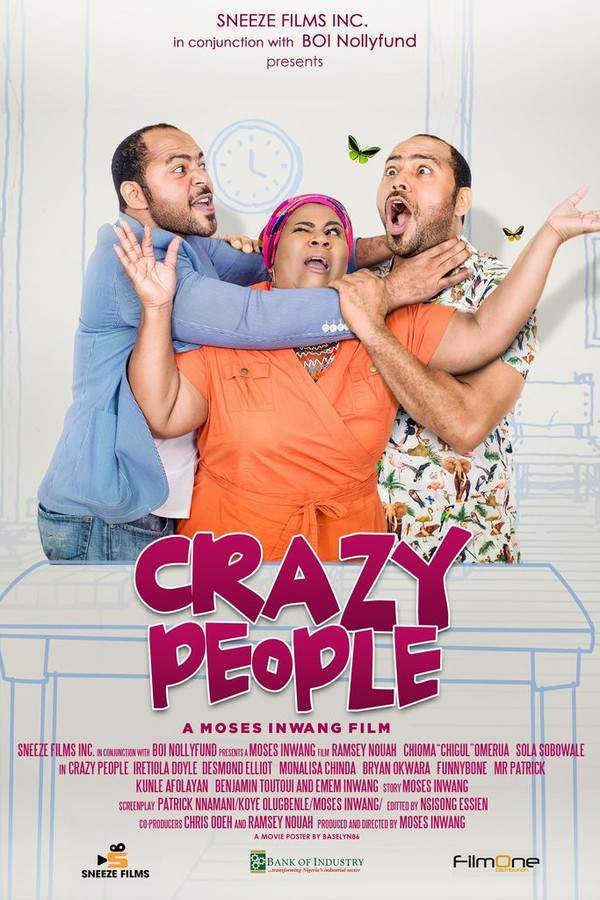
Crazy People (1990) movie poster

Characters & Themes

Crazy People (1990) Characters, Setting & Themes Explained

Release, runtime and language
1990 · 90 min · English
Directed by
Barry L. Young
Starring
Paul Reiser, J.T. Walsh, Bill Smitrovich, Dudley Moore, Daryl Hannah, Danton Stone

Chaos descends upon the entertainment industry when a lookalike begins impersonating actor Ramsey Nouah. As the imposter's antics escalate, Nouah must race against time to uncover the doppelganger's motives and reclaim his reputation. The situation spirals into a comical battle of identity, forcing Nouah to confront the bizarre side of fame and the lengths people will go to for attention. It's a funny and ultimately touching story about finding yourself amidst the absurdity of celebrity.

On this page (8)
  1. 1 Where to watch
  2. 2 Characters explained (4)
  3. 3 Where & when it takes place
  4. 4 Themes & meaning (3)
  5. 5 Character & meaning questions
  6. 6 Movie threads
  7. 7 Movies like Crazy People
  8. 8 Every angle

Where to watch

Where to Watch Crazy People (1990)

Where can you watch Crazy People? Stream, rent or buy it in the US, including on Hoopla, Amazon Video and Apple TV Store: current JustWatch availability with up-to-date prices.

Streaming availability powered by JustWatch

4 main characters · contains spoilers

Crazy People Characters Explained: Who Is Who

The main characters of Crazy People (1990), heroes and villains: what drives them, how they change over the course of the story and what each of them reveals about the film's bigger ideas.

  • Emory Leeson (Dudley Moore)

    Emory is a creative advertising executive who experiences a professional crisis that leads him to develop brutally honest ads. His character evolves from being overwhelmed by anxiety to harnessing the raw creativity of himself and his fellow patients. Emory's journey captures resilience and the importance of collaboration in the pursuit of artistic expression.

    • 🎨 Creative
    • 💔 Vulnerable
    • 🏥 Patient
  • Kathy Burgess (Daryl Hannah)

    Kathy is a fellow patient who initially appears fragile but possesses a strong inner resilience. Her relationship with Emory adds depth to her character, highlighting her transformative journey. Kathy’s growth reflects the impact of creativity and support on mental wellness.

    • ❤️ Complex
    • 🌟 Resilient
  • Stephen Bachman (J.T. Walsh)

    As Emory's coworker, Stephen plays a critical role in escalating Emory's situation, leading to his commitment. His actions stem from concern, yet they push Emory into a new world where he discovers his potential. Stephen embodies the corporate pressure that often stifles creativity.

    • 📈 Corporate
    • 🏢 Oppressive
  • Dr. Baylor

    Dr. Baylor is Emory's supportive therapist who champions the creative endeavors of the patients. She embodies a compassionate approach to therapy, recognizing the value of artistic expression in recovery. Her guidance helps to foster a nurturing environment in the hospital.

    • 👩‍⚕️ Supportive
    • 🌀 Empathetic

Last updated: October 22, 2024 at 23:21

Was this helpful?

Setting

Where and When Does Crazy People Take Place?

The setting of Crazy People (1990): the year and time period, the places and locations, and how they shape the characters, the mood and the tension of the story.

Time period

The events transpire in a contemporary period reflective of the evolving attitudes toward mental health and creativity. It captures a moment where unconventional ideas begin to disrupt traditional business practices, particularly in advertising.

Location

Psychiatric Hospital, Greece, The Bahamas

The movie primarily takes place in a psychiatric hospital where patients gather to innovate and collaborate on advertising concepts. This hospital setting becomes a vibrant hub for creativity, contrasting the traditional advertising world outside. Additionally, the advertisements reference tourism spots such as Greece and the Bahamas, evoking a sense of escape and leisure.

  • 🏥 Hospital
  • 🇬🇷 Greece
  • 🏝️ Bahamas

Last updated: October 22, 2024 at 23:21

Was this helpful?

3 major themes

Crazy People Meaning: Themes & Message Explained

What is Crazy People (1990) really about? The emotional, social and philosophical themes the film keeps returning to, its symbolism and the message beneath the surface.

  • Creativity

    Creativity is a central theme as Emory defies advertising norms by embracing honesty. His journey illustrates how innovation can emerge from unconventional places, highlighting the power of collaboration among individuals facing adversity. The film showcases how creativity can function as a healing mechanism in the context of mental health.

  • Romance

    A budding romance between Emory and Kathy adds an emotional layer to the narrative. Their relationship develops amidst the backdrop of recovery, illustrating how love can flourish even in challenging environments. This romance also serves as a catalyst for their daring escape plan, symbolizing hope and new beginnings.

  • Collaboration

    The theme of collaboration shines through as Emory engages his fellow patients in creating advertising campaigns. Their teamwork not only fosters a sense of belonging but also enhances their personal growth throughout the film. It emphasizes that shared creativity can lead to significant transformations, both personally and professionally.

Last updated: October 22, 2024 at 23:21

Was this helpful?

Character & theme questions

Crazy People Characters & Meaning: Your Questions Answered

The questions people ask about Crazy People (1990): who the characters really are, their relationships, what the symbols mean, where it takes place and what the movie is really about. Each answer contains spoilers.

Q1

Where does the movie take place?

The story primarily unfolds in a psychiatric hospital where the main character Emory is committed. This setting becomes a creative hub where patients collaborate on advertising concepts, contrasting sharply with the traditional corporate advertising world outside. The film also references exotic locations like Greece and the Bahamas through the advertisements the patients create, symbolizing escape and freedom.

Foreshadowing: The hospital is introduced early as Emory arrives after his breakdown, establishing it as the central location for the film's creative awakening.

  • psychiatric hospital
  • setting
  • location
  • advertising
  • creativity
Q2

When is the movie set?

The film takes place in a contemporary period that reflects evolving attitudes toward mental health and creativity in the late 1980s to early 1990s. It captures a specific cultural moment when unconventional ideas began disrupting traditional business practices, particularly in the advertising industry.

  • time period
  • era
  • contemporary
  • 1990s
Q3

What does the movie say about creativity?

Creativity is the film's central theme, portrayed as a powerful force that emerges from unexpected places. Emory, a burned-out advertising executive, discovers that radical honesty in advertising actually works better than conventional marketing. The movie suggests that creativity can function as a healing mechanism, especially for those facing mental health challenges, and that innovation often comes from people society dismisses as different.

Foreshadowing: Emory's early struggle with creative block sets the stage for his breakdown and subsequent discovery of authentic expression.

  • creativity
  • advertising
  • innovation
  • mental health
  • honesty
Q4

How does the romance develop between Emory and Kathy?

Emory's relationship with Kathy, a fellow patient, evolves from mutual support to a budding romance that becomes a source of hope throughout the film. Their connection develops against the backdrop of recovery and creative collaboration, adding emotional depth to the narrative. The romance serves as a catalyst for their daring escape plan, symbolizing new beginnings and personal transformation.

Foreshadowing: Early scenes establish Kathy's inner resilience, hinting at her eventual role as Emory's romantic partner and collaborator.

  • romance
  • Emory
  • Kathy
  • love
  • relationship
  • escape
Q5

What role does collaboration play in the story?

Collaboration is essential to the film's message. Emory engages his fellow patients in creating advertising campaigns, and their teamwork fosters a sense of belonging and personal growth. The movie emphasizes that shared creativity can lead to significant transformations, both personally and professionally. This collaborative approach ultimately leads to their successful escape and a new creative partnership outside the hospital.

Foreshadowing: The hospital setting naturally brings diverse patients together, setting up the collaborative dynamics that drive the story forward.

  • collaboration
  • teamwork
  • patients
  • advertising
  • partnership
  • escape
Q6

Who is Emory Leeson and what is his role?

Emory Leeson is a creative advertising executive played by Dudley Moore who experiences a professional crisis after developing brutally honest ads that shock his colleagues. His journey takes him from a corporate burnout to a psychiatric hospital where he discovers his true creative potential by collaborating with fellow patients. Emory represents resilience and the importance of authentic self-expression over conformity.

Foreshadowing: Emory's professional struggle with advertising norms is established early, leading to his breakdown and eventual transformation.

  • Emory Leeson
  • Dudley Moore
  • advertising executive
  • protagonist
  • creativity
Q7

Who is Kathy Burgess and what is her story?

Kathy Burgess, played by Daryl Hannah, is a fellow patient at the psychiatric hospital who initially appears fragile but possesses remarkable inner strength. Her relationship with Emory becomes central to the narrative, highlighting her transformative journey from patient to creative partner and love interest. Kathy's growth reflects the film's themes of how creativity and supportive relationships can impact mental wellness.

Foreshadowing: Early scenes reveal Kathy's quiet resilience, foreshadowing her evolution into a key creative collaborator.

  • Kathy Burgess
  • Daryl Hannah
  • patient
  • romance
  • character
Q8

What role does Stephen Bachman play?

Stephen Bachman, played by J.T. Walsh, is Emory's coworker whose concern for Emory's erratic behavior leads to his institutionalization. Stephen represents the corporate pressure and conventional thinking that stifles creativity in the advertising industry. While his actions stem from genuine worry, they inadvertently push Emory into an environment where his creative talents flourish among the patients.

Foreshadowing: Stephen's concern is introduced early, creating the chain of events that sends Emory to the hospital.

  • Stephen Bachman
  • J.T. Walsh
  • coworker
  • corporate
  • advertising
Q9

Who is Dr. Baylor?

Dr. Baylor is Emory's therapist at the psychiatric hospital who champions the creative endeavors of the patients. She embodies a compassionate, progressive approach to therapy, recognizing the therapeutic value of artistic expression in recovery. Dr. Baylor's guidance helps foster the nurturing environment that enables the patients' creative collaboration.

  • Dr. Baylor
  • therapist
  • mental health
  • supportive
  • recovery
Q10

How does the movie view the advertising industry?

The film presents a satirical critique of the advertising industry, suggesting that conventional advertising relies on deception and conformity. Emory's breakthrough comes from creating ads that tell brutal truths instead of clever lies, which ironically proves more effective. The movie uses humor to highlight how the corporate world often dismisses authentic creativity as madness, while the 'patients' in the hospital demonstrate more genuine innovation than industry professionals.

Foreshadowing: Emory's early struggles with conventional advertising set up the satirical critique that runs throughout the film.

  • advertising industry
  • satire
  • corporate
  • criticism
  • marketing
  • honesty
Q11

How does the film approach mental illness?

The film approaches mental illness through a comedic and satirical lens, avoiding heaviness while still addressing serious themes. While the initial premise involves involuntary commitment, the tone remains hopeful and light. The movie portrays psychiatric patients as creative, capable individuals rather than simply as people with disorders. The setting, though institutional, becomes a place of healing, empowerment, and community rather than isolation.

Foreshadowing: The film's opening establishes the comedic tone that frames the mental health themes throughout.

  • mental illness
  • psychiatric hospital
  • mental health
  • patients
  • portrayal

Movie threads

More Movies Like Crazy People, by Mood & Story

Curated lists built around what makes Crazy People tick: the same mood, the same kind of story or the same emotional payoff. Each list explains why these movies belong together.

Movies about creative found families like Crazy People

Outsiders band together to build an unconventional family through shared creative expression. If you liked the heartwarming story of misfits finding purpose together in Crazy People, you'll enjoy these similar movies. This list features comedies and dramas where an unconventional group bands together through creativity, defying expectations to form a unique and supportive family.

  • hopeful
  • quirky
  • touching
  • creative
  • uplifting
  • bittersweet
  • Tone: hopeful, whimsical, touching
  • Pacing: steady, character-driven
Why these movies?

The story pattern: The narrative typically follows a protagonist who feels isolated or out of place, finding belonging with a group of fellow eccentrics. Their shared creative endeavor—be it art, music, or a business—becomes the catalyst for personal growth, challenging the status quo and proving that true family is found, not given. The central conflict often involves overcoming societal or institutional pressures to celebrate their unique identities.

Why they belong together: These films are grouped together because they share a core theme of empowerment through community and creativity. They blend comedy with heartfelt emotion, maintaining a hopeful tone and a light-to-medium emotional weight, ensuring the journey is ultimately uplifting and affirming.


Satirical comedies with heart like Crazy People

Sharp, funny critiques of society that never lose their warmth and humanity. Looking for more funny and touching satires like Crazy People? This list features movies that blend sharp, whimsical humor with genuine heart. If you enjoyed the critique of advertising mixed with heartfelt character moments, these similar stories offer a perfect balance of silly and sincere.

  • satirical
  • silly
  • touching
  • absurd
  • uplifting
  • quirky
  • Tone: hopeful, silly, touching
  • Pacing: steady
Why these movies?

The story pattern: Stories in this thread often place relatable characters within a bizarre or exaggerated system (like corporate culture or an institution). The plot uses their interactions with this system to generate both comedy and poignant insights. The satire is never mean-spirited; instead, it highlights human follies to ultimately affirm individuality, connection, and hope.

Why they belong together: This thread groups movies that masterfully balance satire with sincerity. They share a specific tonal mix: the pacing is steady, the intensity is medium, and the emotional weight is light, creating an experience that is intellectually amusing and emotionally satisfying without being heavy or bleak.

If you liked this

Movies Like Crazy People

Similar movies to Crazy People: the same genre, themes or kind of story. Each one comes with its own plot summary, timeline and ending explained.

Browse all movie summaries

Every angle

Crazy People (1990) Explained: Plot, Timeline & Characters

Everything about Crazy People in one place: what happens in the plot summary, the timeline in chronological order, the characters and meaning and a spoiler-free summary. What's After the Movie adds the cast, box office and post-credit scenes.

Coming soon on iOS and Android

The Plot Explained Movie Summary App

Plot summaries, endings explained and timelines on your phone. Catch up on any movie in minutes, save your favorites and never miss a twist again.

Be the first to know when we launch. Your email stays private, always.

Learn more about the app