Plot Explained Spoilers guaranteed!
Plot Explained

Browse by genre

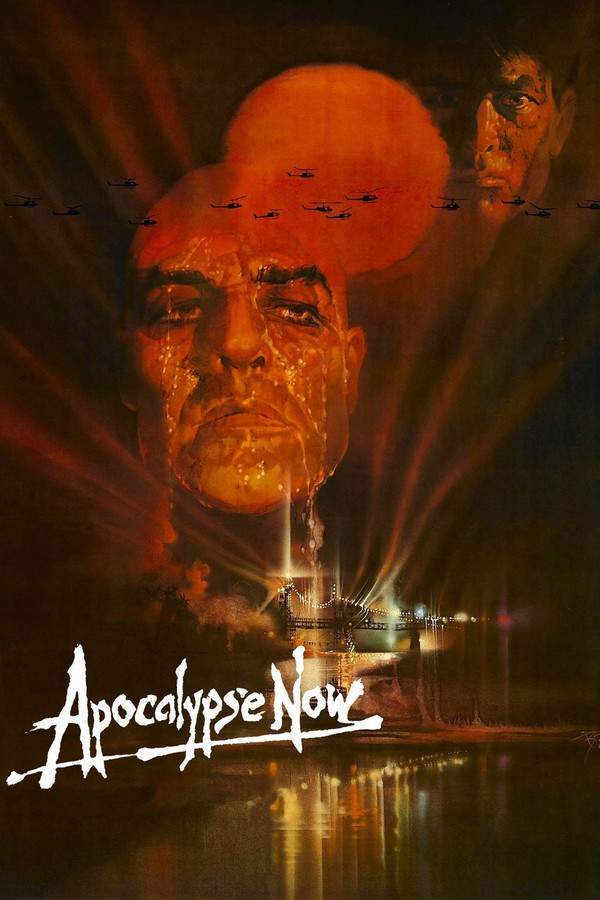
Apocalypse Now (1979) movie poster

Plot Summary

Apocalypse Now (1979) Plot Summary Explained

Release, runtime and language
1979 · 153 min · English
JustWatch #427
Directed by
Francis Ford Coppola
Starring
Martin Sheen, Marlon Brando

During the Vietnam War, Captain Willard is given a dangerous mission: journey up a river into the Cambodian jungle to assassinate Colonel Kurtz. A highly decorated officer, Kurtz has gone rogue and established himself as a god-like figure among a local tribe. Willard's perilous journey is accompanied by a diverse group of U.S. Navy crew members, as they face the brutal realities of war and confront the darkness within themselves.

On this page (7)
  1. 1 Where to watch
  2. 2 What happens: full plot
  3. 3 Plot questions answered
  4. 4 The book behind the movie
  5. 5 Movie threads
  6. 6 Movies like Apocalypse Now
  7. 7 Every angle

Where to watch

Where to Watch Apocalypse Now (1979)

Where can you watch Apocalypse Now? Stream, rent or buy it in the US, including on Plex, Amazon Video and Apple TV Store: current JustWatch availability with up-to-date prices.

Streaming availability powered by JustWatch

Full plot summary · contains spoilers

What Happens in Apocalypse Now: Full Plot Summary

The whole story of Apocalypse Now (1979) explained, from the opening scene to the final frame: every key event, every twist and what it all adds up to. Read it as a quick recap before the sequel, to check a scene you missed, or to finally understand what really happened.

U.S. Army Captain and seasoned special operations veteran Benjamin L. Willard (Martin Sheen) finds himself back in the chaotic environment of Saigon, drowning his sorrows in alcohol while wrecking his hotel room. His bleak existence takes a sudden turn when intelligence officers Lt. General Corman and Colonel Lucas, played by G. D. Spradlin and Harrison Ford respectively, approach him with a daunting mission: he is to navigate the treacherous Nung River deep into the Cambodian jungle, track down the rebellious US Special Forces Colonel Walter E. Kurtz (Marlon Brando), and eliminate him.

The officers report that Kurtz is conducting a brutal campaign against NVA, Viet Cong, and Khmer Rouge forces independent of any military oversight, earning him a god-like status among his troops at a remote jungle outpost. With the chilling order to "terminate Kurtz's command... with extreme prejudice," Willard embarks on this perilous assignment.

Joined by a Navy PBR boat crew led by George "Chief" Phillips (portrayed by Albert Hall) and fellow members Lance Johnson (Sam Bottoms), Jay "Chef" Hicks (Frederic Forrest), and Tyrone "Mr. Clean" Miller (Laurence Fishburne), Willard sets off. Their journey is interrupted at the mouth of the Nung River, where they encounter the wild, reckless Lieutenant Colonel Bill Kilgore (Robert Duvall). Initially indifferent to their mission, Kilgore’s love for surfing leads him to assault the beachfront filled with Viet Cong while enjoying the classic "Ride of the Valkyries" blaring from helicopter speakers. Despite his antics, Willard manages to gather his crew and push on with their mission.

As they travel upstream, Willard slowly communicates the significance of their mission to Chief, attempting to prioritize their objective amidst growing tension. He discovers that Kurtz, a once-admired officer and promising general, abandoned a prestigious Pentagon role to join the Special Forces, a decision that ultimately tainted his legacy. Willard learns of Kurtz's controversial actions that led to his downfalls, such as the execution of suspected double agents and the subsequent desertion into Cambodia.

As they make their way deeper through the war-torn landscapes, the crew faces numerous perilous encounters, including a fearsome tiger and a distressing incident where Mr. Clean snaps and kills a group of civilians aboard a sampan, forcing Willard into a dark decision when he executes an injured survivor, viewing it as a necessary evil to maintain their focus.

Pushing further, they uncover the tragic fates of previous attempts to confront Kurtz, including a harrowing letter from Captain Colby (Scott Glenn) that reveals the grim reality of their mission. The psychological toll of the journey weighs heavily on the remaining crew, particularly on Lance and Chef, who become increasingly influenced by drugs and paranoia.

The climax of their expedition occurs at Kurtz's lair, a savage and eerie Khmer temple. Following a disturbing encounter with a frenetic photographer (Dennis Hopper) and a gut-wrenching revelation of the violence within the camp, Willard finally confronts Kurtz. In the depths of the temple, Kurtz sees Willard as merely an errand boy and imprisons him, leading to a moment of sheer horror when Chef's severed head is thrown at Willard.

As Kurtz's philosophical rants delve into the brutal nature of war, Willard grapples with the chilling history that warped Kurtz into the man he has become. After a chaotic night filled with rituals and violence, Willard confronts Kurtz, ultimately ending his life after a lengthy discourse about the darkness within humanity. Kurtz’s final whispered words, > "The horror ... the horror ...," reverberate in Willard's mind as he departs the temple and escapes the madness that engulfed them.

With the village now under siege from airstrikes, Willard and Lance flee the chaos, leaving behind a world teetering on the brink of moral decay, as Kurtz's haunting legacy lingers in their minds.
Last updated: November 16, 2024 at 14:56

Was this helpful?

Plot questions answered

Apocalypse Now Plot Explained: Your Questions Answered

The questions people ask most about Apocalypse Now (1979): what happens in the confusing scenes, why the characters do what they do, the twists, hidden details and what the ending means. Each answer contains spoilers.

Q1

Why was Captain Willard chosen for the mission to kill Kurtz?

Willard was chosen because he was a seasoned special operations veteran already in Vietnam, and the military needed someone discrete and capable of handling the sensitive nature of an assassination. The mission was kept highly classified, with orders to terminate Kurtz 'with extreme prejudice' - meaning kill him rather than bring him to trial.

Foreshadowing: Early scenes show Willard drinking alone in Saigon, his mental state already fragile, hinting at the psychological toll the mission will have.

  • captain willard
  • mission
  • colonel kurtz
  • special forces
  • assassination
Q2

Why did Colonel Kurtz turn against the military?

Kurtz was once a highly decorated officer and promising general who chose to join the Special Forces instead of a prestigious Pentagon role. His downfall began when he executed suspected double agents without approval, an act that marked the start of his descent into independent, brutal campaigning against enemy forces.

Foreshadowing: Willard learns about Kurtz's controversial execution of suspected double agents, showing how his extreme methods started before going rogue.

  • colonel kurtz
  • rogue
  • special forces
  • military
  • pentagon
  • descent
Q3

What happened on the sampan and why did Willard kill the survivor?

When Mr. Clean snapped and killed civilians aboard a sampan, one civilian was left wounded. Willard executed the survivor to prevent him from alerting enemy forces to their position and to maintain the crew's focus on their mission. He viewed it as a necessary evil to ensure they could complete their objective.

Foreshadowing: The earlier scene shows Mr. Clean becoming increasingly unstable, foreshadowing his breakdown.

  • sampan
  • mr clean
  • civilians
  • willard
  • kill
  • necessary evil
Q4

Why did Chef go to Kurtz's temple alone?

Chef became increasingly paranoid and influenced by drugs as they traveled deeper into the jungle. He went ahead to Kurtz's temple alone, likely hoping to find clarity or make peace with what awaited them, but he was killed and his severed head was thrown at Willard as a message.

Foreshadowing: Chef's growing paranoia and drug use throughout the journey signaled his deteriorating mental state.

  • chef
  • temple
  • alone
  • paranoia
  • killed
  • head
Q5

What does 'The horror... the horror...' mean at the end?

Kurtz's final words represent his recognition of the true horror of war - not the violence itself, but the moral corruption and darkness it creates in both perpetrator and victim. It reflects his understanding that the line between sanity and madness, good and evil, has completely blurred in the context of war.

Foreshadowing: Throughout the film, Kurtz's philosophical rants about the nature of war and humanity's capacity for evil build toward this realization.

  • horror
  • kurtz
  • final words
  • quote
  • meaning
  • war
  • darkness
Q6

Why did Willard decide to kill Kurtz after everything they discussed?

After listening to Kurtz's lengthy philosophical discourse about the darkness within humanity and experiencing the horrors of his compound, Willard chose to end Kurtz's life. This act represented both the completion of his mission and a kind of mercy killing - releasing Kurtz from his tormented existence while also confronting the moral complexity of his own role.

Foreshadowing: Willard's internal conflict and the mounting psychological toll throughout the journey build toward this pivotal decision.

  • willard
  • kurtz
  • kill
  • decision
  • mercy
  • mission
  • darkness
Q7

What happened to Chief, Lance, Mr. Clean, and Chef?

Mr. Clean was killed during the sampan incident. Chef was killed at Kurtz's temple, where his severed head was thrown to Willard. Chief was killed during the final assault on Kurtz's compound. Only Lance survived, escaping with Willard after the airstrikes destroyed the village.

Foreshadowing: The letter from Captain Colby early on revealed the grim fate of previous missions, foreshadowing the crew's eventual demise.

  • chief
  • lance
  • mr clean
  • chef
  • death
  • fate
  • crew
Q8

Why was Lieutenant Colonel Kilgore obsessed with surfing during a war?

Kilgore represents the absurdity of war - he prioritizes surfing and personal pleasure over military objectives. His assault on the Viet Cong beach was initially motivated by a desire to surf the waves there. This scene highlights how war creates its own irrational logic and how officers can be detached from the reality around them.

Foreshadowing: Kilgore's introduction establishes the film's theme of war's insanity from the very first river encounter.

  • kilgore
  • surfing
  • war
  • absurdity
  • helicopters
  • ride of the valkyries
Q9

What was the photographer's role at Kurtz's camp?

The frenetic photographer (played by Dennis Hopper) served as a witness to the violence at Kurtz's compound. He revealed the nightmarish conditions to Willard and seemed to have become absorbed into Kurtz's world, documenting the brutal rituals and philosophical justifications for the atrocities committed there.

Foreshadowing: The photographer's manic behavior and descriptions of violence prepare Willard (and the audience) for the horror awaiting inside the temple.

  • photographer
  • dennis hopper
  • kurtz
  • camp
  • violence
  • witness
Q10

Why did Kurtz call Willard an 'errand boy'?

Kurtz dismissed Willard as an 'errand boy' because he saw the assassination mission as petty and beneath him. Kurtz viewed himself as someone engaged in a profound philosophical struggle about the nature of war and humanity, while Willard's assignment was simply to kill him - a task Kurtz considered mindless and subservient to the military machine.

Foreshadowing: The cold open where Willard receives his orders sets up the transactional nature of his mission, which Kurtz immediately recognizes.

  • kurtz
  • willard
  • errand boy
  • mission
  • dismissal
  • philosophy
Q11

What does 'terminate with extreme prejudice' mean in the mission?

'Terminate with extreme prejudice' was a military code phrase meaning to kill the target rather than attempt capture or trial. It indicated that Kurtz was to be assassinated, not brought back for interrogation - a decision made because his actions had become too embarrassing for the military to acknowledge publicly.

Foreshadowing: The ominous phrasing sets the tone for the morally dubious nature of Willard's entire mission from the start.

  • terminate with extreme prejudice
  • mission
  • code
  • assassination
  • military

Movie threads

More Movies Like Apocalypse Now, by Mood & Story

Curated lists built around what makes Apocalypse Now tick: the same mood, the same kind of story or the same emotional payoff. Each list explains why these movies belong together.

Psychological Descent into Madness like in Apocalypse Now

Films that chart a character's internal collapse under extreme pressure. If you were fascinated by Willard and Kurtz's psychological turmoil in Apocalypse Now, explore more movies like it. This thread gathers films about characters losing their grip on reality, perfect for viewers seeking similar intense psychological dramas and stories of moral collapse.

  • psychological
  • unsettling
  • nihilistic
  • oppressive
  • anxious
  • dark
  • Tone: dark, psychological, nihilistic
  • Pacing: variable, often slow-building
Why these movies?

The story pattern: Stories in this thread typically follow a protagonist entering a chaotic or oppressive environment, which acts as a catalyst for their internal disintegration. The central conflict is psychological, pitting the character's former self against the darkness they encounter, often culminating in a bleak acceptance of that darkness.

Why they belong together: Movies are grouped here based on their shared focus on a protagonist's psychological breakdown. They create a similar feeling of unease and dread through oppressive atmospheres, morally ambiguous situations, and a narrative that prioritizes internal conflict over external action.

Surreal and Philosophical Journeys like Apocalypse Now

Epic voyages that blend brutal reality with dreamlike symbolism. For fans of the hallucinatory river voyage in Apocalypse Now, this collection features similar movies with surreal journeys. Discover films that use epic travel as a framework for exploring dark themes, perfect if you like philosophical stories with a dreamlike, anxious atmosphere.

  • surreal
  • philosophical
  • anxious
  • oppressive
  • symbolic
  • hallucinatory
  • Tone: surreal, dark, philosophical
  • Pacing: variable, atmospheric
Why these movies?

The story pattern: The narrative pattern is a quest or mission that becomes increasingly abstract and symbolic. The physical obstacles the characters face are secondary to the thematic and psychological revelations they encounter. The structure often allows for episodic, surreal encounters that build towards a profound, ambiguous conclusion.

Why they belong together: These movies are grouped by their unique blend of a concrete narrative mission with a deeply surreal and philosophical tone. They share a specific vibe: an anxious, oppressive atmosphere where the setting itself feels like a character, challenging the protagonist's worldview.

If you liked this

Movies Like Apocalypse Now

Similar movies to Apocalypse Now: the same genre, themes or kind of story. Each one comes with its own plot summary, timeline and ending explained.

Browse all movie summaries

Every angle

Apocalypse Now (1979) Explained: Plot, Timeline & Characters

Everything about Apocalypse Now in one place: what happens in the plot summary, the timeline in chronological order, the characters and meaning and a spoiler-free summary. What's After the Movie adds the cast, box office and post-credit scenes.

Coming soon on iOS and Android

The Plot Explained Movie Summary App

Plot summaries, endings explained and timelines on your phone. Catch up on any movie in minutes, save your favorites and never miss a twist again.

Be the first to know when we launch. Your email stays private, always.

Learn more about the app