Plot Explained Spoilers guaranteed!
Plot Explained

Browse by genre

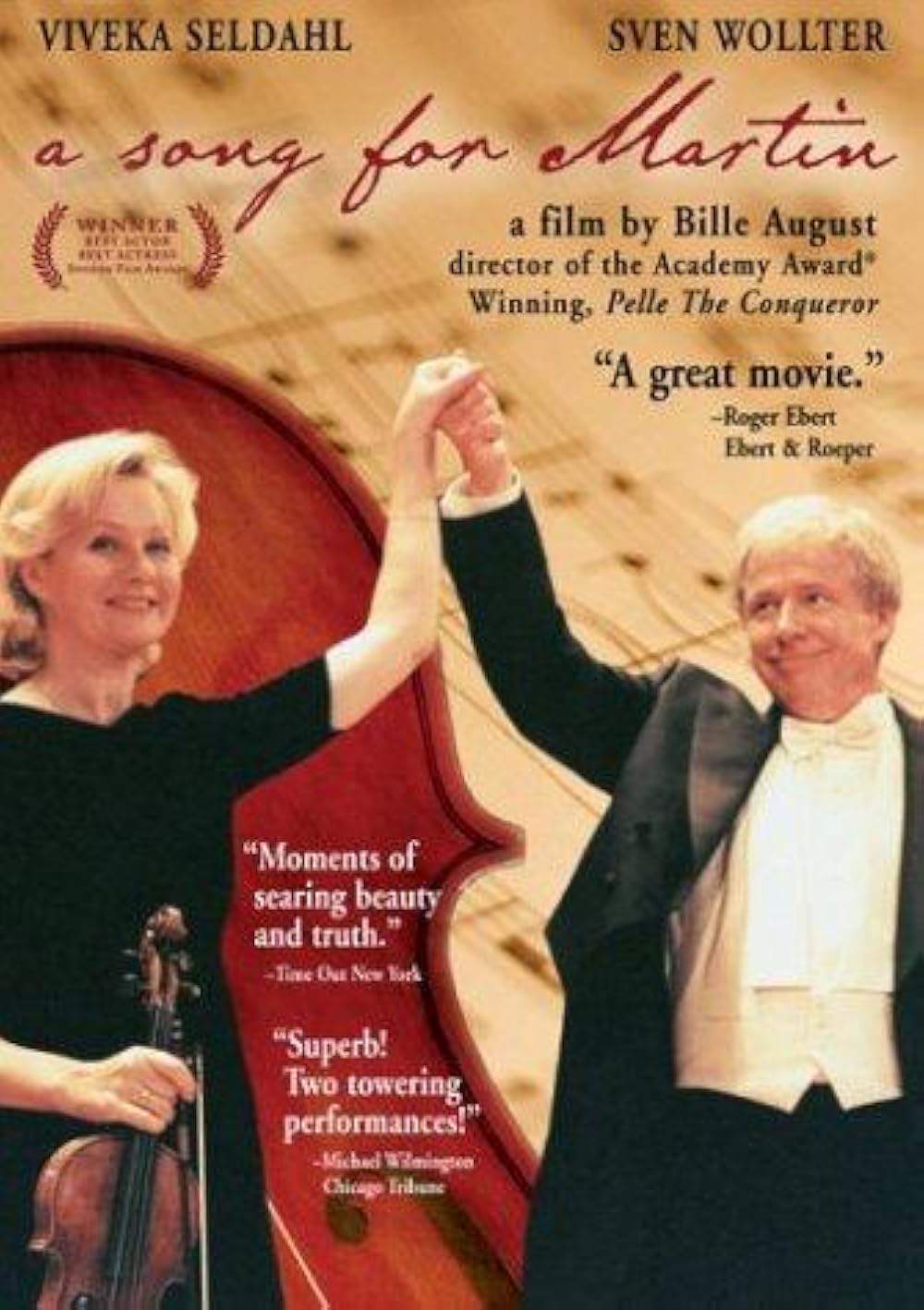
A Song for Martin (2001) movie poster

Timeline

A Song for Martin (2001) Timeline Explained – Every Event in Order

Release, runtime and language
2001 · 117 min · Swedish
Directed by
Bille August
Starring
Sven Wollter, Viveka Seldahl

In midlife, Barbara and Martin, a violinist and composer-conductor respectively, rediscover their deep connection and rekindle a passionate romance. As their love deepens, Martin is diagnosed with Alzheimer's disease, which threatens to disrupt their newfound harmony. The film explores the enduring power of love and music as they face the challenges of mortality and fight to preserve their cherished bond.

On this page (5)
  1. 1 Events in order (14)
  2. 2 Timeline questions answered
  3. 3 Movie threads
  4. 4 Movies like A Song for Martin
  5. 5 Every angle

14 events in order · contains spoilers

A Song for Martin Timeline: Events in Chronological Order

Every key event of A Song for Martin (2001) in order, scene by scene, with when and where it takes place. Use it to untangle flashbacks, time jumps and parallel storylines, to refresh your memory before the sequel or to find the exact scene you are thinking of.

  1. Initial Romance

    Martin Fischer, a renowned composer, embarks on a complicated romantic relationship with Barbara Hartman, the first violinist. Their romantic tension grows during rehearsals for an upcoming concert, highlighting their mutual attraction despite both being married.

  2. The Confession

    Following a passionate concert performance, Barbara confesses her love to Martin and expresses her intent to leave her husband. This pivotal moment of vulnerability changes the dynamics of their relationship, revealing both excitement and fear about their future.

  3. Family Reactions

    Barbara faces her children's reactions to her decision to separate from their father. While her son Phillip is furious and confrontational about her choice, her daughter Karin exhibits empathy and understanding, illustrating the family turmoil resulting from their romance.

  4. Honeymoon in Morocco

    Barbara and Martin enjoy a romantic honeymoon in Morocco, celebrating their new relationship. This trip symbolizes a brief escape from reality and a chance for them to deepen their bond.

    Where
    Morocco
  5. Amnesia Diagnosis

    Upon returning home, Martin experiences a dramatic decline as he suffers from amnesia and is later diagnosed with Alzheimer's disease. Medical professionals advise the couple to maintain a semblance of normalcy, but the challenges soon mount.

  6. Embarrassing Dinner Outing

    During a dinner outing, Martin faces a distressing situation when he inadvertently has to pay the bill twice, leading to embarrassment. This uncomfortable moment marks the beginning of his struggle with social situations exacerbated by his Alzheimer's.

  7. Struggles with the Opera

    As his condition worsens, Martin attempts to complete an opera, convinced it is nearing perfection. Barbara's discovery that the finalized score is incoherent puts them in a challenging position, forcing her and their manager Biederman to keep the pretense alive.

  8. Somber Return to Morocco

    Their return to Morocco is bittersweet as Martin's struggle with Alzheimer's intensifies. An alarming incident occurs when he is found sitting alone in a café without his pants, showcasing the severity of his condition.

    Where
    Morocco
  9. Dangerous Moment at the Water

    On another excursion, Martin forgets how to swim, resulting in a dangerous situation where he pulls Barbara into the water with him. Lifeguards intervene just in time, emphasizing the increasing urgency of his deteriorating mental state.

  10. Mozart Performance Confusion

    While attending a performance of Mozart's *The Magic Flute*, Martin unexpectedly stands to sing along, leading to a chaotic scene. Barbara must escort him out as his confusion escalates, highlighting the strains of their relationship as his illness progresses.

    Where
    Sweden
  11. Damaging Barbara's Violin

    In a moment of lost control, Martin damages Barbara's beloved violin, leading to an emotional confrontation between the couple. This incident marks a significant low point in their relationship, showcasing the toll of Alzheimer's on their love.

  12. Birthday Restaurant Incident

    During Martin's birthday celebration, he embarrassingly urinates in a plant, causing a harsh confrontation with Barbara. This event starkly showcases his decline and the profound impact of his condition on their daily lives.

    Where
    Restaurant
  13. Retreat into Silence

    As his health declines further, Martin begins to retreat into silence, responding only to specific cues like the sound of Barbara opening a box of chocolates. This poignant moment emphasizes the emotional disconnection brought on by his illness.

  14. Final Concert Performance

    The film culminates in a deeply moving concert where Martin performs, with Barbara accompanying him on the violin. Despite his struggle with Alzheimer’s, the performance symbolizes the enduring love they share amidst the painful reality of his illness.

Last updated: November 15, 2024 at 16:21

Was this helpful?

Timeline questions answered

A Song for Martin Timeline Explained: Your Questions Answered

When does it happen, and why in that order? The questions people ask about the chronology of A Song for Martin (2001): time jumps, flashbacks, cause and effect between scenes and the correct order of events, each answered with spoilers.

Q1

Why does Barbara decide to leave her husband for Martin?

Barbara falls deeply in love with Martin during their collaborative work on a concert. As a first violinist working closely with the composer-conductor, their shared passion for music creates an intense emotional connection. After confessing her love following a concert performance, she chooses to leave her marriage to pursue this relationship, believing their connection is worth the upheaval. Her daughter Karin shows understanding, recognizing her mother's need for genuine happiness.

Foreshadowing: The romantic tension is evident during rehearsals, where their mutual attraction builds gradually through shared musical passion.

  • barbara
  • martin
  • love affair
  • marriage
  • decision
Q2

Why does Martin develop Alzheimer's disease?

The film does not provide a specific cause for Martin's Alzheimer's; the diagnosis simply arrives after he experiences amnesia upon returning from Morocco. The doctor advises them to continue living normally, but his condition deteriorates progressively. This represents the film's central tragedy, a beloved composer facing cognitive decline at the height of his creative powers.

  • martin
  • alzheimers
  • diagnosis
  • amnesia
  • illness
Q3

Why does Barbara hide the incoherent opera score from Martin?

When Martin believes his opera is complete and ready for performance, Barbara discovers the pages are completely incoherent, likely due to his cognitive decline. Rather than shattering his sense of accomplishment and worsening his condition, she and manager Biederman maintain the pretense that the opera will be performed. This protective deception reflects Barbara's determination to preserve Martin's dignity and emotional stability despite his illness.

Foreshadowing: Martin's declining ability to compose coherently is hinted at in earlier scenes showing his struggle to complete the work.

  • opera
  • score
  • biederman
  • deception
  • caregiving
Q4

Why does Martin forget how to swim during their trip?

Martin's forgetting how to swim represents a terrifying manifestation of his Alzheimer's. Cognitive decline affects motor memory and learned skills, meaning he simply cannot access the ability he once had. In his panic, he grabs Barbara and pulls her down with him, demonstrating how the disease strips away not just memories but fundamental capabilities. Lifeguards rescue them, marking a turning point where the danger of his condition becomes undeniable.

  • swimming
  • memory loss
  • cognitive decline
  • danger
Q5

Why does Martin damage Barbara's cherished violin?

During a moment of confusion and lost control stemming from his Alzheimer's, Martin damages Barbara's beloved violin, an instrument that represents her professional identity and their shared musical world. This devastating incident symbolizes how the disease destroys the very things that defined Martin and Barbara's relationship. The confrontation that follows represents one of their lowest points, as Barbara must confront the reality that the illness is destroying what they cherish.

Foreshadowing: Earlier scenes show Martin's increasing confusion and loss of control in social situations.

  • violin
  • damage
  • confrontation
  • loss of control
Q6

Why does Martin pull Barbara into the water with him?

When Martin realizes he cannot swim, that ability has been erased by his illness, he panics and instinctively pulls Barbara down with him. This desperate grasp represents his fundamental fear of losing control and his need for anchoring. It demonstrates how Alzheimer's transforms competent individuals into people who become dangerous to themselves and others, highlighting the profound psychological toll of cognitive decline.

  • panic
  • swimming
  • rescue
  • desperation
Q7

Why does Martin only respond to the sound of opening chocolate boxes?

As Martin's condition severely deteriorates, he retreats into near-total silence, unresponsive to most stimuli. However, he still responds to the specific sound of Barbara opening a box of chocolates. This indicates that some sensory memories and emotional connections persist even when most cognitive function has faded, his deep bond with Barbara remains accessible through this one auditory cue, demonstrating the resilience of emotional memory even in advanced dementia.

  • chocolate
  • silence
  • response
  • emotional memory
Q8

Why is the final concert scene so significant?

The final concert represents the culmination of Barbara and Martin's love story. Despite Martin's severe Alzheimer's, he performs with Barbara playing the violin beside him. This heartbreaking yet beautiful moment demonstrates that their bond transcends cognitive decline, their shared musical connection persists even when much else is lost. The performance becomes a testament to enduring love, showing that some connections cannot be erased by illness.

  • concert
  • performance
  • violin
  • finale
  • love
Q9

Why does Martin stand up to sing during the Mozart performance?

While attending Mozart's The Magic Flute, Martin unexpectedly stands and attempts to sing along, overwhelmed by the familiar music. This moment reflects how Alzheimer's often leaves musical memory intact even as other cognitive functions decline, a phenomenon documented in dementia patients. His confusion escalates because he cannot properly process the social context of the concert, forcing Barbara to escort him out.

  • mozart
  • magic flute
  • confusion
  • music memory
Q10

Why does Barbara stay with Martin despite his deteriorating condition?

Barbara remains committed to Martin because their love, rekindled in midlife after both experienced unhappy marriages, proves stronger than the hardship Alzheimer's brings. Her decision represents profound devotion; she chooses to care for him through humiliation, embarrassment, and emotional pain. The film explores how love transforms from passionate romance into something deeper: sacrifice and unconditional commitment despite devastating circumstances.

Foreshadowing: Their relationship began with intense passion, but Barbara's commitment deepens as she assumes the caregiving role.

  • caregiving
  • devotion
  • sacrifice
  • commitment
Q11

Why does Martin urinate in the plant during his birthday dinner?

During Martin's birthday celebration at a restaurant, he experiences a humiliating loss of control, urinating in a plant. This devastating moment represents the stripping away of dignity that Alzheimer's brings, not just for the patient but for the caregiver witnessing such public degradation. The incident forces Barbara to confront the raw reality of his condition and marks another painful milestone in their journey together.

  • birthday
  • restaurant
  • loss of dignity
  • humiliation

Movie threads

More Movies Like A Song for Martin, by Mood & Story

Curated lists built around what makes A Song for Martin tick: the same mood, the same kind of story or the same emotional payoff. Each list explains why these movies belong together.

Movies about love tested by illness like A Song for Martin

Romantic bonds pushed to their limit by devastating diagnosis and decline. Find movies like A Song for Martin that delve into the heartbreak and resilience of romantic relationships facing a serious illness. These similar dramas focus on the emotional toll of caregiving and the fight to preserve love against overwhelming odds, perfect for viewers seeking heavy, poignant love stories.

  • heartbreaking
  • tender
  • desperate
  • somber
  • reflective
  • uncomfortable
  • Tone: melancholic, heartbreaking
  • Pacing: steady, deliberate
Why these movies?

The story pattern: These narratives typically follow a linear, chronological progression of a disease, mapping its impact on the dynamic between two people. The journey moves from initial diagnosis and denial, through stages of adjustment and struggle, to a final resolution that is often bittersweet or tragic. The central conflict is the illness itself, acting as an antagonist that unravels the life the characters built.

Why they belong together: Movies in this thread are united by their focus on a specific, intimate tragedy: a health crisis within a central relationship. They share a heavy emotional weight, a melancholic or bittersweet tone, and a steady pacing that allows the audience to feel the gradual, painful progression of the condition alongside the characters.


Movies with bittersweet endings like A Song for Martin

Stories where profound loss is intertwined with a glimmer of poignant beauty. If you liked the poignant, bittersweet conclusion of A Song for Martin, explore these movies that also balance heavy emotional drama with a finale of graceful acceptance. These films provide a deeply affecting experience where beauty and loss coexist, offering a complex and memorable emotional payoff.

  • bittersweet
  • poignant
  • somber
  • reflective
  • heartbreaking
  • tender
  • Tone: bittersweet, melancholic
  • Pacing: steady, emotionally focused
Why these movies?

The story pattern: The narrative pattern involves a central character or relationship undergoing a significant, often irreversible loss. The plot builds towards an inevitable sad outcome, but the climax or denouement introduces a symbolic act, a moment of connection, or a legacy that provides a measure of comfort or vindication. The resolution acknowledges the pain while affirming that the struggle had meaning.

Why they belong together: These films are grouped by their specific emotional payoff. They share a high sadness score but avoid a purely bleak ending, instead offering a complex mix of sorrow and solace. The tone is consistently heavy and melancholic, with a pacing that allows the emotional weight to fully land, leading to a conclusion that feels earned and emotionally resonant.

If you liked this

Movies Like A Song for Martin

Similar movies to A Song for Martin: the same genre, themes or kind of story. Each one comes with its own plot summary, timeline and ending explained.

Browse all movie summaries

Every angle

A Song for Martin (2001) Explained: Plot, Timeline & Characters

Everything about A Song for Martin in one place: what happens in the plot summary, the timeline in chronological order, the characters and meaning and a spoiler-free summary. What's After the Movie adds the cast, box office and post-credit scenes.

Coming soon on iOS and Android

The Plot Explained Movie Summary App

Plot summaries, endings explained and timelines on your phone. Catch up on any movie in minutes, save your favorites and never miss a twist again.

Be the first to know when we launch. Your email stays private, always.

Learn more about the app