Plot Explained Spoilers guaranteed!
Plot Explained

Browse by genre

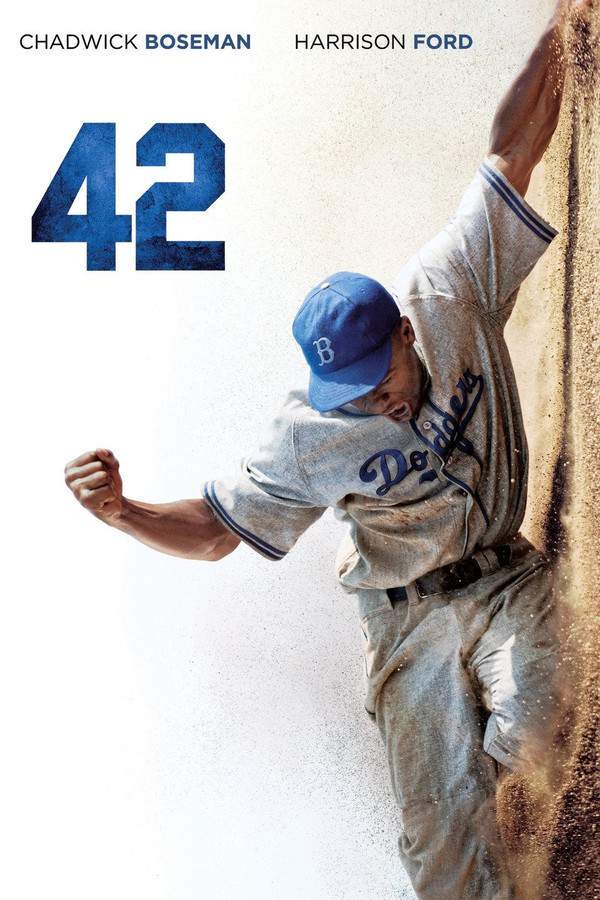
42 (2013) movie poster

Timeline

42 (2013) Timeline Explained – Every Event in Order

Release, runtime and language
2013 · 128 min · English
Loading streaming availability…
Directed by
Brian Helgeland
Starring
Lucas Black, Chadwick Boseman, Christopher Meloni, Nicole Beharie, Alan Tudyk, Harrison Ford
Budget
$40M

In 1946, baseball executive Branch Rickey makes a bold decision to sign Jackie Robinson to the Brooklyn Dodgers, breaking the long-standing color barrier in Major League Baseball. Robinson endures relentless prejudice and hostility from opposing fans, the media, and even some of his own teammates. His remarkable skill, quiet dignity, and unwavering resolve in the face of intense racism ultimately inspire a nation and forever change the landscape of professional sports.

On this page (6)
  1. 1 Where to watch
  2. 2 Events in order (15)
  3. 3 Timeline questions answered
  4. 4 Movie threads
  5. 5 Movies like 42
  6. 6 Every angle
Loading streaming availability…

15 events in order · contains spoilers

42 Timeline: Events in Chronological Order

Every key event of 42 (2013) in order, scene by scene, with when and where it takes place. Use it to untangle flashbacks, time jumps and parallel storylines, to refresh your memory before the sequel or to find the exact scene you are thinking of.

  1. Post-War Challenges

    In 1945, Jackie Robinson and fellow African American soldiers return home from World War II only to confront the harsh realities of racism and segregation. Despite their bravery and service, they find themselves subjected to Jim Crow laws, with limited opportunities in a segregated society that overlooks their talents.

    When
    1945
  2. Branch Rickey's Ambition

    Branch Rickey meets with sportswriter Wendell Smith, expressing his intent to sign the first African American player for the Brooklyn Dodgers. He believes this decision can significantly impact the game and society, revealing his desire to create a lasting legacy in baseball.

  3. Selecting Jackie Robinson

    After discussing potential candidates, Wendell Smith suggests Jackie Robinson, citing his exceptional talent. Rickey sees the opportunity not just for success on the field, but also for a pathway to cultural change within the sport.

  4. Robinson's Temperament

    Robinson's reputation for being a hothead precedes him, stemming from his court-martial incident for refusing to sit at the back of a bus. Rickey and his staff express concerns that his temper could lead to conflicts on the field, jeopardizing the integration effort.

  5. The Gas Station Incident

    While traveling with the Kansas City Monarchs in 1945, Robinson faces racial discrimination when a gas station attendant refuses him access to the restroom. This incident highlights the everyday racial tensions and injustices that African Americans experienced in that era.

    When
    1945
    Where
    Gas Station
  6. The Contract Offer

    Branch Rickey invites Jackie Robinson to Brooklyn, offering him a $600 a month contract with a substantial signing bonus. However, he insists that Robinson must endure racial slurs and remain composed for the greater good of integration in baseball.

    Where
    Brooklyn
  7. Engagement to Rachel

    In a heartfelt moment, Jackie proposes to his girlfriend Rachel over the phone, and she eagerly accepts. Their joyous moment is a beacon of hope as they prepare to face challenges together during a highly scrutinized time in baseball history.

  8. Spring Training Challenges

    During spring training in Florida, Jackie and Rachel's perseverance is tested when they are removed from a flight due to racial segregation. This incident exemplifies the societal obstacles they must confront while Jackie's reputation is at stake.

    Where
    Florida
  9. Resistance at Training Camp

    As Jackie trains in Sanford, Branch Rickey works to counter the existing resistance among players and staff. Meanwhile, Robinson's immense talent begins to shine through, establishing him as a strong candidate for the major leagues.

    Where
    Sanford
  10. Facing Hostility

    During a game in Daytona Beach, Robinson encounters immediate hostility from the crowd and even local authorities. Despite being unjustly challenged by a sheriff, Jackie remains focused on his performance, underscoring his resilience amidst adversity.

    Where
    Daytona Beach
  11. Pressures from Teammates

    Amid rising tensions, team manager Leo Durocher publicly supports Robinson's inclusion in the team, despite petitions against it. This moment of solidarity illustrates the ongoing struggle against entrenched racism within the league.

  12. Overcoming Adversity

    During a crucial game against the Philadelphia Phillies, Robinson faces verbal abuse, particularly from player Ben Chapman. With Rickey's backing, Jackie channels his frustration into performance, contributing to a key victory for the Dodgers.

  13. Teammate Solidarity

    As the season progresses, Pee Wee Reese publicly supports Robinson during a particularly hostile game, standing by him in a moment of unity against racial prejudice. This act signifies a crucial turning point in team dynamics and player relationships.

  14. National League Pennant

    With immense skill and determination, Robinson hits a home run that secures the National League pennant for the Dodgers. His achievement is not only a personal victory but also a landmark moment for African Americans in professional sports.

  15. World Series Journey

    The season culminates in the Dodgers' appearance in the World Series against the New York Yankees. Despite their efforts, the Dodgers fall short after a fierce seven-game battle, sealing the chapter but highlighting the monumental impact of Robinson’s legacy.

Last updated: November 02, 2024 at 11:26

Was this helpful?

Timeline questions answered

42 Timeline Explained: Your Questions Answered

When does it happen, and why in that order? The questions people ask about the chronology of 42 (2013): time jumps, flashbacks, cause and effect between scenes and the correct order of events, each answered with spoilers.

Q1

Why did Branch Rickey choose Jackie Robinson to break the color barrier?

Branch Rickey selected Jackie Robinson because of his exceptional baseball talent and his strong character. Rickey believed Robinson could succeed at the major league level and handle the immense pressure that would come with being the first African American player. Robinson's background as a commissioned army officer who was court-martialed for refusing to sit at the back of a bus demonstrated both his courage and his ability to stand up for himself, which Rickey saw as essential for surviving the integration effort.

Foreshadowing: Robinson's court-martial incident foreshadowed his ability to endure injustice without breaking, while also revealing his temper that Rickey would later need to manage.

  • branch rickey
  • jackie robinson
  • color barrier
  • brooklyn dodgers
  • integration
Q2

Why did Branch Rickey demand Jackie Robinson not fight back against racism?

Rickey imposed this condition because he knew the integration experiment would only succeed if Robinson performed exceptionally on the field. Any public confrontation or loss of temper would give opponents and segregationists ammunition to force Robinson off the team and end the experiment. Rickey calculated that once Robinson proved his worth through his play, the economic reality of attracting African American fans would make it impossible for owners to reverse the decision.

Foreshadowing: Rickey's earlier conversation about leaving a lasting legacy on the game revealed his strategic, long-term thinking about how to make integration irreversible.

  • branch rickey
  • racism
  • restraint
  • integration
  • strategy
Q3

Why did some Brooklyn Dodgers teammates oppose Jackie Robinson joining the team?

Many teammates opposed Robinson's addition due to the prevailing racial prejudice of the era. Some feared that playing alongside an African American would harm their careers or alienate white fans. Others felt pressure from the petition organized against Robinson, and some simply held racist beliefs common at the time. Manager Leo Durocher's firm support was crucial in overcoming this internal resistance.

Foreshadowing: The earlier resistance from staff and coaches during training camp showed the depth of opposition Robinson would face within the organization.

  • brooklyn dodgers
  • teammates
  • resistance
  • racism
  • integration
Q4

Why was Pee Wee Reese's public show of support for Jackie Robinson significant?

Pee Wee Reese standing with Robinson during a hostile game was significant because it represented a white player publicly defying racial prejudice to support his teammate. This gesture helped shift team dynamics and showed that white players could embrace integration. It was a pivotal moment that illustrated how Robinson's dignity and talent were beginning to change attitudes within the clubhouse.

Foreshadowing: Earlier hostility from teammates and the petition against Robinson made Reese's eventual support a crucial turning point in team unity.

  • pee wee reese
  • jackie robinson
  • solidarity
  • teammates
  • support
Q5

Did the Dodgers win the World Series in 1947?

The Dodgers did not win the World Series in 1947. After Jackie Robinson secured the National League pennant with a decisive home run, the Dodgers faced the New York Yankees in the World Series and lost in seven hard-fought games. However, Robinson's season was already considered a historic triumph for breaking the color barrier, regardless of the final outcome.

Foreshadowing: The buildup to the World Series represented the culmination of Robinson's season-long battle both on and off the field.

  • world series
  • dodgers
  • yankees
  • 1947
  • pennant
Q6

What happened during the Daytona Beach game incident?

During a game in Daytona Beach, Robinson faced immediate hostility from local authorities when a sheriff attempted to force him to leave simply because of his skin color. This unjust treatment was part of the broader racial discrimination Robinson endured throughout the season, but he remained focused on his performance and used his talent to overcome such obstacles.

Foreshadowing: Earlier discrimination at the gas station and during travel established the pattern of racial hostility Robinson constantly faced.

  • daytona beach
  • sheriff
  • discrimination
  • racism
  • game
Q7

How did Jackie Robinson's military service influence his approach to baseball?

Robinson's experience as a commissioned army officer shaped his approach to the integration battle. His court-martial for refusing to move to the back of a bus demonstrated his willingness to challenge injustice, but it also revealed the temper that concerned Rickey. His military training gave him discipline and a sense of duty that helped him endure the relentless prejudice while representing African Americans nationwide.

Foreshadowing: The court-martial incident directly informed Rickey's decision to impose the condition requiring Robinson to refrain from reacting to provocations.

  • army
  • military
  • court-martial
  • discipline
  • background
Q8

Why was the 1947 Brooklyn Dodgers season historically significant?

The 1947 season was historically significant because Jackie Robinson became the first African American to play in Major League Baseball in the modern era, breaking the sport's long-standing color barrier. This moment marked the beginning of the end for segregation in professional sports and represented a major victory in the broader civil rights movement, inspiring millions across the nation.

Foreshadowing: Rickey's earlier ambition to create a lasting legacy and bring African American fans to stadiums set the stage for this historic season.

  • 1947
  • season
  • brooklyn dodgers
  • color barrier
  • history
Q9

What happened during the Philadelphia Phillies game with Ben Chapman?

During a game against the Philadelphia Phillies, player Ben Chapman led relentless verbal abuse toward Robinson, shouting racial slurs and taunts from the dugout. Rather than reacting with anger, Robinson channeled his frustration into his performance at Rickey's urging. He responded by hitting a single, stealing bases, and scoring the winning run, proving that his talent outweighed the hatred directed at him.

Foreshadowing: Rickey's earlier demand that Robinson respond on the field rather than to off-field injustice directly played out in this moment.

  • ben chapman
  • phillies
  • taunts
  • verbal abuse
  • response
Q10

What was the impact of Jackie Robinson's home run that won the pennant?

Jackie Robinson's home run against Fritz Ostermueller secured the National League pennant for the Dodgers, making them the first integrated team to win the league championship. This moment validated Branch Rickey's gamble on Robinson and transformed him from a controversial figure into a sports hero, demonstrating that African American players could excel at the highest level of baseball.

Foreshadowing: Robinson's consistent outstanding performance throughout the season built toward this climactic moment of triumph.

  • home run
  • pennant
  • dodgers
  • fritz ostermueller
  • winning

Movie threads

More Movies Like 42, by Mood & Story

Curated lists built around what makes 42 tick: the same mood, the same kind of story or the same emotional payoff. Each list explains why these movies belong together.

Underdog Historical Biopics Like 42

True stories where quiet determination overcomes overwhelming social prejudice. If you were inspired by 42, explore more movies like it that chronicle true stories of quiet courage. These historical biopics feature individuals fighting systemic injustice, offering a similar blend of tense social drama and hopeful, inspiring narratives.

  • inspiring
  • tense
  • dignified
  • hopeful
  • historical
  • courageous
  • Tone: hopeful, tense, dignified
  • Pacing: steady, chronological
Why these movies?

The story pattern: The narrative follows a linear, chronological path detailing a specific historical struggle. The central conflict is external—a protagonist versus a prejudiced system—with the drama arising from their quiet perseverance and the tension of whether society will change. The journey is arduous, culminating in a meaningful, if not perfectly happy, victory.

Why they belong together: Movies in this thread share a core focus on real-life figures breaking barriers. They balance the depiction of serious social issues with an uplifting tone, creating a specific emotional mix of tension and inspiration. The pacing is steady and the emotional weight is medium, making the stories impactful yet accessible.

Movies with Bittersweet Triumphs Like 42

Stories where a personal victory is monumental, yet the personal cost remains. For viewers who appreciated the bittersweet ending of 42, this thread collects similar movies where a hard-won victory comes with personal cost. Discover films that balance inspirational success with emotional realism, leaving you with a powerful, complex feeling.

  • bittersweet
  • inspiring
  • emotional
  • poignant
  • reflective
  • triumphant
  • Tone: bittersweet, hopeful, reflective
  • Pacing: steady, building
Why these movies?

The story pattern: The narrative builds towards a major, often public, success that has broader implications beyond the protagonist. However, the climax is undercut by a personal cost, a loss, or the sheer exhaustion of the struggle. The ending feels earned and hopeful for the future, but also soberly acknowledges the price paid for progress.

Why they belong together: This thread groups movies based on a specific emotional payoff. They share a tonal balance where hope and melancholy coexist in the conclusion. The films are driven by high-stakes conflicts and leave the audience with a powerful, reflective feeling rather than simple euphoria.

If you liked this

Movies Like 42

Similar movies to 42: the same genre, themes or kind of story. Each one comes with its own plot summary, timeline and ending explained.

Browse all movie summaries

Every angle

42 (2013) Explained: Plot, Timeline & Characters

Everything about 42 in one place: what happens in the plot summary, the timeline in chronological order, the characters and meaning and a spoiler-free summary. What's After the Movie adds the cast, box office and post-credit scenes.

Coming soon on iOS and Android

The Plot Explained Movie Summary App

Plot summaries, endings explained and timelines on your phone. Catch up on any movie in minutes, save your favorites and never miss a twist again.

Be the first to know when we launch. Your email stays private, always.

Learn more about the app