Plot Explained Spoilers guaranteed!
Plot Explained

Browse by genre

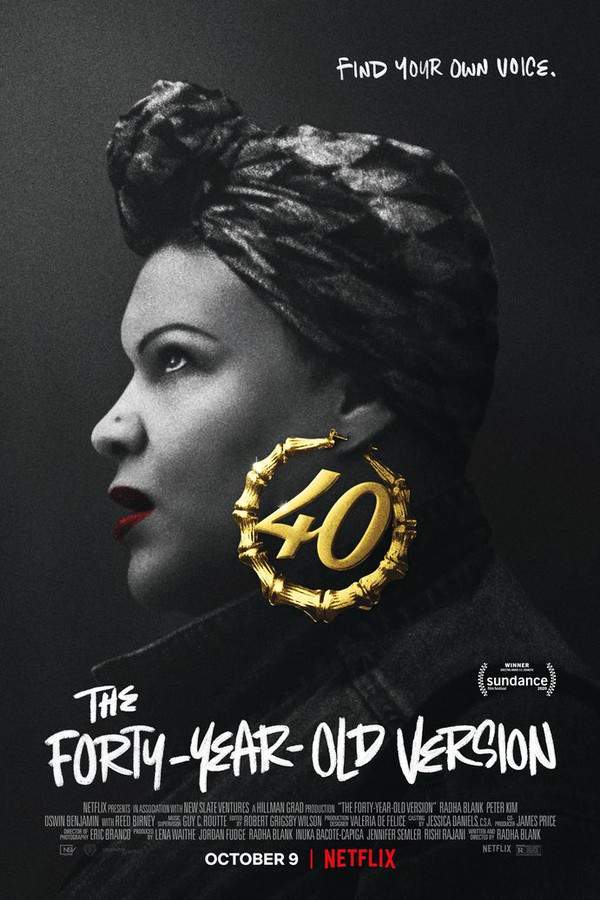
The Forty-Year-Old Version (2020) movie poster

Timeline

The Forty-Year-Old Version (2020) Timeline Explained – Every Event in Order

Release, runtime and language
2020 · 129 min · English
Echo score 90
Loading streaming availability…
Starring
Doris McCarthy, Peggy Scott, Imani Lewis, Reed Birney, Antonio Ortiz, Haskiri Velazquez

A New York playwright nearing 40 experiences a career setback that sparks an unexpected transformation. Feeling adrift, she reinvents herself as a rapper, adopting the persona RadhaMUSPrime. This bold move leads her into the world of hip-hop, where she explores themes of artistic identity and confronts the challenges of finding her place in a changing industry.

On this page (6)
  1. 1 Where to watch
  2. 2 Events in order (14)
  3. 3 Timeline questions answered
  4. 4 Movie threads
  5. 5 Movies like The Forty-Year-Old Version
  6. 6 Every angle
Loading streaming availability…

14 events in order · contains spoilers

The Forty-Year-Old Version Timeline: Events in Chronological Order

Every key event of The Forty-Year-Old Version (2020) in order, scene by scene, with when and where it takes place. Use it to untangle flashbacks, time jumps and parallel storylines, to refresh your memory before the sequel or to find the exact scene you are thinking of.

  1. Introduction of Radha

    Radha is introduced as a playwright and teacher who is close to her 40th birthday. She carries the weight of her unfulfilled potential, particularly the promise associated with her winning a 30 under 30 award nearly a decade prior.

  2. Confrontation with J. Whitman

    Radha's agent and friend, Archie, presents her latest play, Harlem Ave, to producer J. Whitman. The meeting turns confrontational when Whitman suggests that her writing should delve more into Black suffering, leading Radha to throttle him in anger.

  3. Rediscovering Rap

    After feeling lost in her career, Radha hears rap music outside her apartment, reminding her of her former passion. She decides to pursue rap again, choosing the name RadhaMUSprime as a fresh start.

  4. First Meeting with D

    Radha tracks down D, a music producer, who initially appears distant and unenthusiastic about working with her. However, when they collaborate on a track, D becomes impressed and invites her to showcase her work.

  5. Humiliation at the Showcase

    Before her performance at the showcase, Radha gets high and suffers a mental lapse, forgetting her lyrics. This embarrassing incident occurs in front of her students, highlighting her vulnerability as both an artist and a teacher.

  6. Archie's Manipulation

    Archie exploits the recent death of Radha's mother to persuade Whitman into producing Harlem Ave. However, Whitman’s condition for the production is for Radha to include a white character, a compromise that troubles her.

  7. Struggle with Compromises

    As the play moves into workshop stages, Radha feels increasingly uncomfortable with the artistic compromises she must make. The pressure to appeal to white audiences begins to weigh heavily on her.

  8. Encouragement from D

    Despite the setback during her performance, D remains supportive, encouraging Radha to persevere in her rap career. Their bond deepens when they share a night out at an all-woman rap battle in the Bronx.

    Where
    Bronx
  9. Morning After

    After a night of connection, Radha retreats from D, insisting that she needs to focus on her play. This moment signifies her struggle to balance her newfound passion for rap with her existing commitments.

  10. Cleaning Out Memories

    While cleaning out her late mother's apartment with her brother, Radha reflects on her mother's journey as a struggling artist. This gives her a new perspective as her brother views their mother as a talented Renaissance woman rather than a failure.

  11. Opening Night

    On the night of her play's opening, Radha takes an unexpected stance during the curtain call. She openly criticizes her own work, rapping about the importance of staying true to one's artistic vision, a powerful declaration of independence.

  12. Breaking Ties with Archie

    In a dramatic turn of events, Radha fires Archie as he is quitting. This marks a decisive moment in reclaiming her autonomy and shedding the influence of those who have pressured her to compromise her art.

  13. Reunion with D

    After her bold declaration, Radha rushes to D's apartment, seeking solace and reconnection. Their relationship reignites as they find common ground in their struggles as artists.

  14. Walking into the Future

    The film concludes with Radha and D walking together, symbolizing a new path forward. D beatboxes while Radha raps, showcasing her artistic rebirth as the visual tone shifts from monochrome to vibrant color.

Last updated: May 12, 2025 at 07:04

Was this helpful?

Timeline questions answered

The Forty-Year-Old Version Timeline Explained: Your Questions Answered

When does it happen, and why in that order? The questions people ask about the chronology of The Forty-Year-Old Version (2020): time jumps, flashbacks, cause and effect between scenes and the correct order of events, each answered with spoilers.

Q1

Why does Radha decide to become a rapper?

After facing career stagnation and feeling unfulfilled as a playwright, Radha hears rap music outside her apartment and remembers her buried passion for rap from high school. This moment sparks her decision to reinvent herself as a rapper, adopting the stage name RadhaMUSprime as a way to explore a new artistic identity and find her voice outside traditional theater.

Foreshadowing: Earlier in the film, Radha mentions she had pursued rap in high school but abandoned it, suggesting her late-career pivot was always a latent possibility.

  • radha rapper
  • radhamusprime
  • career change
  • artistic identity
Q2

Why does Radha confront J. Whitman so aggressively?

When producer J. Whitman suggests that Radha's play should focus more on Black suffering and offers her a writing position for a musical about Harriet Tubman, Radha is offended by the reductive stereotyping and the assumption that her work should be defined by trauma for white audiences. Her physical reaction of throttling him demonstrates the depth of her frustration with industry expectations.

Foreshadowing: This confrontation establishes the central conflict between artistic integrity and commercial compromise that drives the rest of the film.

  • j whitman
  • black suffering
  • artistic compromise
  • producer
Q3

What happens during Radha's rap showcase performance?

On the night of her first showcase performance for emerging rappers, Radha gets high before going on stage and suffers a mental lapse, forgetting her lyrics entirely. The embarrassing moment plays out in front of her students who came to support her, highlighting her vulnerability as she transitions between two artistic worlds.

Foreshadowing: This failure initially seems like a setback but ultimately becomes a turning point that leads to deeper reflection on her artistic journey.

  • rap showcase
  • forgot lyrics
  • performance failure
  • radhaMUSprime
Q4

Why does Radha pull away from D after they spend the night together?

After an intimate night at an all-women's rap battle in the Bronx where they bond over shared experiences in the arts and their mothers' deaths, Radha retreats the next morning, telling D she needs to focus on her play. This reflects her struggle to balance her new rap identity with her existing commitments and fear of fully committing to a relationship while still navigating her artistic crisis.

Foreshadowing: This hesitation foreshadows her eventual reconciliation with D after she fully commits to her artistic vision.

  • radha d
  • relationship
  • intimacy
  • artistic balance
Q5

Why does Radha fire Archie on opening night?

On the night of her play's opening, Radha makes a dramatic decision to fire her agent and friend Archie, who had been pressuring her to make artistic compromises to appeal to white audiences. This moment represents her final break from everyone who has encouraged her to dilute her vision for commercial success, reclaiming full creative control over her work.

Foreshadowing: Archie's earlier manipulation of Radha's mother's death to secure production funding and his insistence on adding a white character had been building tension throughout the film.

  • archie fired
  • artistic integrity
  • opening night
  • agent
Q6

Why does Radha publicly criticize her own play during the curtain call?

During the curtain call of her play's opening night, Radha breaks from the production to perform a rap calling for artists to stay true to their vision rather than compromise for mainstream audiences. By denouncing her own work, she symbolically rejects the entire process of artistic compromise she endured and declares her commitment to authenticity.

Foreshadowing: This bold statement connects back to her earlier confrontation with J. Whitman about Black suffering narratives.

  • curtain call
  • artistic integrity
  • rap
  • self-criticism
Q7

What does the transition from black and white to color at the end signify?

The film shifts from black and white to vibrant color as Radha walks with D while he beatboxes and she raps. This visual transition symbolizes her journey from artistic stagnation and compromise to genuine creative liberation, her world literally becomes more colorful once she embraces her true voice and artistic identity.

Foreshadowing: The monochrome aesthetic dominates the film during periods of uncertainty and compromise, with color appearing sparingly until her breakthrough.

  • ending
  • color transition
  • symbolism
  • visual storytelling
Q8

Why does Archie exploit Radha's mother's death to secure production?

After Radha's mother passes away, Archie manipulates the situation by leveraging the recent loss to persuade J. Whitman to produce Harlem Ave. This morally questionable move highlights Archie's priority of advancing Radha's career through any means necessary, even at the cost of exploiting her grief.

Foreshadowing: This manipulation plants the seeds of distrust that ultimately leads to Archie's firing.

  • archie
  • mother's death
  • manipulation
  • production
Q9

Why does Radha agree to add a white character to her play?

As a condition for producing Harlem Ave, J. Whitman insists that Radha include a white character in her predominantly Black story. Despite feeling uneasy about this compromise, Radha initially agrees because she feels trapped between her desire to have her work produced and her discomfort with pandering to white audience expectations.

Foreshadowing: This compromise becomes a central source of her artistic distress and ultimately contributes to her decision to reject the production entirely.

  • white character
  • harlem ave
  • compromise
  • whitman
Q10

What does Radha discover about her mother while cleaning her apartment?

While clearing out her late mother's apartment with her brother, Radha learns that her brother views their mother as a talented Renaissance woman rather than a failed artist. This revelation helps Radha reframe her mother's journey as one of multidimensional creativity rather than pure failure, providing her with renewed encouragement to pursue her own unconventional artistic path.

Foreshadowing: This moment of perspective gives Radha the emotional foundation she needs to eventually choose artistic integrity over commercial success.

  • mother
  • apartment
  • legacy
  • renaissance woman
  • brother

Movie threads

More Movies Like The Forty-Year-Old Version, by Mood & Story

Curated lists built around what makes The Forty-Year-Old Version tick: the same mood, the same kind of story or the same emotional payoff. Each list explains why these movies belong together.

Movies like The Forty-Year-Old Version about midlife creative awakenings

Characters finding a new artistic voice when facing a personal crossroads. If you liked The Forty-Year-Old Version's story of artistic rebirth, you'll enjoy these films about characters finding a new creative voice. This collection features similar stories of midlife awakenings, self-reinvention, and the pursuit of artistic authenticity.

  • empowering
  • introspective
  • authentic
  • determined
  • reflective
  • creative
  • Tone: hopeful, reflective, determined
  • Pacing: steady, character-driven
Why these movies?

The story pattern: These narratives typically follow a protagonist who has hit a wall in their established creative field. A catalyst event forces them to question their path, leading them to explore an unexpected and often unconventional new art form. The journey is filled with self-doubt, comedic missteps, and moments of breakthrough, culminating in a renewed sense of purpose and identity.

Why they belong together: These films are grouped by their shared focus on a very specific moment of crisis and transformation in an artist's life. They blend introspection with determination, often balancing melancholy with hope, and center on the theme of finding authenticity over commercial or critical success.

Authentic city life character studies like The Forty-Year-Old Version

Grounded stories of personal transformation within a vibrant urban setting. Fans of The Forty-Year-Old Version's authentic New York vibe will appreciate these similar character studies set in vibrant cities. These movies share a steady pace, a focus on creative communities, and a reflective mood that captures the feeling of personal transformation against an urban landscape.

  • authentic
  • reflective
  • urban
  • observational
  • low stakes
  • character-driven
  • Tone: reflective, authentic, hopeful
  • Pacing: steady, observational
Why these movies?

The story pattern: The plot is secondary to the character's internal arc, which unfolds in a realistic urban environment. The city's culture, challenges, and opportunities directly influence the protagonist's decisions and growth. The story avoids high melodrama, instead finding drama in everyday struggles, creative pursuits, and the nuances of friendship and collaboration.

Why they belong together: This thread connects films that share a specific atmospheric quality: a believable, lived-in city setting combined with a steady, reflective pace. They prioritize authenticity over plot twists, creating a cohesive experience defined by mood, setting, and character depth.

If you liked this

Movies Like The Forty-Year-Old Version

Similar movies to The Forty-Year-Old Version: the same genre, themes or kind of story. Each one comes with its own plot summary, timeline and ending explained.

Browse all movie summaries

Every angle

The Forty-Year-Old Version (2020) Explained: Plot, Timeline & Characters

Everything about The Forty-Year-Old Version in one place: what happens in the plot summary, the timeline in chronological order, the characters and meaning and a spoiler-free summary. What's After the Movie adds the cast, box office and post-credit scenes.

Coming soon on iOS and Android

The Plot Explained Movie Summary App

Plot summaries, endings explained and timelines on your phone. Catch up on any movie in minutes, save your favorites and never miss a twist again.

Be the first to know when we launch. Your email stays private, always.

Learn more about the app