Plot Explained Spoilers guaranteed!
Plot Explained

Browse by genre

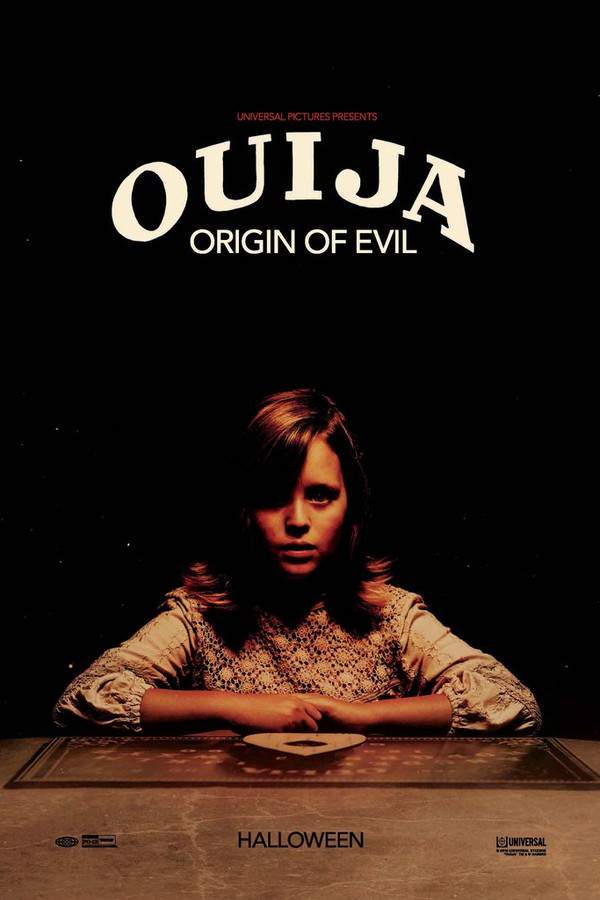
Ouija: Origin of Evil (2016) movie poster

Plot Summary

Ouija: Origin of Evil (2016) Plot Summary & Ending Explained

Release, runtime and language
2016 · 99 min · English
Directed by
Mike Flanagan
Starring
Lin Shaye, Annalise Basso, Elizabeth Reaser, Henry Thomas, Lulu Wilson
Budget
$9M

In 1967 Los Angeles, a widowed mother and her sisters run a fraudulent séance business to make ends meet. Their scheme takes a dark turn when they unwittingly unleash a genuine and malevolent spirit. The entity possesses the family's youngest daughter, Doris, and as its influence grows, they must confront terrifying supernatural forces to save her and banish the evil from their home.

On this page (7)
  1. 1 Where to watch
  2. 2 What happens: full plot
  3. 3 Plot questions answered
  4. 4 How it ends
  5. 5 Movie threads
  6. 6 Movies like Ouija: Origin of Evil
  7. 7 Every angle

Where to watch

Where to Watch Ouija: Origin of Evil (2016)

Where can you watch Ouija: Origin of Evil? Stream, rent or buy it in the US, including on Tubi TV, Amazon Video and Apple TV Store: current JustWatch availability with up-to-date prices.

Streaming availability powered by JustWatch

Full plot summary · contains spoilers

What Happens in Ouija: Origin of Evil: Full Plot Summary

The whole story of Ouija: Origin of Evil (2016) explained, from the opening scene to the final frame: every key event, every twist and what it all adds up to. Read it as a quick recap before the sequel, to check a scene you missed, or to finally understand what really happened.

In Los Angeles, 1967, Mr. Browning, portrayed by Sam Anderson, and his younger wife, Jenny, played by Kate Siegel, visit the home of fortune teller Alice Zander, brought to life by Elizabeth Reaser. During the séance Alice conducts, Mr. Browning seeks to communicate with his deceased wife, while Jenny remains skeptical, believing they are being swindled. As tensions rise, a spirit, disguised as the late wife, frightens Mr. Browning, prompting an emotional show of fear. When Mr. Browning attempts to pay Alice, she declines, feeling guilty for their ruse.

Unbeknownst to them, the entity haunting the séance is Alice's own teenage daughter, Paulina, depicted by Annalise Basso, with her younger sister, Doris, played by Lulu Wilson, aiding in the deception. After being scolded by Alice for costing them potential earnings, Paulina defends her actions. As events unfold, Paulina sneaks out to join her friends Ellie, played by Halle Charlton, and Mikey, portrayed by Parker Mack, where they toy with a Ouija board, only to send one friend into a panic.

While the girls are at school, Alice naively seeks her own Ouija board, believing it could boost their business. That night, she accidentally connects with a spirit named Marcus through Doris, who becomes a medium for strange and chilling responses from the other side, leaving Paulina both perplexed and intrigued. Doris, in her quest to communicate with their deceased father, Roger, breaks the cardinal rule of the game by playing alone, leading to haunting developments.

Father Tom, played by Henry Thomas, calls Alice to discuss Doris's unusual homework, written in cursive, showcasing her sudden change in behavior and the development of uncanny abilities tied to the spirit world. As mysterious occurrences escalate, including a notice of foreclosure, Doris presents her mother and sister with money she claims to have found – a supernatural twist that raises questions about the spirit's demands.

In an attempt to tap deeper into the otherworldly, Alice and Doris hold a séance with Tom. The answers they receive are nothing short of chilling, uncovering dark secrets tied to the house and the past of its previous occupants. Events take a sinister turn when Mikey visits and becomes ensnared by the entity, further trapping the family in a nightmarish scenario.

The climax unfolds with furious supernatural elements as the girls confront the vengeful spirits. When Alice desperately pleads for her daughters' safety, a harrowing possession occurs, leading to a tragic conclusion. Two months later, we find Lina, portrayed by Lulu Wilson, grappling with the aftermath in a mental hospital, where she attempts to reconnect with her lost sister through dark practices.

As the story closes, an older Lina, played by Lin Shaye, faces her own demons while hinting at her return to a life intertwined with the supernatural, setting the stage for chilling possibilities yet to unfold.

Last updated: November 08, 2024 at 06:32

Was this helpful?

Plot questions answered

Ouija: Origin of Evil Plot Explained: Your Questions Answered

The questions people ask most about Ouija: Origin of Evil (2016): what happens in the confusing scenes, why the characters do what they do, the twists, hidden details and what the ending means. Each answer contains spoilers.

Q1

Why does Doris break the rule and play with the Ouija board alone?

Doris plays the Ouija board alone because she desperately wants to communicate with her deceased father, Roger. Throughout the film, she misses her father and sees the Ouija board as the only way to reach him. This act of playing alone violates the cardinal rule of the game, never playing alone, and directly allows the malevolent spirit to attach to her.

Foreshadowing: Earlier in the film, Doris asks her mother Alice if she can contact their father, showing her longing to reconnect with him.

  • doris
  • ouija board
  • roger
  • father
  • possession
  • rule breaking
Q2

What is the spirit Marcus that contacts Doris through the Ouija board?

Marcus is a malevolent entity that uses the Ouija board to enter the family's life. While he initially presents himself as a willing spirit to communicate with, the film reveals he is actually a powerful vengeful ghost tied to the house's dark history. He manipulates Doris into becoming his medium and uses her innocence as a gateway to possess and terrorize the family.

Foreshadowing: The first séance already shows a dark presence masquerading as Mr. Browning's deceased wife, establishing that malevolent spirits are drawn to the family's fraudulent séances.

  • marcus
  • spirit
  • ouija
  • entity
  • possession
  • doris
Q3

Why does the entity target Doris for possession?

The entity targets Doris because she is the most vulnerable and spiritually sensitive member of the family. She is young, emotionally fragile from losing her father, and desperate to communicate with him. This emotional vulnerability makes her the perfect conduit for the spirit. Additionally, by playing alone, she removes the protective element of having others present during spirit communication, leaving herself completely exposed to possession.

Foreshadowing: Doris's repeated requests to contact her deceased father and her willingness to break rules show her emotional vulnerability, which the entity exploits.

  • doris
  • possession
  • vulnerable
  • spirit
  • medium
  • target
Q4

What happens to Alice at the end of Ouija: Origin of Evil?

At the climax, Alice witnesses her daughter Doris being fully possessed by the malevolent spirit. In her desperate attempt to save her daughters, Alice is killed during the supernatural confrontation. The entity uses Alice's love for her children against her, leading to a tragic outcome where the mother perishes while trying to banish the evil from her home.

Foreshadowing: The escalating supernatural events and the entity's growing control over Doris foreshadow the tragic confrontation where Alice must face the full force of the vengeful spirit.

  • alice
  • death
  • ending
  • possession
  • climax
  • mother
Q5

Why does the family receive a foreclosure notice in the movie?

The family receives a foreclosure notice because they are struggling financially. The fraudulent séance business doesn't generate enough income to sustain them, and the notice represents their mounting economic desperation. The timing of the notice coinciding with Doris bringing home supernatural money suggests the entity is manipulating circumstances to draw the family deeper into its influence, possibly forcing them to stay in the house for its own purposes.

Foreshadowing: Earlier scenes show the family living in modest circumstances and relying on the séance business for income, establishing their financial vulnerability.

  • foreclosure
  • house
  • money
  • financial
  • struggle
Q6

How does Mikey become possessed in Ouija: Origin of Evil?

Mikey becomes ensnared when he visits the Zander home while the family is conducting a séance. The malevolent entity, having already gained strength through Doris, uses the opportunity to attach itself to Mikey. His presence during the ritual provides another conduit for the spirit to spread its influence beyond the family, turning him into another victim of possession.

Foreshadowing: Earlier, Paul's friends experience a frightening encounter with an Ouija board, showing that the board's power can affect anyone who uses it.

  • mikey
  • possession
  • ouija
  • visit
  • entity
Q7

What is the connection between older Lina and the original Ouija movie?

The ending reveals that older Lina, played by Lin Shaye, is the same character from the original 2014 Ouija film. This connection establishes that the traumatic events at age 16 in 1967 shaped her into the adult who later encounters the Ouija board again in the modern sequel. Her final statement hints at returning to the supernatural world, creating a cyclical pattern of tragedy.

Foreshadowing: The film's title 'Origin of Evil' directly suggests we are witnessing the beginning of Lina's lifelong connection to malevolent forces.

  • lina
  • lin shaye
  • connection
  • sequel
  • origin
  • ouija movie
Q8

Why does Doris suddenly start writing in cursive?

Doris starts writing in cursive because the malevolent spirit Marcus is using her as a conduit. The cursive writing is not from Doris herself but from the spirit communicating through her. Father Tom notices this sudden change in her homework, recognizing it as a sign of supernatural influence rather than a normal developmental milestone in a child her age.

Foreshadowing: Father Tom's concern about Doris's unusual behavior and abilities signals the increasing hold the entity has over her.

  • doris
  • cursive
  • homework
  • father tom
  • supernatural
Q9

Why does the entity want the family out of the house?

The entity wants the family out of the house because they are blocking its ability to fully manifest and carry out whatever unfinished business it has in that location. The house holds dark secrets from its past, and the entity needs to completely possess Doris and use the family's fraudulent séance business as a gateway to gain power. Their presence initially seems counterproductive, but the entity actually uses their desperation (financial and emotional) to draw them deeper into its influence.

Foreshadowing: The séance with Father Tom reveals dark secrets tied to the house and its previous occupants, hinting at the entity's deep connection to the location.

  • house
  • entity
  • spirit
  • possession
  • secrets
  • location
Q10

What happens to Doris after she is possessed?

After Doris is fully possessed by the malevolent spirit, she becomes its primary vessel and tool. In the climactic confrontation, the possession reaches its peak as the entity uses her body to attack her own family. The exact fate of Doris is left somewhat ambiguous, but the aftermath shows her sister Lina in a mental hospital two months later, implying Doris either died during the confrontation or was lost to the family in some other tragic way.

Foreshadowing: The progressive possession throughout the film, starting with subtle changes like cursive writing and escalating to full control, prepares for the tragic climax where Doris becomes completely overtaken.

  • doris
  • possession
  • aftermath
  • outcome
  • sister
  • lina

Ending explained

What Happens at the End of Ouija: Origin of Evil?

How Ouija: Origin of Evil (2016) ends, in short: the final scene, the last twist and what it means for the characters. The full ending explained, with every spoiler, lives on its own page.

Read the full ending explained

The ending of Ouija: Origin of Evil reveals the tragic consequences of untreated trauma and grief within a family. As the story comes to a close, Lina, the youngest sister, desperately tries to silence her sister Doris by sewing her mouth shut, in an attempt to stop her from revealing the spirit’s influence. However, this act ultimately leads to Doris dying, deepening the family’s broken state. Lina, overwhelmed by guilt and trauma, then becomes possessed and kills her mother, Alice. The story concludes with Lina in a psychiatric hospital, where she begins creating her own Ouija board using her blood, symbolizing her ongoing connection to the spirit world and her unresolved pain. A chilling final scene shows her silently summoning the spirit, with a doctor unaware that Doris’s vengeful ghost is silently moving above him. The film’s deeper message is that the ghosts haunting this family are representations of their emotional wounds—particularly Doris’s grief over her lost father and Alice’s denial of her own pain. Their inability to confront and process their suffering leads to destructive outcomes, emphasizing that seeking help and facing trauma is essential to healing. The post-credits scene further ties this story back to the original Ouija, revealing Lina’s true identity and suggesting that the cycle of unresolved grief continues beyond the movie’s ending. Ultimately, Ouija: Origin of Evil presents a haunting cautionary tale: ignoring emotional wounds and pretending to move on only invites further darkness and tragedy.

Ouija: Origin of Evil ending explained in full

Movie threads

More Movies Like Ouija: Origin of Evil, by Mood & Story

Curated lists built around what makes Ouija: Origin of Evil tick: the same mood, the same kind of story or the same emotional payoff. Each list explains why these movies belong together.

Family Horror Movies like Ouija: Origin of Evil

Families shattered by grief become prey to malevolent supernatural forces. Discover movies like Ouija: Origin of Evil where domestic grief and trauma open a doorway to supernatural terror. If you enjoyed the story of a family confronting evil while coping with loss, these films deliver similar haunting and emotionally heavy experiences.

  • haunting
  • tragic
  • sinister
  • unsettling
  • fearful
  • oppressive
  • Tone: dark, tragic
  • Pacing: steady escalation
Why these movies?

The story pattern: Stories in this thread typically begin with a family unit already weakened by emotional trauma, such as the death of a parent. Their attempts to cope or reconnect inadvertently invite a supernatural presence, which then preys upon their sorrow, often targeting the most vulnerable member and escalating the family's crisis.

Why they belong together: These movies are grouped by their core premise: using a family's genuine grief as the catalyst for supernatural horror. They share a heavy emotional weight, a focus on domestic settings under siege, and a tone that blends genuine sadness with terrifying, otherworldly threats.

Supernatural Thrillers with Steady Pacing like Ouija: Origin of Evil

Stories where a simple supernatural curiosity unleashes an unstoppable evil. Find movies similar to Ouija: Origin of Evil that feature a steady, methodical build of supernatural terror. These films start with a small paranormal event that logically escalates into a full-blown crisis, perfect for viewers who enjoy watching dread accumulate step-by-step.

  • anxious
  • oppressive
  • sinister
  • unsettling
  • methodical
  • dread
  • Tone: dark, oppressive
  • Pacing: steady, methodical
Why these movies?

The story pattern: The narrative pattern is straightforward and relentless. An initial encounter with a supernatural element—a board, a ritual, a cursed object—sets off a chain of events. Each new development is worse than the last, creating a sense of inevitable doom as the characters' attempts to stop the threat prove futile, leading to a devastating conclusion.

Why they belong together: These films are united by their STEADY pacing and STRAIGHTFORWARD complexity. They avoid convoluted twists in favor of a direct, escalating horror. The experience is defined by a growing sense of oppressive dread and a bleak outcome, making the supernatural threat feel authentic and inescapable.

If you liked this

Movies Like Ouija: Origin of Evil

Similar movies to Ouija: Origin of Evil: the same genre, themes or kind of story. Each one comes with its own plot summary, timeline and ending explained.

Browse all movie summaries

Every angle

Ouija: Origin of Evil (2016) Explained: Plot, Ending, Timeline & Characters

Everything about Ouija: Origin of Evil in one place: what happens in the plot summary, the timeline in chronological order, the characters and meaning, the ending explained and a spoiler-free summary. What's After the Movie adds the cast, box office and post-credit scenes.

Coming soon on iOS and Android

The Plot Explained Movie Summary App

Plot summaries, endings explained and timelines on your phone. Catch up on any movie in minutes, save your favorites and never miss a twist again.

Be the first to know when we launch. Your email stays private, always.

Learn more about the app