Plot Explained Spoilers guaranteed!
Plot Explained

Browse by genre

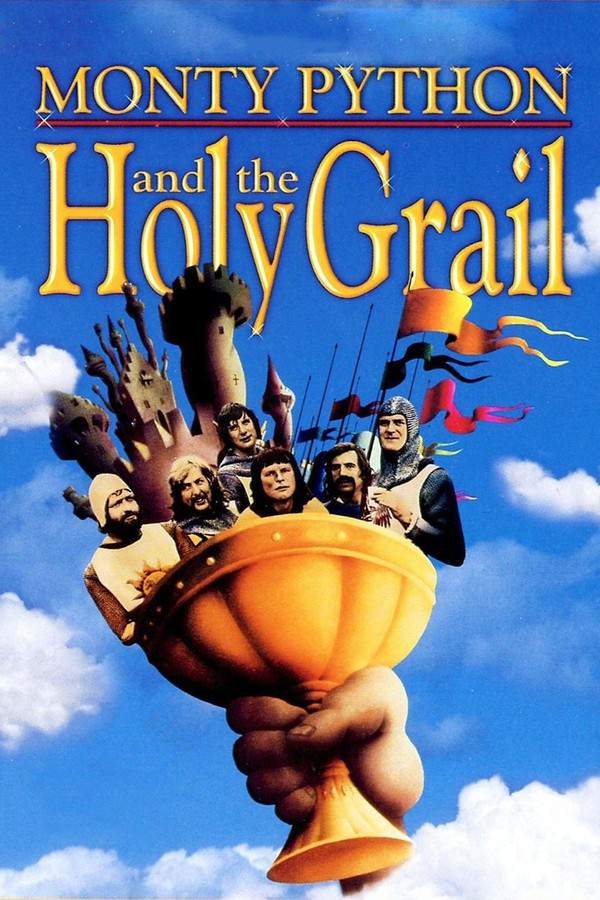
Monty Python and the Holy Grail (1975) movie poster

Plot Summary

Monty Python and the Holy Grail (1975) Plot Summary Explained

Release, runtime and language
1975 · 91 min · English
JustWatch #450 86
Starring
Eric Idle, Graham Chapman, John Cleese, Michael Palin, Terry Gilliam, Terry Jones

King Arthur and his knights embark on a quest for the Holy Grail, encountering a series of ridiculous obstacles and eccentric characters along the way. Their journey is filled with absurd situations, including a stubborn Black Knight, a fearsome three-headed giant, and a deceptively cute killer rabbit. The knights face challenges from shrubbery-loving warriors, frustrated French taunters, and a host of other bizarre encounters in this medieval comedy.

On this page (6)
  1. 1 Where to watch
  2. 2 What happens: full plot
  3. 3 Plot questions answered
  4. 4 Movie threads
  5. 5 Movies like Monty Python and the Holy Grail
  6. 6 Every angle

Where to watch

Where to Watch Monty Python and the Holy Grail (1975)

Where can you watch Monty Python and the Holy Grail? Stream, rent or buy it in the US, including on Amazon Prime Video, fuboTV and Peacock Premium: current JustWatch availability with up-to-date prices.

Streaming availability powered by JustWatch

Full plot summary · contains spoilers

What Happens in Monty Python and the Holy Grail: Full Plot Summary

The whole story of Monty Python and the Holy Grail (1975) explained, from the opening scene to the final frame: every key event, every twist and what it all adds up to. Read it as a quick recap before the sequel, to check a scene you missed, or to finally understand what really happened.

In 932 AD, King Arthur (Graham Chapman) and his devoted squire, Patsy (Terry Gilliam), embark on a quest across Britain to assemble brave souls to join the Knights of the Round Table. Along this whimsical journey, Arthur engages in a philosophical debate regarding the possibility of swallows carrying coconuts and fondly recalls how the Lady of the Lake bestowed upon him the legendary Excalibur. "People say that executive power cannot come from strange aquatic ceremonies, and only from a democratic system of voting," he muses. The knight encounters various absurdities, including vanquishing the Black Knight who blocks his passage and witnessing a makeshift witch trial, which absurdly decides a woman’s guilt by weighing her against a duck.

To his astonishment, many citizens remain ignorant of their monarch, presuming they exist in a self-governed society reminiscent of modern parliamentary democracy. During his quest, Arthur gathers notable figures, recruiting Sir Bedevere (Terry Jones) the Wise, Sir Lancelot (John Cleese) the Brave, Sir Galahad (Michael Palin) the Pure, and Sir Robin (Eric Idle), who is dubbed the Not-Quite-So-Brave-as-Sir-Lancelot, along with their squires and Robin's minstrels.

As they journey to Camelot, Arthur is momentarily struck by the allure of a musical number but quickly deems Camelot "a silly place" and diverts his attention when a divine command from God entreats him to locate the Holy Grail. Their travels lead them to a fortress manned by French soldiers who claim possession of the Grail, taunting the British knights while unleashing a flurry of farm animals to fend them off. In an attempt to infiltrate the castle, Bedevere devises a ludicrous plan involving a Trojan Rabbit, but without anyone hiding inside it, the Britons find themselves on the receiving end of a comical blunder.

Divided, Arthur encourages the knights to pursue their individual searches for the Grail. A modern historian shooting a documentary on Arthurian legends meets his demise at the hands of an errant knight, triggering a police investigation into this curious affair.

As they wander the land, Arthur and Bedevere receive guidance from an enigmatic old man and face the nonsensical demands of the notorious Knights Who Say "Ni!". Sir Robin cleverly evades a confrontation with a Three-Headed Knight by taking flight while the heads bicker among themselves. Sir Galahad finds himself drawn to Castle Anthrax, guided by a grail-shaped signal, where he encounters a bevy of alluring women, led by the irresistible twin sisters Zoot and Dingo, only to be "rescued" by Lancelot in a comical misunderstanding.

A mysterious note from Swamp Castle spurs Lancelot to action, prompting an ill-fated assault that leads him to mistakenly slay numerous guests at a wedding, only to discover that the note was not a cry for help but rather a plea from Prince Herbert (Terry Jones), who wishes to escape an unwanted marriage to an unattractive princess.

As fortunes wane, the knights reconvene and bolster their ranks with three new members, including Brother Maynard and his fellow monks. Winter’s touch forces them into drastic measures, resulting in Robin's minstrels becoming their unfortunate meal. They later encounter Tim the Enchanter, who points them to a cave rumored to hold the secret of the Grail's location, guarded by the fearsome Rabbit of Caerbannog. Underestimating the beast, the knights foolishly charge, leading to tragic results as it swiftly dispatches Sirs Bors, Gawain, and Ector. Utilizing the "Holy Hand Grenade of Antioch," bestowed by Brother Maynard, Arthur triumphantly vanquishes the creature.

Inside the cave, they discover an inscription from Joseph of Arimathea, hinting at Castle Aarrgh in France. However, their journey is interrupted when an unexpected animated cave monster devours Brother Maynard, but fortunately, the knights escape just as the animator has a heart attack.

Upon reaching the Bridge of Death, the bridge-keeper challenges them to answer three questions; only those who succeed can pass. Lancelot navigates the queries with ease, but Robin is tossed into the Gorge of Eternal Peril after failing a question about Assyrian capitals. Likewise, Galahad struggles too and joins Robin in a tragic plunge. When Arthur is confronted with an obscure question about swallows, his sharp wit prevails: he asks for clarification regarding which type of swallow is being referenced, leaving the bridge-keeper at a loss and ultimately flinging him into the gorge.

While Arthur and Bedevere seek Lancelot, unaware he has been detained by the police investigating the historian's demise, they reach Castle Aarrgh, only to encounter the French soldiers again. Defeated by a barrage of manure, they muster an army of knights to lay siege to the castle, but just as they charge, the police intervene, apprehending Arthur and Bedevere while shattering the camera, effectively bringing the chaotic splendor of their quest to a close.
Last updated: November 16, 2024 at 15:04

Was this helpful?

Plot questions answered

Monty Python and the Holy Grail Plot Explained: Your Questions Answered

The questions people ask most about Monty Python and the Holy Grail (1975): what happens in the confusing scenes, why the characters do what they do, the twists, hidden details and what the ending means. Each answer contains spoilers.

Q1

Why does King Arthur debate whether swallows can carry coconuts?

The debate occurs early in the film during Arthur's journey across Britain. It's a deliberately absurd philosophical discussion that establishes the movie's tone - treating a completely impractical question with serious intellectual weight. This sets up the film's central comedic premise of treating nonsensical medieval logic as completely reasonable.

  • swallow
  • coconut
  • philosophical debate
  • arthur
Q2

How does the witch trial by weighing against a duck work?

The knights conduct a makeshift trial where they weigh a woman against a duck. If she's heavier than the duck, she's declared a witch. This absurd 'logic' is played completely straight by the characters, demonstrating the film's satirical take on medieval superstitions and arbitrary justice systems.
  • witch trial
  • duck
  • weighing
  • medieval justice
Q3

Why don't the citizens recognize King Arthur as their monarch?

When Arthur attempts to assert his authority, citizens respond that they don't need a king because they have a democratic system with a parliament. This anachronistic exchange satirizes both medieval monarchy and modern democracy, suggesting the populace has always been skeptical of royal authority regardless of the era.

  • citizens
  • democracy
  • king
  • authority
  • parliament
Q4

What was the Trojan Rabbit plan and why did it fail?

Sir Bedevere proposes a Trojan Rabbit strategy to enter the French fortress - they'll wheel a large wooden rabbit to the castle gate and claim it's a gift. The plan fails because no one hides inside the rabbit, making it an obvious trap. The French easily see through the ruse, and the British knights are left looking ridiculous.

  • trojan rabbit
  • bedevere
  • french castle
  • infiltration
Q5

Why does Sir Lancelot rescue Sir Galahad from Castle Anthrax?

Sir Galahad is lured to Castle Anthrax by a grail-shaped beacon and encounters what appears to be a seductive situation with beautiful women. Lancelot bursts in believing Galahad is in danger, but it's actually a misunderstanding - Galahad wasn't in distress. This sets up the film's running gag about knights misinterpreting situations.

  • galahad
  • lancelot
  • castle anthrax
  • rescue
  • women
Q6

What was the note that caused Lancelot to attack Swamp Castle?

Lancelot receives a note reading 'Help me! I'm being held against my will!' and storms the castle, killing multiple wedding guests. In reality, the note was from Prince Herbert, who was trying to escape an unwanted marriage - not asking to be rescued from captivity. Lancelot completely misread the situation.

  • lancelot
  • swamp castle
  • note
  • prince herbert
  • wedding
Q7

Why is the Rabbit of Caerbannog so dangerous?

The Rabbit of Caerbannog is described as a fearsome creature that guards the entrance to the Holy Grail's location. Tim the Enchanter warns them it's extremely deadly, but the knights underestimate it. When they charge, it quickly kills Sirs Bors, Gawain, and Ector, proving it's far from a ordinary rabbit.

  • rabbit of caerbannog
  • tim the enchanter
  • holy hand grenade
Q8

How does King Arthur survive the Bridge of Death?

The bridge-keeper asks Arthur three questions, and when asked about the airspeed velocity of an unladen swallow, Arthur cleverly asks 'What type of swallow? African or European?' The bridge-keeper cannot answer, and in his moment of confusion, Arthur throws him into the gorge. Arthur wins through technical wordplay rather than knowledge.

  • bridge of death
  • swallow
  • arthur
  • bridge keeper
  • gorge
Q9

Why do police arrest King Arthur at the end of the movie?

A modern historian making a documentary about Arthur gets killed by a stray arrow earlier in the film. This triggers a police investigation. When Arthur and Bedevere lead an army to assault Castle Aarrgh, police arrive and arrest them for the historian's murder, abruptly ending the quest. The modern intervention is deliberately jarring and anti-climactic.

  • police
  • arrest
  • historian
  • camera
  • quest ending
Q10

How does Sir Robin escape the Three-Headed Knight?

Sir Robin encounters a knight with three heads who each argue amongst themselves while blocking his path. Rather than fight, Robin simply runs away while the three heads are distracted by their own bickering. The heads spend more time fighting each other than paying attention to Robin.

  • three-headed knight
  • sir robin
  • escape
  • heads arguing
Q11

How does Arthur defeat the Rabbit of Caerbannog?

After the Rabbit kills several knights, Brother Maynard produces the Holy Hand Grenade of Antioch. Following a countdown read from a religious text, Arthur throws the grenade, which explodes and destroys the Rabbit, allowing the knights to proceed into the cave and find the next clue about the Grail's location.

  • holy hand grenade
  • antioch
  • rabbit
  • brother maynard

Movie threads

More Movies Like Monty Python and the Holy Grail, by Mood & Story

Curated lists built around what makes Monty Python and the Holy Grail tick: the same mood, the same kind of story or the same emotional payoff. Each list explains why these movies belong together.

Fast-Paced Absurdist Comedies like Monty Python and the Holy Grail

Movies where a nonsensical world is the backdrop for a constant stream of silly jokes. If you liked the rapid-fire, nonsensical humor of Monty Python and the Holy Grail, you'll enjoy these other movies. This thread features similar comedies with a high gag rate, surreal situations, and a playful disregard for logic, perfect for fans of absurdist humor and silly, episodic adventures.

  • absurd
  • silly
  • fast-paced
  • surreal
  • irreverent
  • anarchic
  • Tone: whimsical, irreverent, playful
  • Pacing: fast, chaotic, gag-driven
Why these movies?

The story pattern: Stories in this thread often follow a loose framework—like a quest or a journey—that serves primarily as an excuse to string together a series of bizarre and hilarious set-pieces. The plot is secondary to the comedic momentum, with characters encountering one ridiculous obstacle after another in a world that operates on its own absurd logic.

Why they belong together: These films are grouped together by their shared comedic engine: a commitment to fast-paced, whimsical absurdity. They share a light emotional weight, low intensity, and a tone that is more playful and satirical than dramatic, creating a consistently hilarious and chaotic viewing experience.

Metafictional Comedies that Break the Fourth Wall like Monty Python and the Holy Grail

Narratives that knowingly wink at the audience and subvert storytelling conventions. Fans of Monty Python and the Holy Grail will appreciate these other movies that cleverly break the fourth wall. These stories feature modern interruptions, character asides, and satirical jabs at narrative conventions, creating a uniquely self-aware and hilarious cinematic experience.

  • self-aware
  • satirical
  • playful
  • irreverent
  • anarchic
  • clever
  • Tone: satirical, playful, self-aware
  • Pacing: variable, with comedic interruptions
Why these movies?

The story pattern: The narrative pattern involves a story that is periodically interrupted or commented upon by forces outside its own reality. This can include characters speaking to the camera, anachronistic elements, or an abrupt ending that pulls back the curtain, all serving to satirize the very idea of storytelling itself.

Why they belong together: These films are united by their shared use of metafictional devices to create humor and commentary. They possess a moderate narrative complexity layered over a straightforward plot, an ambiguous or unconventional ending feel, and a tone that is intellectually mischievous and satirical.

If you liked this

Movies Like Monty Python and the Holy Grail

Similar movies to Monty Python and the Holy Grail: the same genre, themes or kind of story. Each one comes with its own plot summary, timeline and ending explained.

Browse all movie summaries

Every angle

Monty Python and the Holy Grail (1975) Explained: Plot, Timeline & Characters

Everything about Monty Python and the Holy Grail in one place: what happens in the plot summary, the timeline in chronological order, the characters and meaning and a spoiler-free summary. What's After the Movie adds the cast, box office and post-credit scenes.

Coming soon on iOS and Android

The Plot Explained Movie Summary App

Plot summaries, endings explained and timelines on your phone. Catch up on any movie in minutes, save your favorites and never miss a twist again.

Be the first to know when we launch. Your email stays private, always.

Learn more about the app