Plot Explained Spoilers guaranteed!
Plot Explained

Browse by genre

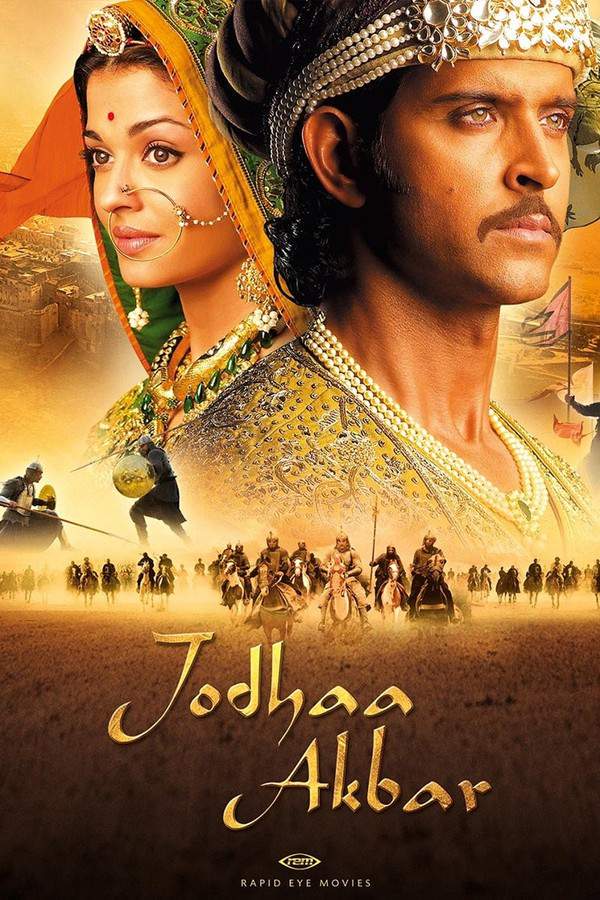
Jodhaa Akbar (2008) movie poster

Timeline

Jodhaa Akbar (2008) Timeline Explained – Every Event in Order

Release, runtime and language
2008 · 213 min · Hindi
Directed by
Ashutosh Gowariker

In 16th century India, Emperor Akbar seeks to solidify his rule through a strategic marriage to Princess Jodhaa. What begins as a political alliance between their kingdoms and faiths gradually blossoms into a profound love story. Akbar grapples with the intricacies of his empire, his personal beliefs, and the cultural differences that arise as he and Jodhaa navigate their unexpected connection and forge a unique bond.

On this page (5)
  1. 1 Events in order (15)
  2. 2 Timeline questions answered
  3. 3 Movie threads
  4. 4 Movies like Jodhaa Akbar
  5. 5 Every angle

15 events in order · contains spoilers

Jodhaa Akbar Timeline: Events in Chronological Order

Every key event of Jodhaa Akbar (2008) in order, scene by scene, with when and where it takes place. Use it to untangle flashbacks, time jumps and parallel storylines, to refresh your memory before the sequel or to find the exact scene you are thinking of.

  1. Mughal Empire's Rise

    The Mughal Empire, founded by Babur, laid a strong foundation in India, carrying forward its legacy through successive emperors. This significant lineage includes Humayun, whose death in 1555 marks a turning point for the empire.

    When
    1555
    Where
    India
  2. Hemu Claims Delhi

    Following Humayun's unexpected demise, Hemu seizes the opportunity to claim the throne of Delhi. This sudden power grab unsettles the Mughal leadership and sparks conflict.

    When
    1555
    Where
    Delhi
  3. Bairam Khan's Strategy

    In a time of turmoil, Bairam Khan, a loyal general of the Mughal empire, devises a bold strategy to confront Hemu’s powerful army. This plan sets the stage for a decisive battle that will determine the future of the empire.

  4. Battle of Panipat

    The Battle of Panipat marks a critical moment in the struggle for dominance, where Bairam Khan leads the Mughal forces against Hemu. The Mughal victory not only secures Akbar's position but also shifts the empire’s power dynamics.

    Where
    Panipat
  5. Bairam Khan's Actions

    Following their victory, Bairam Khan takes the drastic step of beheading Hemu, fearing the potential for retaliation. This act of violence raises questions about the moral compass of the young emperor Akbar.

  6. Consolidation of the Empire

    With victory in hand, Bairam Khan embarks on consolidating the Mughal empire, demanding tribute from rulers across Hindustan. His approach yields mixed results, with some rulers submitting while others resist.

    Where
    Hindustan
  7. Akbar's Principles

    Despite the pressures, Akbar displays a notable reluctance to execute defeated kings, advocating for compassion and justice instead. His visionary leadership earns him the respect of many, highlighting his unique approach to governance.

  8. The Marriage Proposal

    In a strategic move to broker peace, Raja Bharmal proposes a marriage alliance between his daughter Jodhaa and Akbar. This decision aims to unite the factions within Rajputana and secure the Mughal's hold over the region.

    Where
    Rajputana
  9. Jodhaa's Dilemma

    Jodhaa finds herself caught in a political web, feeling betrayed as her desires to marry Ratan Singh are dashed. Torn between duty and love, she expresses her distress through a letter to her cousin Sujamal.

  10. Wedding and Tensions

    Following her marriage to Akbar, Jodhaa navigates her new life in Agra where she faces hostility from court members. Meanwhile, she manages to secure concessions regarding her faith, demonstrating her resolve.

    Where
    Agra
  11. The Political Struggle

    As tensions rise within the Mughal court, a prime minister’s assassination by Adham Khan reveals deep-seated betrayals. Akbar is forced to confront treachery even among his closest advisors.

    Where
    Mughal Court
  12. Jodhaa's Temporary Banishment

    Amidst rising suspicions, Jodhaa is temporarily banished from the court due to betrayals and misunderstandings. This period of separation tests their relationship and highlights the struggles she faces as a queen.

  13. Reconciliation

    When the truth behind the misunderstandings comes to light, Akbar seeks to mend the rift with Jodhaa. Their reunion marks the strengthening of their relationship, built on mutual respect and understanding.

  14. Religious Tolerance Proclaimed

    Akbar boldly champions religious tolerance, fostering an environment where diverse beliefs can coexist. This decision not only grows Jodhaa's trust in him but also sets a progressive tone for his reign.

  15. Final Confrontation

    In a climactic showdown, Akbar faces Sharifuddin, who attempts to assassinate him. The ensuing conflict results in Akbar's victory but underscores his commitment to mercy and reconciliation with family ties.

Last updated: November 03, 2024 at 14:05

Was this helpful?

Timeline questions answered

Jodhaa Akbar Timeline Explained: Your Questions Answered

When does it happen, and why in that order? The questions people ask about the chronology of Jodhaa Akbar (2008): time jumps, flashbacks, cause and effect between scenes and the correct order of events, each answered with spoilers.

Q1

Why did Akbar refuse to kill Hemu after defeating him at the Battle of Panipat?

Akbar refused to execute Hemu because he wanted to establish his rule with compassion and justice rather than bloodshed. This principle was central to his vision of governing Hindustan. Even as a young emperor, Akbar believed that mercy toward defeated enemies would earn their loyalty more effectively than vengeance. Bairam Khan, however, beheaded Hemu out of fear that leaving him alive could lead to future retaliation.

  • akbar
  • hemu
  • battle of panipat
  • compassion
  • mercy
Q2

Why did Raja Bharmal agree to marry his daughter Jodhaa to Emperor Akbar?

Raja Bharmal proposed the marriage as a strategic peace treaty to avoid war between Amer and the expanding Mughal empire. With Mughal forces consolidated after their victory over Hemu, many Rajput kingdoms faced the choice of surrender or confrontation. By offering Jodhaa in marriage, Bharmal secured peace for his kingdom and ensured Mughal protection, though this decisionOverride Jodhaa's personal wish to marry Ratan Singh of Ajabgarh.

  • raja bharmal
  • jodhaa
  • marriage
  • peace treaty
  • amer
Q3

Why did Jodhaa demand concessions from Akbar after their wedding?

Jodhaa demanded to retain her Hindu faith following her marriage to Akbar, refusing to convert to Islam. She insisted on maintaining her religious practices, including building a temple within the Agra fort. Akbar surprisingly granted these concessions, which was unusual for a Mughal emperor. This demand reflected Jodhaa's determination to preserve her identity despite being a political pawn in the alliance.

  • jodhaa
  • hindu faith
  • religion
  • temple
  • akbar
Q4

Why was Jodhaa temporarily banished from the Mughal court?

Jodhaa was banished from the court due to misunderstandings and manipulations by court rivals who questioned her loyalty. As Akbar faced betrayals from within his own ranks, including the assassination of his prime minister by Adham Khan, suspicion extended to Jodhaa. The exact nature of the accusations is tied to the political intrigue surrounding her position as a Rajput queen in the Mughal court. When the truth eventually surfaced, Akbar reconciled with her and allowed her return.

  • jodhaa
  • banishment
  • court
  • accusation
  • reconciliation
Q5

Why did Akbar spare Sharifuddin despite his attempt to assassinate the emperor?

Akbar spared Sharifuddin because he was Akbar's brother-in-law and the governor of three provinces. Even after Sharifuddin orchestrated a plot to kill Akbar and later threatened Jodhaa, Akbar chose mercy over vengeance. This decision aligned with his core principle of compassionate rule and his desire to maintain family bonds over bloodlust. Akbar's victory over Sharifuddin was decisive, but he opted for reconciliation rather than execution.

  • sharifuddin
  • assassination
  • mercy
  • brother-in-law
  • akbar
Q6

Why did Akbar declare religious tolerance across his empire?

Akbar proclaimed religious tolerance as part of his vision for a united Hindustan. After experiencing the political tensions between different faiths and witnessing the cultural friction in his own court, Akbar believed that respecting all religions would strengthen his empire. This proclamation earned Jodhaa's admiration and trust, as it validated her insistence on maintaining her Hindu faith. The policy marked a significant departure from typical Mughal religious policy of the era.

  • religious tolerance
  • hindu
  • islam
  • empire
  • jodhaa
Q7

Why did Bairam Khan behead Hemu after Akbar's victory at Panipat?

Bairam Khan beheaded Hemu because he feared that keeping the defeated king alive would pose a future threat to the young emperor. With Akbar refusing to kill Hemu himself due to his原则 of not staining his hands with blood, Bairam Khan took it upon himself to eliminate the potential source of future rebellion or revenge. This act highlighted the tension between Bairam Khan's aggressive methods and Akbar's more compassionate approach to ruling.

  • bairam khan
  • hemu
  • beheading
  • battle of panipat
Q8

What was the significance of Sujamal's death in the story?

Sujamal, Jodhaa's cousin whom she supported as the rightful heir to Amer, sought refuge with rebel leader Sharifuddin Hussain. When Sharifuddin attempted to assassinate Akbar, Sujamal intervened heroically to warn the emperor but was killed in the process. His sacrifice demonstrated his redemption and loyalty, ultimately earning recognition from Akbar. Sujamal's death underscored the personal costs of the political betrayals and warfare that characterized the era.

  • sujamal
  • death
  • Sharifuddin
  • assassination warning
  • cousin
Q9

How did the relationship between Akbar and Jodhaa transform from a political marriage to genuine love?

Although their marriage began as a political alliance that distressed Jodhaa (who wanted to marry Ratan Singh), Akbar and Jodhaa gradually developed mutual respect and admiration through their interactions. Akbar granted Jodhaa concessions regarding her Hindu faith, and they engaged in spirited discussions and sparring matches. As Akbar championed religious tolerance and demonstrated his compassionate vision for the empire, Jodhaa came to trust and love him. Their relationship became the emotional core of the film.

  • akbar
  • jodhaa
  • love
  • marriage
  • relationship evolution
Q10

Why did Akbar relieve Bairam Khan of his duties and send him to Mecca?

After consolidating the Mughal empire through his military campaigns and diplomacy, Akbar relieved Bairam Khan of his regent duties. While Bairam Khan had been instrumental in securing Akbar's throne and defeating enemies, Akbar sought to establish his own authority as emperor. He sent Bairam Khan on a pilgrimage to Mecca, effectively transitioning from Bairam Khan's aggressive expansion tactics to his own more compassionate style of governance.

  • bairam khan
  • mecca
  • pilgrimage
  • regent
  • duties
Q11

Why did Jodhaa's mother give her poison before her marriage to Akbar?

Jodhaa's mother, Rani Padmavati, gave her a vial of poison as insurance against her impending marriage to Akbar. Distressed at being used as a political pawn and forced to abandon her desire to marry Ratan Singh, Jodhaa considered the poison a potential escape from a life she did not choose. Ultimately, Jodhaa refrained from sending her desperate letter to Sujamal and did not use the poison, choosing instead to confront Akbar and assert her terms for the marriage.

  • jodhaa
  • poison
  • rani padmavati
  • mother
  • marriage

Movie threads

More Movies Like Jodhaa Akbar, by Mood & Story

Curated lists built around what makes Jodhaa Akbar tick: the same mood, the same kind of story or the same emotional payoff. Each list explains why these movies belong together.

Historical Epic Love Stories That Forged Empires like Jodhaa Akbar

Where grand political strategy unexpectedly blooms into profound romantic connection. Explore movies similar to Jodhaa Akbar, featuring sprawling historical epics where a strategic royal marriage or alliance blossoms into a powerful love story. If you liked the blend of grand politics, cultural conflict, and a hopeful romantic core set against an empire-building backdrop, these films offer a similar majestic and emotional experience.

  • epic
  • romantic
  • hopeful
  • solemn
  • grandiose
  • tense
  • Tone: hopeful, grandiose, solemn
  • Pacing: steady, epic
Why these movies?

The story pattern: Stories in this thread follow a powerful ruler or central figure who enters a political or strategic union for the good of their kingdom or cause. Initially a transaction, the relationship faces immediate tests from conflicting cultures, traditions, and internal betrayals. The narrative arc charts the gradual, hard-won transformation of this alliance into a resilient and transformative love that becomes the emotional cornerstone of a grander political or social vision.

Why they belong together: These movies are grouped together because they share a unique blend of the epic and the intimate. They balance large-scale historical drama—featuring battles, political maneuvering, and world-building—with a central, slowly-burning romance that defies initial circumstances. The tone is ultimately hopeful, focusing on love's power to bridge divides, even as the pacing remains steady to accommodate both personal and political storylines.


Movies About Love Conquering Cultural Divides like Jodhaa Akbar

Stories where romance becomes a powerful force for unity and understanding. Find films similar to Jodhaa Akbar that explore romance blossoming between characters from different religions, cultures, or warring factions. If you liked the theme of love overcoming prejudice and serving as a bridge to unity, these stories offer a similar mix of hopeful romance, tense cultural conflict, and a bittersweet but uplifting resolution.

  • hopeful
  • tense
  • romantic
  • solemn
  • thought-provoking
  • uplifting
  • Tone: hopeful, tense, bittersweet
  • Pacing: steady, character-driven
Why these movies?

The story pattern: The narrative pattern involves two individuals from distinct, often opposing, backgrounds whose connection defies societal norms. Their love is tested not only by personal doubts but by external pressures from family, community, or tradition. The plot focuses on their struggle to reconcile their identities, defend their union, and often, inspire a change in perspective within their wider world. The ending typically carries a bittersweet weight, acknowledging the sacrifices made while celebrating the love's profound impact.

Why they belong together: These films are united by their central thematic focus on love as an antidote to division. They share a specific emotional mix: the tension of cultural friction, the hope born from genuine connection, and the solemn weight of challenging entrenched beliefs. The pacing is often steady, allowing for the nuanced development of both the relationship and the societal obstacles it faces, resulting in an emotionally medium but impactful experience.

If you liked this

Movies Like Jodhaa Akbar

Similar movies to Jodhaa Akbar: the same genre, themes or kind of story. Each one comes with its own plot summary, timeline and ending explained.

Browse all movie summaries

Every angle

Jodhaa Akbar (2008) Explained: Plot, Timeline & Characters

Everything about Jodhaa Akbar in one place: what happens in the plot summary, the timeline in chronological order, the characters and meaning and a spoiler-free summary. What's After the Movie adds the cast, box office and post-credit scenes.

Coming soon on iOS and Android

The Plot Explained Movie Summary App

Plot summaries, endings explained and timelines on your phone. Catch up on any movie in minutes, save your favorites and never miss a twist again.

Be the first to know when we launch. Your email stays private, always.

Learn more about the app