Plot Explained Spoilers guaranteed!
Plot Explained

Browse by genre

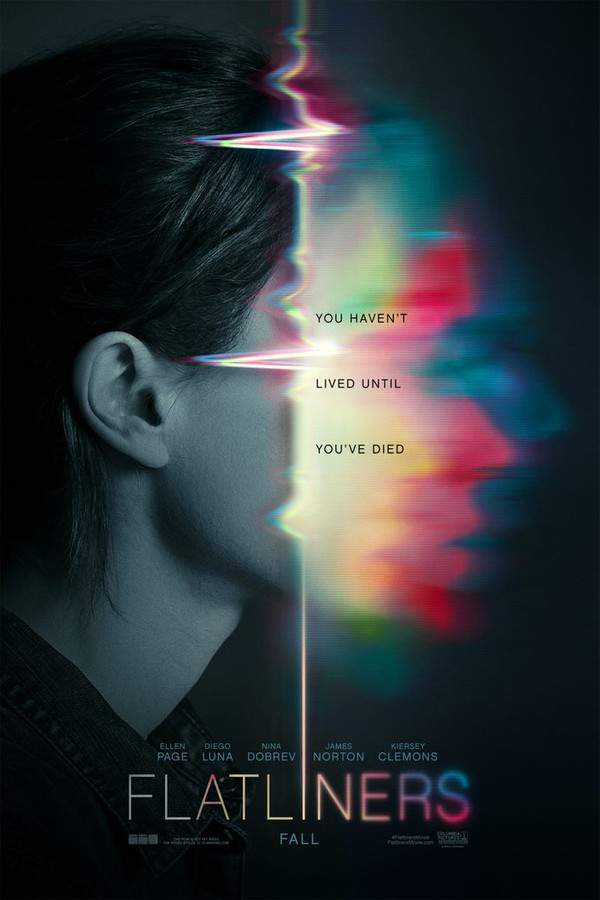
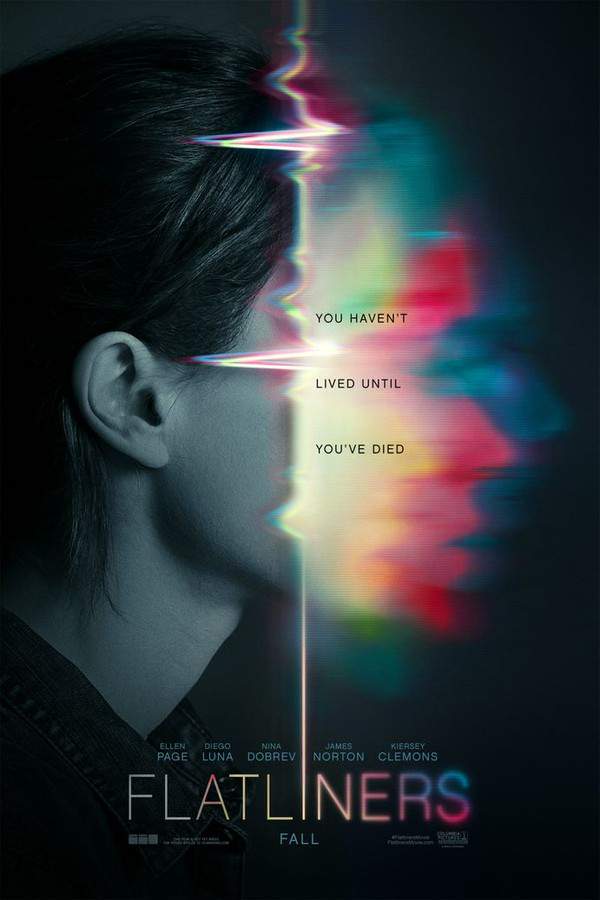
Flatliners (1990) movie poster

Plot Summary

Flatliners (1990) Plot Summary Explained

Release, runtime and language
1990 · 115 min · English
Directed by
Joel Schumacher
Starring
Julia Roberts, William Baldwin, Oliver Platt, Kevin Bacon, Kiefer Sutherland

Driven by a fascination with death, five medical students attempt to cheat mortality by deliberately stopping their hearts and recording their experiences during clinical death. As they push the boundaries of science, they find themselves haunted by a mysterious presence and forced to confront their own past regrets. The experiment leads them down a dangerous path, blurring the line between life, death, and the consequences of tampering with the natural order.

On this page (6)
  1. 1 Where to watch
  2. 2 What happens: full plot
  3. 3 Plot questions answered
  4. 4 Movie threads
  5. 5 Movies like Flatliners
  6. 6 Every angle

Where to watch

Where to Watch Flatliners (1990)

Where can you watch Flatliners? Stream, rent or buy it in the US, including on Amazon Video, Apple TV Store and Fandango At Home: current JustWatch availability with up-to-date prices.

Streaming availability powered by JustWatch

Full plot summary · contains spoilers

What Happens in Flatliners: Full Plot Summary

The whole story of Flatliners (1990) explained, from the opening scene to the final frame: every key event, every twist and what it all adds up to. Read it as a quick recap before the sequel, to check a scene you missed, or to finally understand what really happened.

Nelson, portrayed by Kiefer Sutherland, embarks on a dangerous journey with four of his fellow medical school colleagues: Joe Hurley, played by William Baldwin, David Labraccio, expertly brought to life by Kevin Bacon, Randall Steckle, enacted by Oliver Platt, and the compassionate Rachel Manus, depicted by Julia Roberts. Their mission? To unveil the mysteries that lie beyond the veil of death itself. Nelson, enthused by accounts from individuals who successfully navigated near-death experiences filled with vivid visions, sets up his experiment in an old, deserted building, complete with all the necessary medical apparatus.

Initially skeptical, Steckle gradually succumbs to the magnetic pull of Nelson's audacious plan. Meanwhile, David harbors unspoken feelings for Rachel, who, unfortunately, is oblivious to his affections. Following a suspension due to an unapproved emergency procedure, David finds himself drawn into Nelson’s risky endeavor, as all of them do, driven by a potent mix of scientific inquiry and an insatiable thirst for knowledge.

The team's strategy is chillingly simple: they will cool the body down and issue a powerful electric shock to halt the heart. Their courageous revival attempt is meticulously timed to commence exactly one minute after the heart ceases to beat. In a harrowing moment, Nelson flat-lines for this crucial minute before his friends battle to bring him back to life. During this time in the afterworld, he is haunted by the ghost of Billy Mahoney, a boy he mercilessly bullied in his past. When pressed to describe his experience, Nelson can only murmur that he glimpsed something extraordinary, though every attempt to articulate it proves elusive.

This taste of the unknown begets a swell of curiosity in his companions, spurring them to follow in his footsteps to uncover what they can discover for themselves. Joe, next in line, seeks to push the limits and opts to flat-line for an ambitious 90 seconds, during which he encounters an electrifying afterlife sequence that leaves him convinced of the existence of a higher plane, affirming everything Nelson has claimed.

In a twist of competition, David and Rachel engage in a playful rivalry over who can endure death the longest before being revived, with David setting a lofty bid of 140 seconds. As David slips into the abyss, he is confronted by haunting visions of Winnie Hicks, an African American girl he had bullied, who eerily reminds him of his past misdeeds. Each of the men begins to face their own unique and tormenting hallucinations, all rooted deeply in their personal histories and regrets. Nelson's manifestations become increasingly terrifying, as he finds himself relentlessly attacked by Billy Mahoney, emerging daily with new wounds that reflect his troubled conscience.

Joe, who has an impending marriage, grapples with the distressing revelations of videos he's kept hidden, serving as a painful reminder of his betrayals during their engagement. Meanwhile, Rachel, anxious to share in this groundbreaking experience, insists on taking her turn to flat-line. However, as the group initiates this next daring feat, David's apprehensions increase; driven by the turmoil within, he races to intervene, but tragically arrives too late. Rachel teeters on the brink of disaster when a power outage disrupts their ability to revive her, yet with immense effort, they manage to bring her back from the precipice.

When Rachel awakens, she confronts haunting memories of her father's suicide during her childhood, burdens that have lingered in the recesses of her mind. As tensions mount around them, the men engage in a cathartic sharing of their traumatic experiences, culminating in David's decision to confront his past wrongs directly. He embarks on a quest to find Winnie Hicks, seeking her forgiveness and rectifying the pain he caused her in his youth. After a heartfelt encounter, he feels an unexpected sense of relief wash over him.

However, as David tends to his emotional scars, Nelson, who accompanies him, finds himself alone and ensnared by the vengeful spirit of Billy Mahoney. In a dramatic confrontation, Billy attacks Nelson, but David arrives just in the nick of time, dispelling the haunting imagery before serious harm befalls his friend. Meanwhile, Joe's reality spirals as his fiancée, Anne, discovers his betrayals and breaks off their engagement, leaving him to confront the aftermath of his actions.

In a moment of vulnerability, Rachel seeks solace in David's embrace, sharing an intimate night together that breathes new life into both of their struggles. With Nelson grappling with his own demons, he reveals a startling secret to Joe and Steckle: their collective childhood misdeed led to Billy Mahoney's tragic death. This revelation prompts Nelson to embark on a path of atonement, yet he chooses to venture out alone.

Realizing the depth of Nelson's turmoil, Rachel and the others rush to save him from his own ill-fated decision to flat-line yet again. They reach him long after the critical window of time has closed. In the ethereal realm of the afterlife, young Nelson and Billy Mahoney switch places, enduring the torment of youth before culminating in a moment of self-realization. Just before he hits the ground, he morphs back into his older self and finds peace as Billy walks toward a radiant light.

Desperate, David delivers one final jolt, leading to a miraculous revival. Upon regaining consciousness, Nelson utters a hauntingly poignant line: > "Today wasn't a good day to die." This encapsulates the profound experiences they have endured and the heavy weight of the choices they made - somewhere between life and the enigmatic silence of the grave.

Last updated: January 18, 2025 at 14:36

Was this helpful?

Plot questions answered

Flatliners Plot Explained: Your Questions Answered

The questions people ask most about Flatliners (1990): what happens in the confusing scenes, why the characters do what they do, the twists, hidden details and what the ending means. Each answer contains spoilers.

Q1

Why does Nelson see Billy Mahoney in the afterlife?

Nelson sees Billy Mahoney because he was responsible for bullying the boy during their childhood, which directly contributed to Billy's death. When Nelson flat-lines, his deepest guilt manifests as the ghost of Billy Mahoney, who attacks him repeatedly to symbolize the unresolved trauma Nelson has carried. This haunting forces Nelson to confront the consequences of his past cruelty.

Foreshadowing: Early in the film, Nelson is inspired by near-death experience stories, hinting at his personal stakes in exploring death.

  • bully
  • childhood guilt
  • billy mahoney
  • death
  • haunting
Q2

What does David see when he flat-lines for 140 seconds?

When David flat-lines for 140 seconds, he confronts visions of Winnie Hicks, an African American girl he bullied as a child. The encounter represents his unresolved guilt from childhood torment. Unlike the others who simply see their haunting visions, David's experience motivates him to take action, he tracks down Winnie Hicks later in the film to apologize, seeking redemption for his past actions.

Foreshadowing: David's competitive nature emerges early when he bids 140 seconds to outdo Joe, showing he wants to go deeper than anyone else.

  • winnie hicks
  • bullying
  • redemption
  • childhood
  • afterlife vision
Q3

What causes Rachel's haunting visions after flatlining?

Rachel's haunting visions stem from her father's suicide during her childhood. When she flat-lines and is revived despite the power outage, she begins experiencing flashbacks of discovering her father's body. This trauma has remained repressed throughout her life, and the near-death experience brings it to the surface, forcing her to confront the guilt she feels about his death.

Foreshadowing: Rachel is anxious to participate in the experiment, suggesting she has unresolved issues she hopes to address.

  • father suicide
  • childhood trauma
  • flashbacks
  • guilt
Q4

What did Nelson reveal about Billy Mahoney's death?

Nelson revealed to Joe and Steckle that their collective childhood misdeed accidentally caused Billy Mahoney's death. This dark secret had been burdening Nelson throughout the film. The revelation explains why Nelson's guilt is so severe, the bullying wasn't just cruel behavior but led to a child's death. This truth ultimately drives Nelson's desperate attempt to find closure through another flatlining experiment.

Foreshadowing: Nelson experiences increasingly terrifying manifestations of Billy Mahoney throughout the film, with new wounds appearing daily.

  • billy mahoney death
  • childhood accident
  • secret
  • guilt confession
Q5

What happens when Rachel flat-lines and there's a power outage?

When Rachel attempts to flat-line, a power outage disrupts the equipment needed to revive her, putting her life in serious danger. The team manages to bring her back from the brink, but this close call intensifies the stakes of their experiments. Rachel survives, but the incident creates heightened tension and foreshadows the fatal consequences that will later nearly claim Nelson.

Foreshadowing: David's apprehensions increase before Rachel's turn, hinting at the danger to come.

  • power outage
  • flat-line
  • danger
  • revival
  • medical emergency
Q6

Why does Nelson decide to flat-line again at the end?

Nelson decides to flat-line again because he feels the weight of his unresolved guilt over causing Billy Mahoney's death. Despite having revealed the truth to his friends, he cannot find peace. He calls Rachel to confess his need to make amends, then ventures out alone to attempt another near-death experience, hoping to finally confront and resolve his trauma. This desperate decision nearly costs him his life when his friends can't reach him in time.

Foreshadowing: Nelson's manifestations become increasingly terrifying throughout the film, showing his guilt intensifying rather than subsiding.

  • guilt
  • suicide attempt
  • atonement
  • billy mahoney
  • closure
Q7

What does Nelson mean when he says 'Today wasn't a good day to die'?

When Nelson says 'Today wasn't a good day to die,' he means that while he experienced the afterlife and found some form of peace or resolution, he ultimately wanted to return to life. The quote reflects his newfound appreciation for being alive after confronting his deepest guilt in the afterlife. It also carries dark humor, acknowledging that his near-death experience, while profound, wasn't preferable to actually living.

Foreshadowing: In the afterlife, young Nelson switches places with Billy, enduring torment before finding peace and transforming back to his older self.

  • quote
  • afterlife
  • revival
  • life appreciation
  • bittersweet ending
Q8

How does David find redemption after flatlining?

After experiencing visions of Winnie Hicks during his flatline, David tracks her down and apologizes for the bullying he inflicted on her during childhood. When Winnie accepts his apology, David feels an unexpected sense of relief lift from his conscience. This act of confronting his past wrongs provides him with the redemption he was seeking, allowing him to move forward emotionally.

Foreshadowing: David's bidding of 140 seconds shows his competitive drive, but his motivation ties directly to his feelings for Rachel and his desire to prove himself.

  • apology
  • redemption
  • winnie hicks
  • forgiveness
  • bullying
Q9

Why does Joe's engagement end?

Joe's engagement ends when his fiancée Anne discovers the hidden videos he kept, which reveal his betrayals during their engagement. These videos serve as painful reminders of his infidelity and dishonesty. The discovery leads Anne to break off their engagement, leaving Joe to face the consequences of his actions. This outcome represents one of the permanent consequences the group suffers from their dangerous experiments.

Foreshadowing: Joe grapples with the distressing revelations of videos he's kept hidden, showing his guilt and fear of discovery early on.

  • anne
  • engagement broken
  • betrayal
  • videos
  • relationship ending
Q10

What happens in Nelson's final afterlife sequence?

In Nelson's final afterlife sequence, he finds himself reliving the torment he inflicted on Billy Mahoney as a child, the young Nelson becomes the perpetrator in a cycle of bullying. The dynamic shifts when young Nelson falls and transforms into his older self, symbolizing his acceptance of responsibility. Billy then walks toward a radiant light, finding peace, while Nelson is revived by David's final shock. This sequence represents Nelson's psychological transformation and eventual acceptance of his past.

Foreshadowing: Nelson's manifestations progressively worsen, showing his guilt escalating toward this climactic confrontation.

  • afterlife transformation
  • billy mahoney
  • cycle of guilt
  • peace
  • light

Movie threads

More Movies Like Flatliners, by Mood & Story

Curated lists built around what makes Flatliners tick: the same mood, the same kind of story or the same emotional payoff. Each list explains why these movies belong together.

Movies about scientific hubris like Flatliners

Stories about brilliant minds tampering with nature and facing terrifying backlash. If you were fascinated by the high-stakes medical experiments in Flatliners, explore these similar sci-fi and thriller movies. This list features stories where scientific curiosity leads to terrifying repercussions, perfect for viewers who like 'what if' scenarios with a dark, tense atmosphere.

  • suspenseful
  • anxious
  • haunting
  • paranoid
  • fearful
  • ethically challenging
  • Tone: tense, dark, morally complex
  • Pacing: fast, escalating
Why these movies?

The story pattern: These stories typically follow a pattern of discovery, experimentation, and catastrophic fallout. Intellectual curiosity becomes obsession, leading to an event that breaches a natural law. The remainder of the plot revolves around characters struggling to contain or survive the escalating consequences of their actions, often haunted by their creation or discovery.

Why they belong together: Movies are grouped here based on their central theme of 'playing god' and the resulting blend of science fiction with psychological or supernatural horror. They share a tense tone, high emotional stakes, and a focus on the moral and personal cost of unchecked ambition.

Psychological thrillers about guilt like Flatliners

Characters are psychologically tormented by long-buried regrets and trauma. For viewers who liked the theme of confronting past sins and trauma in Flatliners, this list offers more movies with heavy emotional weight. Discover similar thrillers and dramas where characters are haunted by their past, leading to a tense and redemptive journey.

  • guilt-ridden
  • melancholic
  • suspenseful
  • anxious
  • redemptive
  • haunting
  • Tone: guilt-ridden, suspenseful, redemptive
  • Pacing: fast, relentless
Why these movies?

The story pattern: The narrative journey begins with a seemingly stable present that is shattered when past transgressions resurface, often triggered by a specific event. Characters are then pursued by manifestations of their guilt, leading to a period of psychological unraveling. The arc culminates in a confrontation with the past that offers either destruction or a hard-won chance at redemption.

Why they belong together: These films are united by their deep exploration of guilt, regret, and the psychological toll of buried secrets. They create a cohesive experience through a tense, anxious mood, fast-paced reveals of past trauma, and a focus on the heavy emotional burden carried by the protagonists.

If you liked this

Movies Like Flatliners

Similar movies to Flatliners: the same genre, themes or kind of story. Each one comes with its own plot summary, timeline and ending explained.

Browse all movie summaries

Every angle

Flatliners (1990) Explained: Plot, Timeline & Characters

Everything about Flatliners in one place: what happens in the plot summary, the timeline in chronological order, the characters and meaning and a spoiler-free summary. What's After the Movie adds the cast, box office and post-credit scenes.

Coming soon on iOS and Android

The Plot Explained Movie Summary App

Plot summaries, endings explained and timelines on your phone. Catch up on any movie in minutes, save your favorites and never miss a twist again.

Be the first to know when we launch. Your email stays private, always.

Learn more about the app