



Plot Explained Spoilers guaranteed!
Plot Explained

Browse by genre

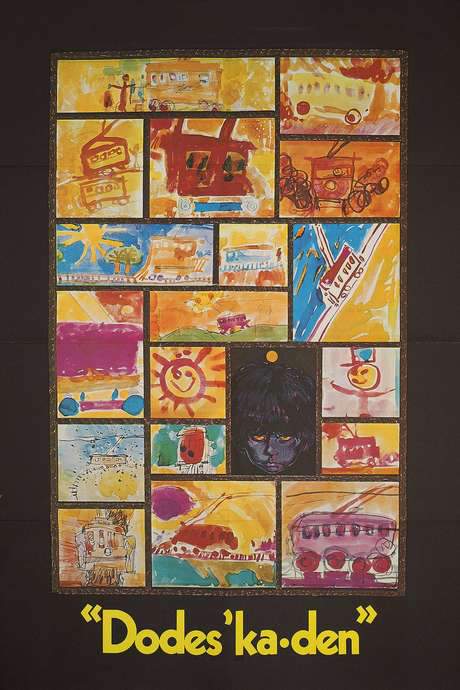
Dodes’ka-den (1970) movie poster

Timeline

Dodes’ka-den (1970) Timeline Explained – Every Event in Order

Release, runtime and language
1970 · 140 mins · Japanese
JustWatch #27,717 9
Directed by
Akira Kurosawa
Starring
Tatsuo Matsumura, Akemi Negishi, Yoshitaka Zushi, Hisashi Igawa, Kôji Mitsui, Kamatari Fujiwara

Set in a Tokyo slum on the city’s outskirts, the film portrays the everyday struggles of its residents. A homeless father and his son imagine building their own house, a young woman endures her uncle’s abuse, and a boy pretends to be a trolley conductor, each finding a personal hope that sustains them despite poverty.

On this page (6)
  1. 1 Where to watch
  2. 2 Events in order (13)
  3. 3 Timeline questions answered
  4. 4 Movie threads
  5. 5 Movies like Dodes’ka-den
  6. 6 Every angle

Where to watch

Where to Watch Dodes’ka-den (1970)

Where can you watch Dodes’ka-den? Stream, rent or buy it in the US, including on HBO Max: current JustWatch availability with up-to-date prices.

Streaming availability powered by JustWatch

13 events in order · contains spoilers

Dodes’ka-den Timeline: Events in Chronological Order

Every key event of Dodes’ka-den (1970) in order, scene by scene, with when and where it takes place. Use it to untangle flashbacks, time jumps and parallel storylines, to refresh your memory before the sequel or to find the exact scene you are thinking of.

  1. Roku-chan's trolley fantasy begins

    Roku-chan imagines himself as the driver of a fixed-route trolley through the dump. He repeats the refrain dodeska-den and treats the journey as a sacred mission. His obsession frames his daily life in the shantytown, blurring fantasy with reality.

    When
    childhood
    Where
    Suburban shantytown atop a rubbish dump
  2. Trolley freak stigma emerges

    Roku-chan is labeled the trolley freak by locals and outsiders, a tag that follows him through the community. His mother worries that the fixation might signal genuine mental disturbance. The tension between fantasy and social judgment colors life in the town.

    When
    childhood
    Where
    Dump / shantytown
  3. Ryotaro supports many children

    Ryotaro, a hairbrush maker, shoulders the burden of supporting numerous children conceived through Misao's affairs. He remains wholeheartedly devoted to them, despite the strain on his resources. His tenderness sits at odds with the town's harsh conditions.

    When
    present
    Where
    Shantytown home
  4. Wife-swapping among day laborers

    Two drunken day laborers, Masuda and Kawaguchi, engage in a reckless cycle of wife swapping. The next day they return to their wives as if nothing happened, illustrating a pattern of routine infidelity. The episode exposes the fragility of relationships under poverty.

    When
    present
    Where
    Shantytown
  5. Hei and Ocho's uneasy routine

    Hei is stoic and emotionally distant, while Ocho appears as his ex-wife who helps with domestic chores. It is revealed that she cheated and returned, wracked with guilt, and Hei does not forgive her. The dynamic reveals lingering resentments beneath everyday life.

    When
    present
    Where
    Hei's home in the dump
  6. Shima defends his wife amid criticisms

    Shima, a man with a tic, defensively shields his outwardly unpleasant wife when friends criticize her. He insists she has always been there for him, revealing a stubborn loyalty that circles the town’s moral judgments. The moment underlines complex bonds in a tough environment.

    When
    present
    Where
    Shantytown
  7. Beggar and son in a derelict car

    A beggar and his son live in a derelict Citroën 2CV, with the father dreaming of a grand home. The boy dies from food poisoning, and the father buries the cremated remains with Tanba's help, clinging to the fantasy that the grave is a swimming pool for his son. The scene blends sorrow with stubborn hope.

    When
    present
    Where
    Derelict car by the dump
  8. Katsuko's trauma and act of violence

    Katsuko, a mute girl, is raped by her alcoholic uncle and becomes pregnant. In a moment of emotional turmoil, she stabs Okabe, a boy who cares for her, though he later forgives her. The uncle flees when confronted, leaving the town to reckon with violence and guilt.

    When
    present
    Where
    Shantytown
  9. Okabe offers forgiveness and warmth

    Okabe recovers from the stabbing and forgives Katsuko when she apologizes, his warmth undiminished. The scene emphasizes compassion amid a landscape of hardship and misfortune. His reaction stands in contrast to the town's cynicism.

    When
    present
    Where
    Liquor shop / town
  10. Tanba disarms with kindness

    Tanba, the chasework silversmith, appears as a sage figure who shows kindness to the town's residents. He disarms a youth with a sword using understanding words and helps a burglar by giving money, later denying to the police that any robbery occurred. His actions model humane restraint in a harsh world.

    When
    present
    Where
    Tanba's home
  11. Roku-chan returns home

    The narrative returns to Roku-chan as he comes back from his imagined tram ride, removes his conductor hat, and hangs it up. The act signals a quiet retreat from fantasy and a re-entry into ordinary life. The closing beat frames the cycle of dreams within the town.

    When
    end
    Where
    Roku-chan's home
  12. A mosaic of hardship and dream

    Across the town, characters endure setbacks while clutching small dreams of escape and better days. The film traces how routines and fantasies coexist to keep people moving forward. It ends by reaffirming the fragile humanity that persists amid deprivation.

    When
    end
    Where
    Suburban shantytown atop a rubbish dump
  13. Closing image of cyclical hope

    The final images emphasize the cyclical nature of life in the dump, where hope and despair continually alternate. The characters' lingering humanity survives the day-to-day grind, suggesting that escape may be possible only within the boundaries of their world. The film closes on a note of quiet resilience.

    When
    end
    Where
    Suburban shantytown atop a rubbish dump

Last updated: October 07, 2025 at 08:25

Was this helpful?

Timeline questions answered

Dodes’ka-den Timeline Explained: Your Questions Answered

When does it happen, and why in that order? The questions people ask about the chronology of Dodes’ka-den (1970): time jumps, flashbacks, cause and effect between scenes and the correct order of events, each answered with spoilers.

Q1

Why does Roku-chan obsessively imagine driving a trolley?

Roku-chan's trolley fantasy serves as his coping mechanism for surviving the harsh reality of life in the shantytown. The fixed-route trolley with its predictable rhythm and the refrain 'dodeska-den' represents a sense of order and purpose completely absent from his chaotic environment. His mother worries the fantasy might mask genuine mental disturbance, but the film presents it as both a vital escape hatch for his heart and a way to maintain hope in deplorable conditions.

  • roku-chan
  • trolley
  • fantasy
  • mental health
  • coping mechanism
  • dodeska-den
Q2

Why does Ryotaro stay with Misao despite having many children from her affairs?

Ryotaro remains devoted to Misao and their children because his identity is rooted in loyalty and family responsibility. Despite the enormous burden of supporting numerous children conceived through Misao's serial infidelities, he views his role as provider as essential to maintaining the family's integrity. The film portrays his steadfast care not as weakness but as a stubborn, dignified refusal to abandon his clan, even when the strain is undeniable.

  • ryotaro
  • misao
  • infidelity
  • loyalty
  • family
  • children
Q3

What happens to the beggar's son living in the derelict car?

The beggar's son dies from food poisoning. After the boy dies, the father cremates the remains and buries them with help from Tanba the silversmith. The father then clings to a poignant fantasy, treating the grave as a swimming pool for his son, demonstrating how grief and hope intertwine in this harsh environment.

  • beggar
  • son
  • death
  • food poisoning
  • tanba
  • grave
Q4

Why does Katsuko stab Okabe after being assaulted by her uncle?

Katsuko, a mute girl who was raped by her alcoholic uncle and became pregnant,stab Okabe in a moment of emotional turmoil. The attack is not directed at Okabe himself, he had shown her tenderness, but rather represents her explosive rage at her situation: the trauma of the assault, the pregnancy, and the uncle's escape when confronted. Okabe later recovers and forgives her, offering warmth that anchors the film's moral center.

  • katsuko
  • okabe
  • stabbing
  • assault
  • uncle
  • pregnancy
  • trauma
  • forgiveness
Q5

Why does Okabe forgive Katsuko after she stabs him?

Okabe forgives Katsuko when she apologizes, showing quiet decency that stands in stark contrast to the cynicism and hardship surrounding them. His forgiveness is not presented as naive but as an act of grace, an acknowledgment of her unbearable trauma and a conscious choice to respond with compassion rather than vengeance. This response underlines the film's theme that humanity can survive even in the harshest conditions.

  • okabe
  • katsuko
  • forgiveness
  • compassion
  • grace
  • kindness
Q6

What happens to Katsuko's uncle after he assaults her?

Katsuko's alcoholic uncle flees when confronted about his assault. The film shows him abandoning the town rather than facing consequences, leaving the community to reckon with the violence and trauma he inflicted on Katsuko. His departure underscores the film's portrayal of how abuse perpetuates cycles of harm with minimal accountability.

  • katsuko
  • uncle
  • assault
  • flee
  • abuse
  • abandonment
Q7

Why do Masuda and Kawaguchi swap wives?

Masuda and Kawaguchi, two drunken day laborers, engage in wife-swapping as a reckless experiment driven by alcohol and bravado. The next day, they simply return to their own spouses as if nothing happened, revealing a pattern of routine infidelity beneath rough exterior. The episode exposes how poverty and desperation create fragile relationships where desire can surface and recede without fundamentally altering established routines.

  • masuda
  • kawaguchi
  • wife swapping
  • infidelity
  • day laborers
  • poverty
Q8

Why does Hei refuse to forgive Ocho after she returns?

Hei maintains emotional distance from Ocho, who appears to be his ex-wife and helps with domestic chores. The film reveals that Ocho cheated on him and returned wracked with guilt, but Hei does not forgive her. His stoic refusal represents the lingering resentment beneath everyday life in the town, wounds that never fully heal even when former partners drift back into routine.

  • hei
  • ocho
  • ex-wife
  • infidelity
  • resentment
  • forgiveness
Q9

What role does Tanba play in the shantytown community?

Tanba, a chasework silversmith, functions as a sage figure who models humane restraint in a harsh world. He disarms a youth threatening with a sword through understanding words, helps a burglar by giving him money, and later denies to police that any robbery occurred. His calm authority and practical kindness touch even those on the town's fringes, serving as a moral counterpoint to the surrounding suffering.

  • tanba
  • silversmith
  • sage
  • kindness
  • wisdom
  • help
Q10

What does the ending signify when Roku-chan hangs up his conductor hat?

At the end, Roku-chan returns home, removes his imaginary tram conductor hat, and hangs it up, a small, solemn ritual that signals his acceptance of reality while preserving his fantasy as a vital escape hatch for the heart. The closing image affirms that imagination and ordinary human connections can endure even in a world defined by hardship. It represents a quiet retreat from fantasy into ordinary life while keeping its glow alive.

Foreshadowing: Early scenes establish the trolley as both obsession and refuge, making the hanging of the hat a symbolic transition.

  • roku-chan
  • ending
  • hat
  • acceptance
  • imagination
  • fantasy
  • reality
Q11

Why does the film tell multiple separate stories rather than one main plot?

The anthology of overlapping vignettes mirrors how life in a shantytown actually unfolds, individual struggles happening simultaneously in close proximity. This structure allows the film to portray the community as a mosaic where characters like Roku-chan, Ryotaro, Katsuko, and Tanba briefly intersect while each carries their own burden. The interconnected stories create a tapestry of hardship and hope rather than a linear narrative, reflecting the messy, concurrent nature of urban poverty.

  • structure
  • vignettes
  • anthology
  • multiple stories
  • community
  • overlapping
Q12

What does "dodeska-den" mean in the film?

"Dodeska-den" is the refrain Roku-chan repeats as he imagines steering his trolley, the rhythm of his journey and the sound of the fictional tram's bell. The phrase has no literal translation but functions as a ritualistic chant that anchors his fantasy world. It becomes both his personal mantra and the film's signature motif, representing the intersection of imagination and mundane reality in his daily life.

  • dodeska-den
  • trolley
  • chant
  • refrain
  • mantra
  • sound

Movie threads

More Movies Like Dodes’ka-den, by Mood & Story

Curated lists built around what makes Dodes’ka-den tick: the same mood, the same kind of story or the same emotional payoff. Each list explains why these movies belong together.

Anthology Slice-of-Life Dramas like Dodes’ka-den

Interconnected stories of ordinary people enduring hardship with quiet dignity. If you liked the mosaic narrative of Dodes’ka-den, you might enjoy these other movies that weave together multiple stories within a single community. These films offer a complex, observant look at life, capturing the full emotional spectrum of human experience through interconnected vignettes.

  • observant
  • melancholic
  • gritty
  • patient
  • hopeful
  • community
  • Tone: bittersweet, melancholic, observant
  • Pacing: slow, patient, character-driven
Why these movies?

The story pattern: These narratives unfold not through a single protagonist's journey, but through a tapestry of overlapping lives. The plot is driven by character observation rather than a central conflict, creating a rich, complex portrait of a specific world and the collective spirit of its inhabitants.

Why they belong together: They are grouped by their shared narrative structure and thematic focus on community. They possess a patient, observant pacing and a bittersweet tone that balances the heaviness of reality with glimmers of human resilience and connection.


Movies About Imagination and Survival like Dodes’ka-den

Stories where characters use fantasy to survive overwhelming suffering. For viewers who appreciated the theme of imaginative escape in Dodes’ka-den, this list features films where characters use fantasy, art, or obsession to cope with suffering. Discover similar stories that blend harsh reality with surreal, dreamlike hope.

  • dreamlike
  • melancholic
  • psychological
  • hopeful
  • gritty
  • surreal
  • Tone: bittersweet, dreamlike, melancholic
  • Pacing: slow, contemplative
Why these movies?

The story pattern: The narrative follows characters whose inner world of fantasy or ritual starkly contrasts with their external reality. The story often hinges on the tension between these two worlds, exploring whether imagination is a saving grace or a dangerous detachment, typically leading to a bittersweet resolution.

Why they belong together: These movies share a core theme of psychological survival through imagination. They often have a dreamlike or surreal quality woven into a gritty setting, creating a specific bittersweet or melancholic mood that acknowledges pain while celebrating the human spirit's ingenuity.

If you liked this

Movies Like Dodes’ka-den

Similar movies to Dodes’ka-den: the same genre, themes or kind of story. Each one comes with its own plot summary, timeline and ending explained.

Browse all movie summaries

Every angle

Dodes’ka-den (1970) Explained: Plot, Timeline & Characters

Everything about Dodes’ka-den in one place: what happens in the plot summary, the timeline in chronological order, the characters and meaning and a spoiler-free summary. What's After the Movie adds the cast, box office and post-credit scenes.

Coming soon on iOS and Android

The Plot Explained Movie Summary App

Plot summaries, endings explained and timelines on your phone. Catch up on any movie in minutes, save your favorites and never miss a twist again.

Be the first to know when we launch. Your email stays private, always.

Learn more about the app