
Timeline
Disclosure (2020) Timeline Explained – Every Event in Order
- Release, runtime and language
- 2020 · 108 min · English
- Echo score 75
- Loading streaming availability…
- Directed by
- Sam Feder
- Starring
- Jamie Clayton, Yance Ford, Alexandra Billings, Bianca Leigh, Brian Michael, Candis Cayne
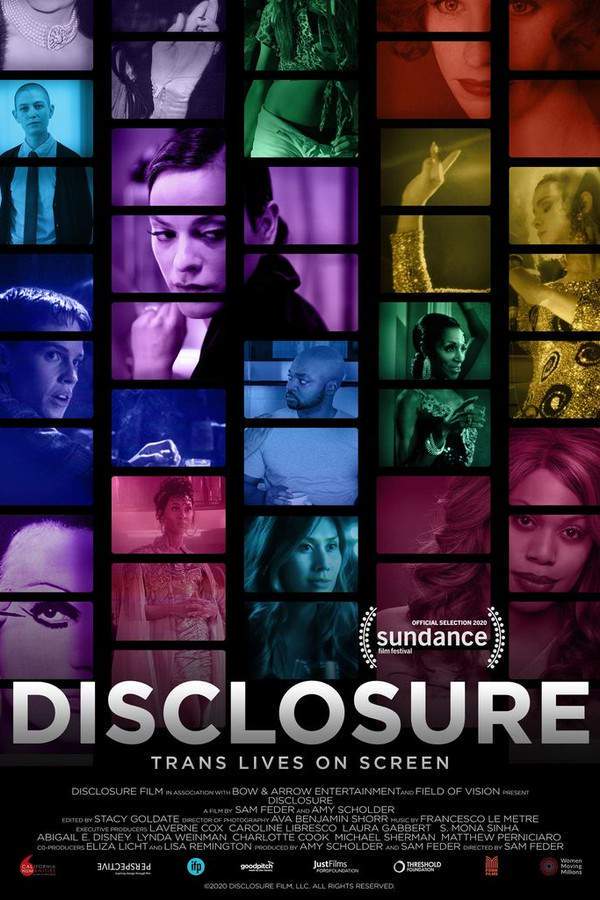
This documentary examines Hollywood's portrayal of transgender people, exploring both positive and problematic depictions that reflect societal anxieties about gender. Featuring perspectives from leading voices like Laverne Cox and Lilly Wachowski, the film offers candid reactions and critiques of iconic moments in film and television. It sheds light on the complex and often challenging relationship between the entertainment industry and gender identity, prompting a deeper understanding of representation and its impact.
On this page (4)
16 events in order · contains spoilers
Disclosure Timeline: Events in Chronological Order
Every key event of Disclosure (2020) in order, scene by scene, with when and where it takes place. Use it to untangle flashbacks, time jumps and parallel storylines, to refresh your memory before the sequel or to find the exact scene you are thinking of.
-
Trans Hollywood Voices Gather
The documentary assembles a wide circle of prominent transgender artists and industry figures, including Laverne Cox, Lilly Wachowski, Chaz Bono, Susan Stryker, and many others. Together they set out to examine how a century of film and television has shaped public perception of transgender people. This opening establishes the film's central goal: a direct conversation between transgender people and Hollywood.
- Where
- Los Angeles, California
-
Early Cinema and the 'Female Impersonator' Gag
The film traces trans-coded imagery back to the earliest days of American cinema, when cross-dressing was played almost entirely for laughs. Men dressing as women were treated as punchlines and spectacles rather than characters with inner lives. These recurring gags laid the groundwork for how audiences would learn to laugh at, fear, or dismiss gender nonconformity.
- When
- Early 1900s–1940s
- Where
- Hollywood
-
Beloved Classics Are Reexamined
Even revered classics like To Kill a Mockingbird are put under the microscope for the ways they use gender transgression as an insult or a mark of ridicule. The panelists argue that momentary gags in celebrated films quietly taught generations of viewers to mock trans people. This segment shows that insensitive depictions were not confined to low comedies but ran throughout mainstream Hollywood.
- When
- 1950s–1960s
- Where
- United States
-
The 'Man in a Dress' Comedy Boom
The documentary examines the wave of hit gender-swap comedies such as Bosom Buddies, Tootsie, and Victor/Victoria. In these stories, cisgender men dress as women for work, money, or survival, and the humor rests on the premise that a man in women's clothing is inherently ridiculous. Panelists explain how this genre erased actual transgender people while profiting from their lived experience as a joke.
- When
- 1970s–1980s
- Where
- Hollywood
-
Trans Characters Cast as Killers and Villains
The film dissects the 'psycho killer' trope in thrillers like Psycho, Dressed to Kill, and The Silence of the Lambs, where cross-dressing or gender identity is linked to murderous madness. Panelists describe how seeing trans-coded villains on screen translated into real fear, harassment, and violence against trans people. This repeated association helped cement the idea of trans people as deceivers and threats.
- When
- 1960–1991
- Where
- Hollywood
-
The Ace Ventura Reveal Scene
One of the documentary's most detailed case studies is the infamous reveal in Ace Ventura: Pet Detective, in which the discovery that a character is transgender triggers vomiting and disgust from the hero. Panelists recall watching such scenes and internalizing the message that their existence was repulsive. The sequence is used to show how a single blockbuster moment could shape public attitudes for decades.
- When
- 1994
- Where
- Hollywood
-
Shock Reveals as Plot Twists
The film also covers fare like The Crying Game, where a transgender reveal is treated as a shocking plot twist designed to stun the audience. Panelists discuss how this 'surprise' construction frames trans identity as a dark secret or a betrayal. These narratives, they argue, repeatedly positioned trans people as deceptive rather than as fully human characters.
- When
- 1992
-
Tabloid Talk Show Spectacle
The documentary revisits the daytime talk show boom, in which transgender guests were paraded as shocking spectacles for laughing studio audiences. Panelists describe watching these programs and the humiliation of having their lives treated as entertainment. The era reinforced the idea that trans people existed to be gawked at rather than listened to.
- When
- 1990s
- Where
- United States
-
Boys Don't Cry and the Cis Actor Problem
Boys Don't Cry is examined as a landmark film centered on trans man Brandon Teena that nonetheless cast cisgender actress Hilary Swank in the lead, a performance that won an Academy Award. Panelists grapple with the complicated legacy: greater visibility accompanied by the erasure of trans actors from trans roles. The segment also confronts the real-world violence against trans people that inspired the story.
- When
- 1999
- Where
- Hollywood
-
Trans Stars Step Into Reality TV
The film highlights moments when transgender people began telling their own stories on unscripted television, with Chaz Bono describing the intense public reaction to his transition and high-profile appearances. These moments generated both unprecedented visibility and vicious backlash. Panelists reflect on how representing themselves changed the dynamic between trans people and the media.
- When
- 2000s–2010s
-
Laverne Cox and the 'Transgender Tipping Point'
The documentary celebrates Laverne Cox's role as Sophia Burset on Orange Is the New Black, one of the first recurring trans characters played by a transgender actress on a major series. Cox's rising profile, including a historic Time magazine cover, marked what the publication called a 'Transgender Tipping Point.' Panelists describe the meaning of finally seeing a trans woman portrayed with depth and humanity on screen.
- When
- 2013–2014
-
Transparent Brings Trans Stories to Prestige TV
Transparent is examined as a watershed series that centered a transgender parent and made trans life a mainstream prestige subject on television. At the same time, panelists question the decision to cast cisgender actor Jeffrey Tambor in the title role. The conversation captures both the progress the show represented and the ongoing debate over who gets to play trans characters.
- When
- 2014
-
Trans Actors Begin Playing Trans Roles
The film spotlights a growing movement to cast transgender actors as transgender characters, featuring artists like Jen Richards, Jamie Clayton, Elliot Fletcher, Brian Michael Smith, Alexandra Grey, and MJ Rodriguez. Panelists share the career obstacles they faced and the breakthroughs that arrived as casting practices slowly evolved. Authentic representation, they argue, changes not only the stories but the lives behind them.
- When
- Mid-2010s
- Where
- Hollywood
-
Pose Makes Television History
Pose is presented as a milestone for featuring the largest cast of transgender series regulars in television history, with trans performers like Michaela Jaé Rodriguez at its center. Set against New York ballroom culture, the series gave trans characters love, joy, and complexity rather than tragedy or punchlines. Its success is framed as proof that authentic casting and storytelling can thrive at the highest level of the industry.
- When
- 2018
- Where
- New York City, New York
-
Connecting the Screen to Real Harm
Throughout the film, the panelists draw a direct line between decades of mocking, villainizing, and erasing trans people on screen and the discrimination, harassment, and violence trans people face today. They argue that representation is not a vanity issue but one of public safety and basic humanity. This argument reframes Hollywood's output as having concrete consequences for transgender lives and American culture.
-
Disclosure Premieres
The documentary itself arrives as part of the change it documents, premiering for audiences and reaching viewers worldwide through streaming. Its release invites viewers to rewatch the film history they just learned with new eyes and to demand better from the industry going forward. The film closes on a note of urgency: the stories Hollywood tells next can either repeat the harm or finally help end it.
- When
- 2020
- Where
- United States
Last updated: November 21, 2026 at 08:51
If you liked this
Movies Like Disclosure
Similar movies to Disclosure: the same genre, themes or kind of story. Each one comes with its own plot summary, timeline and ending explained.
Disclosure
1994

Transgender Nation
2019

The Transsexual
1977
The Trans List
2016

Sex on Screen
2023

Gender Transformation: The Untold Realities
2023

Every Body
2023

Trans
1994

Dysphoric: Fleeing Womanhood Like a House on Fire
2021

Hollywood: No Sex, Please!
2018

The Celluloid Closet
1995
Transhood
2020
Every angle
Disclosure (2020) Explained: Plot, Timeline & Characters
Everything about Disclosure in one place: what happens in the plot summary, the timeline in chronological order, the characters and meaning and a spoiler-free summary. What's After the Movie adds the cast, box office and post-credit scenes.
- Disclosure Plot Summary What happens, from the first scene to the last, every twist included.
- Disclosure Characters & Themes Who is who, where it takes place and what the movie really means.
- Disclosure Spoiler-Free Summary What it is about and whether it is worth watching, without spoilers.
- Disclosure on What's After the Movie Cast and crew, box office, post-credit scenes and more.
Coming soon on iOS and Android
The Plot Explained Movie Summary App
Plot summaries, endings explained and timelines on your phone. Catch up on any movie in minutes, save your favorites and never miss a twist again.
Be the first to know when we launch. Your email stays private, always.
Learn more about the app