Year: 2014
Runtime: 95 min
Language: English
Director: Todd Douglas Miller
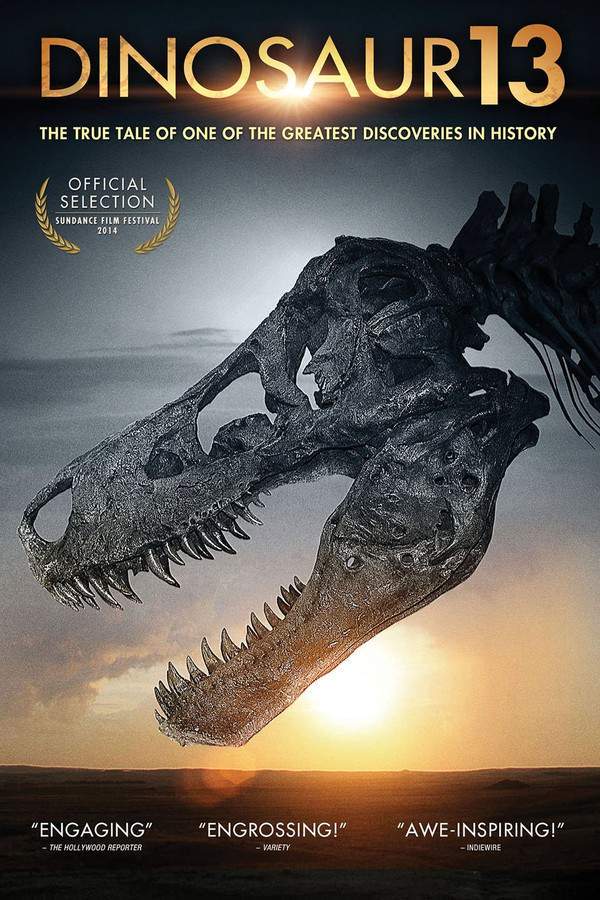
In 1990, paleontologist Peter Larson led a team that unearthed the largest and most complete Tyrannosaurus rex skeleton ever discovered. This monumental find ignited a fierce dispute with the U.S. government, prominent museums, and rival paleontologists, all vying for ownership of the prized fossil. The team’s struggle to secure their discovery also brought them into conflict with Native American tribes and forced them to confront the complexities of scientific ambition and the preservation of cultural heritage.
Warning: spoilers below!
Haven’t seen Dinosaur 13 yet? This summary contains major spoilers. Bookmark the page, watch the movie, and come back for the full breakdown. If you're ready, scroll on and relive the story!
Read the complete plot breakdown of Dinosaur 13 (2014), including all key story events, major twists, and the ending explained in detail. Discover what really happened—and what it all means.
The film chronicles the fascinating events of 1990, when American paleontologist Pete Larson and his dedicated team, including Terry Wentz, Susan Hendrickson, and Neal Larson, unearthed the largest and most complete Tyrannosaurus Rex specimen ever discovered, affectionately named “Sue.” The groundbreaking find took place in the badlands of South Dakota, where prior to this, only twelve T. Rex fossils had been located, each lacking significant completeness—averaging less than 40% intact. Remarkably, the extraction of Sue was completed in just 17 days, showcasing the team’s expertise and perseverance.
Maurice Williams, the landowner, received $5,000 from the Black Hills Institute, an organization founded by Pete, for the right to display Sue in their museum. This was conducted through a handshake agreement, without any formal documentation. Sue’s skeleton was approximately 80% complete, and initial estimates suggested it would take about two years for full preparation.
The Black Hills Institute experienced a surge in fame due to Sue, which accelerated their plans to open a larger museum. However, a twist occurred when the federal government intervened, claiming the fossil had been excavated from federal land. The FBI, along with the National Guard, seized the skeleton, despite lacking expertise in fossil preservation. To navigate this challenging situation, the Black Hills team lent their knowledge to assist in Sue’s transport to Rapid City, where she was kept secure in a shipping container at the South Dakota School of Mines & Technology.
What followed was a decade-long legal battle involving the FBI, the National Park Service, the Bureau of Indian Affairs, and Maurice Williams. As the media frenzy erupted, Maurice altered his original claims, stating that he had never actually sold Sue to the Black Hills Institute. It became apparent that Maurice, a member of an Indian tribe, had initially placed the parcel of land where Sue was found under trust with the U.S. government in 1969. This meant that he was required to obtain permission from the government before selling any discoveries from that land.
The first trial concluded in 1993, revealing that the fossil essentially constituted part of the land itself and that Maurice lacked the legal right to sell it, thus nullifying the sale and awarding ownership back to him. Following this ruling, the U.S. Parks Service initiated further investigations into the Black Hills Institute for allegedly engaging in illegal fossil trading. In November 1993, charges were filed against the institute and its members for 153 counts of illegal trading in fossils.
As the prosecution hesitated to proceed to trial, a newspaper article leaked the ongoing settlement negotiations, compelling the government to take their case to court. In 1995, the prosecution presented a six-week case asserting that the Black Hills team had illegally procured fossils from public lands and sold them, allegedly contributing to money laundering activities. Ultimately, the jury found the institute guilty on thirteen charges, comprising five misdemeanors and eight felonies. This verdict deemed a moral victory for the Black Hills Institute.
Upon appeal, only two felony charges against Pete Larson were upheld, while the rest were dropped. In a surprisingly harsh sentence, the judge assigned Pete two years in prison for transgressions that typically merited only a six-month term. Pete began serving his sentence in February 1996.
Meanwhile, Maurice decided to auction the fossils through Sotheby’s. Sue was once again transported—this time a staggering 1,800 miles to New York City before being stored for the auction. Pete was released after 18 months behind bars. At the Sotheby’s auction, Sue fetched an impressive $7.6 million, purchased by the Chicago Museum with backing from McDonald’s and Walt Disney. After an additional three years of preparation, Sue was finally unveiled to the public in 2000, attracting millions of visitors throughout the years. Notably, Pete Larson was not invited to the grand unveiling, and in the years following, he successfully unearthed nine more dinosaur specimens, although none would match the completeness of Sue.
Last Updated: November 08, 2024 at 00:16
Discover curated groups of movies connected by mood, themes, and story style. Browse collections built around emotion, atmosphere, and narrative focus to easily find films that match what you feel like watching right now.
True stories of ordinary people fighting powerful institutions in court.Find movies like Dinosaur 13 that chronicle tense, real-life legal conflicts. If you were captivated by the fight for the T-Rex Sue, explore other documentaries and dramas about high-stakes courtroom battles, government overreach, and the perseverance of individuals challenging powerful institutions.
Stories in this thread typically follow a linear, steady-paced chronology of a legal dispute, beginning with a major discovery or event that triggers conflict. The narrative escalates through investigation, indictment, and courtroom proceedings, placing immense pressure on the protagonists and testing their resolve over a long period.
Movies are grouped here based on their shared focus on a specific type of conflict: a lengthy, high-intensity legal battle where David must confront Goliath. They share a tense, frustrating tone, a heavy emotional weight due to the personal cost of the fight, and often a bittersweet resolution.
Real-life stories where the pursuit of a dream leads to profound personal cost.Explore documentaries similar to Dinosaur 13, which capture the thrilling discovery and subsequent heartbreaking struggle of a passion project. If you appreciated the story of ambition, cultural conflict, and bittersweet resolution, discover other true stories about monumental achievements overshadowed by complex and painful consequences.
The narrative pattern follows a classic rise and fall structure, beginning with the euphoria of a significant achievement. This is soon complicated by external forces—be they legal, ethical, or corporate—leading to a devastating conflict. The journey concludes not with clear victory, but with a complex, bittersweet acknowledgment of what was gained and what was irrevocably lost.
These films are united by their emotional arc: they begin with hope and ambition, descend into tense conflict and heavy emotional weight, and resolve with a poignant, bittersweet feeling. They share a steady pacing that allows the full impact of the tragedy to unfold, making the viewer deeply feel the injustice alongside the subjects.
Don't stop at just watching — explore Dinosaur 13 in full detail. From the complete plot summary and scene-by-scene timeline to character breakdowns, thematic analysis, and a deep dive into the ending — every page helps you truly understand what Dinosaur 13 is all about. Plus, discover what's next after the movie.
Track the full timeline of Dinosaur 13 with every major event arranged chronologically. Perfect for decoding non-linear storytelling, flashbacks, or parallel narratives with a clear scene-by-scene breakdown.
Discover the characters, locations, and core themes that shape Dinosaur 13. Get insights into symbolic elements, setting significance, and deeper narrative meaning — ideal for thematic analysis and movie breakdowns.
Get a quick, spoiler-free overview of Dinosaur 13 that covers the main plot points and key details without revealing any major twists or spoilers. Perfect for those who want to know what to expect before diving in.
Visit What's After the Movie to explore more about Dinosaur 13: box office results, cast and crew info, production details, post-credit scenes, and external links — all in one place for movie fans and researchers.
Discover movies like Dinosaur 13 that share similar genres, themes, and storytelling elements. Whether you’re drawn to the atmosphere, character arcs, or plot structure, these curated recommendations will help you explore more films you’ll love.
Dinosaur 13 (2014) Scene-by-Scene Movie Timeline
Dinosaur 13 (2014) Movie Characters, Themes & Settings
Dinosaur 13 (2014) Spoiler-Free Summary & Key Flow
Movies Like Dinosaur 13 – Similar Titles You’ll Enjoy
Jurassic Park (1993) Movie Recap & Themes
Dinosaur (2000) Detailed Story Recap
Dinotasia (2012) Movie Recap & Themes
The Dinosaur Hunter (2000) Film Overview & Timeline
When Dinosaurs Roamed America (2001) Film Overview & Timeline
Dinosaurs Alive (2007) Spoiler-Packed Plot Recap
Dinosaurs: Giants of Patagonia (2007) Detailed Story Recap
Sea Monsters: A Prehistoric Adventure (2007) Ending Explained & Film Insights
Dinosaur Planet (1000) Movie Recap & Themes
Dinosaur! (1985) Plot Summary & Ending Explained
Dinosaurus! (1960) Ending Explained & Film Insights
Bizarre Dinosaurs (2009) Film Overview & Timeline
Dinosaur Hunters (1996) Full Summary & Key Details
The Dinosaurs! (1000) Movie Recap & Themes
Dinosaurs Decoded (2009) Film Overview & Timeline