Plot Explained Spoilers guaranteed!
Plot Explained

Browse by genre

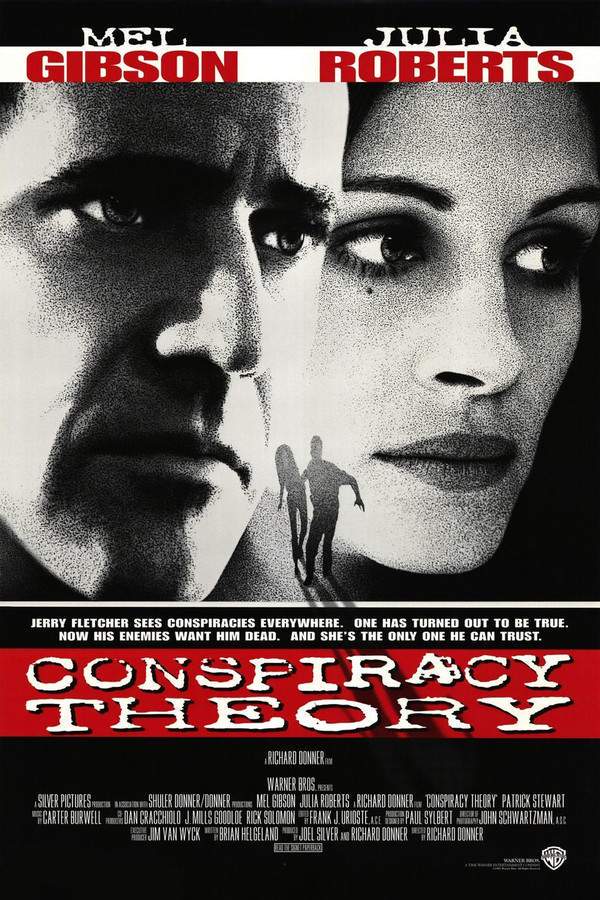
Conspiracy Theory (1997) movie poster

Characters & Themes

Conspiracy Theory (1997) Characters, Setting & Themes Explained

Release, runtime and language
1997 · 135 min · English
Loading streaming availability…
Directed by
Richard Donner
Starring
Julia Roberts, Mel Gibson

Jerry Fletcher, a paranoid cab driver, finds solace in his elaborate theories. His life takes a dangerous turn when he meets Alice Sutton, a government lawyer, and they develop a romantic connection. Jerry believes a sinister conspiracy is at play, and he must convince Alice that his fears are based in reality, not delusion. As he investigates, he uncovers a plot that puts both of their lives in peril, forcing them to confront a powerful and shadowy organization.

On this page (9)
  1. 1 Where to watch
  2. 2 Characters explained (3)
  3. 3 Where & when it takes place
  4. 4 Themes & meaning (3)
  5. 5 Character & meaning questions
  6. 6 Movie threads
  7. 7 Movies like Conspiracy Theory
  8. 8 Categories
  9. 9 Every angle
Loading streaming availability…

3 main characters · contains spoilers

Conspiracy Theory Characters Explained: Who Is Who

The main characters of Conspiracy Theory (1997), heroes and villains: what drives them, how they change over the course of the story and what each of them reveals about the film's bigger ideas.

  • Jerry Fletcher (Julia Roberts)

    Jerry Fletcher is a New York City taxi driver whose eccentricities and paranoia mask a more profound truth. His obsessive nature drives him into a web of conspiracy, where he balances resourcefulness with vulnerability. Jerry’s journey highlights his struggle against manipulation, revealing layers of complexity as he navigates a treacherous world.

    • 🧑‍💼 Protagonist
    • 🕵️‍♂️ Paranoia
    • 📜 Conspiracy Theorist
  • Alice Sutton (Mel Gibson)

    Alice Sutton is a dedicated lawyer at the U.S. Justice Department, characterized by her determination and commitment to uncovering the truth. As the narrative unfolds, Alice’s initial skepticism transforms into a blend of intrigue and danger as she partners with Jerry. Her journey into the world of conspiracies becomes deeply personal, forcing her to confront her beliefs and the implications of her father's past.

    • 👩‍⚖️ Lawyer
    • 🔍 Investigator
    • 🤔 Skeptical
  • FBI Agent Lowry (Mel Gibson)

    Lowry initially presents himself as an FBI agent pursuing Jerry but is later revealed to be part of a much larger conspiracy. His character embodies betrayal and moral ambiguity, as he manipulates situations to achieve his goals. The tension between his role and true intentions creates a significant conflict within the narrative.

    • 👮‍♂️ Authority
    • 🥷 Covert Operative
    • ⚔️ Antagonist

Last updated: October 22, 2024 at 22:32

Was this helpful?

Setting

Where and When Does Conspiracy Theory Take Place?

The setting of Conspiracy Theory (1997): the year and time period, the places and locations, and how they shape the characters, the mood and the tension of the story.

Time period

The film unfolds in a contemporary setting reflecting the late 20th century, capturing the societal distrust in institutions and the emergence of conspiracy theories during that era. The narrative is set against the backdrop of historical events that resonate through its plot, signifying a world where truth is distorted and manipulated.

Location

New York City, Connecticut, Ravenswood Generating Station

New York City serves as the bustling backdrop of the film, where the anonymity of urban life contrasts with Jerry's intense paranoia. The Ravenswood Generating Station is a significant location for the climactic confrontation between the protagonists and their adversaries, symbolizing industrial power and hidden dangers. The lush countryside of Connecticut represents a more peaceful yet deceptive setting, where the complexities of their relationship unfold amidst an undercurrent of tension.

  • 🏙️ City
  • 🌄 Countryside
  • 🔌 Power Station

Last updated: October 22, 2024 at 22:32

Was this helpful?

3 major themes

Conspiracy Theory Meaning: Themes & Message Explained

What is Conspiracy Theory (1997) really about? The emotional, social and philosophical themes the film keeps returning to, its symbolism and the message beneath the surface.

  • Conspiracy

    The theme of conspiracy permeates the film as Jerry's obsession with hidden truths drives the narrative forward. It raises questions about the nature of reality and the lengths individuals will go to uncover or conceal secrets. This theme is exemplified through Jerry's complex interactions with Alice and the shadowy figures that loom throughout their journey.

  • Trust

    Trust is a central theme, particularly in the relationship between Jerry and Alice. As Alice discovers Jerry's extensive surveillance of her, the dynamics of suspicion and loyalty are tested. The film explores the fragile nature of trust amidst chaos, as alliances shift and motives are revealed, culminating in profound moral dilemmas.

  • Betrayal

    Betrayal echoes throughout the film, particularly in the revelation of Jerry's past and the true identity of Lowry. The erosion of trust culminates in dramatic confrontations that challenge characters' perceptions of loyalty and deception. This theme is intensified by the emotional stakes involved in Alice's journey to uncover the truth about Jerry's intentions and her father's legacy.

Last updated: October 22, 2024 at 22:32

Was this helpful?

Character & theme questions

Conspiracy Theory Characters & Meaning: Your Questions Answered

The questions people ask about Conspiracy Theory (1997): who the characters really are, their relationships, what the symbols mean, where it takes place and what the movie is really about. Each answer contains spoilers.

Q1

Why is New York City the primary setting?

New York City serves as the bustling backdrop where the anonymity of urban life contrasts sharply with Jerry Fletcher's intense paranoia. The city represents a world where anyone can disappear, making Jerry's conspiracy theories feel both paranoid and strangely justified within the crowded metropolis.

  • new york city
  • setting
  • urban
  • paranoia
  • anonymity
Q2

What does the Connecticut setting represent?

The lush countryside of Connecticut represents a more peaceful yet deceptive setting, where the complexities of Jerry and Alice's relationship unfold amidst an undercurrent of tension. It symbolizes the illusion of safety and normalcy that contrasts with the dangerous conspiracy underworld.

  • connecticut
  • countryside
  • setting
  • safety
  • deception
Q3

What is the significance of the Ravenswood Generating Station?

The Ravenswood Generating Station serves as the climactic location where the protagonists confront their adversaries. The power station symbolizes industrial might and the hidden dangers that lurk beneath everyday infrastructure, representing how conspiracy operates within systems people take for granted.

  • ravenswood
  • power station
  • climax
  • confrontation
  • industrial
Q4

How does the conspiracy theme drive the story?

The conspiracy theme permeates the film as Jerry's obsession with hidden truths drives the entire narrative. It raises questions about the nature of reality and how far individuals will go to uncover or conceal secrets, exemplified through Jerry's complex interactions with Alice and the shadowy figures that loom throughout their journey.

  • conspiracy
  • hidden truth
  • reality
  • secrets
  • paranoia
Q5

How does trust function between Jerry and Alice?

Trust becomes a central theme in the relationship between Jerry and Alice. As Alice discovers Jerry's extensive surveillance of her, the dynamics of suspicion and loyalty are tested. The film explores the fragile nature of trust amidst chaos, as alliances shift and motives are revealed, leading to profound moral dilemmas.

  • trust
  • relationship
  • suspicion
  • loyalty
  • alice sutton
  • jerry fletcher
Q6

What role does betrayal play in the film?

Betrayal echoes throughout the film, particularly in the revelation of Jerry's past and the true identity of Lowry. The erosion of trust culminates in dramatic confrontations that challenge characters' perceptions of loyalty and deception, intensified by the emotional stakes in Alice's journey to uncover the truth about her father's legacy.

  • betrayal
  • lowry
  • loyalty
  • deception
  • character identity
Q7

Who is Jerry Fletcher and what defines him?

Jerry Fletcher is a New York City taxi driver whose eccentricities and paranoia mask a more profound truth. His obsessive nature draws him into a web of conspiracy, where he balances resourcefulness with vulnerability. His struggle against manipulation reveals layers of complexity as he navigates a treacherous world.

  • jerry fletcher
  • taxi driver
  • paranoia
  • protagonist
  • conspiracy
Q8

What is Alice Sutton's role in the story?

Alice Sutton is a dedicated lawyer at the U.S. Justice Department, characterized by her determination and commitment to uncovering the truth. Her initial skepticism transforms into intrigue and danger as she partners with Jerry, making her journey into the world of conspiracies deeply personal.

  • alice sutton
  • lawyer
  • justice department
  • truth
  • protagonist
Q9

Who is FBI Agent Lowry really?

FBI Agent Lowry initially presents himself as an agent pursuing Jerry but is later revealed to be part of a much larger conspiracy. His character embodies betrayal and moral ambiguity, as he manipulates situations to achieve hidden goals, creating significant conflict within the narrative.

  • lowry
  • fbi
  • betrayal
  • conspiracy
  • antagonist
Q10

Why is the film set in the late 1990s?

The film unfolds in a contemporary setting reflecting the late 20th century, capturing the societal distrust in institutions and the emergence of conspiracy theories during that era. The narrative is set against historical events that resonate through its plot, signifying a world where truth is distorted and manipulated.

  • 1990s
  • era
  • contemporary
  • distrust
  • institutions

Movie threads

More Movies Like Conspiracy Theory, by Mood & Story

Curated lists built around what makes Conspiracy Theory tick: the same mood, the same kind of story or the same emotional payoff. Each list explains why these movies belong together.

Paranoid thrillers like Conspiracy Theory

Stories where one person's conspiracy theory turns out to be dangerously real. If you enjoyed the tense, high-stakes chase in Conspiracy Theory, you'll find more movies like it here. This collection features fast-paced thrillers where characters battle powerful conspiracies, blending psychological tension with action-packed survival stories.

  • paranoid
  • suspenseful
  • thrilling
  • anxious
  • dark
  • conspiracy
  • Tone: tense, paranoid, dark
  • Pacing: fast, relentless
Why these movies?

The story pattern: The narrative typically follows an isolated individual, often dismissed as paranoid, who stumbles upon a sinister truth. As they investigate, the threat becomes terrifyingly real, leading to a frantic race against time filled with captures, escapes, and psychological warfare against an elusive enemy.

Why they belong together: Movies in this thread share a core vibe of intense paranoia and relentless pursuit. They are grouped by their high-tension atmosphere, fast pacing, and the central theme of an ordinary person confronting a vast, secretive power, creating a consistently thrilling and anxious viewing experience.
Thrillers with a romantic connection like Conspiracy Theory

A romantic bond forms under extreme pressure during a life-or-death crisis. For viewers who liked the dynamic between Jerry and Alice in Conspiracy Theory, this list features similar movies that blend high-stakes thriller plots with a compelling romantic storyline. Discover stories where love and survival are deeply intertwined.

  • romantic
  • thrilling
  • suspenseful
  • bittersweet
  • dangerous
  • emotional
  • Tone: tense, bittersweet, heavy
  • Pacing: fast, emotional
Why these movies?

The story pattern: The plot intertwines a high-stakes external conflict—such as being pursued or uncovering a conspiracy—with the development of a central romantic relationship. The danger accelerates their bond, creating a partnership built on necessity that evolves into genuine connection, often culminating in a sacrifice or separation for the greater good.

Why they belong together: These films are grouped by their unique blend of heavy emotional weight, significant romance, and high-intensity thriller elements. They share a specific emotional mix where love provides a glimmer of hope or motivation within a dark, chaotic, and suspenseful narrative.

If you liked this

Movies Like Conspiracy Theory

Similar movies to Conspiracy Theory: the same genre, themes or kind of story. Each one comes with its own plot summary, timeline and ending explained.

Browse all movie summaries

Categories

Movie Lists Featuring Conspiracy Theory

Conspiracy Theory appears in these hand-built movie categories. Each one groups movies by a specific mood, theme or story type, with their plot summaries and endings explained.

View all movie categories

Every angle

Conspiracy Theory (1997) Explained: Plot, Timeline & Characters

Everything about Conspiracy Theory in one place: what happens in the plot summary, the timeline in chronological order, the characters and meaning and a spoiler-free summary. What's After the Movie adds the cast, box office and post-credit scenes.

Coming soon on iOS and Android

The Plot Explained Movie Summary App

Plot summaries, endings explained and timelines on your phone. Catch up on any movie in minutes, save your favorites and never miss a twist again.

Be the first to know when we launch. Your email stays private, always.

Learn more about the app