













Plot Explained Spoilers guaranteed!
Plot Explained

Browse by genre

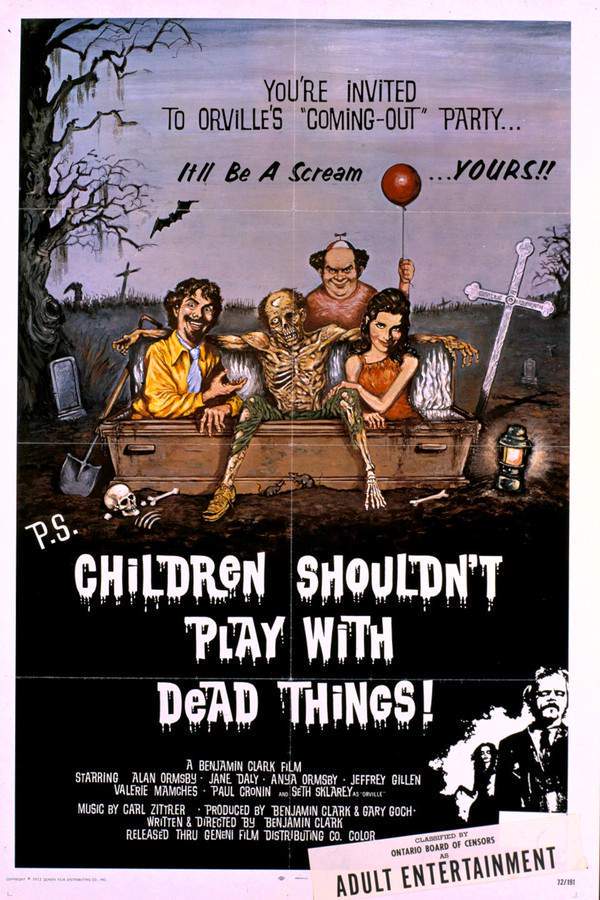
Children Shouldn't Play with Dead Things (1972) movie poster

Characters & Themes

Children Shouldn't Play with Dead Things (1972) Characters, Setting & Themes Explained

Release, runtime and language
1972 · 87 min · English
JustWatch #12,363 11
Directed by
Bob Clark
Starring
Bruce Solomon, Alecs Baird, Anya Ormsby, Jane Daly, Jeff Gillen, Paul Cronin

A group of novice paranormal enthusiasts tries to contact the spirit world, but their séance goes horribly wrong. They accidentally summon Orville, a talkative corpse, unleashing a series of increasingly bizarre and humorous events. The inexperienced necromancer and his friends must deal with the chaotic consequences of their botched ritual as the night unfolds.

On this page (8)
  1. 1 Where to watch
  2. 2 Characters explained (5)
  3. 3 Where & when it takes place
  4. 4 Themes & meaning (3)
  5. 5 Character & meaning questions
  6. 6 Movie threads
  7. 7 Movies like Children Shouldn't Play with Dead Things
  8. 8 Every angle

Where to watch

Where to Watch Children Shouldn't Play with Dead Things (1972)

Where can you watch Children Shouldn't Play with Dead Things? Stream, rent or buy it in the US, including on Bloodstream, Eternal Family and FlixFling: current JustWatch availability with up-to-date prices.

Streaming availability powered by JustWatch

5 main characters · contains spoilers

Children Shouldn't Play with Dead Things Characters Explained: Who Is Who

The main characters of Children Shouldn't Play with Dead Things (1972), heroes and villains: what drives them, how they change over the course of the story and what each of them reveals about the film's bigger ideas.

  • Alan Ormsby

    Alan is the malevolent director who orchestrates the troupe's descent into horror. Driven by a desire for control and spectacle, his character shifts from a charismatic leader to a self-serving antagonist. His actions propel the plot into chaos as he experiments with dark forces without regard for the safety of his 'children'.

    • 🎭 Director
    • 👻 Manipulative
  • Anya Ormsby

    Anya is caught between loyalty and survival, torn by her trust in Alan and the escalating terror their situation evokes. Her character embodies the role of a victim who ultimately faces the true horrors of betrayal. Her fate reveals the dire consequences of naive loyalty when confronted with malevolence.

    • 🎭 Victim
    • 🌀 Torn
  • Paul

    played by Paul Cronin

    Paul is one of the troupe members who exhibits bravery amidst the unraveling chaos. His decision to escape highlights the human instinct for survival but ultimately leads to tragedy. He represents those who confront evil but are overpowered by forces they cannot comprehend.

    • 💪 Brave
    • 😔 Tragic
  • Jeff Gillen

    Jeff is another troupe member swept into the horrifying events, illustrating the group's growing desperation as they face the undead threat. His character adds depth to the ensemble, portraying the varying reactions to crisis within the group dynamic. His fate serves as a cautionary tale woven into the story.

    • 😱 Fearful
    • 🎭 Ensemble
  • Valerie Mamches

    Valerie is part of the theatre troupe and faces the chilling adversities along with her friends. Her role enhances the sense of camaraderie among the group, yet also symbolizes the fragility of life when entangled in supernatural horrors. Her demise is a reflection of the group's misplaced trust in Alan.

    • 🎭 Comrade
    • ⚰️ Fragile

Last updated: October 22, 2024 at 23:27

Was this helpful?

Setting

Where and When Does Children Shouldn't Play with Dead Things Take Place?

The setting of Children Shouldn't Play with Dead Things (1972): the year and time period, the places and locations, and how they shape the characters, the mood and the tension of the story.

Time period

The movie has a contemporary setting, where modern themes intertwine with traditional horror elements. As night falls, fears amplify, showcasing a blend of festive anticipation and the looming threat of the supernatural.

Location

mysterious island, quaint cottage

The mysterious island serves as the eerie backdrop for a chilling theatre troupe's adventure, known for its sinister history that fuels Alan's dark intentions. The quaint cottage, where much of the horror unfolds, is an old structure with a festive exterior that contrasts sharply with the grotesque events taking place within.

  • 🏝️ Island
  • 🏡 Cottage

Last updated: October 22, 2024 at 23:27

Was this helpful?

3 major themes

Children Shouldn't Play with Dead Things Meaning: Themes & Message Explained

What is Children Shouldn't Play with Dead Things (1972) really about? The emotional, social and philosophical themes the film keeps returning to, its symbolism and the message beneath the surface.

  • Death

    Death is a central theme that drives the plot, appearing through the summoning of the dead and the resulting chaos. The film explores the consequences of meddling with life and death, ultimately illustrating how unresolved souls can disrupt the living. Alan's dark obsession with death transforms celebration into horror.

  • Betrayal

    Betrayal manifests dramatically as Alan sacrifices Anya to save himself, reflecting the darkest aspects of human nature under duress. The betrayal is not only personal but also extends to the group's trust in the folly of their leader. This theme is embodied during the harrowing moments as survival instincts clash with human morality.

  • Supernatural

    The supernatural elements surface through Alan's dark rituals and the rising of the undead. This evokes a sense of dread and highlights humanity’s frail grasp over the forces beyond comprehension. The blurring lines between life and death magnify the horror and underscore the consequences of spiritual tampering.

Last updated: October 22, 2024 at 23:27

Was this helpful?

Character & theme questions

Children Shouldn't Play with Dead Things Characters & Meaning: Your Questions Answered

The questions people ask about Children Shouldn't Play with Dead Things (1972): who the characters really are, their relationships, what the symbols mean, where it takes place and what the movie is really about. Each answer contains spoilers.

Q1

Where is the movie set?

The film takes place on a mysterious island off the coast, where a theatre troupe arrives for what should be a weekend getaway. Much of the horror unfolds within a quaint cottage, an old structure with a festive exterior that sharply contrasts with the grotesque events inside. The isolated island setting amplifies the group's vulnerability and fuels Alan Ormsby's dark intentions.

  • island setting
  • cottage location
  • remote setting
  • horror movie location
Q2

What time period does the movie take place in?

The movie has a contemporary setting, appearing to take place in modern times. The events unfold at night, blending festive anticipation with the looming threat of the supernatural. This contemporary backdrop allows traditional horror elements to feel grounded while the darkness amplifies the troupe's fears.

  • time period
  • modern setting
  • contemporary horror
  • nighttime
Q3

What role does death play in the film?

Death is the central theme driving the plot, manifesting through the group's attempted séance and summoning of the dead. The film explores the consequences of meddling with life and death, showing how unresolved souls can disrupt the living. Alan Ormsby's dark obsession with death transforms what begins as celebration into pure horror.

  • death theme
  • necromancy
  • undead
  • life and death
Q4

How is betrayal portrayed in the story?

Betrayal manifests dramatically when Alan sacrifices Anya to save himself, revealing the darkest aspects of human nature under duress. This personal betrayal extends to the group's trust in their leader's folly. The theme emerges during harrowing moments when survival instincts clash with human morality, ultimately proving fatal for those who remain loyal.

  • betrayal
  • alan anya sacrifice
  • survival instinct
  • loyalty
Q5

What supernatural elements appear in the movie?

The supernatural surfaces through Alan's dark rituals and the raising of the undead, specifically the corpse of Orville. These elements evoke dread while highlighting humanity's fragile grasp over forces beyond comprehension. The blurring of lines between life and death amplifies the horror and underscores the dangerous consequences of spiritual tampering.

  • supernatural
  • undead
  • orville corpse
  • ritual
  • zombie
Q6

Who is Alan Ormsby?

Alan Ormsby is the malevolent director who orchestrates the theatre troupe's descent into horror. Initially appearing as a charismatic leader, his character transforms into a self-serving antagonist as the night progresses. Driven by a desire for control and spectacle, he experiments with dark forces without regard for the safety of his fellow troupe members.

  • alan ormsby
  • director
  • leader
  • antagonist
  • necromancer
Q7

Who is Anya Ormsby?

Anya Ormsby is Alan's partner who finds herself caught between loyalty and survival. Torn by her trust in Alan and the escalating terror surrounding them, she embodies the role of victim throughout the film. Her fate reveals the dire consequences of naive loyalty when confronted with true malevolence.

  • anya ormsby
  • victim
  • loyalty
  • troupe member
Q8

Who are the main characters in the film?

The core cast consists of Alan Ormsby (the director and orchestrator of the doomed ritual), Anya Ormsby (his partner), Paul (a troupe member who attempts escape), Jeff Gillen (another troupe member facing the undead threat), and Valerie Mamches (who represents the group's misplaced trust). Each character represents different responses to crisis, some confront evil, others remain loyal, but all face tragic fates.

  • paul
  • jeff gillen
  • valerie mamches
  • cast
  • troupe members
Q9

What is the tone of the movie?

The film blends horror with dark comedy, a hallmark of early 1970s cult cinema. While the subject matter involves death, desecration, and betrayal, the premise includes bizarre and humorous events that prevent it from feeling overly heavy. The tone shifts from atmospheric build-up to fast-paced siege once the dead rise, creating variable pacing throughout.

  • tone
  • comedy horror blend
  • cult film
  • b-movie
  • dark comedy
Q10

What is the significance of the cottage setting?

The quaint cottage serves as the primary location where much of the horror unfolds. Its old structure and festive exterior create a stark contrast with the grotesque events taking place within, this juxtaposition heightens the unsettling atmosphere. The cottage becomes a trap as the troupe cannot escape the island and must face the rising dead inside its walls.

  • cottage
  • house setting
  • isolated location
  • trapped setting
Q11

What is the ending tone of the movie?

The ending feel is bleak, with main characters being systematically killed off throughout the film. The final shot implies the zombie threat is spreading unchecked beyond the island. Despite the dark subject matter, the film's comedic elements provide a contrasting layer, resulting in a unique blend of horror and comedy typical of cult films from this era.

  • ending
  • bleak conclusion
  • zombie spreading
  • final shot
  • cult classic

Movie threads

More Movies Like Children Shouldn't Play with Dead Things, by Mood & Story

Curated lists built around what makes Children Shouldn't Play with Dead Things tick: the same mood, the same kind of story or the same emotional payoff. Each list explains why these movies belong together.

Macabre Black Comedy movies like Children Shouldn't Play with Dead Things

Where attempts at summoning forces lead to darkly funny, disastrous consequences. If you liked the mix of horror and humor in Children Shouldn't Play with Dead Things, this thread features movies where supernatural hubris leads to chaotic, darkly funny outcomes. Find similar stories with botched rituals, undead antics, and a cynical sense of humor.

  • macabre
  • humerous
  • chaotic
  • gory
  • cynical
  • dark comedy
  • Tone: dark, humorous
  • Pacing: variable, escalating
Why these movies?

The story pattern: The narrative typically revolves around a group of arrogant or foolish characters who deliberately or accidentally tamper with dark forces. Their initial actions are often played for laughs, but the consequences quickly escalate into genuine danger, weaving a story of survival that is undercut by the absurdity of their predicament.

Why they belong together: They are grouped by their unique tonal blend of dark horror and irreverent comedy. They share a thematic focus on the folly of meddling with the unknown and a similar structure where humor arises from the escalating chaos of a situation gone horribly wrong.

Bleak Siege Horror stories similar to Children Shouldn't Play with Dead Things

Trapped groups face overwhelming supernatural threats with little hope of survival. Fans of the frantic survival and hopeless ending in Children Shouldn't Play with Dead Things will find similar movies here. This thread features low-budget horror where characters are trapped and besieged by zombies or other monsters, leading to inevitable, bleak conclusions.

  • anxious
  • oppressive
  • gory
  • hopeless
  • claustrophobic
  • frantic
  • Tone: bleak, oppressive
  • Pacing: variable, fast-paced climax
Why these movies?

The story pattern: The narrative pattern involves a group of characters becoming trapped in a remote location. An external threat—like a horde of zombies—is unleashed, leading to a desperate fight for survival. The story focuses on the breakdown of order and the characters' futile attempts to escape, culminating in a defeat that underscores the unstoppable nature of the threat.

Why they belong together: They share a core experience of claustrophobic survival against impossible odds, a high-intensity pacing that builds to a frantic siege, and a consistently bleak tone. The low-budget charm and practical effects create a specific, raw aesthetic that binds these films together.

If you liked this

Movies Like Children Shouldn't Play with Dead Things

Similar movies to Children Shouldn't Play with Dead Things: the same genre, themes or kind of story. Each one comes with its own plot summary, timeline and ending explained.

Browse all movie summaries

Every angle

Children Shouldn't Play with Dead Things (1972) Explained: Plot, Timeline & Characters

Everything about Children Shouldn't Play with Dead Things in one place: what happens in the plot summary, the timeline in chronological order, the characters and meaning and a spoiler-free summary. What's After the Movie adds the cast, box office and post-credit scenes.

Coming soon on iOS and Android

The Plot Explained Movie Summary App

Plot summaries, endings explained and timelines on your phone. Catch up on any movie in minutes, save your favorites and never miss a twist again.

Be the first to know when we launch. Your email stays private, always.

Learn more about the app