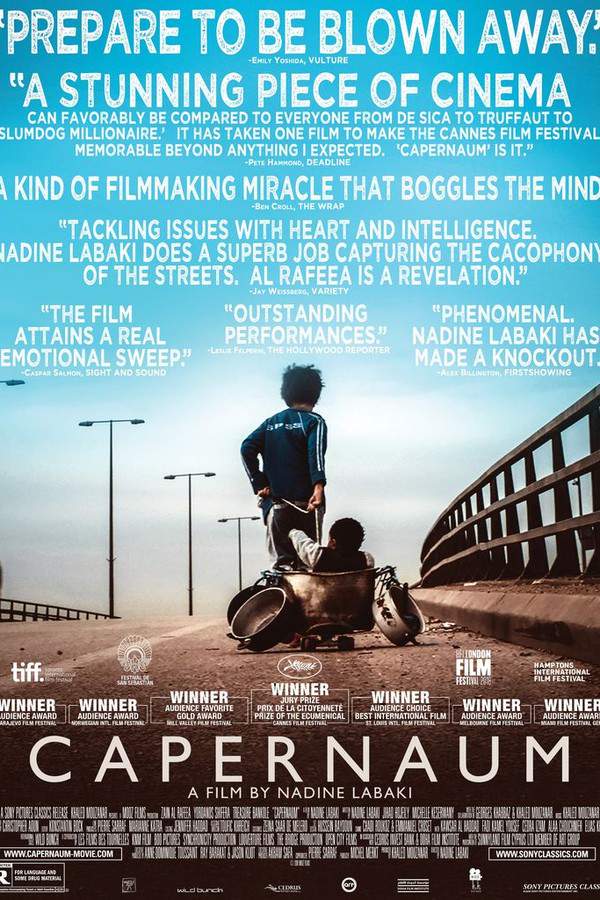
A defiant young boy, Zain, takes drastic action by suing his parents for bringing him into a life of hardship. This bold move sets in motion a compelling journey through the challenging streets of Beirut. He encounters various people and faces numerous obstacles, demonstrating remarkable resilience and a search for a better existence amidst difficult circumstances.
Warning: spoilers below!
Haven’t seen Capernaum yet? This summary contains major spoilers. Bookmark the page, watch the movie, and come back for the full breakdown. If you're ready, scroll on and relive the story!
Read the complete plot breakdown of Capernaum (2018), including all key story events, major twists, and the ending explained in detail. Discover what really happened—and what it all means.
Zain El Hajj is a 12-year-old boy from the impoverished neighborhoods of Beirut, currently serving a five-year sentence in Roumieh Prison for stabbing a man he refers to disdainfully as a “son of a bitch.” The irony of Zain’s predicament is that neither he nor his parents can specify his birth date, as they have never obtained an official birth certificate. His current situation leads him to take the unprecedented step of bringing his parents, his mother Souad and father Selim, to court for neglect. When the judge inquires about his motive for suing them, Zain simply states, > “Because I was born.”
As the narrative unfolds, we flash back to the tumultuous months leading up to Zain’s arrest. His life is a daily struggle, as he takes care of seven younger siblings who, instead of pursuing education, engage in various schemes for money. Zain turns to illegal activities, using forged prescriptions to obtain tramadol pills, which he sells to drug addicts in prison. In efforts to support his family, he also works as a delivery boy for Assad, their landlord, often caught in the harsh realities of their existence.
In a particular incident, Zain aids his 11-year-old sister Sahar in hiding evidence of her first menstruation, fearing she will be forced into marriage with Assad if their parents discover that she is now of childbearing age. Zain dreams of escaping their grim life with Sahar, but tragedy strikes as their parents marry her off to Assad in a bargain involving two chickens. Infuriated, Zain runs away and boards a bus, where he encounters an elderly man known as “Cockroach Man,” who wears a knock-off Spider-Man costume. The man leads Zain to Luna Park, where Zain finds solace in the beauty of a sunset while riding the Ferris wheel.
At Luna Park, Zain meets Rahil, a young Ethiopian migrant worker who takes a compassionate interest in him. She allows Zain to stay with her in her makeshift home in return for babysitting her infant son, Yonas. Unfortunately, Rahil faces her own set of challenges as her forged documents are about to expire, jeopardizing her ability to remain in the country. Aspro, who has the power to renew her documents, exploits Rahil’s vulnerable situation, proposing to help her only if she relinquishes Yonas for adoption. Despite the dire consequences, she adamantly refuses.
Tragedy deepens when Rahil is arrested, and Zain, now solely responsible for caring for Yonas, claims the two are siblings. In a desperate bid to survive, he begins selling tramadol once again. During an outing at Souk Al Ahad, Zain meets Maysoun, a Syrian refugee who has aspirations of being sent to Sweden by Aspro. Driven by the desire for a better life, Zain reluctantly agrees to give Yonas to Aspro in exchange for his own escape plan.
Upon returning home to secure his identification, Zain is met with laughter and disrespect from his parents, whom he has effectively disowned due to their treatment of him. In a shocking revelation, they inform him that Sahar has died during childbirth, pushing Zain to a breaking point. Fueled by rage, he attacks Assad with a knife and finds himself arrested, marking the beginning of his harsh journey in prison.
During a visit, Zain learns from his mother that she is once again expecting a child, naming it Sahar in a twisted homage to her deceased sister. Overwhelmed with disgust at his mother’s seeming indifference to the grief they have endured, Zain opts to cut ties with her, labeling her “heartless.” Using his time in prison to spotlight the negligence of parents like his own, he contacts the media to advocate for children in similar situations, declaring his intent to sue for their unfit parenting.
Zain’s courage leads to a turning point when he states in court, “I want them to stop having children,” emphasizing the suffering his family has inflicted upon him. His efforts result in a raid on Aspro’s house, leading to the reunion of separated children with their parents, including Yonas and Rahil.
In a poignant moment of reinstating his identity, Zain poses for a photo for his ID card. The photographer lightens the mood with a joke, saying, “It’s your ID card, not your death certificate,” prompting Zain to crack a smile for the first time.
Last Updated: November 15, 2024 at 19:21
Still wondering what the ending of Capernaum (2018) really means? Here’s a spoiler-heavy breakdown of the final scene, major twists, and the deeper themes that shape the film’s conclusion.
Capernaum’s ending is powerful and thought-provoking. Throughout the film, Zain, a boy from the slums of Beirut, has been fighting against a system that neglects and abuses the vulnerable. When he sues his parents for giving him life in such harsh conditions, it symbolizes his demand for accountability—they created a life filled with suffering that he no longer wishes to endure. The court dismisses his case, but Zain’s act of rebellion sends a clear message about the injustices faced by children like him.
In the final scenes, Zain is living as a refugee in Norway, attending school for the first time and experiencing some stability and care he never had before. This stark contrast highlights the resilience of the human spirit and the possibility of hope even after enduring profound hardship. The film’s closing shot is both raw and poignant, showing Zain sitting in a classroom, with his face filled with a mixture of hope and uncertainty. It underscores that despite the chaos and pain he has endured, there remains a chance for renewal and a brighter future. The ending leaves viewers contemplating the cycles of violence and neglect that children like Zain are caught in, urging us to reflect on the social systems that allow such suffering to persist. Ultimately, Capernaum is a devastating yet hopeful reminder of the importance of empathy and justice in a world often indifferent to children’s lives.
Last Updated: June 25, 2025 at 08:58
Discover curated groups of movies connected by mood, themes, and story style. Browse collections built around emotion, atmosphere, and narrative focus to easily find films that match what you feel like watching right now.
Films where children navigate harsh realities and confront adult failures.For viewers seeking movies like Capernaum, this list highlights powerful dramas where children face immense hardship. If you were moved by Zain's story, these films feature similar journeys of young protagonists navigating poverty, neglect, and injustice, telling profound stories through a child's resilient gaze.
These narratives often follow a child's linear journey through a series of increasingly harsh challenges. The plot is driven by the protagonist's desperate attempts to secure basic needs—safety, food, love—in an environment of systemic neglect. The emotional core is the tension between the child's inherent innocence and the cruel realities they are forced to endure.
The movies grouped here share a focus on the child's perspective within dire social conditions. They are united by a heavy emotional weight, a dark tone underscored by a sliver of hope from the protagonist's spirit, and a steady pacing that immerses the viewer in the relentless struggle for survival.
Stories where hard-won hope is earned through immense suffering.If the ending of Capernaum resonated with you, this collection features similar stories of bittersweet resilience. These movies, like Capernaum, follow characters enduring great hardship, culminating in an ending that is both hopeful and heartbreaking—a small light after a long, dark tunnel.
The narrative pattern involves a relentless accumulation of hardship and trauma, testing the protagonist's will to continue. The climax or resolution is not a traditional 'happy ending' but rather a hard-fought, often symbolic, achievement—like reclaiming one's identity or securing a minor but crucial improvement. The emotional arc is one of endurance rather than triumph.
These films are grouped by their shared emotional mix: a dark tone dominated by suffering, a high-intensity viewing experience, and a conclusively bittersweet feel. The pacing is typically steady, building pressure, and the emotional weight is consistently heavy, making the final glimmer of hope feel earned and profound.
Don't stop at just watching — explore Capernaum in full detail. From the complete plot summary and scene-by-scene timeline to character breakdowns, thematic analysis, and a deep dive into the ending — every page helps you truly understand what Capernaum is all about. Plus, discover what's next after the movie.
Track the full timeline of Capernaum with every major event arranged chronologically. Perfect for decoding non-linear storytelling, flashbacks, or parallel narratives with a clear scene-by-scene breakdown.
Discover the characters, locations, and core themes that shape Capernaum. Get insights into symbolic elements, setting significance, and deeper narrative meaning — ideal for thematic analysis and movie breakdowns.
What really happened at the end of Capernaum? This detailed ending explained page breaks down final scenes, hidden clues, and alternate interpretations with expert analysis and viewer theories.
Get a quick, spoiler-free overview of Capernaum that covers the main plot points and key details without revealing any major twists or spoilers. Perfect for those who want to know what to expect before diving in.
Visit What's After the Movie to explore more about Capernaum: box office results, cast and crew info, production details, post-credit scenes, and external links — all in one place for movie fans and researchers.
Discover movies like Capernaum that share similar genres, themes, and storytelling elements. Whether you’re drawn to the atmosphere, character arcs, or plot structure, these curated recommendations will help you explore more films you’ll love.
Capernaum (2018) Scene-by-Scene Movie Timeline
Capernaum (2018) Movie Characters, Themes & Settings
Capernaum (2018) Ending Explained & Theories
Capernaum (2018) Spoiler-Free Summary & Key Flow
Movies Like Capernaum – Similar Titles You’ll Enjoy
A Ciambra (2018) Detailed Story Recap
Costa Brava, Lebanon (2022) Full Movie Breakdown
Ali Zoua: Prince of the Streets (2003) Film Overview & Timeline
Incendies (2011) Spoiler-Packed Plot Recap
Zaytoun (2013) Spoiler-Packed Plot Recap
Little Jerusalem (2006) Full Movie Breakdown
Khaled (2001) Story Summary & Characters
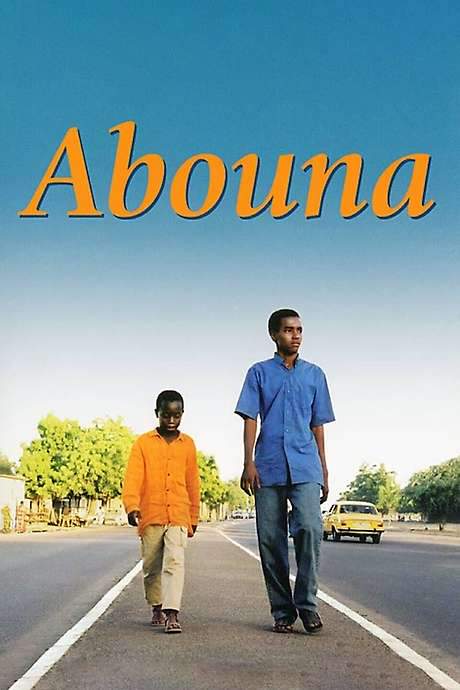
Abouna (2002) Plot Summary & Ending Explained
A Son (2019) Ending Explained & Film Insights
In the Battlefields (2004) Story Summary & Characters
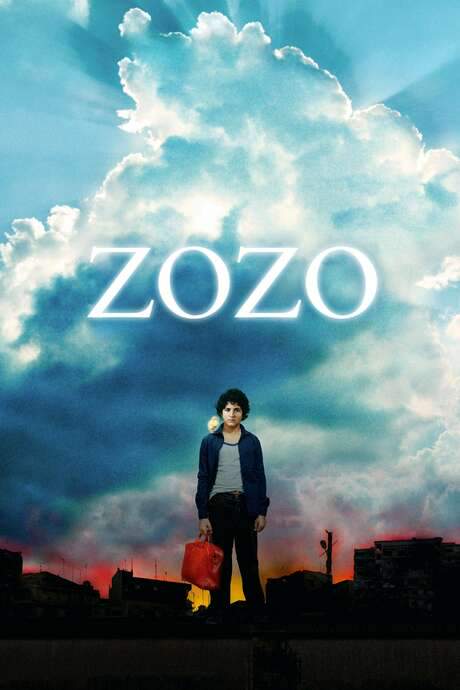
Zozo (2005) Plot Summary & Ending Explained
Al Mouled (1989) Plot Summary & Ending Explained
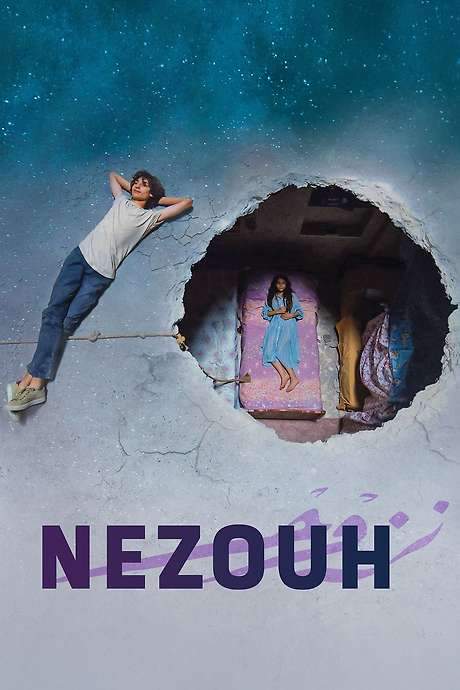
Nezouh (2022) Detailed Story Recap
Hardabasht (2023) Detailed Story Recap
West Beirut (1998) Film Overview & Timeline