Plot Explained Spoilers guaranteed!
Plot Explained

Browse by genre

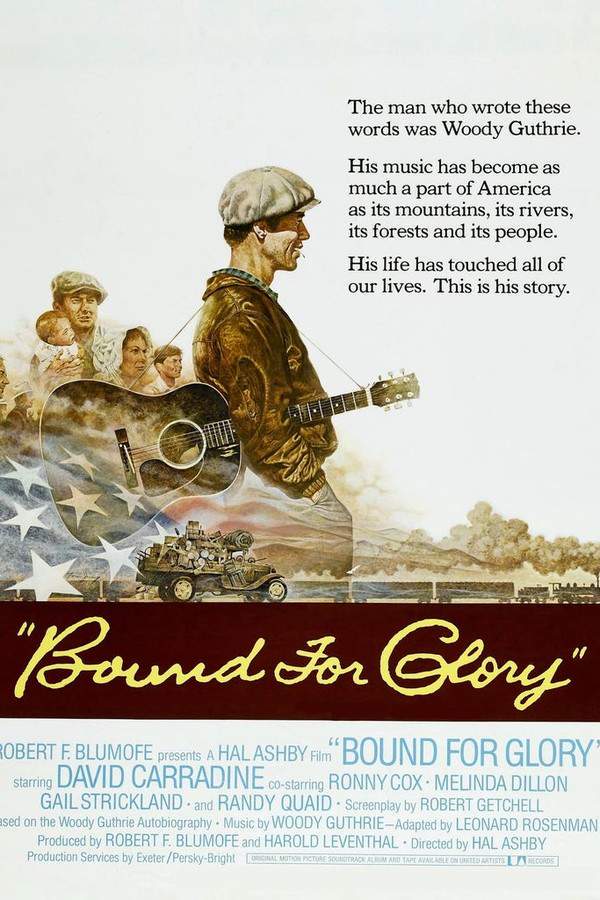
Bound for Glory (1976) movie poster

Timeline

Bound for Glory (1976) Timeline Explained – Every Event in Order

Release, runtime and language
1976 · 147 min · English
Loading streaming availability…
Directed by
Hal Ashby
Starring
John Lehne, Melinda Dillon, David Carradine, Elizabeth Macey, Gail Strickland, Ji-Tu Cumbuka

During the hardships of the Dust Bowl era, Woody Guthrie leaves his family in Oklahoma and travels to California. This journey marks the beginning of his career as a folk singer and social commentator. He finds guidance from Ozark Bule, dedicating himself to his music and activism, even as it strains his personal relationships and the life he knew before.

On this page (7)
  1. 1 Where to watch
  2. 2 Events in order (12)
  3. 3 Timeline questions answered
  4. 4 The book behind the movie
  5. 5 Movie threads
  6. 6 Movies like Bound for Glory
  7. 7 Every angle
Loading streaming availability…

12 events in order · contains spoilers

Bound for Glory Timeline: Events in Chronological Order

Every key event of Bound for Glory (1976) in order, scene by scene, with when and where it takes place. Use it to untangle flashbacks, time jumps and parallel storylines, to refresh your memory before the sequel or to find the exact scene you are thinking of.

  1. Guthrie at the gas station during the Depression

    In 1936 Guthrie performs his guitar at a gas station while customers listen. A man offers $1 to anyone who can address his worries, and Guthrie provides a satisfying answer that earns the money. The moment foreshadows his later role as a working-class troubadour.

    When
    1936
    Where
    Gas station
  2. Guthrie abandons sign painting to chase his music

    Guthrie begins painting a sign but abandons the task—the family's only reliable source of income—in favor of pursuing music. This decision strains his wife Mary and highlights the precarious finances of the Depression era. The choice sets Guthrie on a road of travel and performance rather than steady work.

    Where
    Home
  3. Bar encounter with Sue Ann

    At a local bar Guthrie performs for a woman named Sue Ann and ends up spending the night with her. The encounter shows his romantic escapades amid constant travel and hardship. It also underscores his restless life on the road.

    Where
    Local bar
  4. Porch meeting with Heavy Chandler

    On his porch, Guthrie meets Heavy Chandler, a recently released mental patient, and encourages him to express his thoughts through painting. The moment reinforces Guthrie's belief in art as a healing outlet and his empathy for others. It also foreshadows his habit of turning conversations into creative acts.

    Where
    Guthrie's porch
  5. Square dance and dust storm

    After performing at a square dance, a dust storm forces everyone indoors. The disruption illustrates the harsh, unsettled conditions of the era and the way nature mirrors the characters' instability. Guthrie uses the moment to reflect on his own path.

    Where
    Square dance location
  6. Guthrie leaves Mary to seek work

    Guthrie tells Mary that he needs to leave to seek work, and he eventually departs, leaving a note behind. The separation underscores the tension between family stability and the pull of labor opportunities during the Depression. Mary stays behind as Guthrie continues his travels.

    Where
    Home
  7. Train ride with Slim Snedeger and the hobos

    Guthrie rides a train with Slim Snedeger and other hobos; a fight erupts. Railroad enforcers compel those without money to disembark, and Slim can afford the fare while Guthrie cannot. He continues on foot as they part ways, epitomizing the precarious life of the unemployed.

    Where
    On a train
  8. A middle-class ride ends in a drop-off

    A middle-class couple gives him a ride, but Guthrie offends them and they drop him off along the road. The encounter highlights class tensions and his outsider status. He moves on to find food and shelter elsewhere.

    Where
    Highway
  9. Bar earnings and a night with a waitress

    In another bar, Guthrie earns a meal by playing the piano and spends the night with a waitress. The scene shows how music provides short-term aid and companionship during endless travel. He remains committed to performing despite the fluctuations of luck.

    Where
    Bar
  10. Border stop forces a hobo camp decision

    Guthrie travels with a family bound for California until border police demand $50 for entry. He leaves the family and camps with nearby hobos instead, continuing his journey westward. The encounter underscores the barriers faced by migrants seeking a better life.

    Where
    State border
  11. Los Angeles meeting with Luther and Liz Johnson

    In Los Angeles, Guthrie meets Luther and Liz Johnson, a migrant couple struggling to find work. He offers to paint a sign at a soup kitchen, but their payment is simply a bowl of soup, illustrating how scarce resources are. The scene highlights the paltry rewards for labor in a city that offers little opportunity.

    Where
    Los Angeles
  12. Ozark Bule, radio job, and the clash with unions

    Ozark Bule, a union organizer, arrives and Guthrie helps him escape disruption, which leads to a radio job where his songs about workers gain some popularity. However, station owner Mr. Locke demands that Guthrie avoid songs about unions, and Guthrie ultimately resists and is dismissed. The sequence marks a turning point as Guthrie refuses to compromise his message.

    Where
    Radio studio (Los Angeles)

Last updated: October 09, 2025 at 15:47

Was this helpful?

Timeline questions answered

Bound for Glory Timeline Explained: Your Questions Answered

When does it happen, and why in that order? The questions people ask about the chronology of Bound for Glory (1976): time jumps, flashbacks, cause and effect between scenes and the correct order of events, each answered with spoilers.

Q1

Why did Woody leave his family and travel west?

Woody left his family primarily to seek work during the Great Depression and Dust Bowl era. Economic hardship had left his family in precarious financial situation, and like many others, he sought better opportunities in California. However, his passion for music and his growing identity as a folk singer also pulled him toward the road, creating a tension between his desire to provide and his artistic calling.

Foreshadowing: Earlier at the gas station, his performance that earned him a dollar foreshadowed his potential to succeed through music rather than traditional labor.

  • woody guthrie
  • great depression
  • california migration
  • dust bowl
  • family separation
Q2

Why did Woody abandon the sign painting job?

Woody abandoned the sign painting, a potentially steady source of income for his family, in favor of pursuing music. The summary shows he dove back into playing guitar instead of completing the sign, choosing his artistic passion over financial stability. This decision illustrates his restless nature and the pull of his musical identity over conventional family responsibilities.

Foreshadowing: His immediate enthusiasm for playing at the gas station instead of working foreshadows his reluctance to stick to conventional work.

  • sign painting
  • family finances
  • depression era work
  • music passion
Q3

What was Ozark Bule's role in Woody's career?

Ozark Bule was a union organizer who became a pivotal figure in Woody's development as a protest singer. When Bule arrived at the hobo camp, Guthrie witnessed the power of collective action and songs that spoke to workers. Bule helped Woody secure a radio job that gave his working-class anthems a wider audience, essentially launching his career as a social commentator through music.

Foreshadowing: The scene where Guthrie helps Bule escape company thugs demonstrates his early alignment with labor organizing.

  • ozark bule
  • union organizer
  • radio job
  • protest songs
  • labor movement
Q4

Why was Woody fired from the radio station?

Woody was fired because he refused to comply with station owner Mr. Locke's demand that he avoid union topics and keep his material light. After initially agreeing to play safe songs, Woody returned to performing protest songs about workers' rights. This conflict with his boss led to losing his radio slot, as he chose his artistic integrity and message over commercial appeal.

Foreshadowing: His earlier decision to help Ozark Bule escape disruption already signaled his willingness to support union causes despite potential consequences.

  • mr locke
  • radio station
  • protest songs
  • censorship
  • artistic integrity
Q5

Why did Mary and the children leave Woody?

Mary and the children left because Woody's dedication to his music and activism ultimately strained their relationship beyond repair. When he brought them to Los Angeles, the city life made him feel like an outsider, and his constant touring, his protest songs, and his refusal to compromise his message meant he could not provide the stability his family needed. His commitment to speaking for workers came at the cost of his own family.

Foreshadowing: Luther's bruised face and his words about how Woody's songs lift workers highlight the personal cost of his choices.

  • mary guthrie
  • family leaving
  • los angeles
  • relationship strain
  • activist cost
Q6

Why did Woody turn down the contract at the Ambassador Hotel?

Woody refused the hotel contract because the owner wanted him to wear overalls and be presented as part of a hillbilly act for wealthy audiences, a caricature that would compromise his integrity. He rejected the opportunity to become a mainstream entertainer because it would require him to play into stereotypes rather than present authentic working-class music. He walked out to remain true to his roots and message.

Foreshadowing: His earlier refusal to abandon protest songs at the radio station established his pattern of choosing integrity over commercial success.

  • ambassador hotel
  • contract offer
  • hillbilly act
  • artistic integrity
  • class performance
Q7

Why did Woody keep singing protest songs despite losing jobs and his family?

Woody continued singing protest songs because he believed his music served a greater purpose, giving voice to migrant workers and the laboring poor. Even after being assaulted at a fruit-packing plant and having his guitar broken, he pressed on. The lyrics he dedicated to farm workers, even when it cost him his final radio chance, demonstrate his conviction that his art should uplift the workers who inspired him, regardless of personal cost.

Foreshadowing: His earlier decision to paint a sign at the soup kitchen for just a bowl of soup shows his prioritization of meaningful expression over financial reward.

  • protest songs
  • farm workers
  • guitar broken
  • personal sacrifice
  • worker voice
Q8

Why was Woody stopped at the California border?

Woody was stopped at the California border when border police demanded fifty dollars from the family he was traveling with. Unable to pay, he had to leave the family and continue with the hobos instead. This encounter illustrates the significant barriers faced by migrants seeking a better life during the Depression, even when they reached their destination, economic obstacles threatened to turn them away.

Foreshadowing: The earlier scene showing the harsh conditions at the hobo camp foreshadows the continued hardship even at the border.

  • california border
  • fifty dollars
  • migrant barriers
  • hobos
  • depression era travel
Q9

What happened when a middle-class couple gave Woody a ride?

A middle-class couple offered Woody a ride, but the encounter ended poorly, they dropped him off along the road after he said something that offended them. This incident highlights the class tensions and his outsider status. Despite their initial generosity, Woody's blunt manner and perhaps his traveling hobo appearance created friction with their middle-class sensibilities.

Foreshadowing: His earlier interactions at the gas station and bar show his comfort with working-class crowds versus more affluent people.

  • middle class couple
  • class tension
  • hitchhiking
  • outsider status
Q10

What does the ending signify about Woody's character?

The ending shows Woody once again climbing onto a train to continue singing protest songs from the top of a boxcar. This return to the railroad yard represents his refusal to compromise his ideals for commercial success or stable family life. Despite losing his family and facing constant hardship, he chooses to stay on the road, speaking for the workers who inspired him, embracing a solitary existence rooted in his beliefs.

Foreshadowing: The film began with him performing at a gas station, establishing the cycle of travel and performance that defines his identity.

  • train ending
  • boxcar
  • protest songs
  • staying true
  • solitary journey
Q11

What did the dust storm represent in the story?

The dust storm that forced everyone indoors after the square dance serves as both literal and symbolic representation of the era's harshness. The natural disaster mirrors the characters' instability and the overwhelming forces threatening their livelihoods. For Woody, it becomes a moment of reflection about his own uncertain path, reinforcing the film's theme of displacement and survival during the Depression.

Foreshadowing: The storm's timing, occurring right after a gathering of community, underscores how quickly stability can crumble.

  • dust storm
  • square dance
  • depression era hardship
  • symbolism
  • natural disaster
Q12

What was the purpose of meeting Heavy Chandler on the porch?

Meeting Heavy Chandler, a recently released mental patient, on his porch demonstrates Woody's belief in art as a healing outlet. Guthrie encourages Chandler to express his thoughts through painting, showing empathy for others struggling with mental health. This encounter reinforces Woody's role as someone who turns pain into creativity and highlights his ability to connect with marginalized people.

Foreshadowing: This moment foreshadows Guthrie's habit of using artistic expression as a way to process and channel difficult experiences.

  • heavy chandler
  • mental patient
  • painting
  • healing through art
  • empathy

Movie threads

More Movies Like Bound for Glory, by Mood & Story

Curated lists built around what makes Bound for Glory tick: the same mood, the same kind of story or the same emotional payoff. Each list explains why these movies belong together.

Bittersweet Journeys of Artistic Awakening like in Bound for Glory

Stories where finding a creative voice brings purpose but carries a heavy personal price. If you liked Bound for Glory, explore more movies about the transformative yet costly path of artistic and political awakening. These films feature protagonists who find their voice through struggle, often at the expense of personal relationships, resulting in hopeful but bittersweet stories similar to Woody Guthrie's.

  • determined
  • melancholic
  • hopeful
  • lonely
  • gritty
  • nostalgic
  • Tone: melancholic, bittersweet, determined
  • Pacing: steady, character driven
Why these movies?

The story pattern: These narratives follow a character's evolution from a state of personal or social obscurity into a role of creative or activist significance. The central conflict is often between the demands of their newfound purpose and the comforts of their former life, culminating in an ending that validates their artistic or social contribution while acknowledging the loneliness and loss it entailed.

Why they belong together: Movies in this thread are united by a shared emotional arc: the triumphant yet painful birth of an artist or activist. They blend a tone of melancholic determination with a steady, character-driven pace, focusing on the heavy emotional weight of choosing a path defined by principle over personal ease.

Gritty Social Realism in Harsh Historical Eras like Bound for Glory

Unflinching portrayals of ordinary people fighting for dignity during times of great social hardship. Find movies like Bound for Glory that offer a raw, grounded look at life during periods of great social and economic hardship. These films share a gritty, melancholic tone and a steady pace, portraying the resilience of individuals and communities facing systemic challenges, similar to the Dust Bowl journey depicted here.

  • gritty
  • harsh
  • determined
  • hopeful
  • lonely
  • nostalgic
  • Tone: gritty, melancholic, hopeful
  • Pacing: steady, immersive
Why these movies?

The story pattern: Stories in this thread are defined by their authentic depiction of a challenging historical setting, such as an economic depression or social upheaval. The plot often follows a linear, straightforward journey of survival and awakening, where characters navigate a harsh world, encounter social injustice, and discover a sense of collective identity or purpose.

Why they belong together: These films are grouped by their commitment to social realism and a specific, atmospheric historical context. They share a melancholic yet determined vibe, a steady pacing that allows for immersion in the era, and a medium intensity that balances stark realities with moments of human connection and hope.

If you liked this

Movies Like Bound for Glory

Similar movies to Bound for Glory: the same genre, themes or kind of story. Each one comes with its own plot summary, timeline and ending explained.

Browse all movie summaries

Every angle

Bound for Glory (1976) Explained: Plot, Timeline & Characters

Everything about Bound for Glory in one place: what happens in the plot summary, the timeline in chronological order, the characters and meaning and a spoiler-free summary. What's After the Movie adds the cast, box office and post-credit scenes.

Coming soon on iOS and Android

The Plot Explained Movie Summary App

Plot summaries, endings explained and timelines on your phone. Catch up on any movie in minutes, save your favorites and never miss a twist again.

Be the first to know when we launch. Your email stays private, always.

Learn more about the app