Plot Explained Spoilers guaranteed!
Plot Explained

Browse by genre

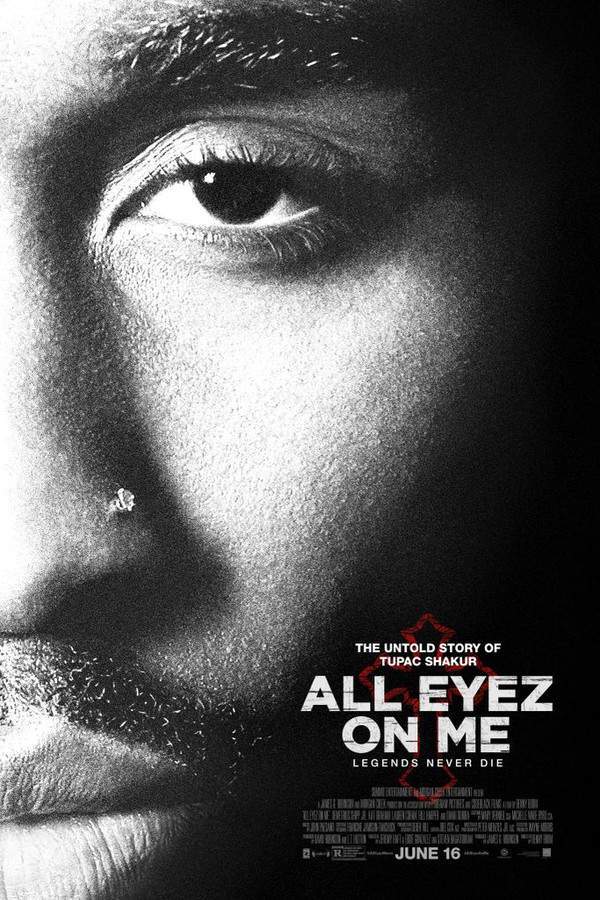
All Eyez on Me (2017) movie poster

Plot Summary

All Eyez on Me (2017) Plot Summary Explained

Release, runtime and language
2017 · 139 min · English
Echo score 44
JustWatch #26,123 1
Directed by
Benny Boom
Starring
Danai Gurira, Katerina Graham, Cory Hardrict, Hill Harper, Demetrius Shipp Jr., Jamal Woolard
Budget
$40M

The film chronicles the life of Tupac Shakur, from his challenging upbringing in poverty to his rise as a globally recognized music icon. Through his powerful lyrics and unwavering dedication to social justice, Shakur became a defining voice of his generation, leaving an indelible mark on popular culture that continues to resonate long after his untimely death. The story explores his remarkable journey and the impact he had on the world.

On this page (6)
  1. 1 Where to watch
  2. 2 What happens: full plot
  3. 3 Plot questions answered
  4. 4 Movie threads
  5. 5 Movies like All Eyez on Me
  6. 6 Every angle

Where to watch

Where to Watch All Eyez on Me (2017)

Where can you watch All Eyez on Me? Stream, rent or buy it in the US, including on Amazon Video, Apple TV Store and Fandango At Home: current JustWatch availability with up-to-date prices.

Streaming availability powered by JustWatch

Full plot summary · contains spoilers

What Happens in All Eyez on Me: Full Plot Summary

The whole story of All Eyez on Me (2017) explained, from the opening scene to the final frame: every key event, every twist and what it all adds up to. Read it as a quick recap before the sequel, to check a scene you missed, or to finally understand what really happened.

The narrative begins in 1995 at the Clinton Correctional Facility, where a documentary filmmaker, Hill Harper, arrives with his crew to meet the iconic Tupac Amaru Shakur (Demetrius Shipp Jr.). He seeks to uncover the true story from the man himself.

Flashing back to 1971 New York City, we find Tupac's mother, Afeni, portrayed by Danai Gurira, recently released from prison along with her fellow Black Panthers after successfully fighting several charges. Pregnant with Tupac at the time, Afeni voices her deep grievances to a reporter regarding the systemic mistreatment of black individuals by society and those mandated to protect their rights.

As a child, Tupac is instilled with a sense of black pride and witnesses numerous instances of injustice in his East Harlem neighborhood, which include instances of racism and police brutality. His stepfather, Mutulu ([Jamie Hector]), serves as an Afrocentric revolutionary, deeply influencing both Afeni and Tupac. The FBI hunts for Mutulu, who is wanted for a robbery and the murder of police officials, creating a pervasive atmosphere of danger for the family. Their life dramatically shifts when law enforcement aggressively storms their home, brutally restraining young Tupac and his sister.

Transitioning into his teenage years, Tupac rejects his mother's ideologies and makes the choice to live independently alongside his sister. In a pivotal moment, he catches Afeni buying drugs from a dealer and confronts her, wishing for her to overcome her addiction. This leads him to seek rehabilitation for her, reassuring her of her strength.

During his formative years at the Baltimore School for the Arts, Tupac forges a strong friendship with Jada Pinkett, during which they promise each other lifelong friendship. He even shares a heartfelt poem dedicated to her, symbolizing the depth of their bond.

Tupac's burgeoning music career commences with the Digital Underground's hit “Same Song,” guiding him under the mentorship of Leila Steinberg, where he begins creating revolutionary hip-hop albums. However, his provocative tracks such as "Brenda's Got a Baby" spark controversy due to their sensitive subject matter, highlighting issues of poverty and sexual violence. Defending his work, he passionately argues about the genuine stories behind his lyrics, emphasizing their real-world relevance. Critiqued for an alleged misogynistic stance due to his experiences relating to his mother, Tupac counters by releasing "Keep Ya Head Up," a heartfelt tribute to black women.

In 1991, Tupac also ventures into acting with films like "Juice," all while maintaining collaborations with artists such as Biggie Smalls. His performances elicit both admiration and criticism; he is seen altruistically aiding those in need while navigating a turbulent relationship with law enforcement—faced with harassment and violence stemming from systemic racism.

Despite some altercations, Tupac’s fame grows, yet so do the complications in his life. He becomes involved in dangerous liaisons with criminal elements, leading to increasing tensions and violence surrounding him. His tumultuous relationship with Briana ([Erica Pinkett]) leads to legal challenges when allegations of sexual misconduct arise.

A pivotal moment occurs on November 30, 1994, when Tupac is violently attacked in Quad Recording Studios by assailants, leaving him severely injured. His close friends rally to his side, but their efforts are marred by attempts to reach him which are thwarted due to hospital regulations. Post-recovery, he faces a tumultuous trial, ultimately being convicted on lesser charges.

While serving time, Tupac reflects on betrayal and uncovering layers of his life through his music. Following a brief sentence, he hits the ground running, signing with Death Row Records and collaborating with colossal names in hip-hop such as Dr. Dre and Snoop Dogg. The release of "California Love" becomes an anthem, even as it contrasts sharply with the escalating anger expressed in "Hit Em Up," aimed at Biggie and others. This spurns a rift in personal relationships, particularly with Jada Pinkett.

As 1996 unfolds, Tupac finds love with Kidada Jones, igniting a romance that seeks to transcend his chaotic lifestyle, culminating in a heartfelt engagement. Nevertheless, the shadows of his past loom large, and he contemplates leaving Death Row to form his own production house where his creative vision can flourish.

When tragedy strikes on September 7, 1996, after leaving a boxing match in Las Vegas, Tupac is caught in a barrage of gunfire initiated by unknown gang members, resulting in grave injuries. Despite immediate help from his entourage, including Suge ([Dominic L. Santana]), he succumbs to his wounds just days later, leaving behind a legacy of music and film that reflects both genius and turmoil.

The film poignantly closes with a clip showcasing the real Tupac, expressing his wish for the world to truly understand his essence.
Last updated: October 27, 2024 at 16:20

Was this helpful?

Plot questions answered

All Eyez on Me Plot Explained: Your Questions Answered

The questions people ask most about All Eyez on Me (2017): what happens in the confusing scenes, why the characters do what they do, the twists, hidden details and what the ending means. Each answer contains spoilers.

Q1

Why was Tupac's mother Afeni in prison?

Afeni Shakur was a member of the Black Panther Party. In 1971, she was recently released from prison along with other Black Panthers after successfully fighting several charges. She was pregnant with Tupac at the time of her release and used her platform to speak out about systemic racism and injustices against Black people.

Foreshadowing: The film opens with the 1995 prison interview, but this flashback establishes the revolutionary environment Tupac was born into.

  • afeni shakur
  • black panthers
  • prison
  • new york city
  • 1971
Q2

Why was Tupac's stepfather Mutulu wanted by the FBI?

Mutulu Shakur was Tupac's stepfather and a member of the Black Panther Party. The FBI sought him for his involvement in a robbery and the murder of police officials. This created a pervasive atmosphere of danger for the family, leading to law enforcement aggressively storming their home when Tupac was a child.

Foreshadowing: This dangerous environment sets the tone for the constant threat and instability in Tupac's childhood.

  • mutulu shakur
  • stepfather
  • fbi wanted
  • robbery
  • murder
  • black panthers
Q3

Why did Tupac leave his mother's home as a teenager?

As a teenager, Tupac rejected his mother's revolutionary ideologies and chose to live independently alongside his sister. The breaking point came when Tupac caught Afeni buying drugs from a dealer. He confronted her about her addiction and sought rehabilitation for her, reassuring her of her strength.

Foreshadowing: This difficult decision foreshadows Tupac's lifelong role as a protector, even while dealing with his own tumultuous life.

  • tupac
  • afeni
  • drugs
  • addiction
  • teenager
  • leaves home
Q4

What happened to Tupac at Quad Recording Studios in 1994?

On November 30, 1994, Tupac was violently attacked at Quad Recording Studios by assailants, leaving him severely injured. His close friends tried to support him but were thwarted by hospital regulations that limited their access during his recovery. After the attack, he faced a tumultuous trial and was ultimately convicted on lesser charges.

Foreshadowing: This violent attack marked a turning point in Tupac's life, hardening his outlook and contributing to the East Coast-West Coast rivalry.

  • quad recording studios
  • 1994
  • attack
  • shooting
  • injured
  • hospital
Q5

Why did Tupac release "Hit Em Up" targeting Biggie Smalls?

After signing with Death Row Records, Tupac released "Hit Em Up" as a diss track aimed at Biggie Smalls and others. This track created a major rift in the hip-hop community and escalated the East Coast-West Coast rivalry. The conflict also damaged his personal relationships, including his friendship with Jada Pinkett, who was close to Biggie.

Foreshadowing: This feud had lasting consequences on the hip-hop industry and contributed to the tragic deaths of both artists.

  • hit em up
  • biggie smalls
  • death row
  • east coast west coast
  • diss track
  • feud
Q6

Why did Tupac sign with Death Row Records?

After serving time in prison and reflecting on betrayal and his life's direction, Tupac signed with Death Row Records upon his release. He collaborated with major hip-hop figures like Dr. Dre and Snoop Dogg. This move represented a significant shift in his career and personal life, though he later contemplated leaving to form his own production house.

Foreshadowing: His time at Death Row produced some of his biggest hits but also deepened the conflicts that would ultimately contribute to his death.

  • death row records
  • dr dre
  • snoop dogg
  • california love
  • contract
  • signed
Q7

What was Tupac's relationship with Jada Pinkett?

While attending the Baltimore School for the Arts, Tupac formed a deep friendship with Jada Pinkett. They promised each other lifelong friendship, and Tupac even dedicated a heartfelt poem to her. However, their relationship became strained after Tupac released "Hit Em Up" targeting Biggie Smalls, who Jada was also close to.

Foreshadowing: This friendship represents one of the genuine, non-transactional relationships in Tupac's life, making its later deterioration all the more poignant.

  • jada pinkett
  • baltimore school for the arts
  • friendship
  • poem
  • best friend
Q8

Who was Kidada Jones to Tupac?

In 1996, Tupac found love with Kidada Jones, the daughter of fashion designer Quincy Jones. Their relationship brought hope and joy amid Tupac's chaotic lifestyle, and they became engaged. This relationship symbolized Tupac's desire for stability and a different kind of life away from the violence and drama that surrounded him.

Foreshadowing: Their engagement represented Tupac's longing for a peaceful future, making his subsequent death even more tragic.

  • kidada jones
  • quincy jones
  • engagement
  • love
  • relationship
  • 1996
Q9

How did Tupac Shakur die?

On September 7, 1996, after leaving a boxing match in Las Vegas with his entourage including Suge Knight, Tupac was caught in a barrage of gunfire initiated by unknown gang members in a drive-by shooting. Despite immediate help from his entourage, he succumbed to his grave injuries days later on September 13, 1996.

Foreshadowing: The film ends with this tragic event, but closes on a clip of the real Tupac expressing his wish for the world to understand his essence.

  • las vegas
  • shooting
  • 1996
  • drive by
  • september 7
  • death
  • suge knight
Q10

Why was Tupac's music controversial?

Tupac's tracks like "Brenda's Got a Baby" sparked controversy due to their sensitive subject matter, including poverty, sexual violence, and social issues. He faced criticism for an alleged misogynistic stance, which stemmed partly from his difficult experiences with his mother's addiction. Tupac defended his work by emphasizing the real-world relevance of his lyrics and later released "Keep Ya Head Up" as a heartfelt tribute to Black women.

Foreshadowing: This controversy foreshadows how Tupac's music would always be deeply intertwined with his personal experiences and the social realities he witnessed.

  • controversy
  • lyrics
  • brenda got a baby
  • keep ya head up
  • music
  • social issues
Q11

What did Tupac witness growing up in East Harlem?

Growing up in East Harlem, Tupac witnessed numerous instances of injustice, including racism and police brutality firsthand. These experiences, combined with his stepfather Mutulu's revolutionary influence, instilled in him a deep sense of Black pride and awareness of systemic oppression that would later influence his music.

Foreshadowing: These early experiences with injustice became the foundation for Tupac's revolutionary voice in hip-hop.

  • east harlem
  • police brutality
  • racism
  • witness childhood
  • grew up
  • neighborhood
Q12

Why is Tupac being interviewed in prison at the beginning of the film?

The film opens in 1995 at Clinton Correctional Facility where a documentary filmmaker arrives with his crew to meet Tupac Shakur. This interview frames the entire narrative, as the filmmaker seeks to uncover the true story from Tupac himself, giving viewers insight into how Tupac wanted his life to be understood.

Foreshadowing: This framing device emphasizes that the story is being told through Tupac's own perspective and words.

  • 1995
  • clinton correctional facility
  • documentary
  • interview
  • prison
  • filmmaker

Movie threads

More Movies Like All Eyez on Me, by Mood & Story

Curated lists built around what makes All Eyez on Me tick: the same mood, the same kind of story or the same emotional payoff. Each list explains why these movies belong together.

Turbulent Biographies like All Eyez on Me

The fast-rise, hard-fall stories of legendary figures cut down too soon. Movies like All Eyez on Me that depict the dramatic lives of iconic figures. Explore similar biographies where a rapid ascent to fame is shadowed by personal demons, systemic pressures, and a tragic, untimely end. If you are drawn to emotionally heavy stories of real-life legends.

  • tragic
  • gritty
  • introspective
  • chaotic
  • melancholic
  • tense
  • Tone: dark, tragic, revolutionary
  • Pacing: fast, event-driven
Why these movies?

The story pattern: These narratives typically follow a linear, chronological rise-and-fall arc, moving quickly from humble beginnings to meteoric success. The central conflict often pits raw talent and ambition against external forces like industry corruption, media scrutiny, or systemic injustice, culminating in a loss that feels both shocking and inevitable.

Why they belong together: Movies are grouped here for their shared focus on a specific, tragic biographical arc: the rapid ascent of a brilliant but flawed individual, their struggle with the dark side of fame, and their ultimately heartbreaking demise. They share a gritty, high-intensity tone and a heavy emotional weight.

Gritty Urban Dramas like All Eyez on Me

Stories where individuals fight against a rigged system in a harsh urban landscape. If you liked the gritty urban setting and themes of social justice in All Eyez on Me, explore similar movies. These films often feature hip hop culture, systemic injustice, and protagonists fighting for expression and survival in a challenging world.

  • gritty
  • tense
  • revolutionary
  • chaotic
  • social commentary
  • urban
  • Tone: dark, tense, revolutionary
  • Pacing: fast, chaotic
Why these movies?

The story pattern: The narrative pattern involves a protagonist born into adversity who finds a powerful form of expression—often art or activism—to challenge their circumstances. Their journey is marked by constant tension with authority, betrayal from within their community, and the heavy toll of fighting a system designed against them.

Why they belong together: These movies share a specific vibe: a dark, high-intensity atmosphere rooted in real-world social issues. They feature a fast, often chaotic pace reflective of urban life and center on characters whose personal battles are deeply intertwined with broader societal conflicts.

If you liked this

Movies Like All Eyez on Me

Similar movies to All Eyez on Me: the same genre, themes or kind of story. Each one comes with its own plot summary, timeline and ending explained.

Browse all movie summaries

Every angle

All Eyez on Me (2017) Explained: Plot, Timeline & Characters

Everything about All Eyez on Me in one place: what happens in the plot summary, the timeline in chronological order, the characters and meaning and a spoiler-free summary. What's After the Movie adds the cast, box office and post-credit scenes.

Coming soon on iOS and Android

The Plot Explained Movie Summary App

Plot summaries, endings explained and timelines on your phone. Catch up on any movie in minutes, save your favorites and never miss a twist again.

Be the first to know when we launch. Your email stays private, always.

Learn more about the app