



















Plot Explained Spoilers guaranteed!
Plot Explained

Browse by genre

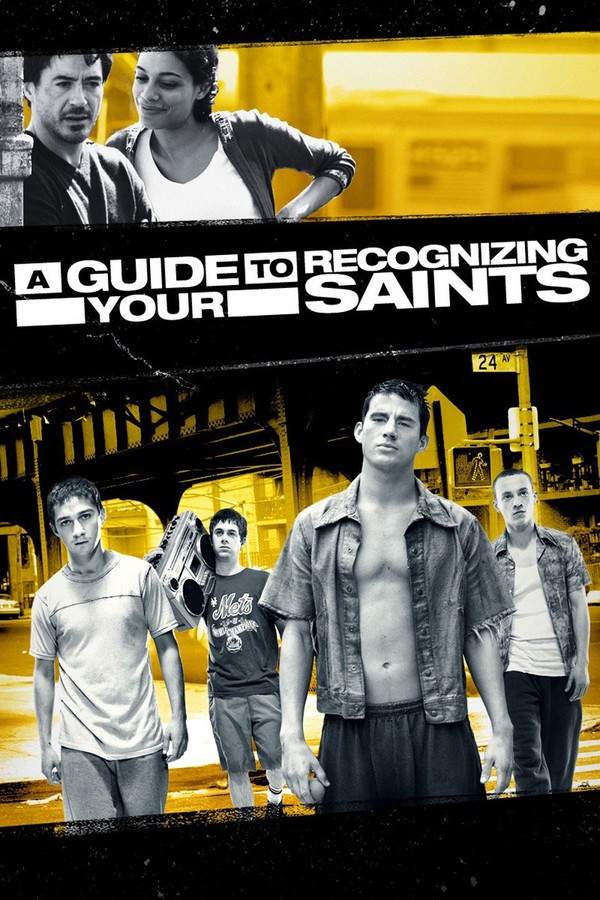
A Guide to Recognizing Your Saints (2006) movie poster

Timeline

A Guide to Recognizing Your Saints (2006) Timeline Explained – Every Event in Order

Release, runtime and language
2006 · 100 min · English
JustWatch #2,727 10
Directed by
Dito Montiel
Starring
Shia LaBeouf, Robert Downey Jr.

This gritty film portrays a writer-director's memories of growing up in Astoria, Queens, during the mid-1980s. It unflinchingly depicts the challenges of adolescence within a tough neighborhood, drawing comparisons to classic urban dramas. Based on a memoir, the film offers a realistic and unvarnished look at coming-of-age struggles and the realities of urban life.

On this page (6)
  1. 1 Where to watch
  2. 2 Events in order (15)
  3. 3 Timeline questions answered
  4. 4 Movie threads
  5. 5 Movies like A Guide to Recognizing Your Saints
  6. 6 Every angle

Where to watch

Where to Watch A Guide to Recognizing Your Saints (2006)

Where can you watch A Guide to Recognizing Your Saints? Stream, rent or buy it in the US, including on Amazon Prime Video, fuboTV and Fawesome: current JustWatch availability with up-to-date prices.

Streaming availability powered by JustWatch

15 events in order · contains spoilers

A Guide to Recognizing Your Saints Timeline: Events in Chronological Order

Every key event of A Guide to Recognizing Your Saints (2006) in order, scene by scene, with when and where it takes place. Use it to untangle flashbacks, time jumps and parallel storylines, to refresh your memory before the sequel or to find the exact scene you are thinking of.

  1. Dito Receives an Urgent Call

    In the current timeline, Dito gets an urgent phone call from his mother, Flori. She informs him that his father, Monty, is gravely ill, prompting Dito to reflect on his past.

  2. Dito on Stage in 2005

    Fast forward to 2005 in Los Angeles, Dito stands on stage introduced as the writer of his book, 'A Guide to Recognizing Your Saints'. He shares insights about the profound meaning behind his writing, setting the stage for the film's exploration of his past.

    When
    2005
    Where
    Los Angeles
  3. Dito's Determination to Break Free

    Jumping back to 1986 in Astoria, Queens, a young Dito boldly declares his intention to distance himself from everyone connected to his past. This moment marks a pivotal point as he directly engages with the audience, hinting at his desire for change.

    When
    1986
    Where
    Astoria, Queens
  4. Meeting Laurie

    Dito is introduced to supportive characters, including Laurie, his girlfriend, who sells food at the pool. Dito struggles to make Monty understand that Laurie's job does not imply that she is preparing for a career as a swimmer.

    Where
    Pool
  5. Neighborhood Violence Erupts

    Despite the earlier comment that their neighborhood lacks violence, a fight breaks out almost immediately. This incident exposes the contradictions in their lives and the latent tensions in their community.

    Where
    Astoria, Queens
  6. Boxing Aspirations

    Dito and his friend Antonio visit Dito's apartment, trying to persuade Monty about their dreams of becoming boxers. Monty insists he can teach them better boxing skills than anyone else at the local gym, revealing the complicated family dynamics.

    Where
    Dito's Apartment
  7. New Student Mike Joins the Class

    At Catholic school, a newcomer named Mike from Ireland reads a poem that strikes a chord with Dito. The two quickly bond over their mutual interest in music and express a desire to start a band together, representing a glimmer of hope in their troubled lives.

    Where
    Catholic School
  8. Friendship and Joyride

    Nerf, a friend, arrives in a classic '75 Chevy, inviting everyone to join him for a joyride. Despite his initial reluctance, Nerf ultimately embraces the moment, highlighting the carefree spirit of youth, even in troubled times.

  9. Antonio's Confrontation

    As night falls, tensions rise when Antonio confronts a Puerto Rican kid, driven by suspicion, despite Dito and their friends urging him to be kinder. This moment illustrates the underlying racial tensions and fear present in their community.

  10. Dito's Growing Friendship with Mike

    Dito and Mike decide to dog-walk for Frank in exchange for cash, further solidifying their friendship. Their bond deepens as they indulge in marijuana and dream about escaping to California, which symbolizes their desire for freedom and a better life.

  11. A Turn of Events

    In a dramatic turn, Dito finds himself in a confrontation with Reaper, who accuses him of disrupting graffiti activities. This culminates in Dito being attacked with a baseball bat, marking a moment that shakes the foundation of his world.

    Where
    Astoria, Queens
  12. Tragedy in the Community

    The community faces tragedy when Antonio's younger brother, Giuseppe, dies in a rail accident. This sends shockwaves through their tight-knit circle, and a somber funeral follows, reminding everyone of the fragility of life in their environment.

  13. Dito's Anguish and Conflict

    Dito faces increasing conflict with Monty, especially when discussions about his departure raise tensions. An argument escalates, leading Monty to suffer a seizure, reflecting the emotional strain between father and son.

    Where
    Dito's House
  14. The Cost of Revenge

    Driven by revenge, Antonio kills a member of the Reaper gang, resulting in police sirens flashing in their neighborhood. The aftermath emphasizes the devastating choices made in the name of loyalty and the high cost of violence.

    Where
    Astoria, Queens
  15. Present Reflections

    In the present, Dito insists Monty seek medical help while reflecting on his past. The film concludes with Dito wrapping up his program in the studio and real footage of Monty, showcasing the lasting impact of these memories on Dito's life.

Last updated: November 03, 2024 at 14:29

Was this helpful?

Timeline questions answered

A Guide to Recognizing Your Saints Timeline Explained: Your Questions Answered

When does it happen, and why in that order? The questions people ask about the chronology of A Guide to Recognizing Your Saints (2006): time jumps, flashbacks, cause and effect between scenes and the correct order of events, each answered with spoilers.

Q1

Why did Dito leave Astoria and not return for so long?

Dito left Astoria to escape the cycle of violence and poverty that defined his neighborhood. After Mike's death, a pivotal moment that shattered his remaining connections to the neighborhood, Dito finally left for California, seeking the brighter future he and Mike had always dreamed about. His prolonged absence was driven by a combination of guilt, trauma, and the need to distance himself from the memories of lost friends and broken relationships.

Foreshadowing: Earlier, Dito and Mike smoke marijuana while dreaming about California, representing their shared escape fantasy.

  • dito montiel
  • leaving astoria
  • california
  • escape
  • mike death
Q2

Why does Monty refuse to go to the hospital even though he's gravely ill?

Monty refuses hospitalization because of his stubborn pride and deep distrust of the medical system. Even when seriously ill in 2005, he insists he doesn't need hospital care, reflecting the tough, self-reliant mentality that defined his entire life in the neighborhood. This refusal creates ongoing tension with Dito, who desperately wants his father to get proper medical attention.

Foreshadowing: The pattern of Monty's stubbornness is established early when he insists he can teach boxing better than anyone at the local gym.

  • monty
  • father
  • hospitalization
  • illness
  • refusal
Q3

What happens to Mike in the film?

Mike is killed in a act of retaliation after Dito and he confront Frank about unpaid wages. When they visit Frank, they find him in an intoxicated state where he mistakes them for robbers. This confrontation triggers violent retaliation that results in Mike's death, which devastates Dito and ultimately pushes him to leave Astoria for California.

Foreshadowing: Dito and Mike's friendship deepens as they walk dogs for Frank and smoke marijuana together, dreaming of escape.

  • mike
  • death
  • killed
  • retaliation
  • frank
  • california
Q4

Why does Antonio kill a member of the Reaper gang?

Antonio kills a member of the Reaper gang seeking revenge for the violence inflicted on his friends, particularly Dito's brutal attack with a baseball bat. The murder is triggered by the ongoing feud between their group and the Reapers, combined with the racial tensions in the neighborhood. This act of vengeance leads to Antonio's eventual imprisonment and represents the destructive cycle of violence consuming their community.

Foreshadowing: Reaper tags the neighborhood, causing Antonio's strong dissatisfaction, and tensions escalate when Reaper attacks Dito with a baseball bat.

  • antonio
  • reaper gang
  • murder
  • revenge
  • imprisonment
  • violence
Q5

What causes the argument between Dito and Monty that leads to Monty's seizure?

The argument erupts when Dito and Monty discuss Dito's plans to leave for California. The heated confrontation escalates as old resentments surface, Monty feels abandoned and betrayed by his son's desire to escape, while Dito feels suffocated by the neighborhood's constraints. The emotional intensity of their argument triggers Monty to suffer a seizure, highlighting the deep emotional trauma and strained relationship between father and son.

Foreshadowing: Monty's earlier insistence that he can teach Dito boxing better than anyone reveals his desperate need to keep his son connected to him.

  • monty
  • seizure
  • argument
  • california
  • departure
  • father son
Q6

Why does Dito send Laurie away after being attacked?

Dito sends Laurie away because he's ashamed of his injuries and wants to protect her from the violence that defines his life in Astoria. After being beaten with a baseball bat by Reaper, Dito and Antonio attempt to downplay the attack, but Laurie's unexpected arrival creates tension. Dito's decision to push her away reflects his belief that he can't offer her a safe or stable future, and it represents his growing isolation from meaningful connections.

Foreshadowing: Dito previously struggles to explain Laurie's job to Monty, showing the cultural gap between his girlfriend and his family.

  • laurie
  • sent away
  • injuries
  • protection
  • shame
  • relationship
Q7

What finally triggers Dito to leave for California?

Mike's death is the final trigger that convinces Dito to leave Astoria for California. After losing his closest friend to the violence that has consumed their neighborhood, Dito decides he must escape before the same fate claims him. The death represents the culmination of everything he's been trying to flee, the violence, the poverty, and the hopelessness of his environment.

Foreshadowing: Throughout the film, Dito and Mike repeatedly discuss their dream of going to California, viewing it as their only way out.

  • california
  • departure
  • mike death
  • escape
  • final trigger
Q8

Why is Antonio so determined to seek revenge against the Reapers?

Antonio's quest for revenge against the Reapers is driven by loyalty to his friends and the cultural code of honor that dominates their neighborhood. When Dito is attacked with a baseball bat by Reaper, Antonio sees it as an attack on their entire group. The desire to protect his friends and maintain respect in their community compels Antonio to kill a Reaper gang member, illustrating how the cycle of violence perpetuates itself through perceived obligations to friends and family.

Foreshadowing: Antonio's suspicion toward the Puerto Rican kid and his quickness to confront others reveals his aggressive nature and readiness to defend his circle.

  • antonio
  • revenge
  • reapers
  • loyalty
  • violence
  • friends
Q9

What does the title "A Guide to Recognizing Your Saints" mean in the film?

The title refers to Dito's journey of recognizing the flawed but meaningful people in his life who served as his guiding lights, his version of saints. In the context of his memoir and the film, it represents his attempt to understand and honor those who helped shape him, even amid the violence, abuse, and tragedy surrounding him. The title reflects the film's autobiographical nature and Dito's reflection on who truly mattered in his difficult upbringing.

Foreshadowing: Dito directly engages with the audience in 1986, declaring his intention to distance himself from everyone connected to his story, hinting at his later retrospective examination of those relationships.

  • title meaning
  • saints
  • memoir
  • recognition
  • autobiographical
Q10

How does Giuseppe's death affect Antonio and the group?

Giuseppe's death, the tragic rail accident that claims Antonio's younger brother, profoundly impacts Antonio and the entire friend group. The somber funeral marks one of the film's most devastating moments, symbolizing the constant threat of death that hangs over the neighborhood. This tragedy contributes to Antonio's later decision to seek violent revenge against the Reapers, as he's already dealing with profound loss and emotional pain.

Foreshadowing: The film establishes early on that the neighborhood is filled with latent tensions and dangers waiting to surface.

  • giuseppe
  • death
  • antonio
  • brother
  • funeral
  • rail accident
Q11

What is the significance of the poem Mike reads in class?

The poem that Mike reads in Catholic class strikes a deep chord with Dito because it reflects their shared feelings of alienation and desire for escape. This moment serves as the foundation for their friendship, as both boys recognize in each other a similar yearning for something beyond their difficult circumstances. The poem represents the intellectual and emotional connection that sets their friendship apart from Dito's other relationships in the neighborhood.

Foreshadowing: After hearing the poem, Mike and Dito quickly bond over their mutual passion for music and their dream of forming a band together.

  • mike
  • poem
  • catholic school
  • connection
  • friendship
  • music
Q12

Why does Dito visit Antonio in prison at the end of the film?

Dito visits Antonio at Ryker's Island as an act of reconciliation and loyalty, demonstrating that despite years of separation and his departure from Astoria, he hasn't forgotten his oldest friend. The visit represents Dito's attempt to reclaim meaningful connections from his past and find some form of closure. Antonio's joyful welcome shows that their bond survived the years of distance and hardship, offering a glimpse of redemption amid the film's many losses.

Foreshadowing: Antonio and Dito's friendship is established early, with the two attempting to convince Monty to teach them boxing.

  • antonio
  • prison
  • rikers island
  • visit
  • reconciliation
  • friendship
Q13

What is the significance of the ending scene with real footage of Monty?

The ending features real footage of the actual Dito Montiel's father, blending documentary authenticity with the dramatized narrative. This powerful choice blurs the line between memoir and film, emphasizing that the story is deeply personal and rooted in reality. The footage shows the real Monty, creating an emotional resonance that underscores the film's autobiographical nature and its message about confronting one's past.

Foreshadowing: Dito's book is introduced as the source material, establishing the memoir's authenticity from the beginning.

  • ending
  • real footage
  • monty
  • documentary
  • autobiographical
  • credits

Movie threads

More Movies Like A Guide to Recognizing Your Saints, by Mood & Story

Curated lists built around what makes A Guide to Recognizing Your Saints tick: the same mood, the same kind of story or the same emotional payoff. Each list explains why these movies belong together.

Gritty urban coming-of-age memoirs like A Guide to Recognizing Your Saints

Hard-hitting memoirs of youth shaped by volatile city streets. If you liked the raw, autobiographical feel of A Guide to Recognizing Your Saints, explore more movies that dive into turbulent youths shaped by tough neighborhoods. These films share a heavy emotional weight, a dark tone, and a focus on the lasting impact of urban life and trauma.

  • gritty
  • raw
  • autobiographical
  • nostalgic
  • melancholic
  • tense
  • Tone: dark, raw, melancholic
  • Pacing: variable, reflective
Why these movies?

The story pattern: Stories in this thread often use a reflective structure, juxtaposing a character's present life with formative memories from their past. The narrative follows a young person navigating a volatile environment, where loyalty, violence, and survival are daily concerns, leading to a bittersweet understanding of how the past endures.

Why they belong together: Movies are grouped here for their shared focus on a raw, autobiographical portrayal of growing up in a specific, often difficult, urban setting. They connect through a heavy emotional tone, themes of trauma and memory, and a commitment to realistic, unflinching drama.

Movies about bittersweet homecoming like A Guide to Recognizing Your Saints

Emotional journeys of confronting a painful past upon returning home. Discover films similar to A Guide to Recognizing Your Saints that explore the complex emotions of returning home. These dramas feature characters reconciling with their past, dealing with family illness or estrangement, and finding a bittersweet closure that acknowledges enduring scars.

  • melancholic
  • tense
  • nostalgic
  • emotional
  • reflective
  • painful
  • Tone: melancholic, tense, bittersweet
  • Pacing: variable, reflective
Why these movies?

The story pattern: The narrative pattern involves a protagonist, often successful in a new life, being drawn back to their origins by a crisis. Through a dual-timeline or flashback structure, the film reveals the traumatic events of the past, leading to tense confrontations and a reconciliation that is incomplete but meaningful, leaving characters forever changed.

Why they belong together: These films are united by the central theme of a protagonist's difficult return to their roots to face a painful past. They share a melancholic and tense mood, a variable pacing that shifts between past and present, and an ending that is bittersweet, blending growth with permanent loss.

If you liked this

Movies Like A Guide to Recognizing Your Saints

Similar movies to A Guide to Recognizing Your Saints: the same genre, themes or kind of story. Each one comes with its own plot summary, timeline and ending explained.

Browse all movie summaries

Every angle

A Guide to Recognizing Your Saints (2006) Explained: Plot, Timeline & Characters

Everything about A Guide to Recognizing Your Saints in one place: what happens in the plot summary, the timeline in chronological order, the characters and meaning and a spoiler-free summary. What's After the Movie adds the cast, box office and post-credit scenes.

Coming soon on iOS and Android

The Plot Explained Movie Summary App

Plot summaries, endings explained and timelines on your phone. Catch up on any movie in minutes, save your favorites and never miss a twist again.

Be the first to know when we launch. Your email stays private, always.

Learn more about the app