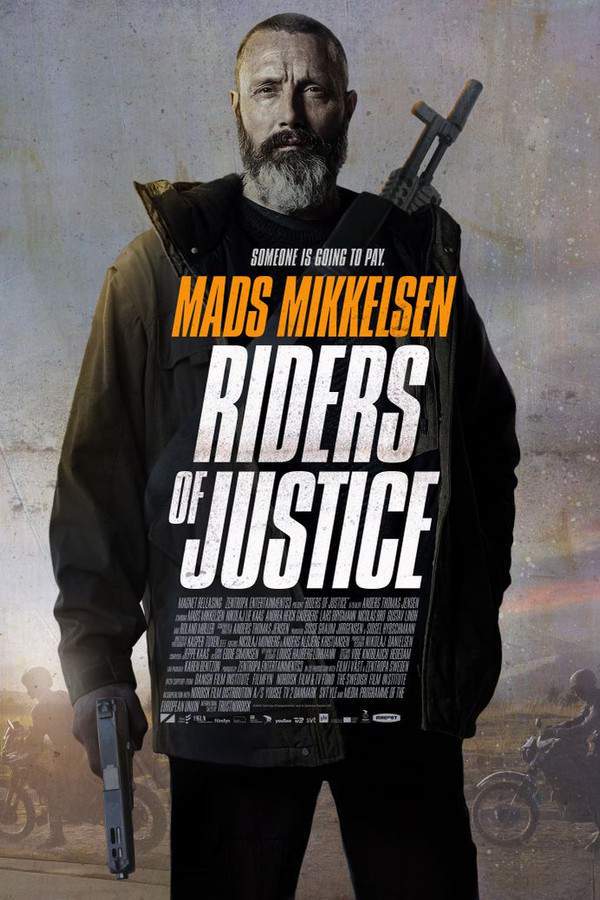
The ending of Riders of Justice reveals that the entire tragedy—the train accident that killed Mathilde's mother—was not the deliberate act of a villain but rather a tragic coincidence. Throughout the film, the characters are caught in the belief that revenge or blaming someone could bring resolution or justice. Markus, devastated by the loss of his wife, seeks to punish those responsible, driven by anger and pain. Otto, meanwhile, becomes convinced that the crash was an intentional murder linked to a criminal gang, and he dedicates himself to uncovering the conspiracy. However, as the story unfolds, it becomes clear that these assumptions were false. When Otto and his team dig deeper, they discover that Palle Olesen, the supposed mastermind, wasn’t even in the city that day, and the suspicious man Otto saw had a different explanation—coincidence. It was a man named Aharon Nahas Shadid, who simply discarded his food, not involved in any plot.
Markus, initially fueled by revenge, is shattered when he realizes there was no malicious intent behind the tragedy. The pain of losing his wife wasn’t caused by a deliberate act but was a cruel twist of fate. This realization forces Markus to confront his own grief and the futility of seeking vengeance. As Markus's emotional facade breaks down, he undergoes a profound transformation—no longer the hardened man driven by revenge, but someone who admits to the randomness of life’s tragedies. His breakdown on learning the truth is raw and powerful, showcasing Mads Mikkelsen’s exceptional acting.
The film uses the Ukrainian legend about coincidences—where a princess loses a ring in a bear attack and later kills the same bear without finding her ring—to illustrate that revenge often leads nowhere. The legend and the film suggest that attempting to hunt down the cause of tragedy is futile because life’s events are often beyond our control, and pursuing revenge only prolongs suffering. In the end, Markus and Mathilde learn that sometimes the best response to tragedy is acceptance, recognizing that life is a series of random, interconnected events rather than clear-cut acts of evil or malice. The story underscores the idea that in life, coincidences shape our fate more than malicious intent, and accepting this can be the path to healing. Ultimately, Markus’s emotional breakdown signifies that true understanding and peace come from accepting life’s unpredictable nature rather than fighting against it.