Plot Explained Spoilers guaranteed!
Plot Explained

Browse by genre

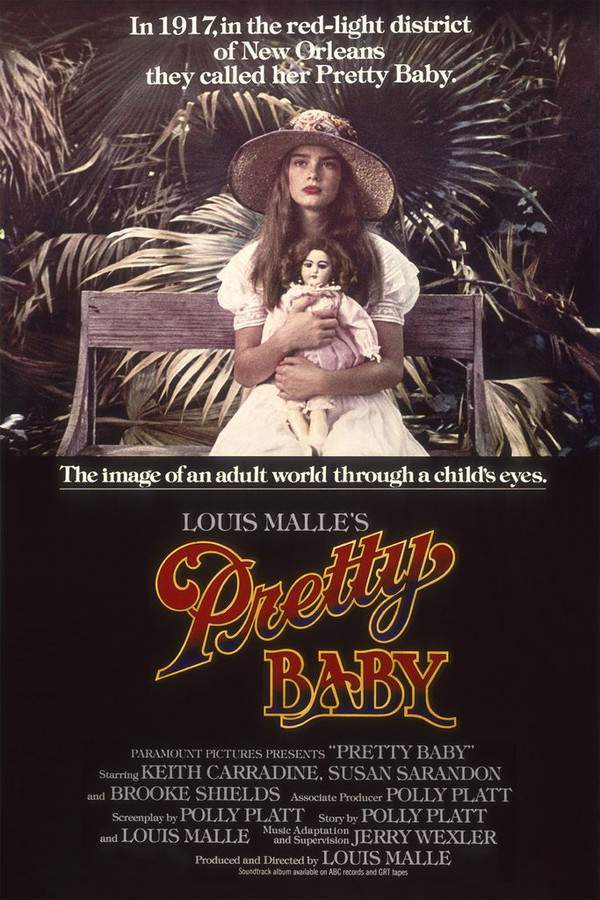
Pretty Baby (1978) movie poster

Plot Summary

Pretty Baby (1978) Plot Summary Explained

Release, runtime and language
1978 · 110 min · English
Directed by
Louis Malle
Starring
Barbara Steele, Keith Carradine, Susan Sarandon, Brooke Shields, Diana Scarwid, Antonio Fargas

In 1917 New Orleans, the lives of a prostitute named Hattie and photographer E.J. Bellocq intertwine in a poignant story. Their complicated relationship deepens when Hattie's twelve-year-old daughter, Violet, becomes involved in the city’s dangerous and shadowy world. Hattie must confront difficult choices as she tries to protect her daughter while navigating her own challenging circumstances.

On this page (6)
  1. 1 Where to watch
  2. 2 What happens: full plot
  3. 3 Plot questions answered
  4. 4 Movie threads
  5. 5 Movies like Pretty Baby
  6. 6 Every angle

Where to watch

Where to Watch Pretty Baby (1978)

Where can you watch Pretty Baby? Stream, rent or buy it in the US, including on Hoopla, Amazon Video and Apple TV Store: current JustWatch availability with up-to-date prices.

Streaming availability powered by JustWatch

Full plot summary · contains spoilers

What Happens in Pretty Baby: Full Plot Summary

The whole story of Pretty Baby (1978) explained, from the opening scene to the final frame: every key event, every twist and what it all adds up to. Read it as a quick recap before the sequel, to check a scene you missed, or to finally understand what really happened.

This film draws inspiration from an interview with a real child prostitute who worked in New Orleans during the early 20th century, as documented in Al Rose's book "Storyville, New Orleans: Being an Authentic, Illustrated Account of the Notorious Red-Light District."

The story commences with Violet, portrayed by Brooke Shields, an eleven-year-old girl witnessing the birth of her baby brother. This moment reflects her own origins as the daughter of Hattie, who is played by Susan Sarandon, a prostitute with an unknown client. In 1917, Violet resides among several children at Madam Nell's brothel, owned by Frances Faye.

One day, a photographer named Bellocq, enacted by Keith Carradine, visits looking for a model. While Hattie poses for him, Violet's curiosity becomes a point of interest, albeit initially a nuisance for Bellocq. Over time, he becomes charmed by her, fascinated by the fact that he prefers to photograph women rather than engage in the expected sexual activities.

Despite her tender age, Violet has already become entangled in the brothel's operations. One day as she plays in an upstairs bedroom, Hattie brings in a client, insinuating that Violet is a virgin who is "only for French." Violet is then expected to follow her mother and the client into the bedroom, indicating a grim acceptance of her reality. As the scene unfolds, it becomes apparent that Violet is to engage in a sexual act, and with the resigned demeanor of someone all too familiar with this life, she enters the room, shutting the door behind her.

As Violet approaches her twelfth birthday, preparations are made to auction her virginity. Madam Nell hosts a dinner for her elite clients during which Violet, adorned in a sheer gown, is paraded like a prize. Afterward, dressed in a white party dress, she stands as men bid for her. The highest bidder, Don Lutenbacher, takes her to a bedroom, and a brief scream signals her initiation into womanhood—though she reveals herself to be joking when her friends later check on her.

Violet quickly becomes a staple of the brothel, often at her own peril, such as being interrupted during her bath for a customer. Meanwhile, Hattie's boyfriend, Alfred Fuller, played by Don Hood, plans to take Hattie and her infant son to St. Louis, leaving Violet behind under the guise of being her sister. As tensions rise, Violet misbehaves and is subjected to a harsh punishment from the bartender, resulting in a scene that both chills and showcases her defiance.

Opting to leave the brothel, Violet attempts to move in with Bellocq. Initially opposed, he finds it hard to resist her charms, but Violet soon grows restless with being just a photography muse. After a heated argument following a public nude photography session—a controversial moment in the film—Violet retaliates by damaging Bellocq's precious negatives, leading to her expulsion from his life.

Returning to the brothel, she is met with a declining atmosphere as the city pressures Madam Nell to close her business. When things seem bleak, Bellocq arrives to profess his love and propose marriage, a rare allowance given Violet's abandonment by her mother. They celebrate this newfound happiness with a picnic along the river.

However, the reality of marriage soon settles in. After two weeks, it's evident that Violet still struggles with her role as a wife, as she primarily engages in intimate relations and sleeps. The couple's moment is interrupted by Hattie, who now demands that Violet join her family in St. Louis. Torn between her mother and Bellocq, Violet lacks the authority to refuse, leading to a poignant moment at the train station where her new stepfather attempts a family portrait. In that moment, Violet's expression hints at her deep internal conflict, prompting her to question whether she can ever revert to the innocence of childhood after her tumultuous experiences.

Last updated: October 28, 2024 at 17:46

Was this helpful?

Plot questions answered

Pretty Baby Plot Explained: Your Questions Answered

The questions people ask most about Pretty Baby (1978): what happens in the confusing scenes, why the characters do what they do, the twists, hidden details and what the ending means. Each answer contains spoilers.

Q1

Why does Hattie allow Violet to be auctioned?

Hattie is trapped in the same exploitative system that governs her daughter. As a prostitute with no legal rights and limited options, she cannot openly refuse Madam Nell's plans without risking her own survival and that of her infant son. The scene shows her passive acceptance rather than active consent, a portrayal of how poverty and social marginalization silence victims of trafficking.

Foreshadowing: Earlier, Hattie brings a client to Violet, indicating she already views her daughter as part of the brothel's 'inventory.'

  • Hattie
  • Violet
  • auction
  • virginity
  • Madam Nell
  • prostitution
Q2

Why does Bellocq want to marry Violet?

Bellocq forms a genuine emotional connection with Violet despite their inappropriate dynamic. He is drawn to her innocence and defiance, which starkly contrasts with the commodified sexuality surrounding them. His proposal represents a twisted attempt at salvation, he offers her legitimate status as his wife, though the film questions whether this rescue is truly selfless given his earlier exploitation of her as a muse.

Foreshadowing: Bellocq initially prefers photographing women over sexual activity, showing his interest in visual rather than physical possession.

  • Bellocq
  • Violet
  • marriage
  • proposal
  • rescue
Q3

Why does Violet destroy Bellocq's photographs?

Violet feels used as merely a muse and objects to the public nature of the nude photography session, which exposes her vulnerability without giving her agency. Her destruction of the negatives is an act of rebellion against being reduced to an object for Bellocq's art, but this impulsive rage also marks the end of their living arrangement.

Foreshadowing: Violet grows restless with being 'just' a muse, indicating her desire for recognition beyond visual objectification.

  • Violet
  • Bellocq
  • negatives
  • photographs
  • rebellion
Q4

What happens at the train station at the end?

Violet stands between her mother Hattie and her husband Bellocq at the train station, forced to choose. Her mother insists she join the family in St. Louis, and Violet lacks the autonomy to refuse either man. The family portrait moment captures her trapped between two forms of control, her mother's patriarchal family and Bellocq's problematic guardianship, leaving her future uncertain.

Foreshadowing: Earlier, Hattie abandoned Violet when she left for St. Louis, showing her pattern of taking control over Violet's life.

  • Violet
  • train station
  • ending
  • family
  • Hattie
  • Bellocq
Q5

Why does Violet return to the brothel after leaving with Bellocq?

After destroying Bellocq's negatives and being expelled from his home, Violet has nowhere else to go. Her mother has left for St. Louis, and as a twelve-year-old with no independent means, the brothel is her only available shelter, demonstrating how the system creates a cycle where victims return to their exploiters.

Foreshadowing: Alfred Fuller specifically leaves Violet behind as 'her sister,' ensuring she has no legitimate family connection to escape to.

  • Violet
  • brothel
  • return
  • Bellocq
  • homeless
Q6

Does Violet become a prostitute after marrying Bellocq?

The film implies Violet's role as wife primarily involves intimate relations, as she is depicted spending most of her time in bed with Bellocq rather than engaging in any other activities. This suggests the marriage replicates the transactional dynamic she knew in the brothel, she trades sexuality for survival rather than achieving genuine liberation.

Foreshadowing: Bellocq photographed women in the brothel rather than participating himself, indicating he values visual access to female bodies.

  • Violet
  • Bellocq
  • marriage
  • prostitute
  • intimacy
Q7

Why does Hattie leave Violet behind when she goes to St. Louis?

Hattie's boyfriend Alfred Fuller insists they present Violet as Alfred's sister rather than his stepdaughter, effectively erasing her maternal claim to Violet. This allows Alfred to avoid the social stigma of raising another man's child while Hattie has no power to refuse. The abandonment reflects how women in this era had no legal authority over their children when male partners dictated terms.

Foreshadowing: Hattie never formally claims Violet as her daughter to outside authorities, only referring to her as 'my girl' in ambiguous contexts.

  • Hattie
  • Violet
  • St. Louis
  • abandonment
  • Alfred Fuller
Q8

Why does Bellocq photograph prostitutes instead of using their services?

Bellocq is established as a voyeur who derives satisfaction from observing and capturing women on camera rather than physically engaging with them. This fixation on visual documentation distinguishes him from the brothel's other clients and explains his interest in Violet as a subject long before any romantic attachment forms.

Foreshadowing: The film opens with Bellocq seeking a 'model' rather than a prostitute, signaling his primary interest in photography.

  • Bellocq
  • photographer
  • prostitution
  • model
  • voyeur
Q9

What does Violet's virginity auction represent in the story?

The auction represents the explicit commodification of a child within the brothel system. It marks Violet's transition from potential to actual asset, turning her body into the most valuable 'property' Madam Nell can sell. The scene horrified audiences upon release and serves as the film's clearest indictment of how children were exploited in historical red-light districts.

Foreshadowing: Earlier, Hattie tells a client Violet is 'only for French,' signaling she was already being prepared for this role.

  • Violet
  • auction
  • virginity
  • child prostitution
  • Madam Nell
Q10

Why does the film open with Violet witnessing her brother's birth?

The opening places viewers in Violet's perspective as she confronts the cycle of her own origin. Just as she watched herself being born, she now watches the next child enter the same environment of poverty and exploitation. This frames Violet's story as an inescapable generational pattern rather than an isolated incident.

  • Violet
  • birth
  • brother
  • opening
  • cycle

Movie threads

More Movies Like Pretty Baby, by Mood & Story

Curated lists built around what makes Pretty Baby tick: the same mood, the same kind of story or the same emotional payoff. Each list explains why these movies belong together.

Dark coming of age stories like Pretty Baby

Young protagonists forced to mature amidst exploitation and moral decay. If you were captivated by the difficult journey in Pretty Baby, this list features movies like it that explore young characters navigating exploitative and morally complex worlds. Discover similar heavy dramas about lost innocence and survival.

  • unsettling
  • somber
  • morally complex
  • oppressive
  • loss of innocence
  • grim
  • Tone: dark, somber, morally complex
  • Pacing: steady, character-driven
Why these movies?

The story pattern: Stories in this thread follow a young character's journey as their innocence is stripped away by a predatory or broken adult world. The central conflict is between the character's nascent understanding of the world and the grim reality they must endure, often leading to a bittersweet or ambiguous conclusion.

Why they belong together: Movies are grouped here for their shared focus on the dark side of maturation, set against oppressive and unsettling backdrops. They share a heavy emotional weight, a somber tone, and a commitment to exploring the traumatic cost of early exposure to adult corruption.

Somber character studies in marginalized settings like Pretty Baby

Unflinching dramas set within oppressed communities and taboo worlds. For viewers who appreciated the grim world of Pretty Baby, this selection showcases movies with a similar feel, exploring taboo subjects and the lives of people in oppressed communities. Find other heavy, steady-paced dramas that don't shy away from difficult themes.

  • oppressive
  • somber
  • melancholic
  • grim
  • unflinching
  • taboo
  • Tone: dark, melancholic, defiant
  • Pacing: steady, immersive
Why these movies?

The story pattern: These narratives are often linear, focusing on the daily struggles and intricate interpersonal dynamics within a closed, often stigmatized community. The plot is driven by character choices made under extreme pressure, examining themes of survival, morality, and the human capacity for defiance in the face of oppression.

Why they belong together: These films are connected by their shared commitment to portraying a specific, often grim world with unflinching honesty. They create an immersive, oppressive atmosphere, prioritize character over plot, and carry a consistently heavy, melancholic emotional tone.

If you liked this

Movies Like Pretty Baby

Similar movies to Pretty Baby: the same genre, themes or kind of story. Each one comes with its own plot summary, timeline and ending explained.

Browse all movie summaries

Every angle

Pretty Baby (1978) Explained: Plot, Timeline & Characters

Everything about Pretty Baby in one place: what happens in the plot summary, the timeline in chronological order, the characters and meaning and a spoiler-free summary. What's After the Movie adds the cast, box office and post-credit scenes.

Coming soon on iOS and Android

The Plot Explained Movie Summary App

Plot summaries, endings explained and timelines on your phone. Catch up on any movie in minutes, save your favorites and never miss a twist again.

Be the first to know when we launch. Your email stays private, always.

Learn more about the app