Plot Explained Spoilers guaranteed!
Plot Explained

Browse by genre

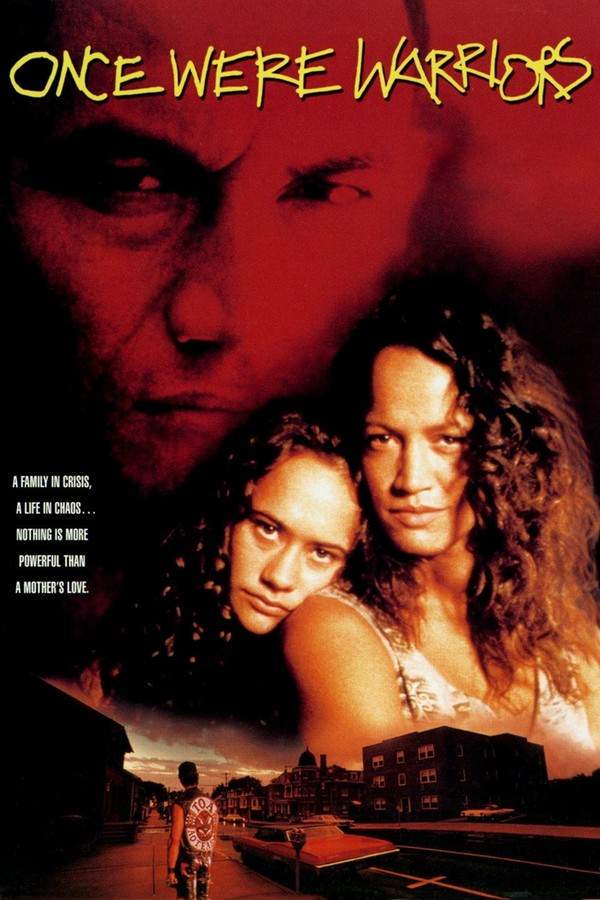
Once Were Warriors (1995) movie poster

Plot Summary

Once Were Warriors (1995) Plot Summary Explained

Release, runtime and language
1995 · 102 min · English
JustWatch #8,849 21
Directed by
Lee Tamahori
Starring
Cliff Curtis, Temuera Morrison, George Henare, Joseph Kairau, Julian Arahanga, Mamaengaroa Kerr-Bell

In the impoverished suburbs of Auckland, Jake Heke's violent outbursts devastate his Maori family. His wife, Beth, endures repeated abuse, while their children, Nig, Boogie, and Grace, grapple with the consequences of his anger. As Jake’s uncontrolled rage intensifies, the family faces increasing hardship and dysfunction, pushing them to the brink of collapse and threatening their very survival.

On this page (7)
  1. 1 Where to watch
  2. 2 What happens: full plot
  3. 3 Plot questions answered
  4. 4 The book behind the movie
  5. 5 Movie threads
  6. 6 Movies like Once Were Warriors
  7. 7 Every angle

Where to watch

Where to Watch Once Were Warriors (1995)

Where can you watch Once Were Warriors? Stream, rent or buy it in the US, including on Film Movement Plus, Hoopla and Kanopy: current JustWatch availability with up-to-date prices.

Streaming availability powered by JustWatch

Full plot summary · contains spoilers

What Happens in Once Were Warriors: Full Plot Summary

The whole story of Once Were Warriors (1995) explained, from the opening scene to the final frame: every key event, every twist and what it all adds up to. Read it as a quick recap before the sequel, to check a scene you missed, or to finally understand what really happened.

This powerful film revolves around a Maori family navigating life in Auckland, New Zealand. The story follows the parents, Beth (Rena Owen) and Jake (Temuera Morrison), who relocated to the city after their tribal elders condemned their relationship. Beth, coming from a lineage of tribal leaders, had been poised for leadership but fled due to her love for Jake, whose ancestry is marked by a history of servitude from inter-tribal conflicts. Fleeing the disapproval of their families, they built a new life together, welcoming five children into their troubled household.

As the film unfolds, we see Jake returning home bearing gifts for his family, a moment that initially evokes sympathy for him, presenting him as a devoted husband seeking his family's happiness. However, as the narrative deepens, it becomes evident that beneath this façade lies a troubling reality. Jake struggles with severe anger issues, especially when under the influence of alcohol, leading to violent outbursts that create an atmosphere of fear in the home. His drinking drives him to host raucous parties that disrupt his children’s lives, leaving them hungry and neglected.

The eldest son, Nig (Julian Arahanga), becomes increasingly rebellious, drawn to a gang that bears traditional Maori tattoos but whose actions betray the true honor associated with their ancestry. Meanwhile, Mark (nicknamed Boogie) (Taungaroa Emile), frequently clashing with the law, finds himself removed from the toxic environment and placed in a boys' group home. There, he encounters a mentor who inspires him to embrace his cultural heritage and rediscover his identity through traditional practices.

Grace, their thirteen-year-old daughter (Mamaengaroa Kerr-Bell), assumes a caregiver role amidst her parents' chaos, tending to her younger siblings and handling domestic chores. She seeks solace in her friendship with Toot (a character portrayed by an unlisted actor), who lives in a car and offers a temporary escape from her family's tumult. However, the destructive cycle of violence takes a tragic turn when Grace is sexually assaulted by Bully (Cliff Curtis), a family friend. Traumatized and isolated, Grace ultimately succumbs to despair, leading to her tragic suicide.

In the aftermath of Grace's passing, Beth grapples with profound loss, unearthing her daughter's journal that reveals the horrific truth of the assault. Fueled by rage and heartbreak, she confronts Jake and Bully, with dire consequences rising from this revelation as Jake avenges his daughter's death in a fit of wrath.

The film concludes with Beth severing ties with Jake, acknowledging that such a decision cannot resurrect Grace. In a poignant farewell, she reflects, "Our people once were warriors. But unlike you, Jake, they were people with mana (power), pride; people with spirit. If my spirit can survive living with you for eighteen years, then I can survive anything." This powerfully emotional ending leaves viewers contemplating the ripples of domestic strife and the quest for healing amid tragedy.
Last updated: November 04, 2024 at 01:30

Was this helpful?

Plot questions answered

Once Were Warriors Plot Explained: Your Questions Answered

The questions people ask most about Once Were Warriors (1995): what happens in the confusing scenes, why the characters do what they do, the twists, hidden details and what the ending means. Each answer contains spoilers.

Q1

Why does Jake abuse his family despite claiming to love them?

Jake's violence stems from deep-seated anger issues compounded by alcohol. The film shows he struggles to control his rage when drunk, leading to explosive outbursts that create an atmosphere of fear. His violent behavior is not about love or hate, it reflects his inability to process emotional pain, stemming from his ancestral history of servitude and his feelings of displacement in urban Auckland. The violence becomes a destructive cycle that traps both Jake and his family.

Foreshadowing: Earlier scenes show Jake's gifts and warmth briefly returning, hinting at the complex duality between his loving moments and violent explosions.

  • jake heke
  • domestic abuse
  • alcoholism
  • violence
  • maori family
Q2

Why does Grace kill herself after the assault?

Grace's suicide results from the combined trauma of sexual assault by Bully, her isolation, and the lack of support within her dysfunctional family. As a thirteen-year-old caring for her siblings while her parents neglect them, she had no healthy outlet or adult protection. The assault left her traumatized and ashamed, and with no one to turn to, including her overwhelmed mother, despair overtook her. Her death is the tragic consequence of systemic failure to protect vulnerable children.

Foreshadowing: Grace's caregiving role and her friendship with Toot show her seeking escape, foreshadowing her desperate need for safety that she never finds.

  • grace heke
  • suicide
  • sexual assault
  • trauma
  • family neglect
Q3

Who is Bully and what motivates his assault of Grace?

Bully is a family friend who betrays the trust placed in him by the Heke family. His assault of Grace is an act of predatory exploitation, taking advantage of a vulnerable child in a chaotic household where adults are absent or distracted. The film presents him as a representative of how predators infiltrate families, using proximity and trust to commit violence. His character embodies the external dangers that prey on broken homes.

Foreshadowing: Bully's presence as a 'family friend' establishes his access to the home, making the assault feel like a violation of hospitality.

  • bully
  • cliff curtis
  • sexual assault
  • grace heke
  • family friend
Q4

Why does Beth leave Jake after Grace's death?

Beth leaves because Grace's death finally breaks her illusion that the family can survive Jake's violence. Although she endured years of abuse, Grace's suicide, stemming from trauma that occurred under their roof, proves that staying has fatal consequences. Beth realizes that her survival and her children's survival require leaving. Her departure is not about revenge but about self-preservation after eighteen years of suffering.

Foreshadowing: Beth's discovery of Grace's journal reveals the full scope of tragedy, giving her the final clarity needed to act.

  • beth heke
  • leaving jake
  • domestic violence
  • survival
  • grace death
Q5

Why does Nig join the gang and what does it represent?

Nig joins the gang because he seeks belonging and identity outside his chaotic home. The gang uses traditional Maori tattoo imagery, superficially invoking warrior culture, but their actions dishonor those traditions. Nig's descent reflects how fatherlessness and cultural displacement push vulnerable youth toward destructive alternatives. His arc shows the intergenerational damage caused by Jake's failures as a parent.

Foreshadowing: Jake's violence and absence of proper guidance leave a vacuum that the gang fills with false promises of family.

  • nig heke
  • gang
  • maori identity
  • rebellion
  • fatherlessness
Q6

Why does Jake seek vengeance after learning about Grace's assault?

Jake's vengeance stems from protective rage as a father learning his daughter was violated. However, his response is consistent with his character, he processes pain through violence rather than justice or healing. His quest for vengeance destroys more lives and highlights the cycle of violence: he cannot save Grace while alive but attempts to avenge her through the same brutal methods that damaged his family. It is a tragic, self-destructive reaction.

Foreshadowing: Jake's history of solving problems with violence foreshadows this explosive response.

  • jake vengeance
  • bully
  • justice
  • grace assault
  • cycle of violence
Q7

What does 'mana' mean in Beth's final speech?

In Maori culture, mana refers to spiritual power, authority, and prestige derived from ancestry and personal achievement. In Beth's farewell speech, she contrasts Jake's violent 'warrior' image with true mana, inner strength, dignity, and spiritual resilience. She declares that her ability to survive eighteen years with Jake proves she possesses authentic mana, unlike his destructive brutality. The speech reclaims Maori identity from superficial display toward genuine inner power.

Foreshadowing: The film's title 'Once Were Warriors' sets up this thematic exploration of what true warrior heritage means.

  • mana
  • maori culture
  • warrior
  • identity
  • beth speech
Q8

What positive change happens to Boogie at the group home?

Boogie is removed from his violent home and placed in a boys' group home, where he encounters a mentor who helps him reconnect with his Maori heritage through traditional practices. This represents the one hopeful arc in the film, showing that with proper guidance and cultural grounding, a child can be redirected. Boogie's transformation contrasts with Nig's destructive path, illustrating how environment and mentorship shape outcomes.

Foreshadowing: Boogie's frequent clashes with law and removal from home sets the stage for this intervention.

  • boogie
  • group home
  • cultural identity
  • mentor
  • redemption
Q9

Why does Beth stay with Jake for so many years despite the abuse?

Beth stays due to a combination of factors: love for the man Jake sometimes is, economic dependence, cultural pressures, and hope that he will change. Coming from a lineage of tribal leaders, she also internalized values of loyalty and family. Additionally, she likely felt trapped like many abuse survivors, isolated, lacking resources, and fearful of the unknown. Her eventual departure shows tremendous courage, but the delay reflects real barriers victims face.

Foreshadowing: Beth's backstory shows she left her tribal community for Jake, suggesting she has a pattern of choosing love over safety.

  • beth
  • domestic abuse
  • reasons to stay
  • survival
  • hope
Q10

Why does the gang appropriating Maori tattoos matter in the story?

The gang's use of traditional Maori tattoos represents cultural appropriation and distortion of warrior values. True Maori warrior culture carries mana, honor, protection of community, and spiritual strength. The gang twisted these symbols into markers of criminal identity, showing how colonially displaced youth grasp at cultural fragments without understanding their meaning. Nig's attraction to them reflects his desperate search for identity in a world that has stripped his family of heritage.

Foreshadowing: The film's title and Beth's speech about 'warriors with mana' directly contrast with this superficial appropriation.

  • maori tattoos
  • gang
  • cultural appropriation
  • warrior identity
  • nig
Q11

Why does Grace take on adult responsibilities at such a young age?

Grace becomes the caregiver because Jake's violence and Beth's exhaustion leave no other option. With five children and an absent, volatile father, someone must tend to the younger siblings. Grace steps into this role out of necessity and a desire to feel needed, a coping mechanism that masks her own unmet needs. Her caregiving also isolates her further from normal childhood experiences, making her more vulnerable when tragedy strikes.

Foreshadowing: Grace's friendship with Toot shows her seeking a brief escape from her heavy responsibilities.

  • grace
  • caregiver role
  • parentification
  • neglect
  • childhood

Movie threads

More Movies Like Once Were Warriors, by Mood & Story

Curated lists built around what makes Once Were Warriors tick: the same mood, the same kind of story or the same emotional payoff. Each list explains why these movies belong together.

Dysfunctional family tragedies like Once Were Warriors

Brutal stories about families shattered by abuse, addiction, and despair. If you were affected by the raw portrayal of family collapse in Once Were Warriors, explore more movies like it. These films delve into similar themes of domestic violence, substance abuse, and the heartbreaking consequences for children and partners, offering similarly heavy emotional experiences.

  • harrowing
  • tragic
  • despairing
  • raw
  • oppressive
  • somber
  • Tone: dark, tragic
  • Pacing: steady, relentless
Why these movies?

The story pattern: Stories in this thread typically follow a family unit as it disintegrates under internal and external pressures. The narrative often centers on a cycle of violence and sorrow, showing the perspectives of both the abuser and the victims, building towards a tragic event that forces a change or highlights the depth of the loss.

Why they belong together: These movies are grouped together for their shared focus on the grim realities of dysfunctional families. They share a dark tone, heavy emotional weight, and a commitment to portraying the raw, uncomfortable truth of domestic strife without offering easy solutions.

Bleak urban realism movies like Once Were Warriors

Gritty, socially conscious dramas set in impoverished urban environments. For viewers who appreciated the gritty Auckland setting and social commentary of Once Were Warriors, this list features similar movies. Discover other powerful dramas that explore urban poverty, cultural displacement, and the struggle for dignity in harsh, unforgiving environments.

  • gritty
  • raw
  • somber
  • angry
  • despairing
  • oppressive
  • Tone: gritty, somber
  • Pacing: steady, character driven
Why these movies?

The story pattern: Narratives focus on individuals or families grappling with systemic issues like poverty, gang culture, and loss of cultural identity. The stories are character-driven, often following a downward spiral or a grim struggle for survival, where the oppressive environment is a central source of conflict.

Why they belong together: These films share a specific vibe defined by their raw, authentic depiction of urban struggle. They are united by a gritty aesthetic, a somber mood, and themes that explore the intersection of personal tragedy with broader social problems.

If you liked this

Movies Like Once Were Warriors

Similar movies to Once Were Warriors: the same genre, themes or kind of story. Each one comes with its own plot summary, timeline and ending explained.

Browse all movie summaries

Every angle

Once Were Warriors (1995) Explained: Plot, Timeline & Characters

Everything about Once Were Warriors in one place: what happens in the plot summary, the timeline in chronological order, the characters and meaning and a spoiler-free summary. What's After the Movie adds the cast, box office and post-credit scenes.

Coming soon on iOS and Android

The Plot Explained Movie Summary App

Plot summaries, endings explained and timelines on your phone. Catch up on any movie in minutes, save your favorites and never miss a twist again.

Be the first to know when we launch. Your email stays private, always.

Learn more about the app